A guided journey through fourteen museums, with Eleanor · Jason D's Vision
This is a journey through the great museums of Europe with Eleanor — a curator's lifetime of houses, visited in the order she loves them best: London, Paris, Amsterdam, Berlin, Vienna, Florence, Rome, Madrid and Bilbao, ending in Athens, in sight of the Parthenon. Forty-two stops — a room, a gallery, or an arrival — at fourteen museums.
Every scene here is our own interpretation of the real place, created from its reference photographs. The photographs themselves — one hundred and twenty-six of them across the ten chapters — are folded beneath each scene below: open a set to see what the scene was made from, and tap any photograph to see it large. The masterpieces in these rooms are Europe's public-domain old friends; where a work is still in copyright, Eleanor honours it in words rather than our presuming to copy it.
To hear the whole journey: press the tour button below and put the phone down — the page travels from scene to scene on its own, scrolling as Eleanor speaks. Or wander freely and tap Listen at any stop.
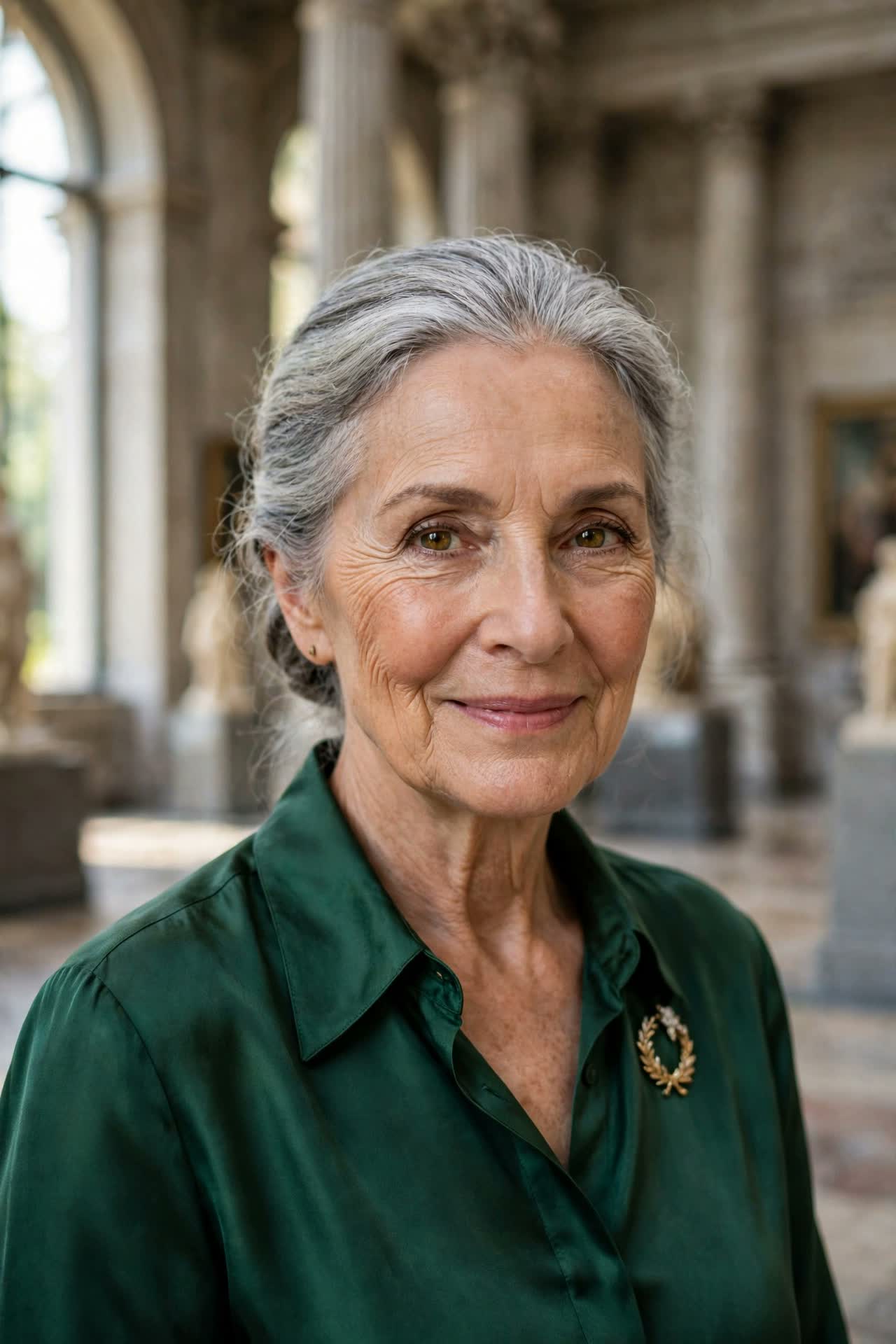
Your host: Eleanor — forty years among the museums of Europe, as cataloguer, then curator. Her welcome:
Hello, I'm Eleanor. For forty years I worked among the great museums of Europe — first as a young cataloguer with ink on her fingers, and at the last as a curator, which mostly means a person entrusted with keys. These are my houses, and I would very much like to show them to you. We begin in London, beneath a roof of glass, and we travel — through Paris and Amsterdam, Berlin and Vienna, Florence and Rome, Madrid and Bilbao — to a glass hall in Athens, within sight of the Parthenon. Fourteen museums. Forty-two stops. Nothing will be hurried. Walk with me.
Chapter One — London
6 scenes · 18 reference photographs
The British Museum — the Great Court
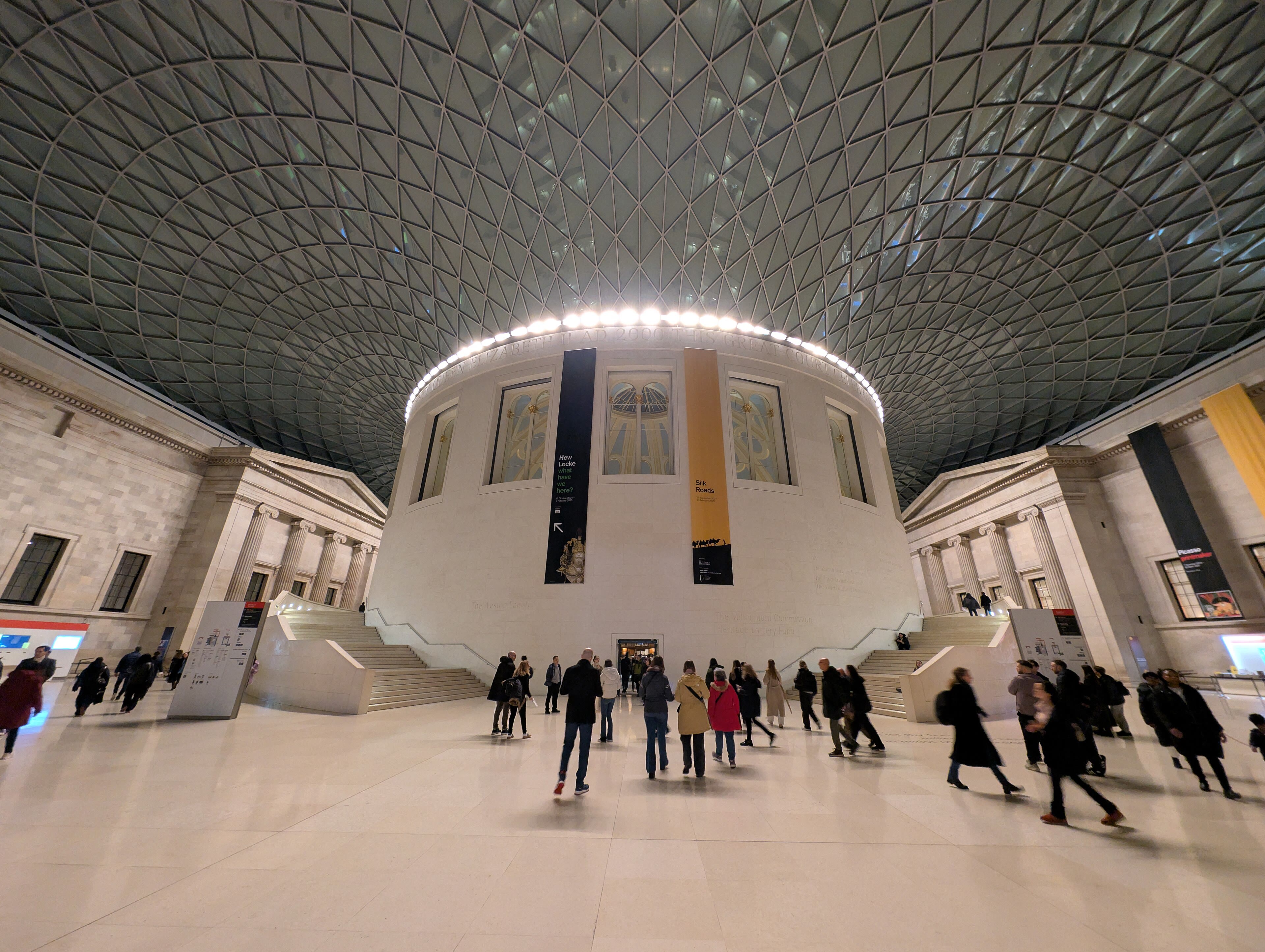
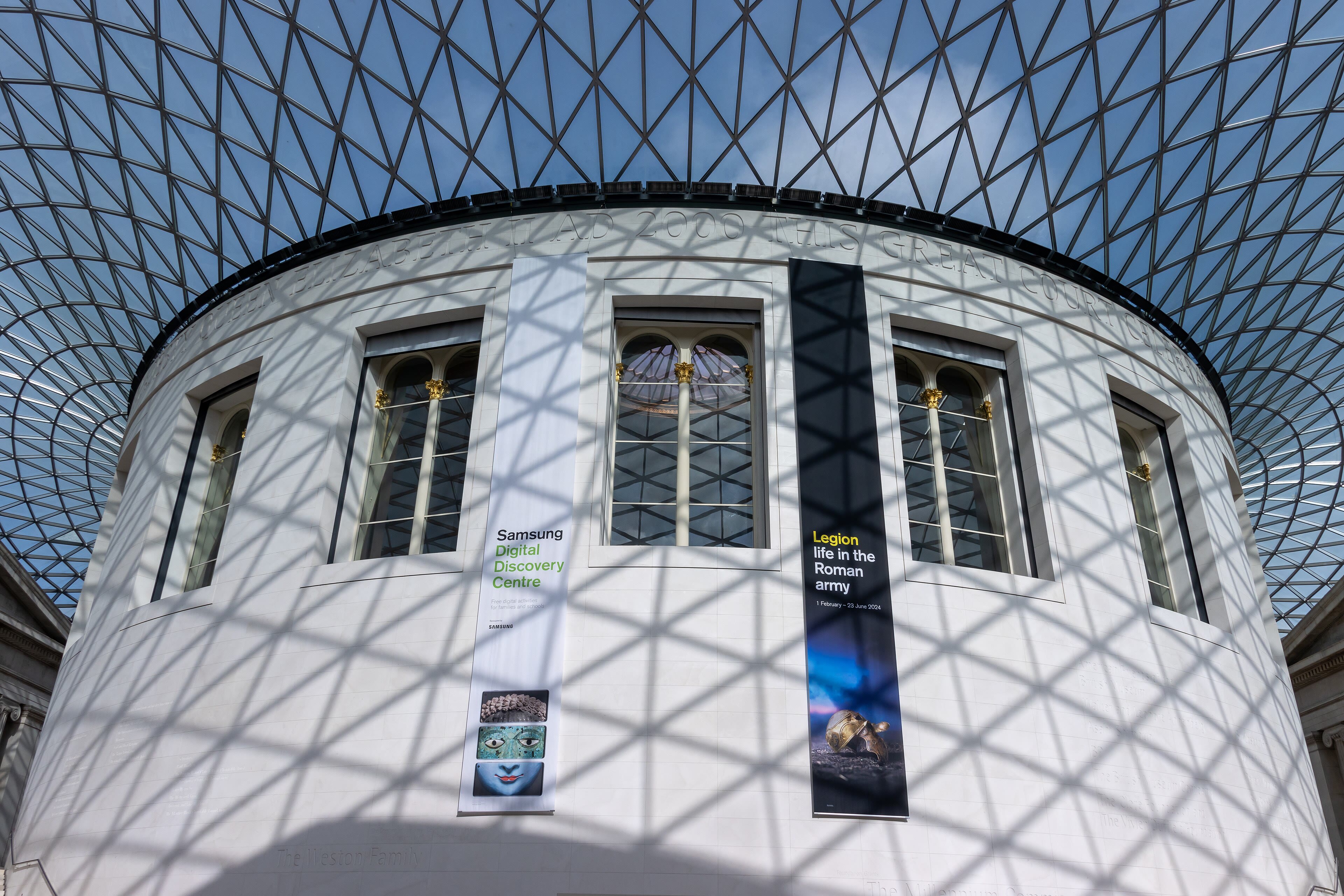
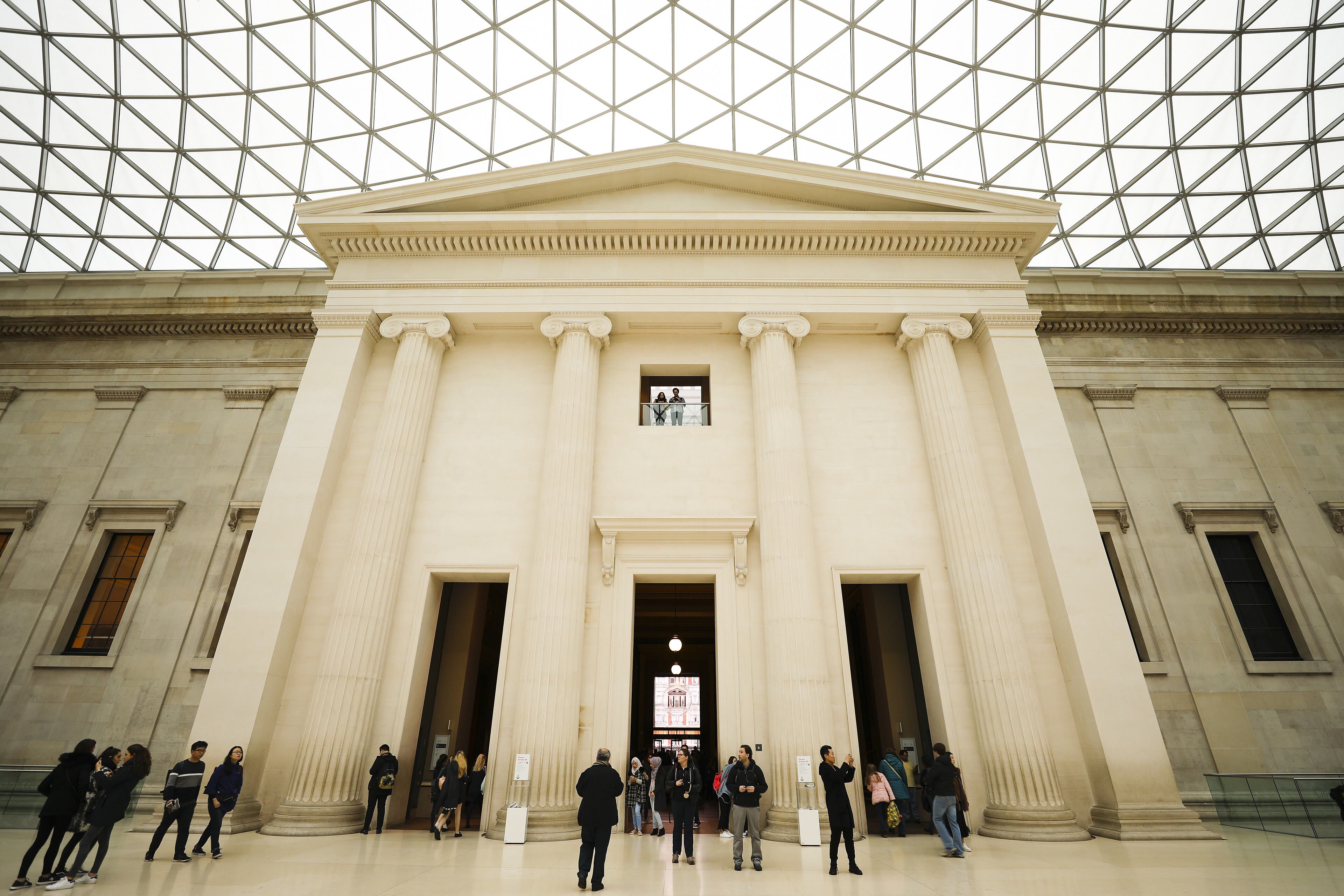
We begin where I always begin in London: under the great glass roof of the British Museum. Two acres of courtyard, hidden for a century and a half behind book stacks, opened to the sky again in the year two thousand — the largest covered square in Europe, tessellated glass floating over the old Reading Room like a held breath. Stand in the middle and turn slowly. Every doorway around you is a continent: Egypt through there, Assyria beyond, Greece up the wide stair. Eight million objects live in this building, and the court is its calm centre — coffee cups, school parties, and two thousand years waiting politely in every direction. When I worked in rooms like these, this is where I came to think. Take your time here. The Rosetta Stone is close, the Parthenon is patient, and the roof above us is worth the journey all by itself.
See this place in the galleryThe British Museum — the Great Court — our interpretation, created from the reference photographs below
Reference photographs — The British Museum — the Great Court · 3 photographs
The British Museum — the Greek Halls
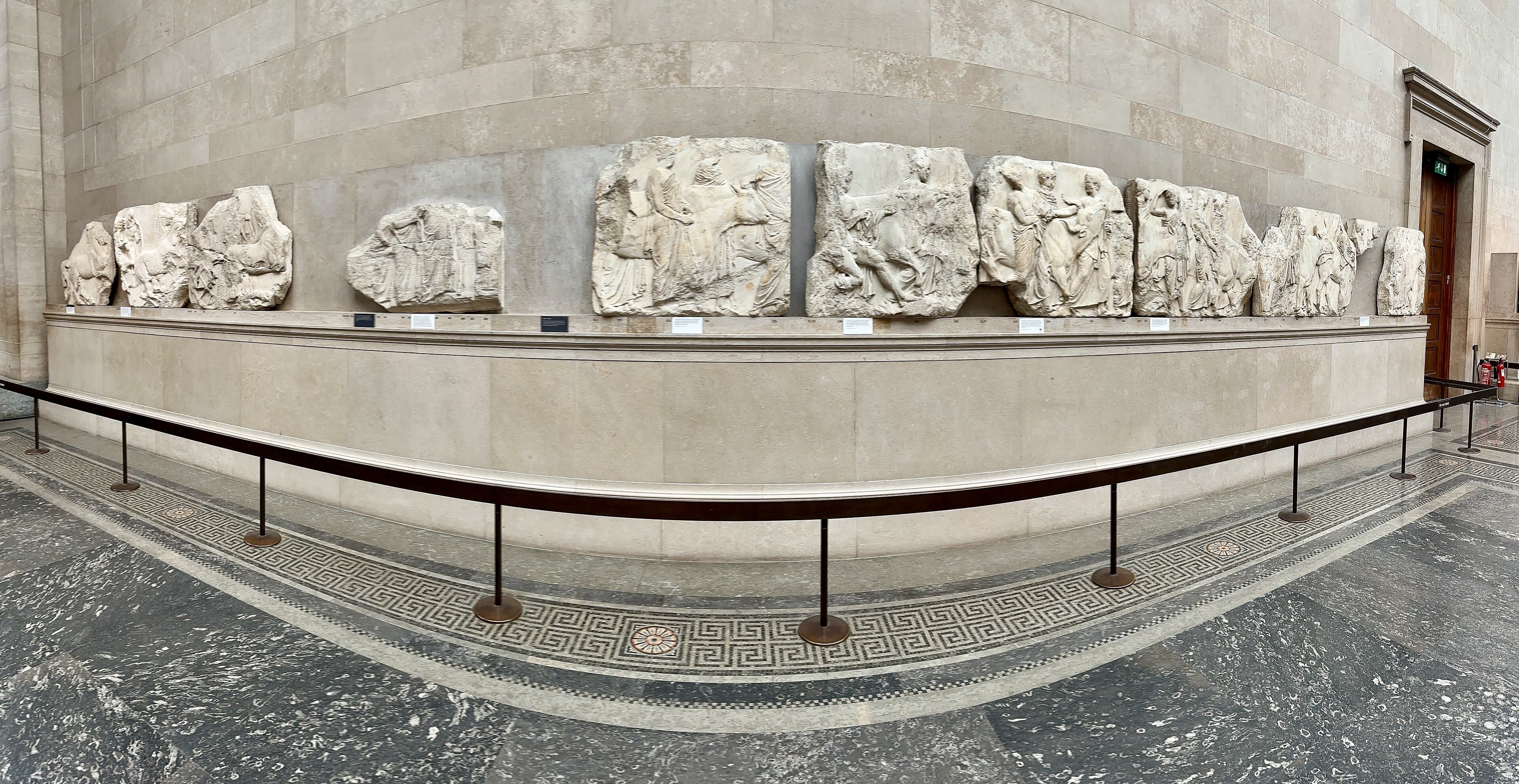
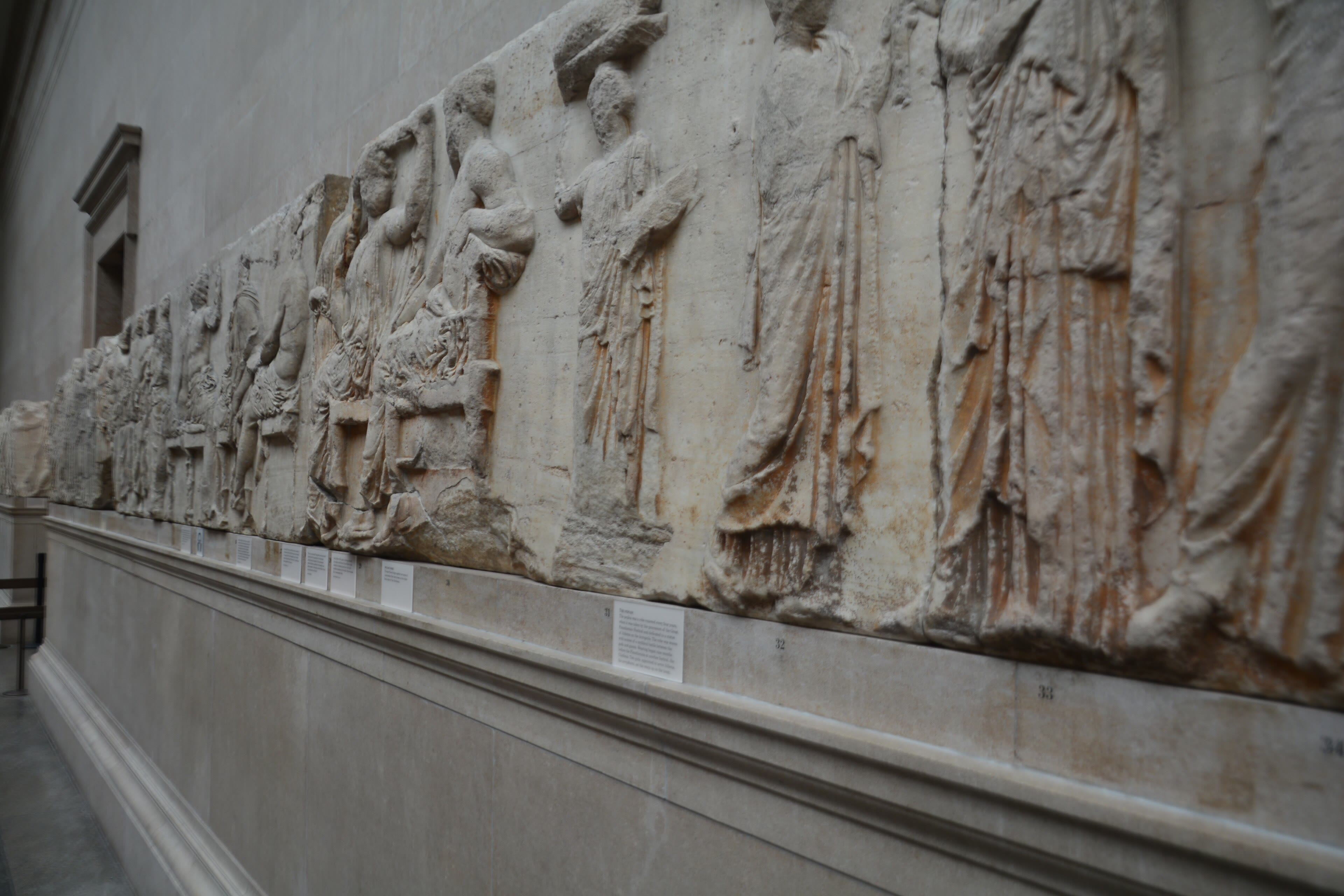
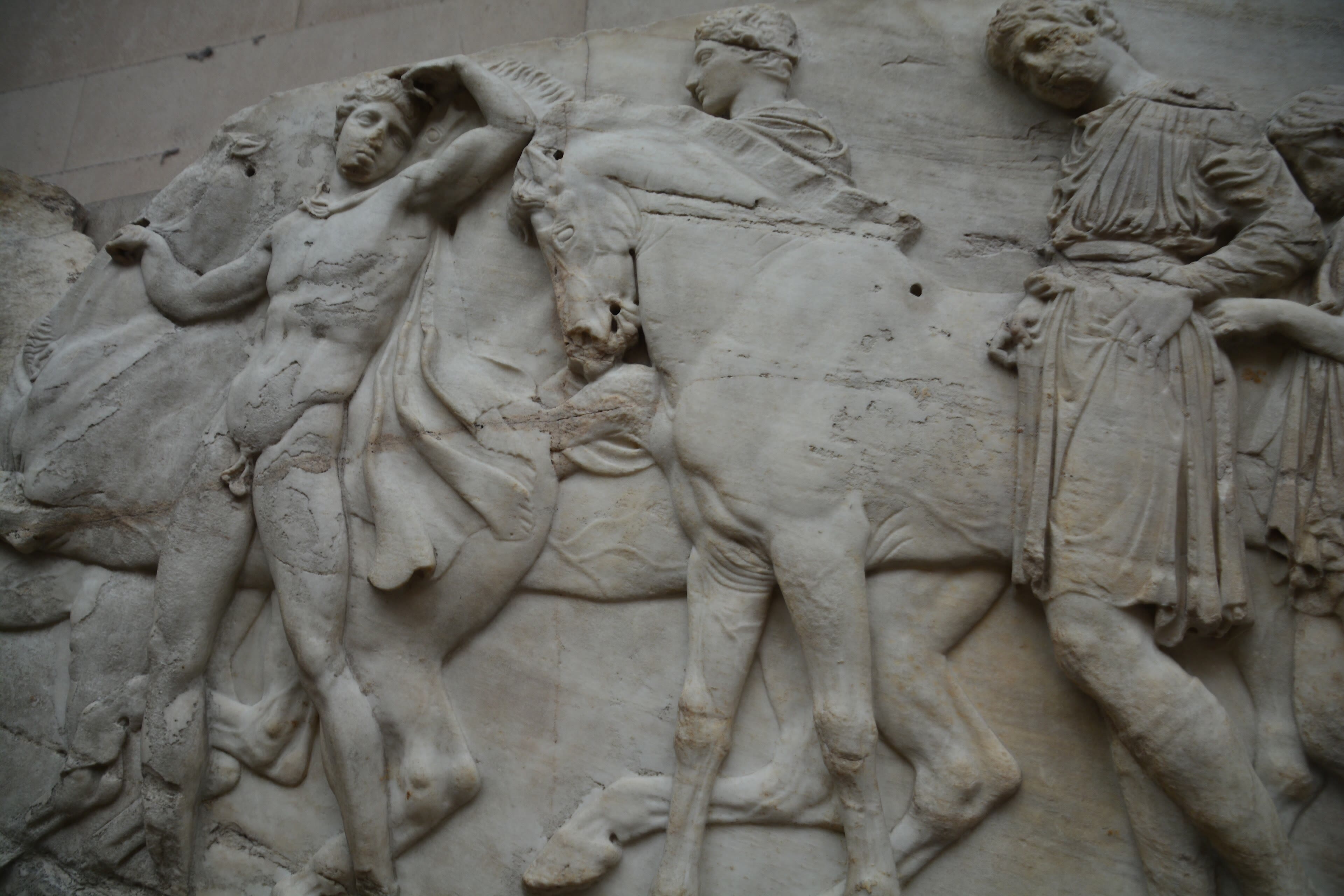
Up the great stair and into the long enfilade of the Greek halls — room after room of marble that once stood under Mediterranean sun. The Nereid Monument rebuilds a Lycian tomb facade inside a London gallery, swagged sea-nymphs between its columns; I never pass it without slowing. But the hall everyone is walking towards is the long one at the end: the Parthenon gallery, where the sculptures of the temple stand at eye level in a quiet file — horsemen, gods at rest, a centaur rearing — carved two thousand four hundred years ago to be seen from far below, and here close enough to read a chisel mark. Whatever arguments surround these stones — and there are arguments, honestly held on both sides — the carving itself silences a room. Look for the horse of Selene at the far end, sinking with the day. In forty years, no one has ever shown me finer.
See this place in the galleryThe British Museum — the Greek Halls — our interpretation, created from the reference photographs belowReference photographs — The British Museum — the Greek Halls · 3 photographs
The British Museum — the Rosetta Room
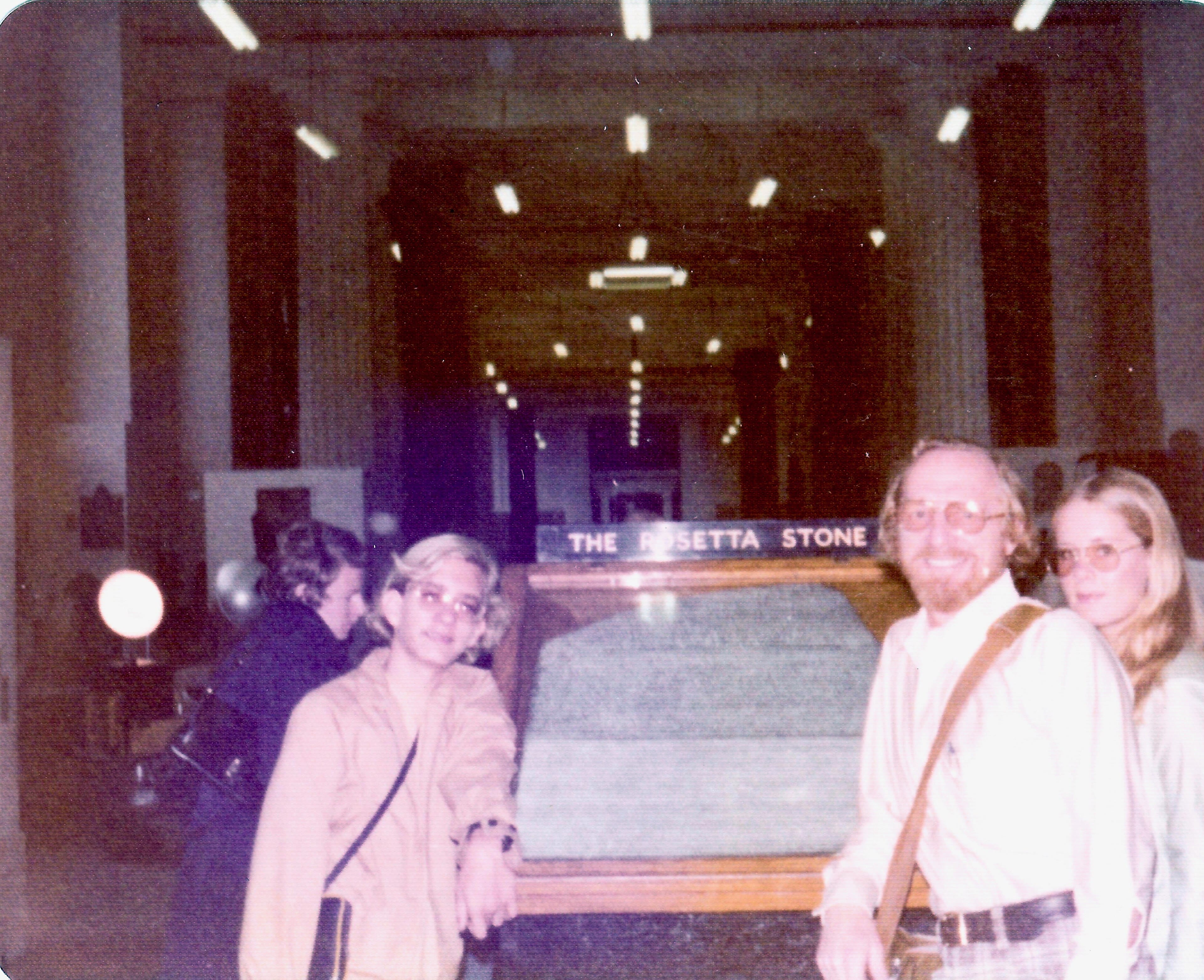
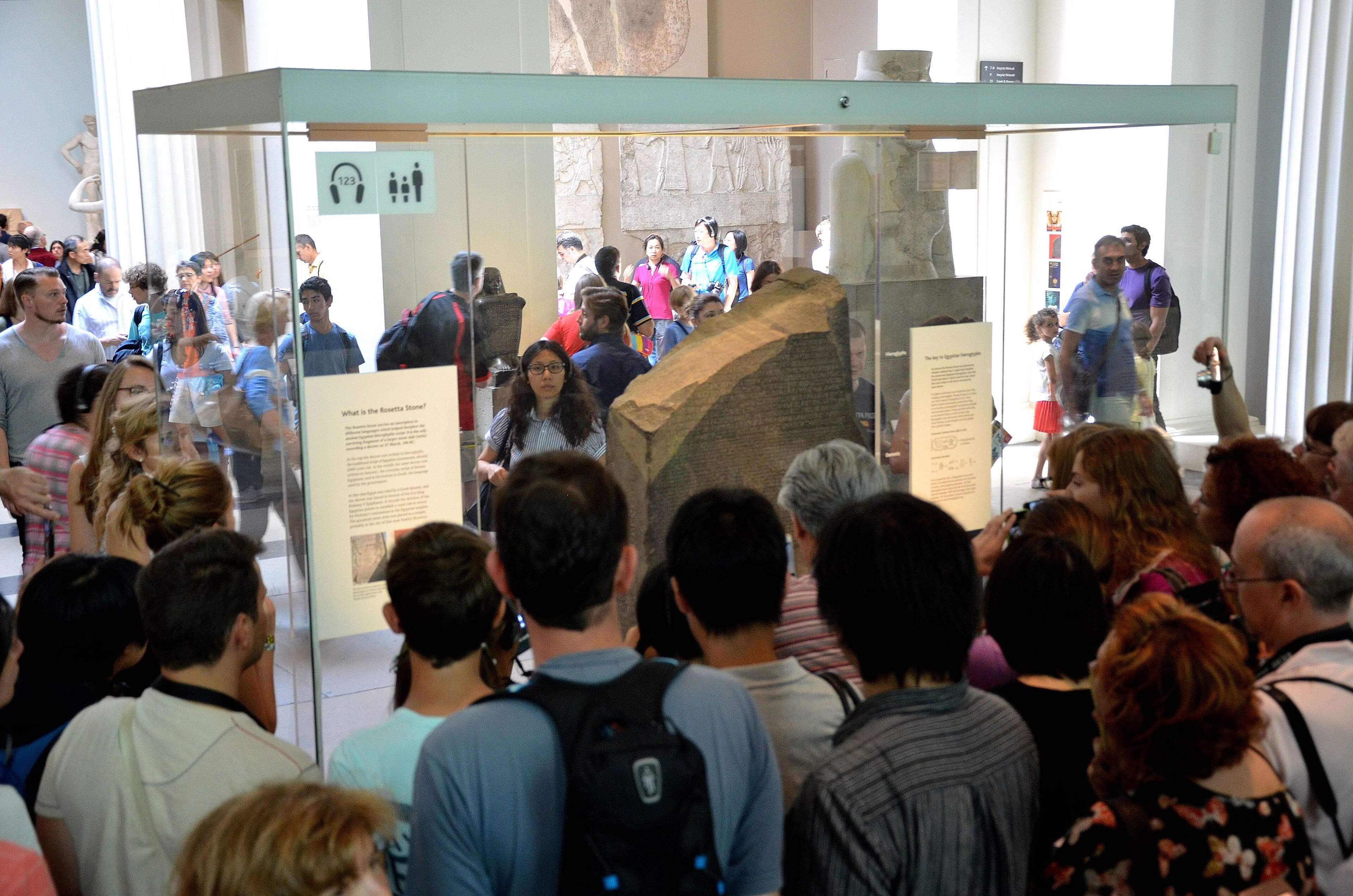
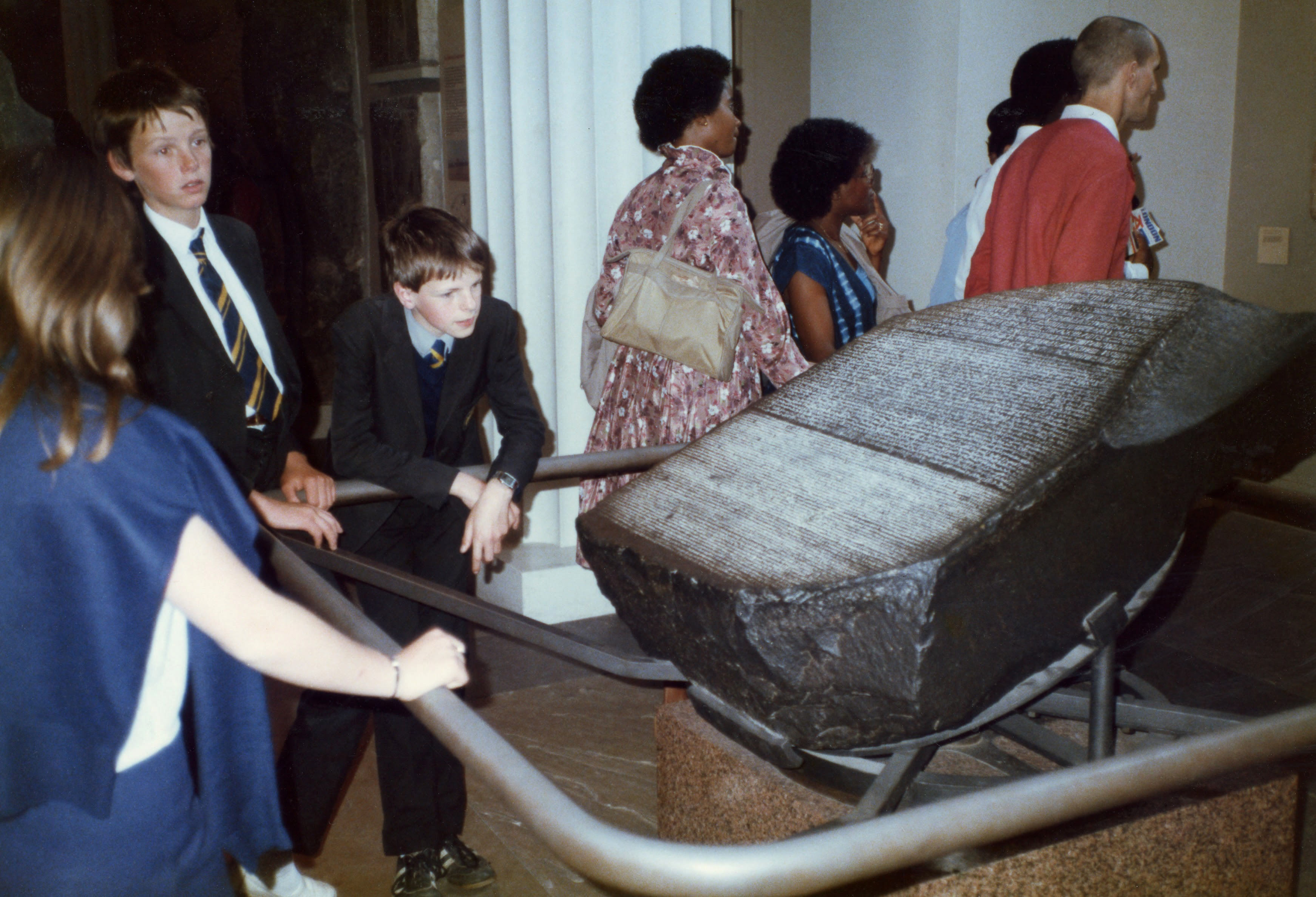
It is only a broken slab of black granodiorite, and it may be the most consequential stone on Earth. The Rosetta Stone carries one decree in three scripts — hieroglyphs, the everyday Egyptian hand, and Greek — and when scholars finally set them side by side, a silent civilisation learned to speak again: three thousand years of Egyptian writing, unlocked by a stone soldiers found in a fort wall in seventeen ninety-nine. It stands now at the heart of the Egyptian sculpture gallery, pharaohs keeping it company down the long hall — Amenhotep in granite, colossal heads that crossed deserts and seas to be here. The crowd around the glass never quite thins, and I have never begrudged it: stand a moment anyway. Everything in this museum, in a sense, is labelled in languages this stone taught us to read.
See this place in the galleryThe British Museum — the Rosetta Room — our interpretation, created from the reference photographs belowReference photographs — The British Museum — the Rosetta Room · 3 photographs
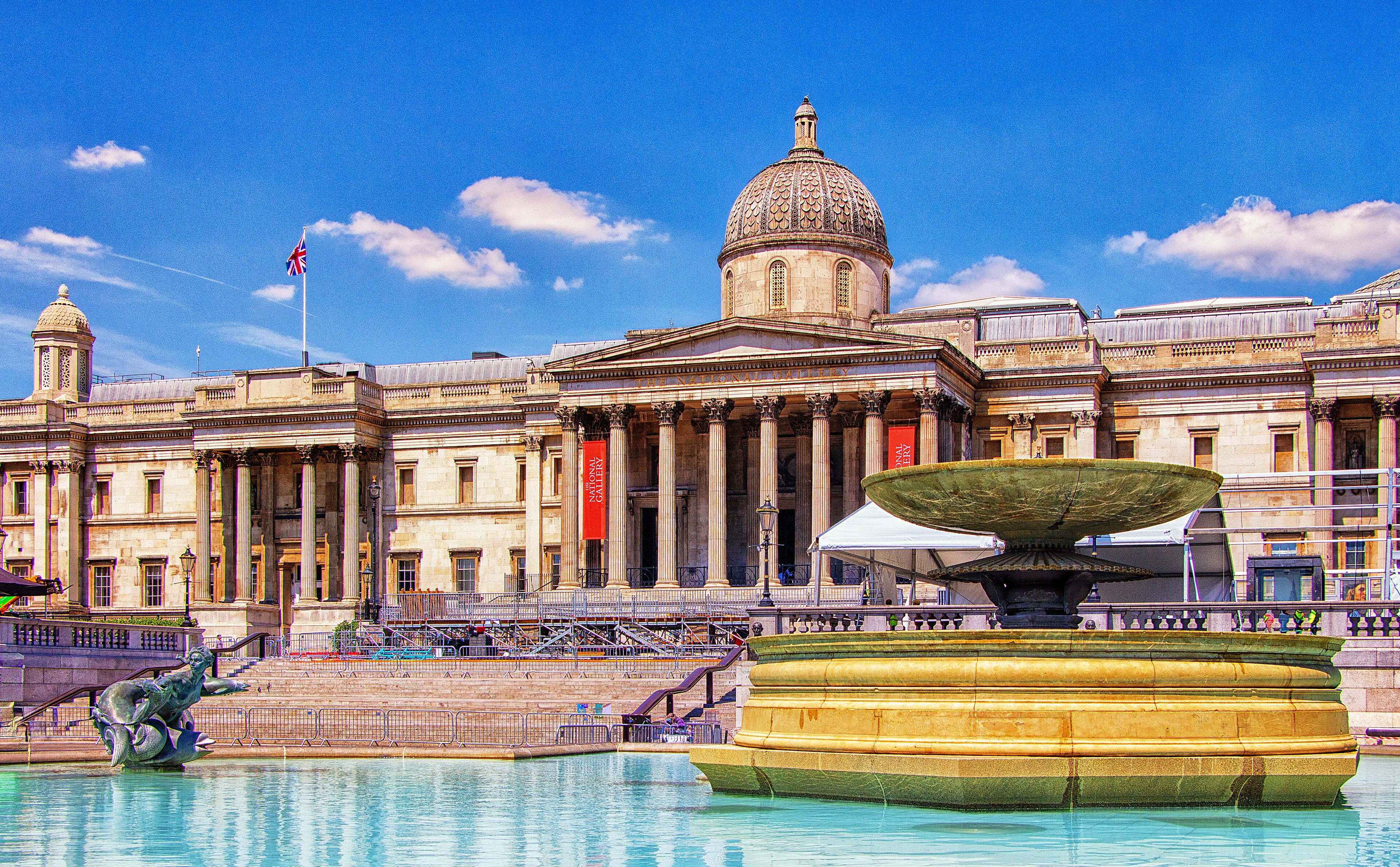
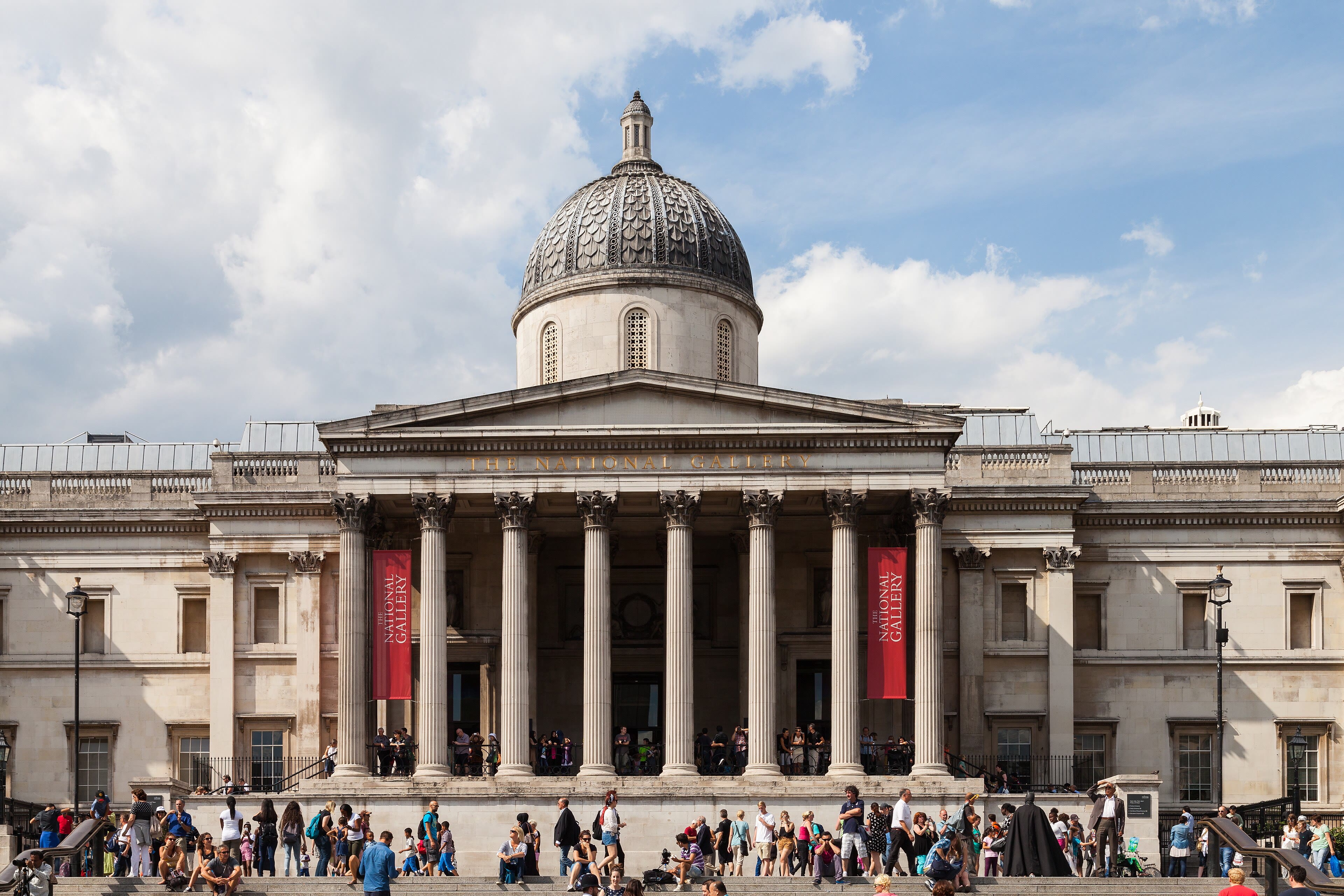
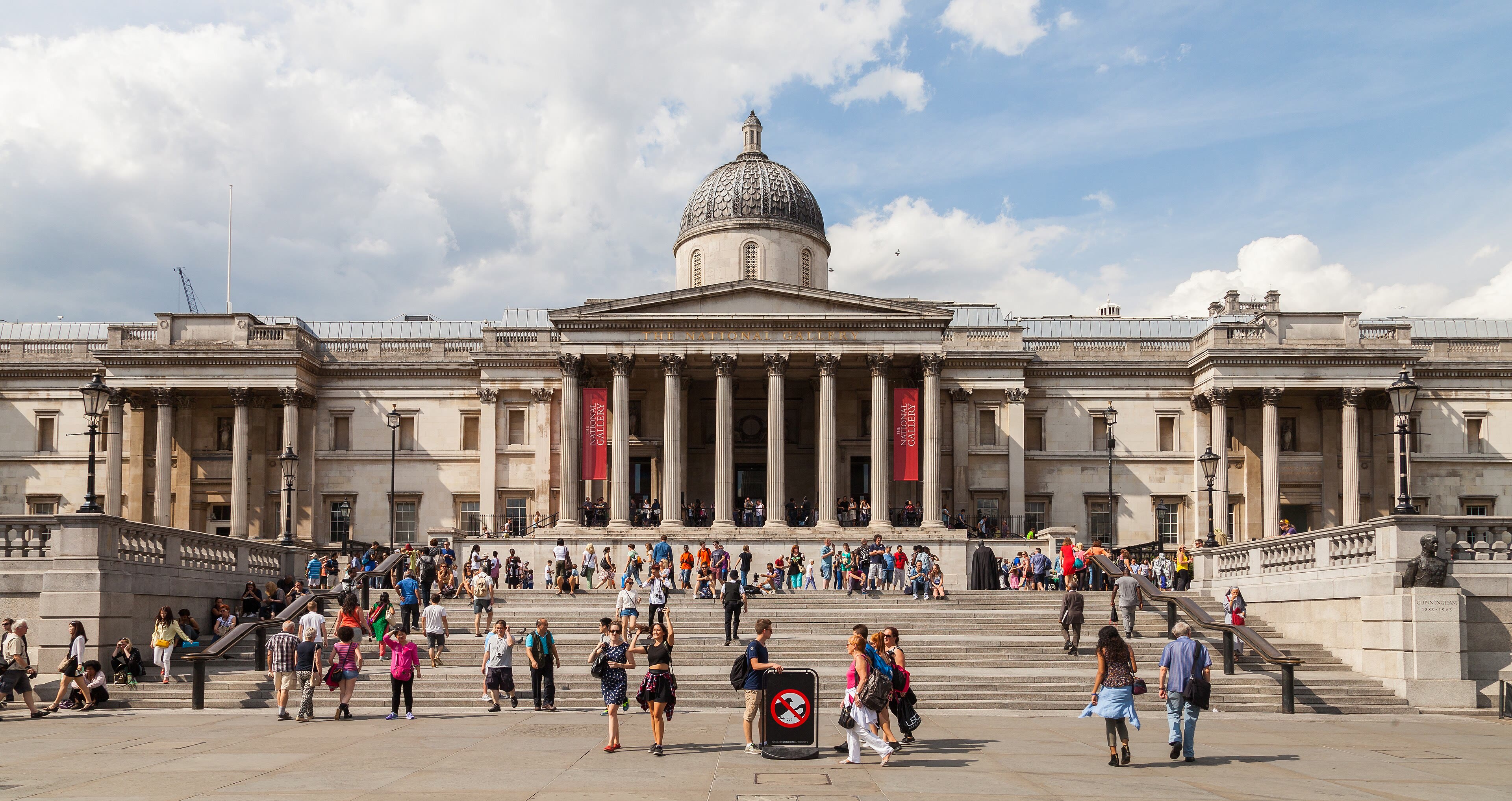
The National Gallery — Trafalgar Square
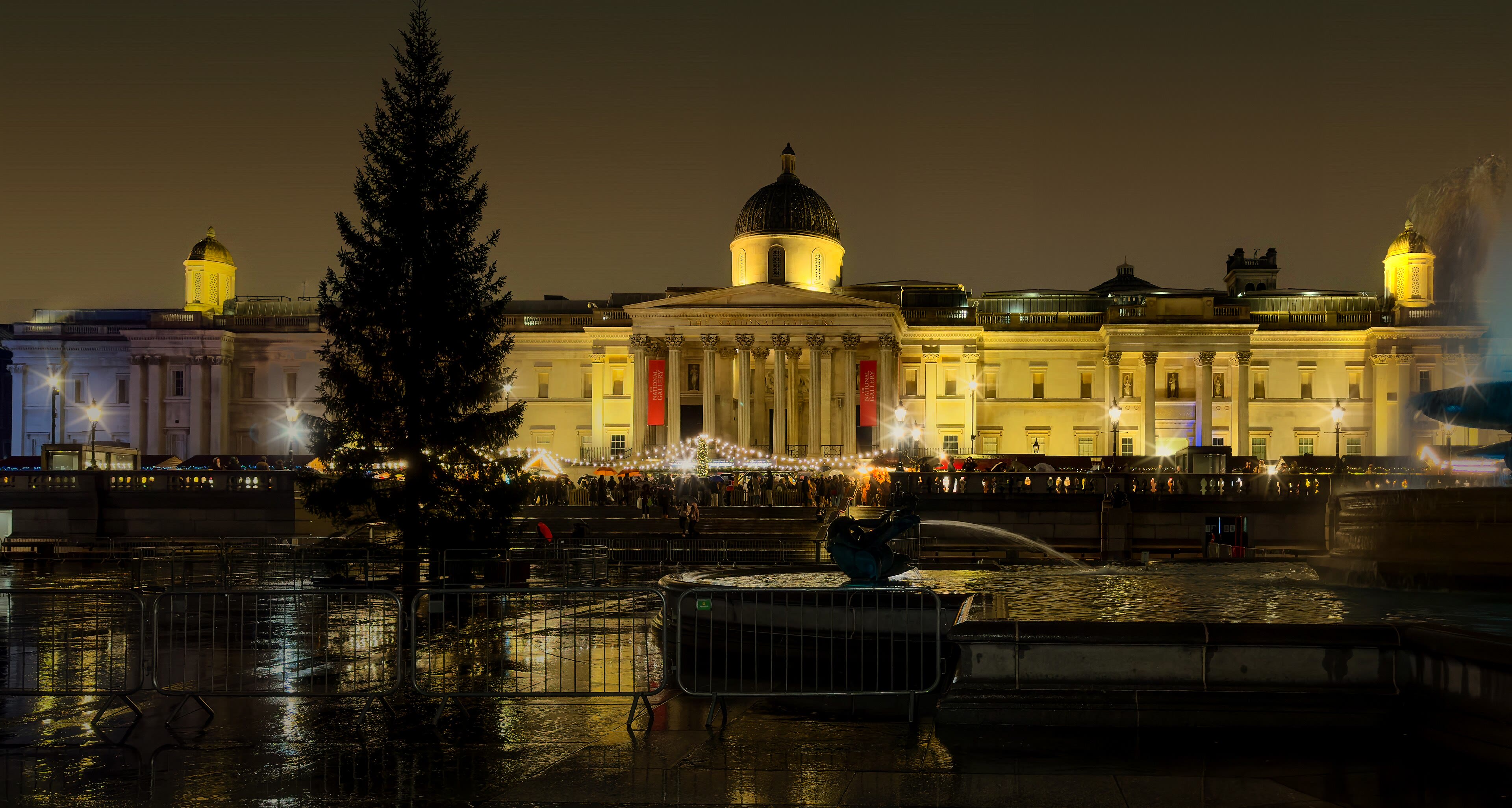
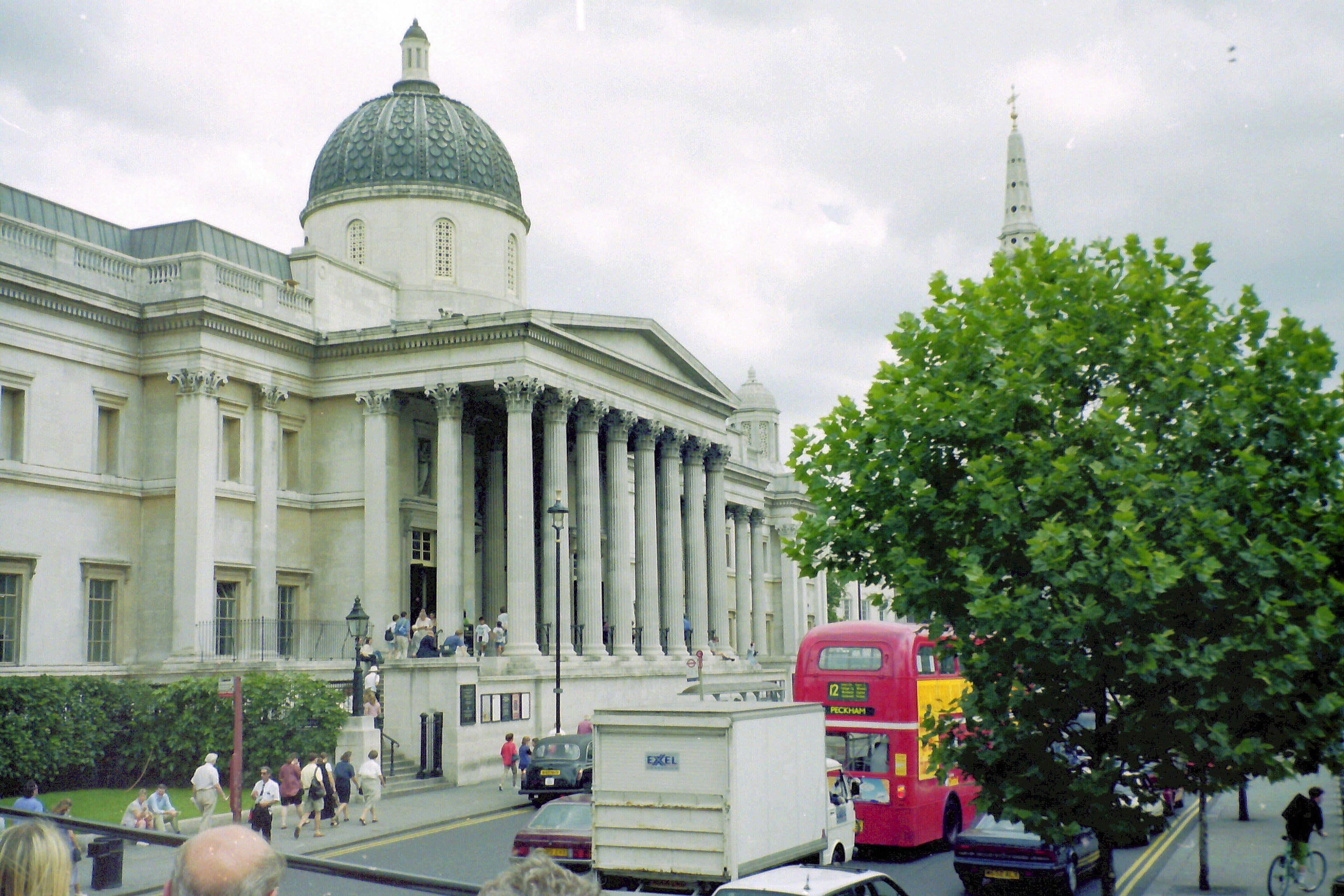
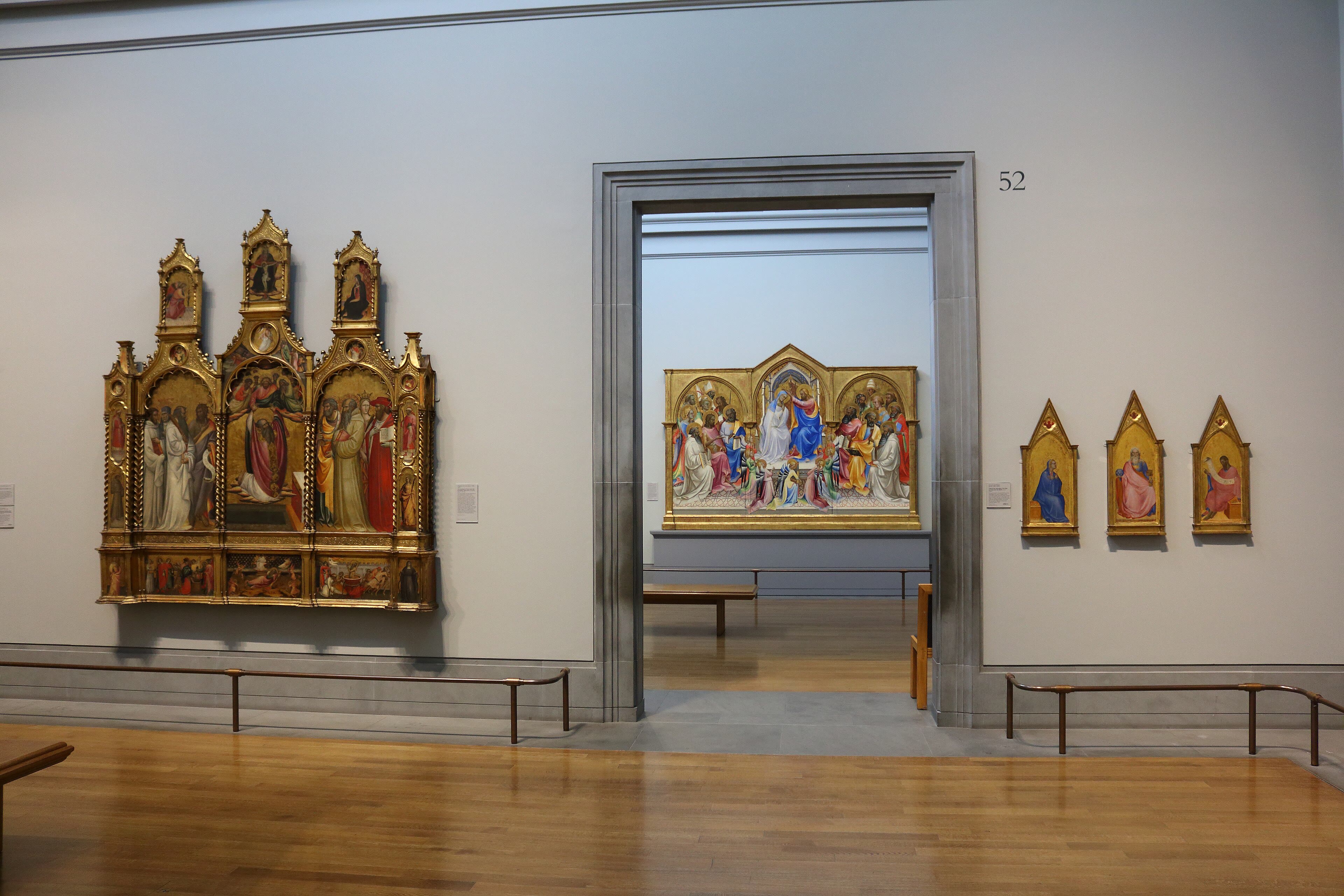
Across the square, past the lions and the fountains, the other London treasure-house keeps a different promise: not the world's objects, but its paintings — seven hundred years of European painting, free to enter since eighteen twenty-four, and belonging, as the phrase goes, to the whole nation. The portico is modest for what it holds, and I like that: no pyramid, no glass mountain, just steps, columns, and doors that open to everyone. Inside, the collection runs in one great chronological river — from medieval gold ground panels to the Impressionists — so that a single unhurried walk takes you from Duccio to Monet in about an hour, if your feet and your feelings allow. Mine never quite do. We will take two rooms slowly: the grand central hall, and one small room I have loved since I was a student.
See this place in the galleryThe National Gallery — Trafalgar Square — our interpretation, created from the reference photographs belowReference photographs — The National Gallery — Trafalgar Square · 3 photographs
The National Gallery — the Grand Rooms
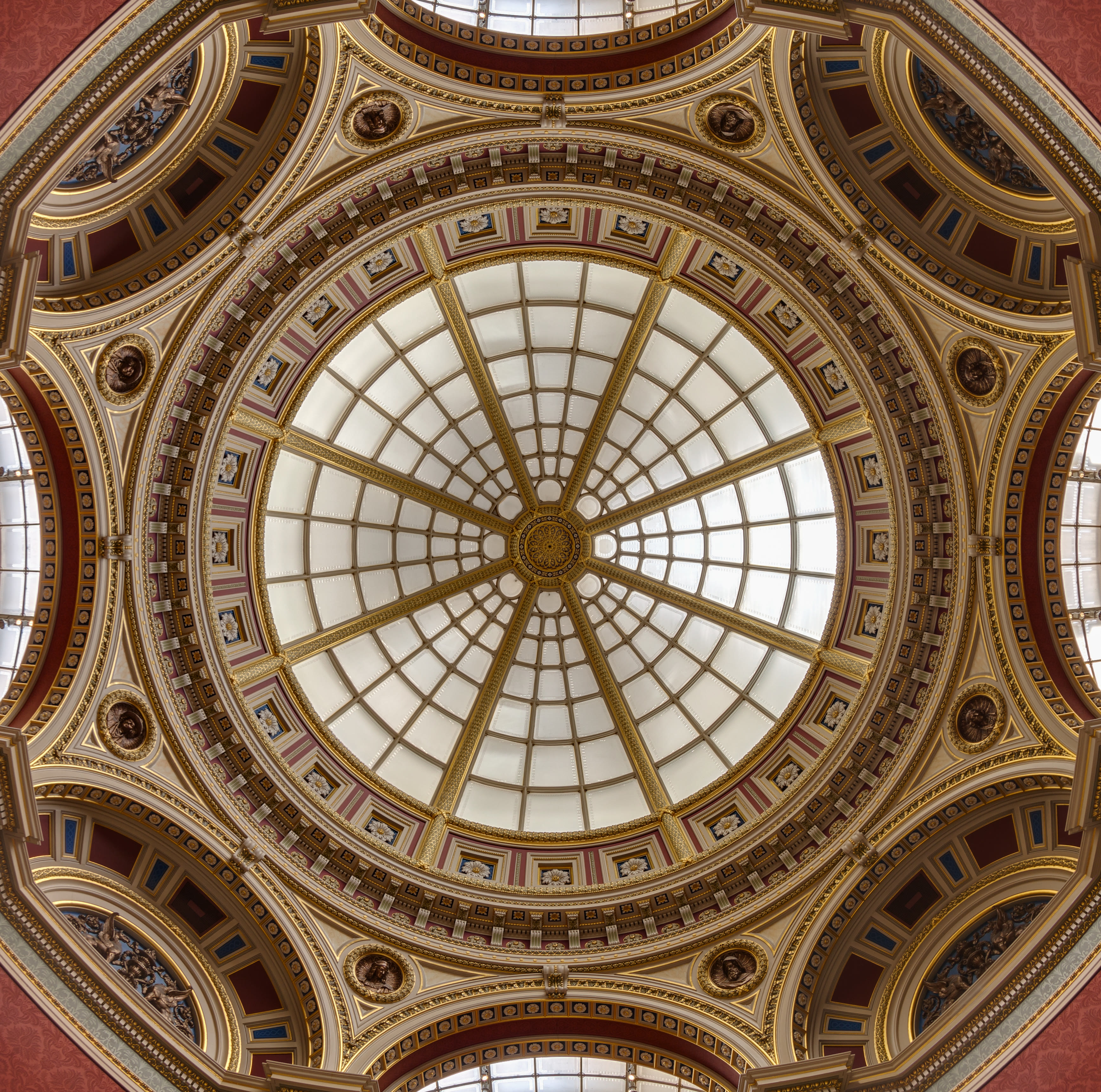
The central rooms of the National Gallery are hung the way the nineteenth century believed paintings deserved: deep green and crimson walls, gilt frames shoulder to shoulder, a sky-lit ceiling pouring even light over everything. Here are the Raphaels and the great Venetians, Titian's colour glowing like something lit from inside; here is Leonardo's Virgin of the Rocks, all shadow and blue distance; and in the Dutch rooms nearby, Rembrandt looks out at you with the honesty of a man who painted himself old and meant it. My working years taught me one thing about rooms like this: do not try to see everything. Choose three pictures. Give each of them ten true minutes. A painting you have really looked at stays with you for life — I can still see, with my eyes shut, every canvas I first met in this hall.
See this place in the galleryThe National Gallery — the Grand Rooms — our interpretation, created from the reference photographs belowReference photographs — The National Gallery — the Grand Rooms · 3 photographs
The National Gallery — the Sunflowers Room
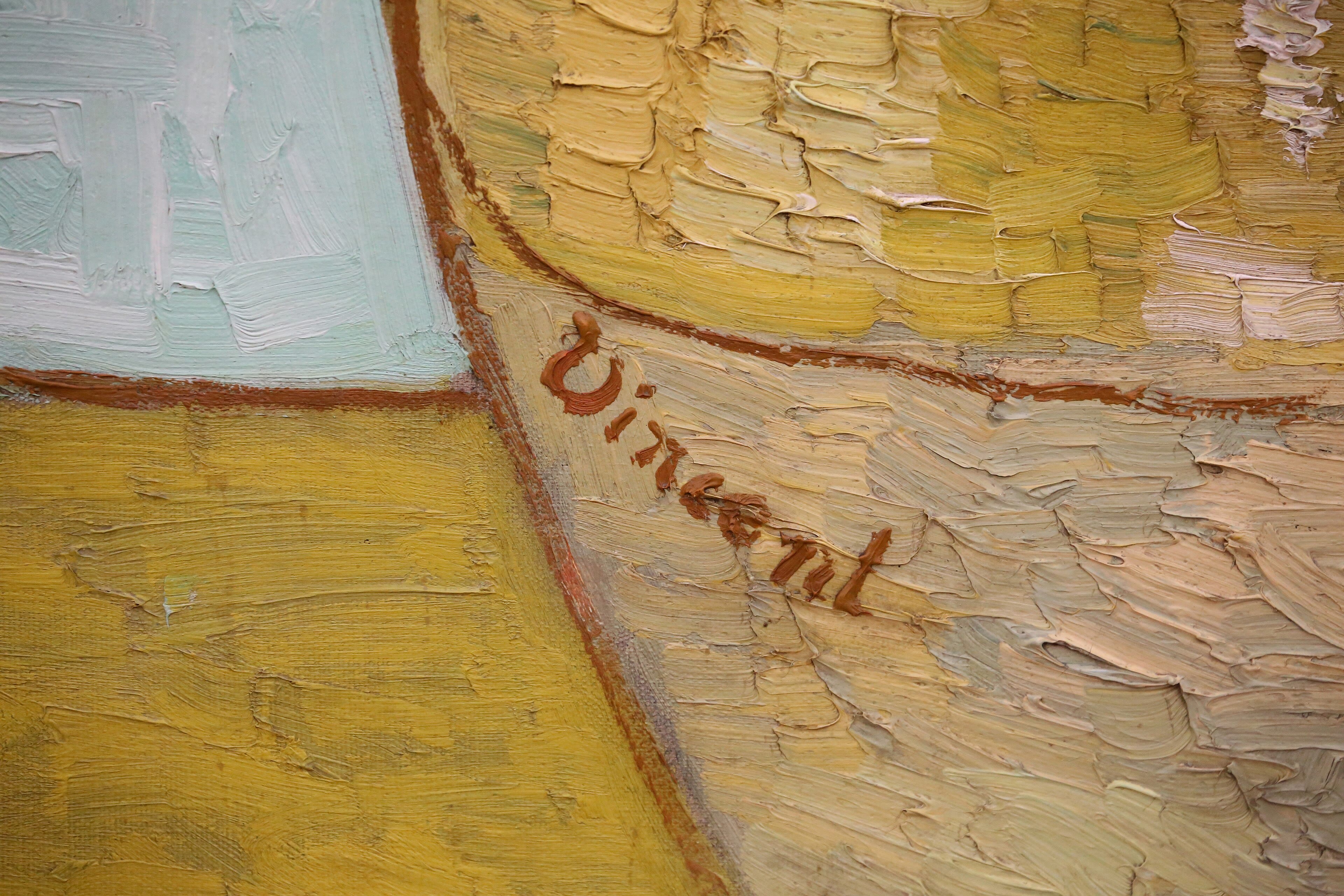
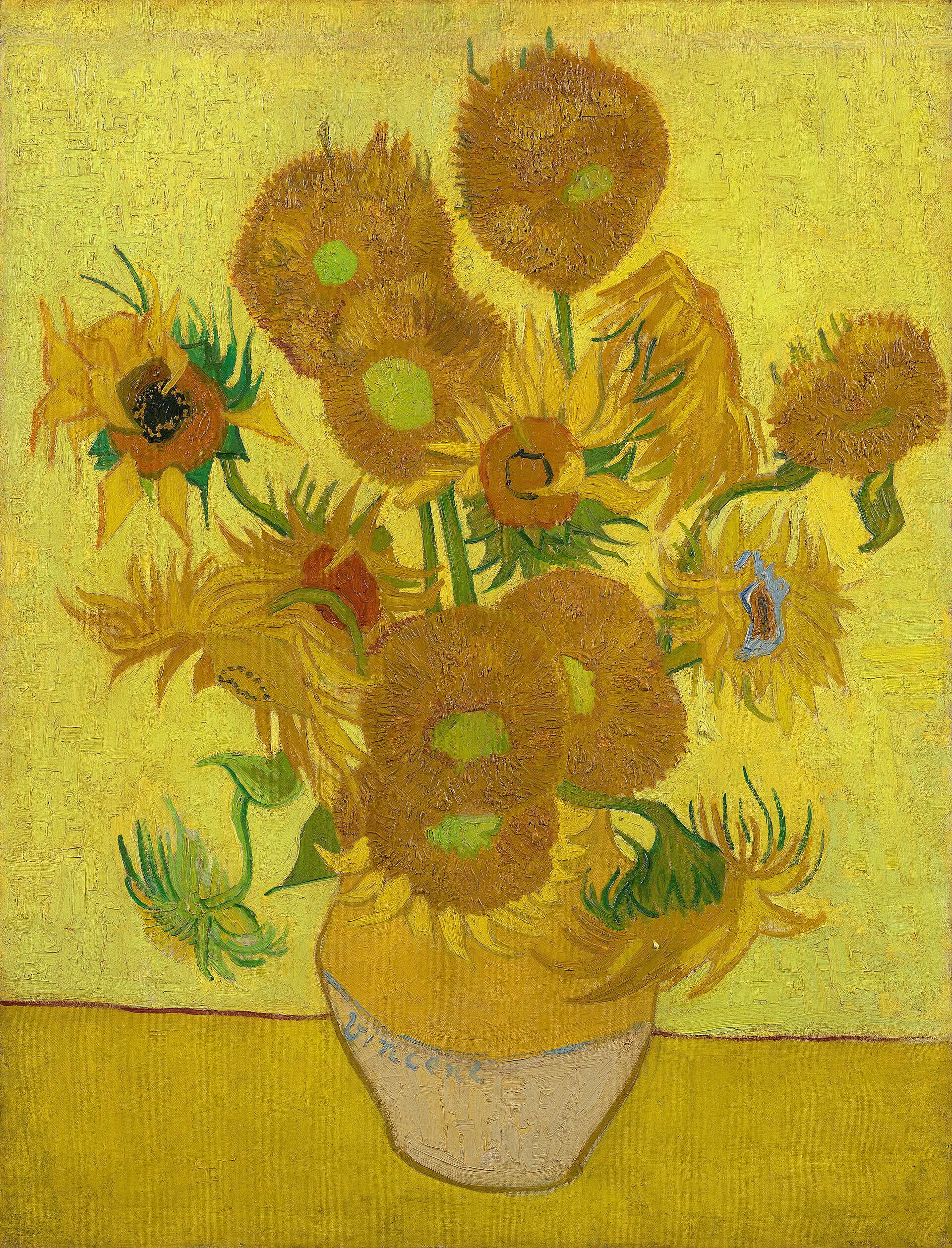
And here is my small room — the one I promised you. In eighteen eighty-eight, in a yellow house in Arles, Vincent van Gogh painted sunflowers in a vase, over and over, trying to catch the exact gold of gratitude: he meant them as a welcome for his friend Gauguin. One of those paintings hangs here, in a quiet room of the National Gallery, and it stops people the way a familiar voice stops you in a crowd. The paint is thick as frosting, the yellows layered on yellows, the whole thing somehow both joyful and aching — which, if we are honest, is what gratitude usually feels like. He sold almost nothing in his lifetime; he could not have imagined this room, this river of people, this hush. Stand here a little longer with me, and then we will cross the Channel. Paris is waiting, and so is the largest museum on Earth.
See this place in the galleryThe National Gallery — the Sunflowers Room — our interpretation, created from the reference photographs belowReference photographs — The National Gallery — the Sunflowers Room · 3 photographs
Chapter Two — Paris
6 scenes · 18 reference photographs
The Louvre — the Pyramid
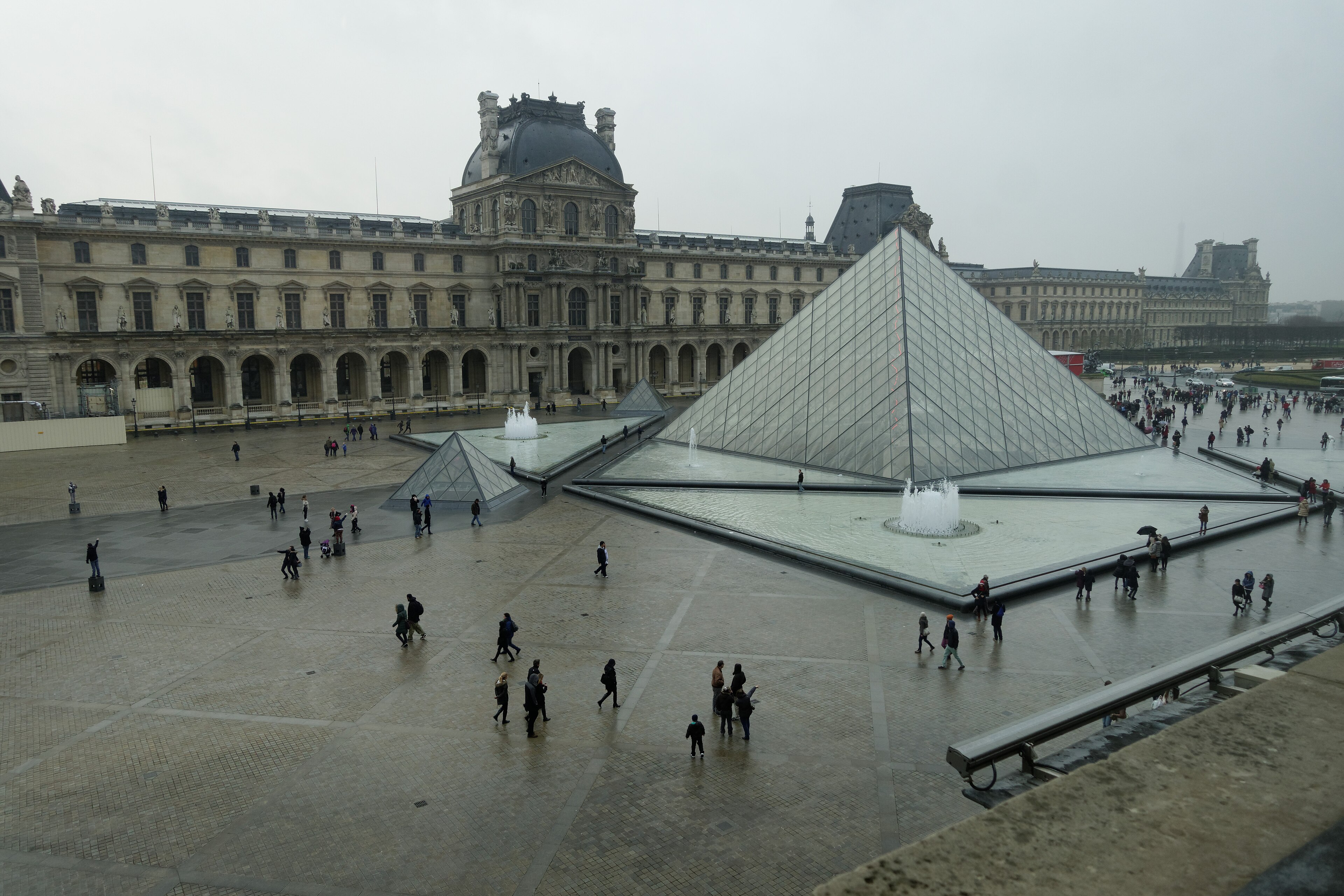
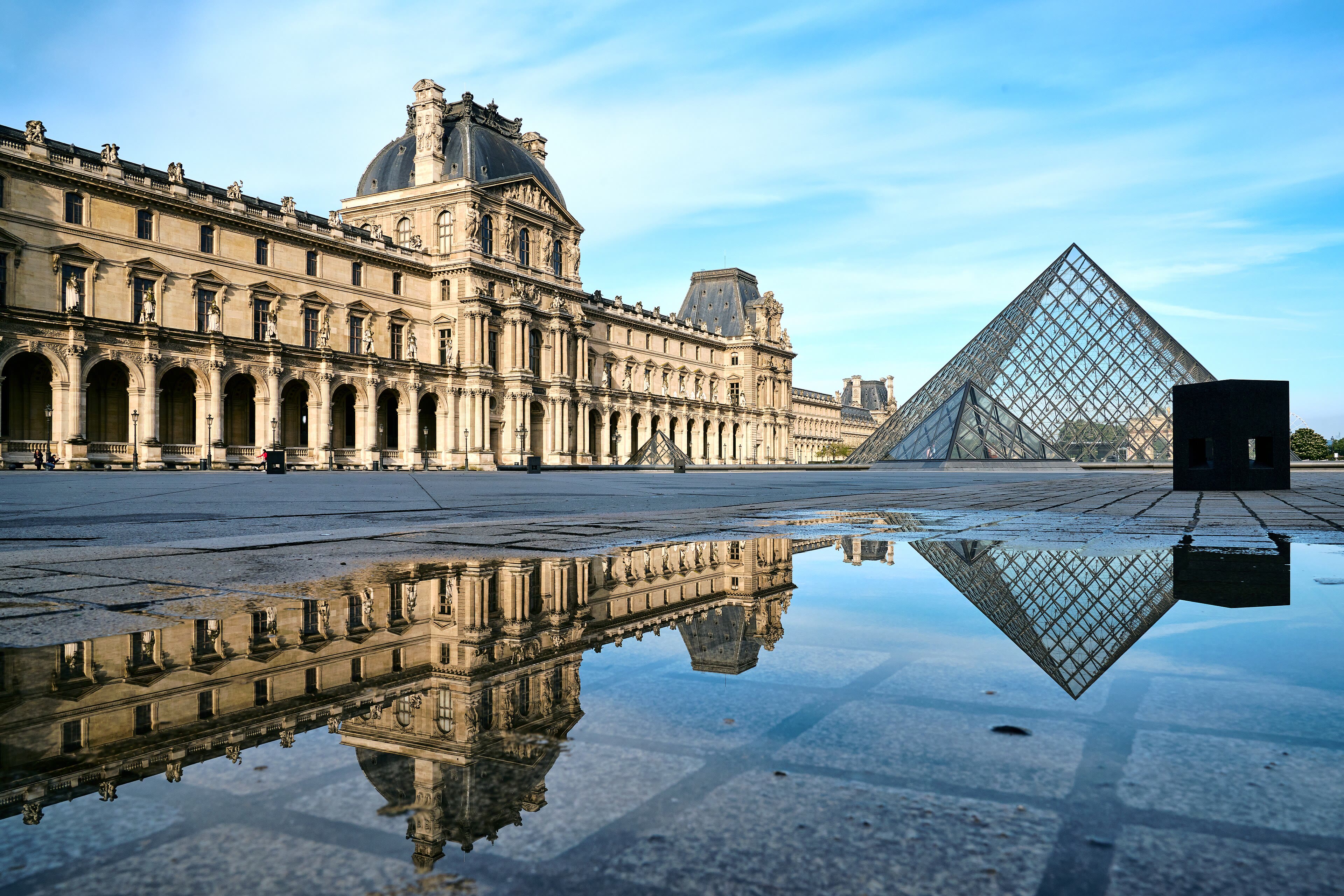
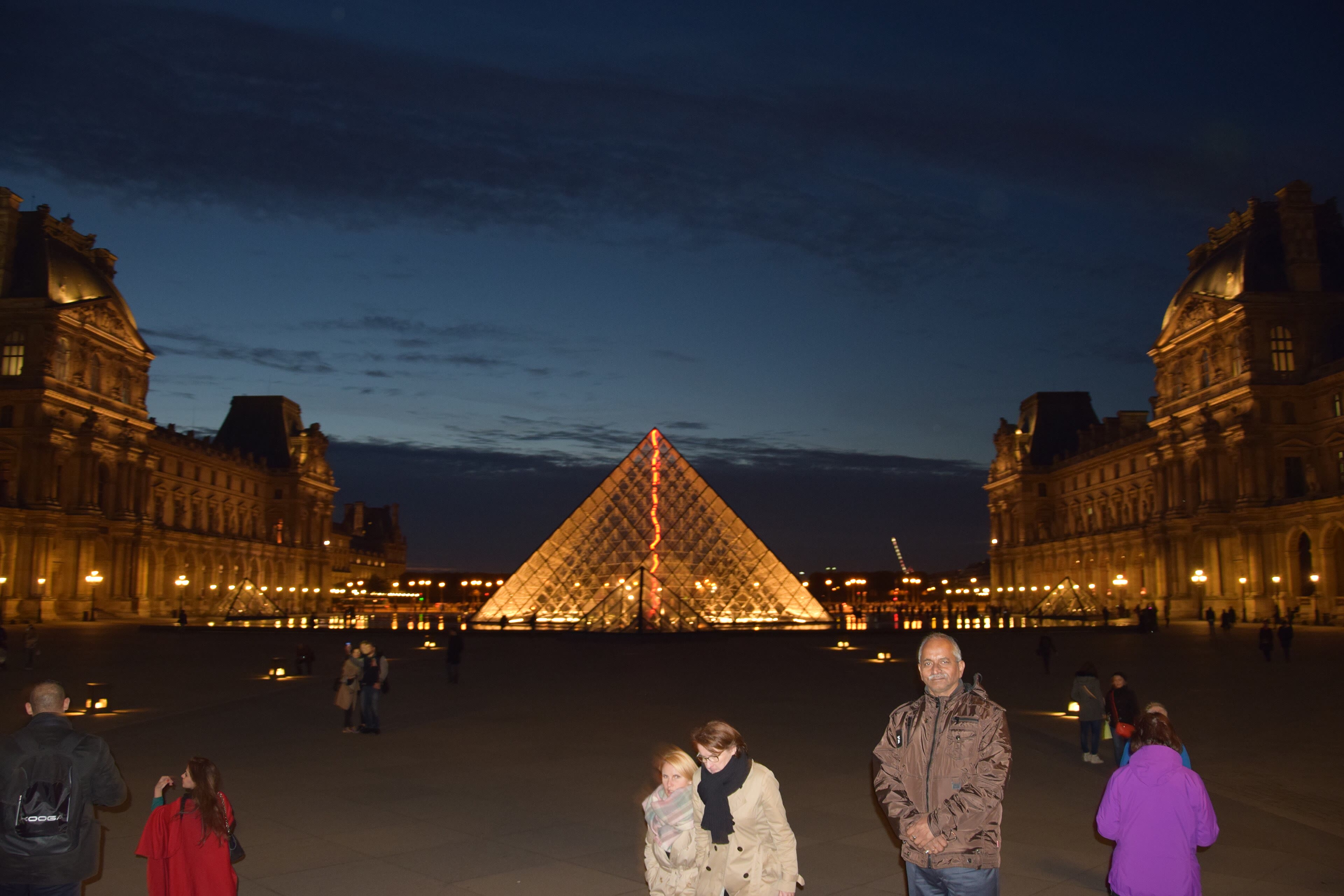
Paris begins, as the Louvre now begins, in a courtyard of kings — and in the middle of it, a pyramid of glass. When I. M. Pei set it here in nineteen eighty-nine, half of Paris was scandalised; now the city photographs it the way it photographs the Eiffel Tower, and queues snake happily through the old Cour Napoléon at opening time. Below the pyramid, the museum pours downward into light: escalators, pale stone, the three wings — Denon, Sully, Richelieu — radiating out under the palace. And a palace it remains: eight hundred years of French kings lived and built here before the Revolution turned it into a museum in seventeen ninety-three. Thirty-five thousand works are on display, and nine million people a year come to see them. Do not let the numbers hurry you. We are going to walk one wing, one gallery, one jewel-box of a room — slowly, the way this palace deserves.
See this place in the galleryThe Louvre — the Pyramid — our interpretation, created from the reference photographs belowReference photographs — The Louvre — the Pyramid · 3 photographs
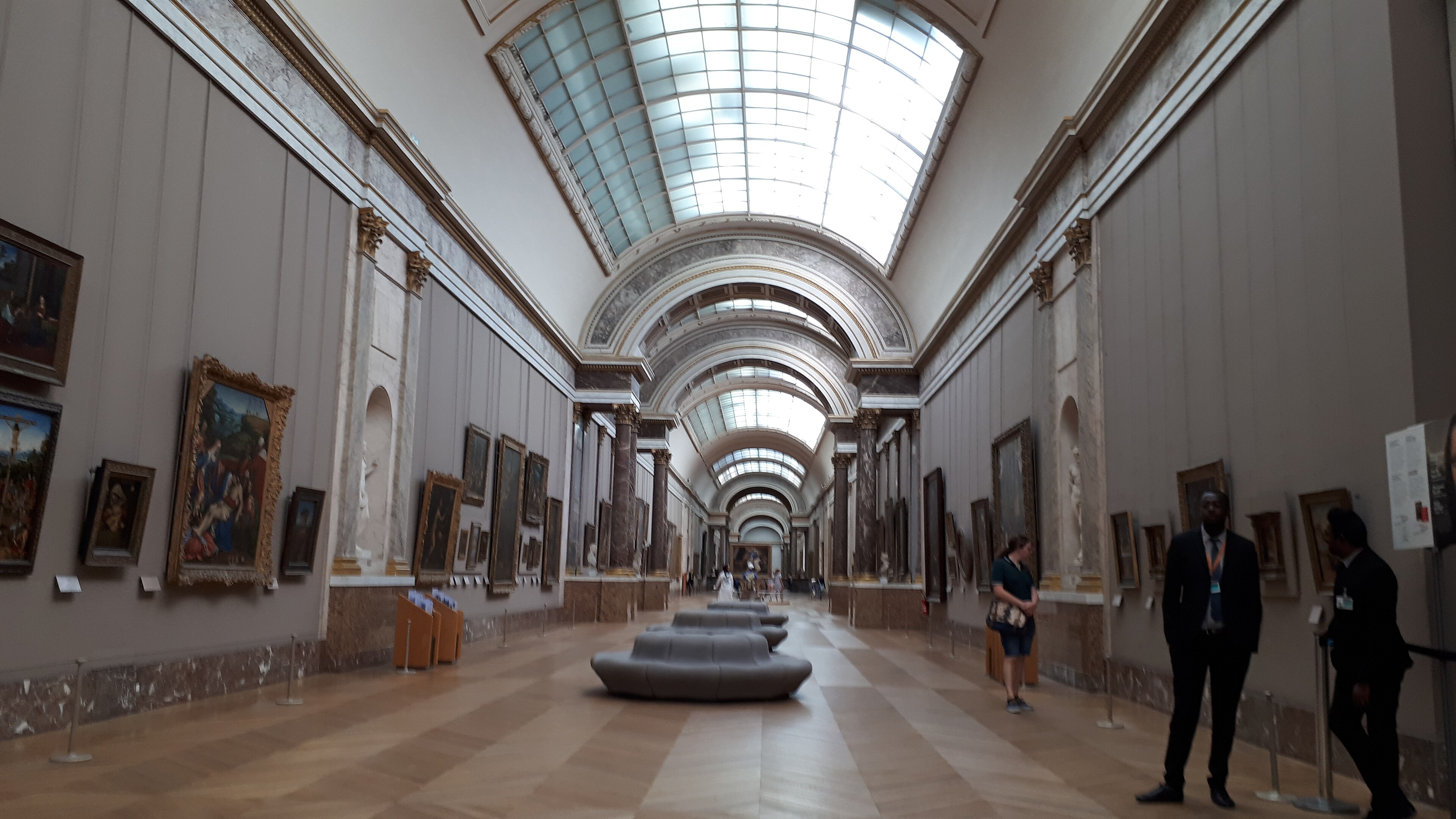
The Louvre — the Denon Gallery
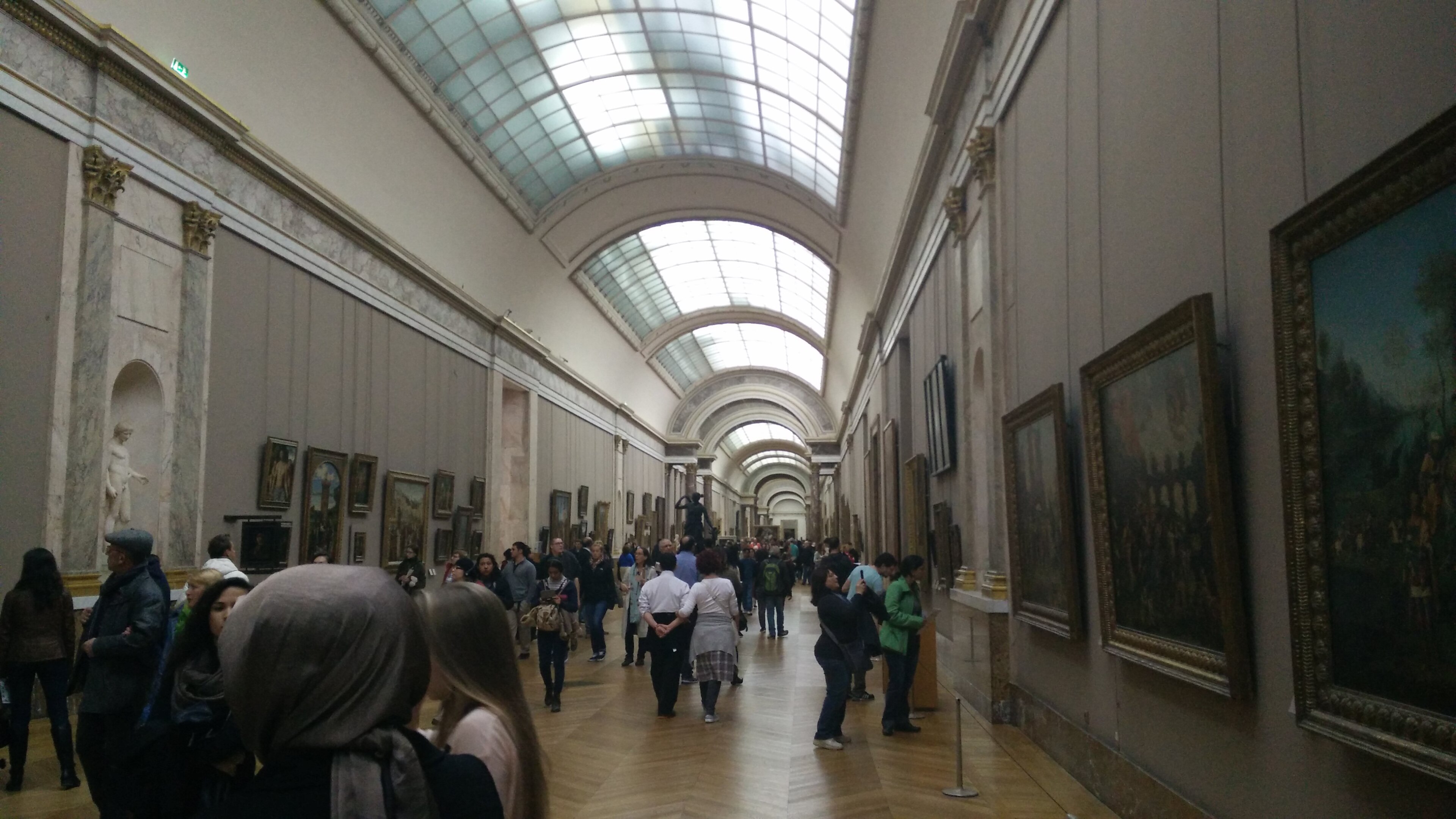
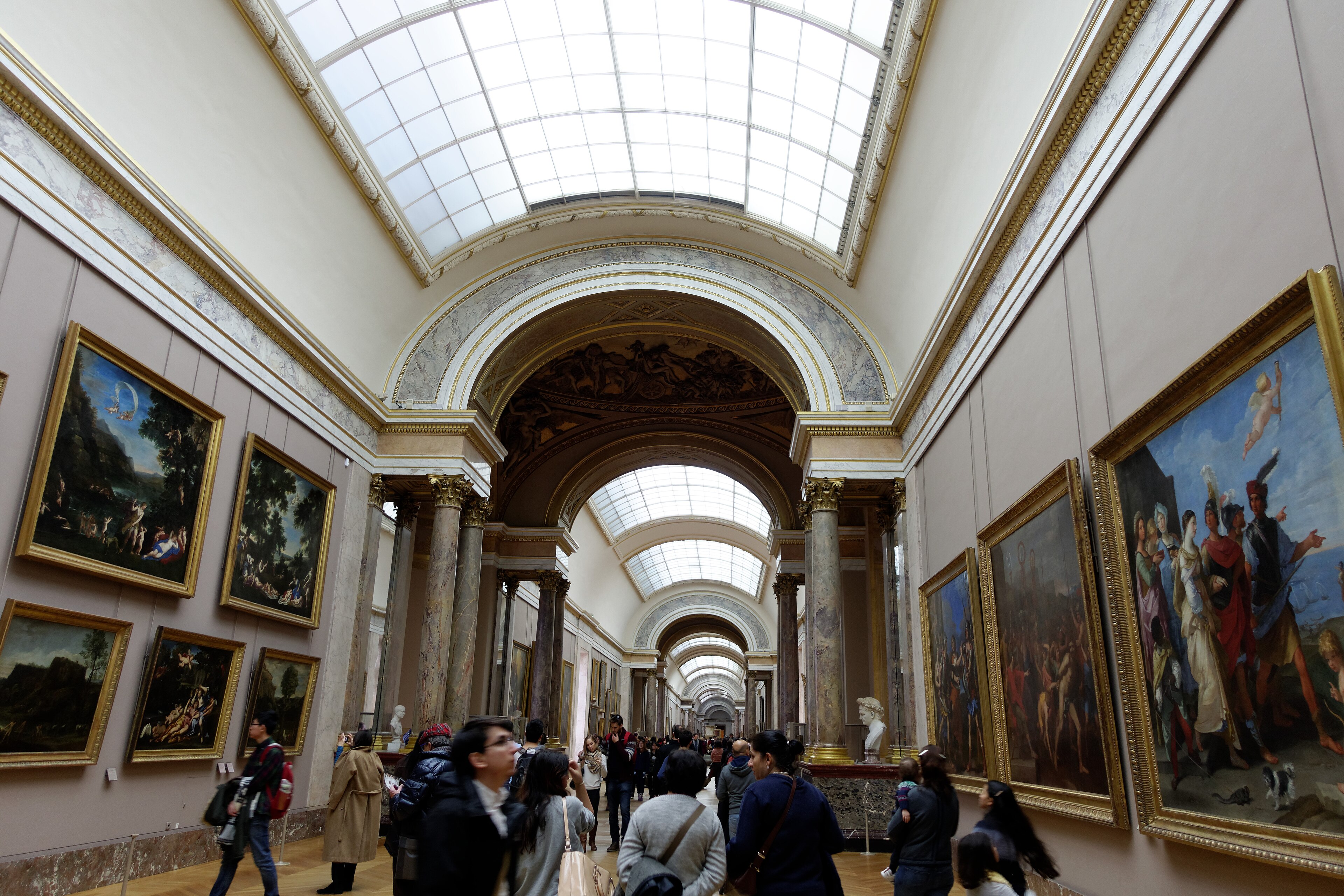
The Denon wing's great gallery of Italian painting is a river of gold and ultramarine half a kilometre long, and at its busiest point the river eddies around one small portrait behind bulletproof glass: a Florentine silk merchant's wife, painted by Leonardo da Vinci in the first years of the fifteen hundreds, whose smile has been argued about for five centuries. The Mona Lisa is smaller than people expect and stranger — the landscape behind her dissolving into blue dream-distance, the gaze following you with unnerving patience. Veronese's enormous Wedding at Cana fills the wall opposite, the largest painting in the Louvre, all feast and silk and music. Stand where you can see both: the intimate and the colossal, the two poles of Renaissance painting, sharing one room. I have stood in this spot for forty years of visits, and the conversation between those two canvases has never once gone quiet.
See this place in the galleryThe Louvre — the Denon Gallery — our interpretation, created from the reference photographs belowReference photographs — The Louvre — the Denon Gallery · 3 photographs
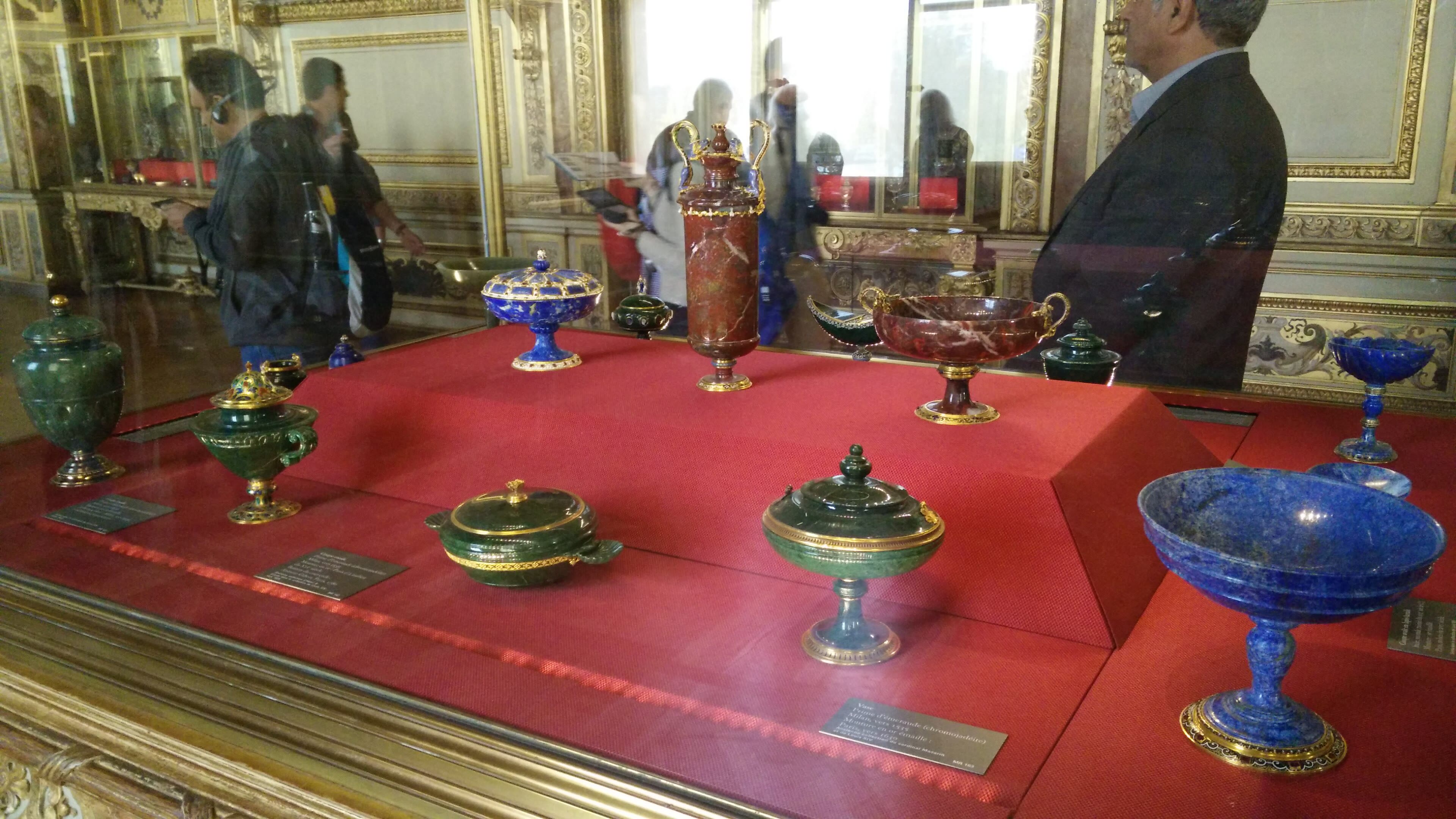
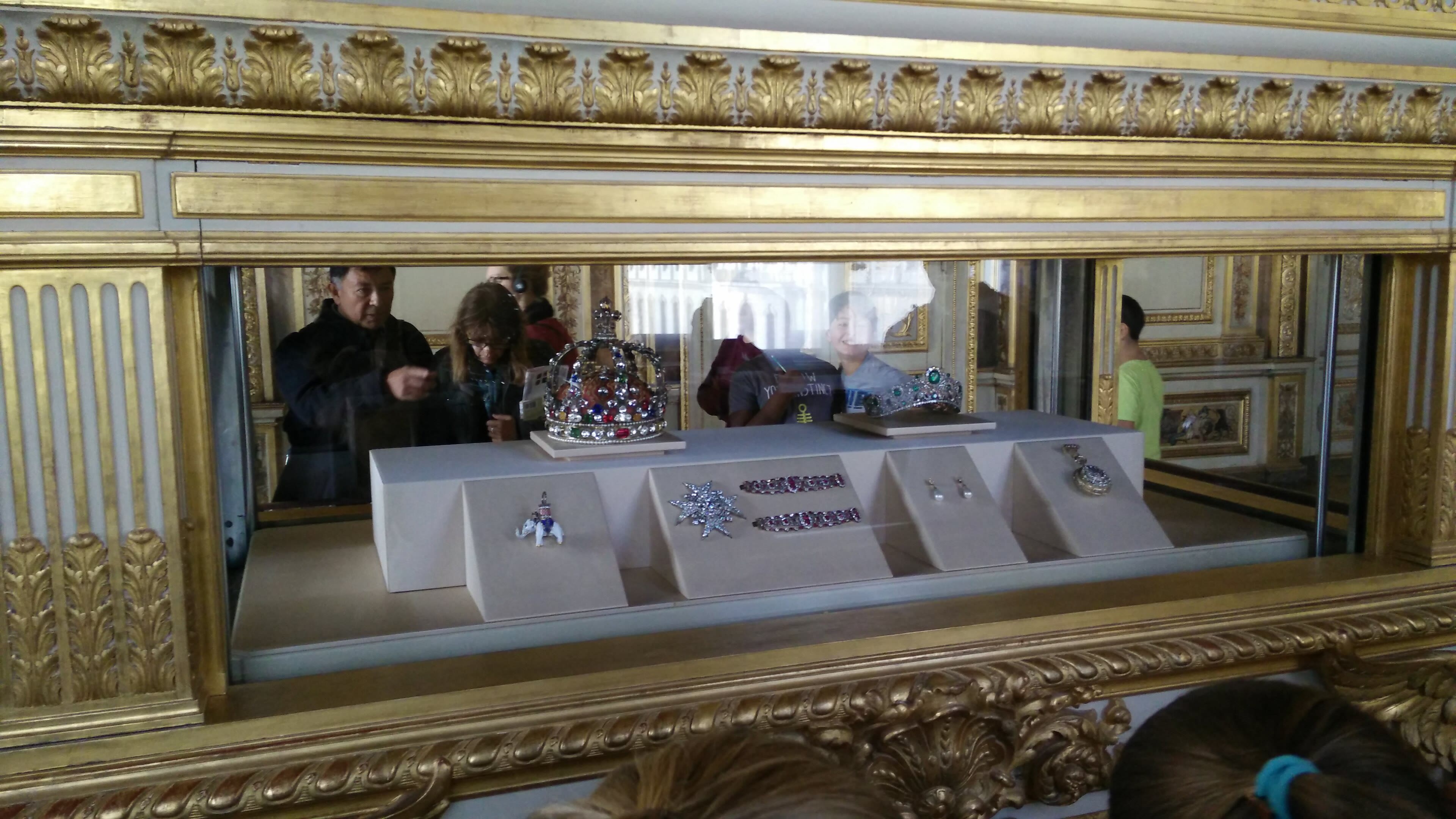
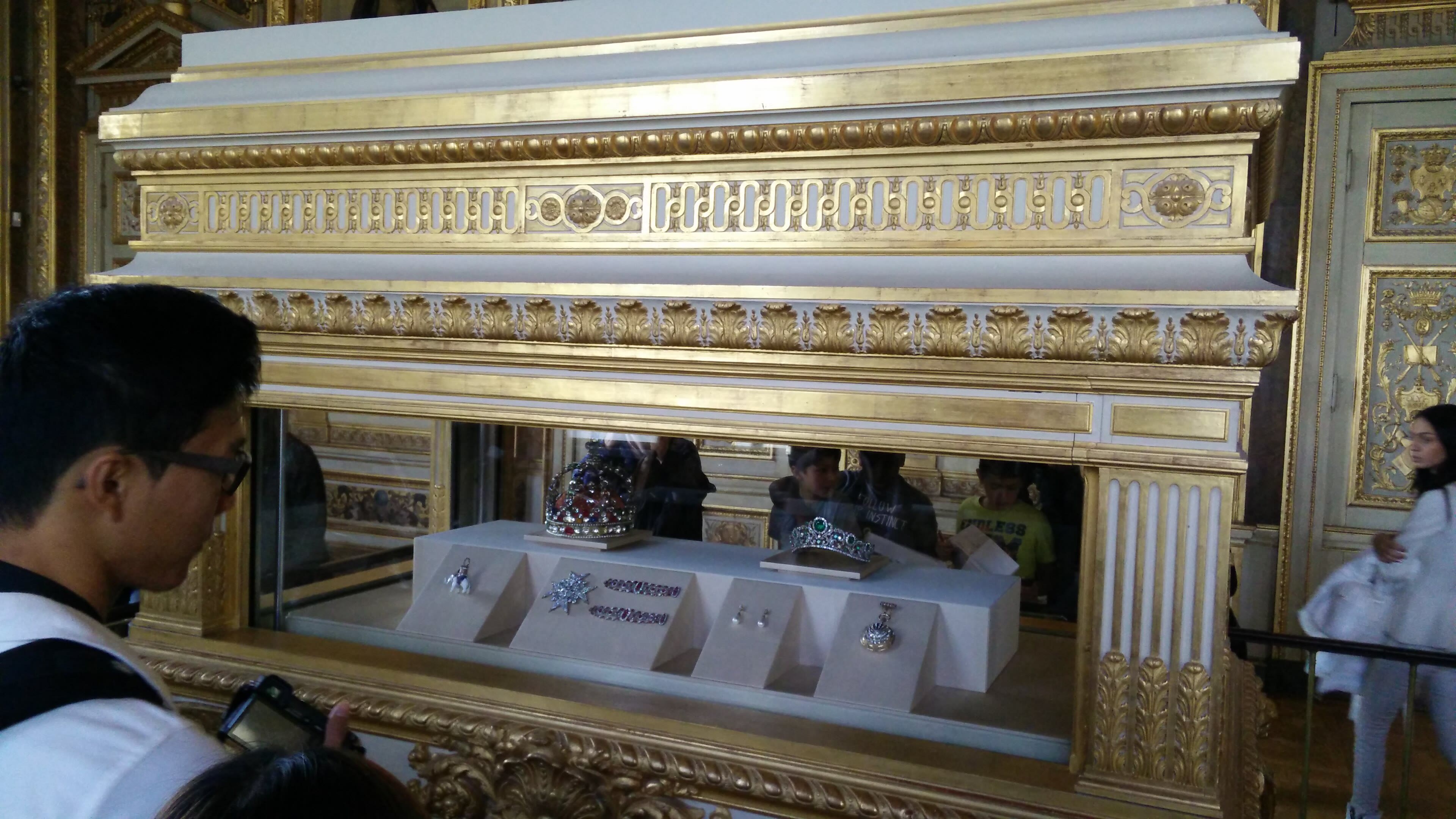
The Louvre — the Galerie d'Apollon
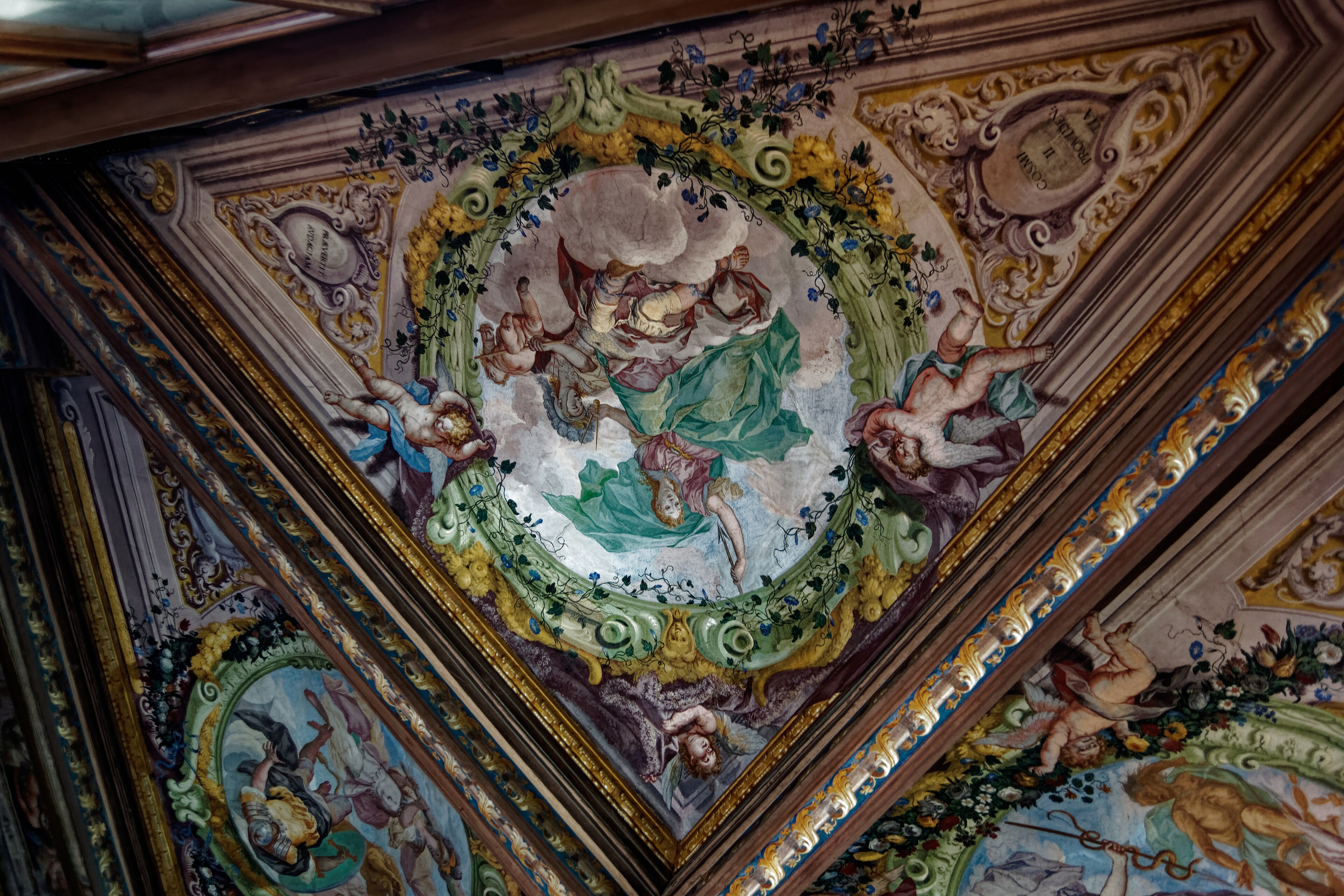
Now the jewel-box. The Galerie d'Apollon is the room the Sun King built to announce himself — all gilded stucco, painted ceiling, and windows on the Seine — and it taught Versailles how to shine; the Hall of Mirrors is this room's pupil. Today it holds the French Crown Jewels, and the cases along the nave glitter like a frozen fireworks show: the Regent diamond, one hundred and forty carats, worn by kings and once by an emperor's bride; the Sancy; crowns, swords, and a rock-crystal ewer that has survived every revolution the palace around it did not. Delacroix painted the ceiling's centre in eighteen fifty — Apollo slaying the Python, order defeating darkness, which in this room feels less like mythology than housekeeping. Look up, look down, and take the light slowly: some rooms are for learning, but this one is for wonder.
See this place in the galleryThe Louvre — the Galerie d'Apollon — our interpretation, created from the reference photographs belowReference photographs — The Louvre — the Galerie d'Apollon · 3 photographs
Musée d'Orsay — the Arrival
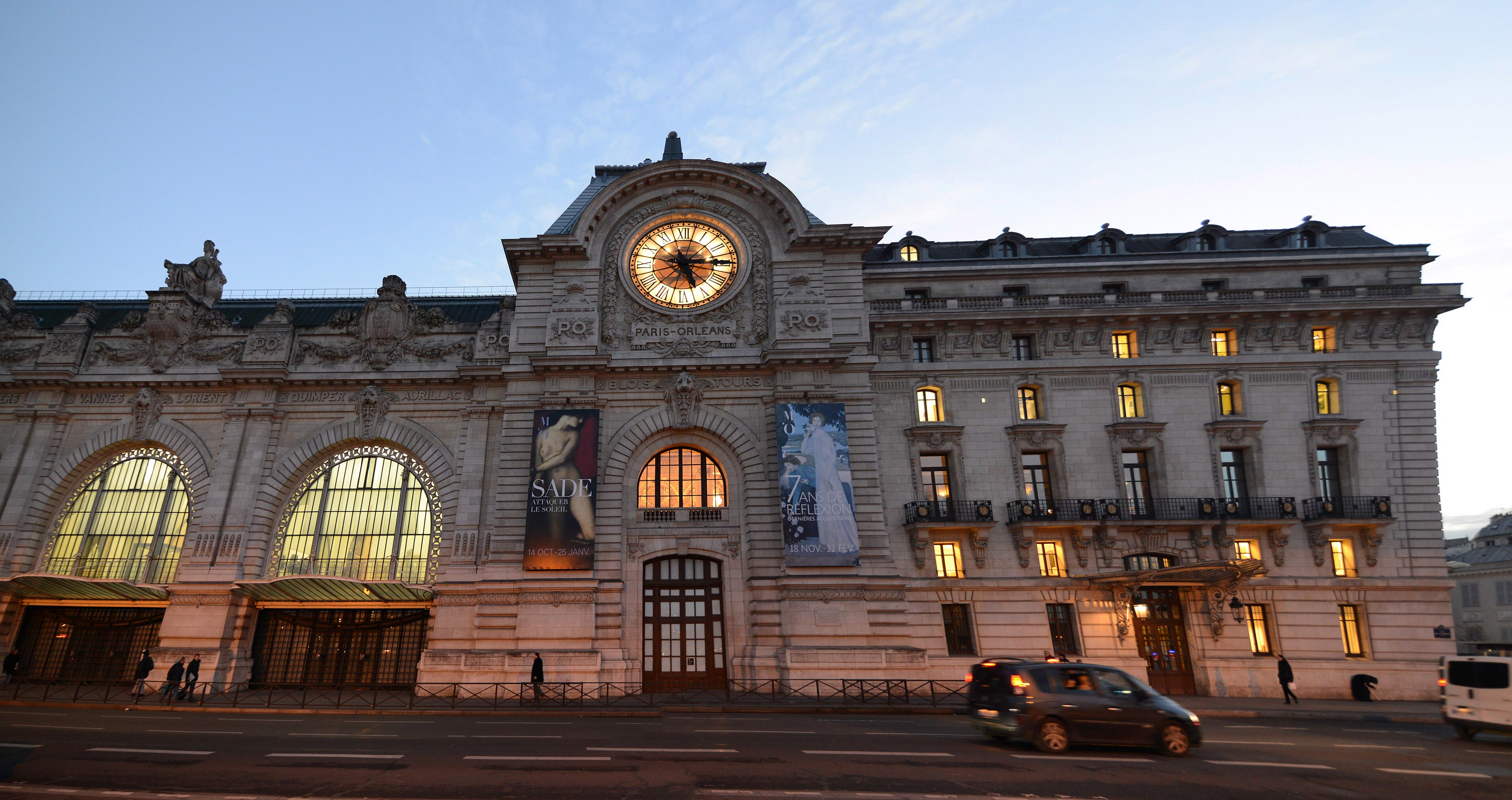
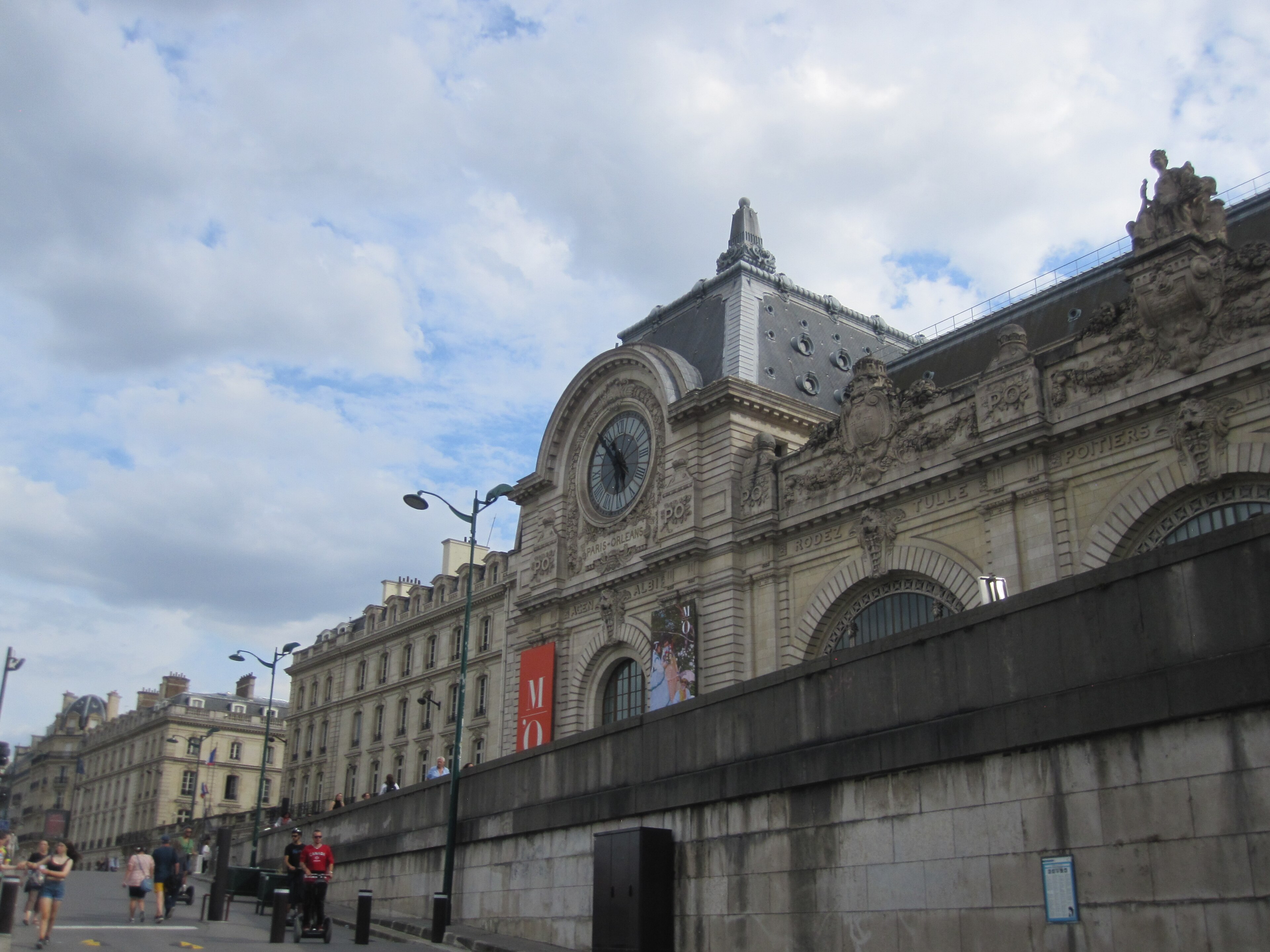
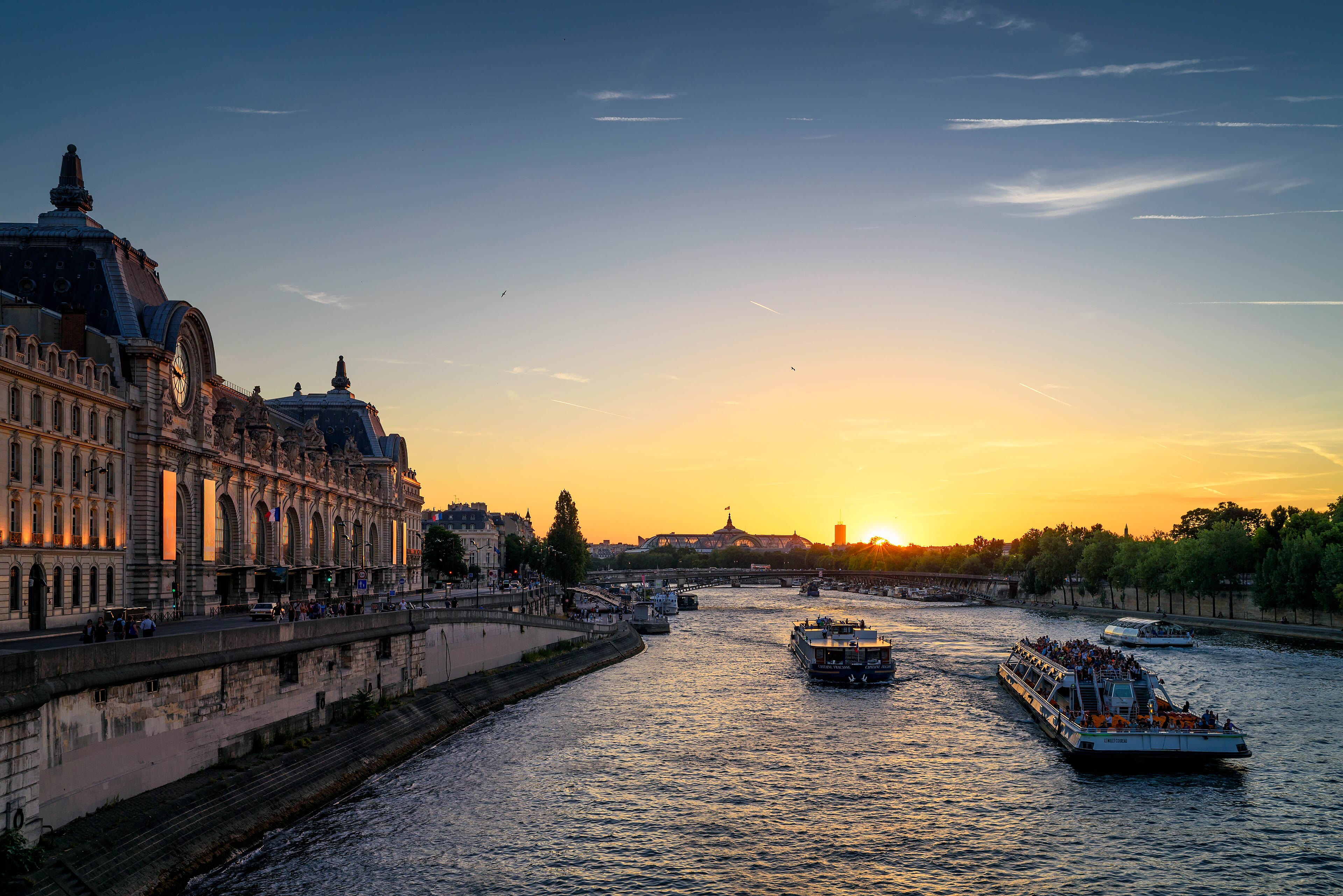
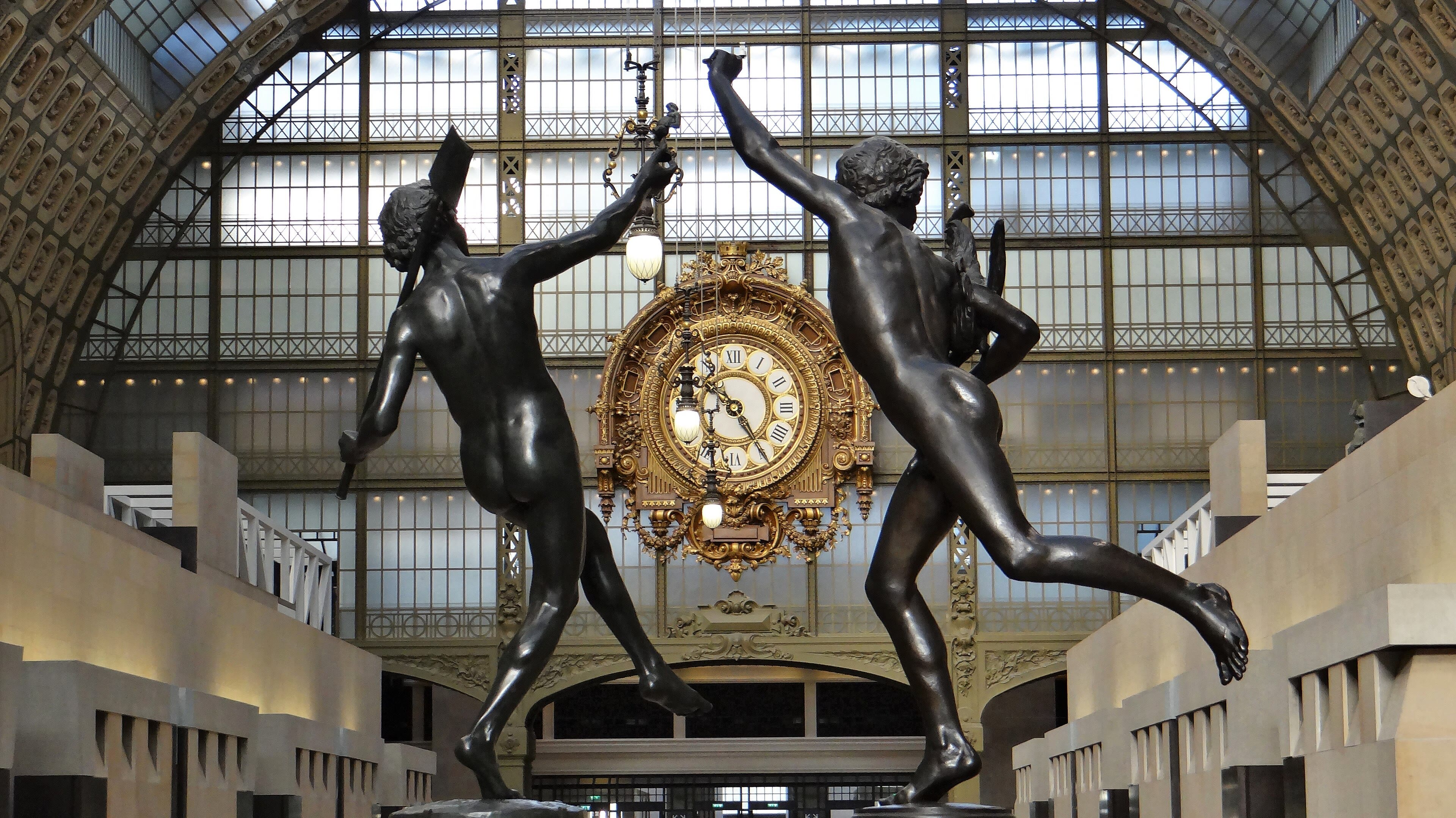
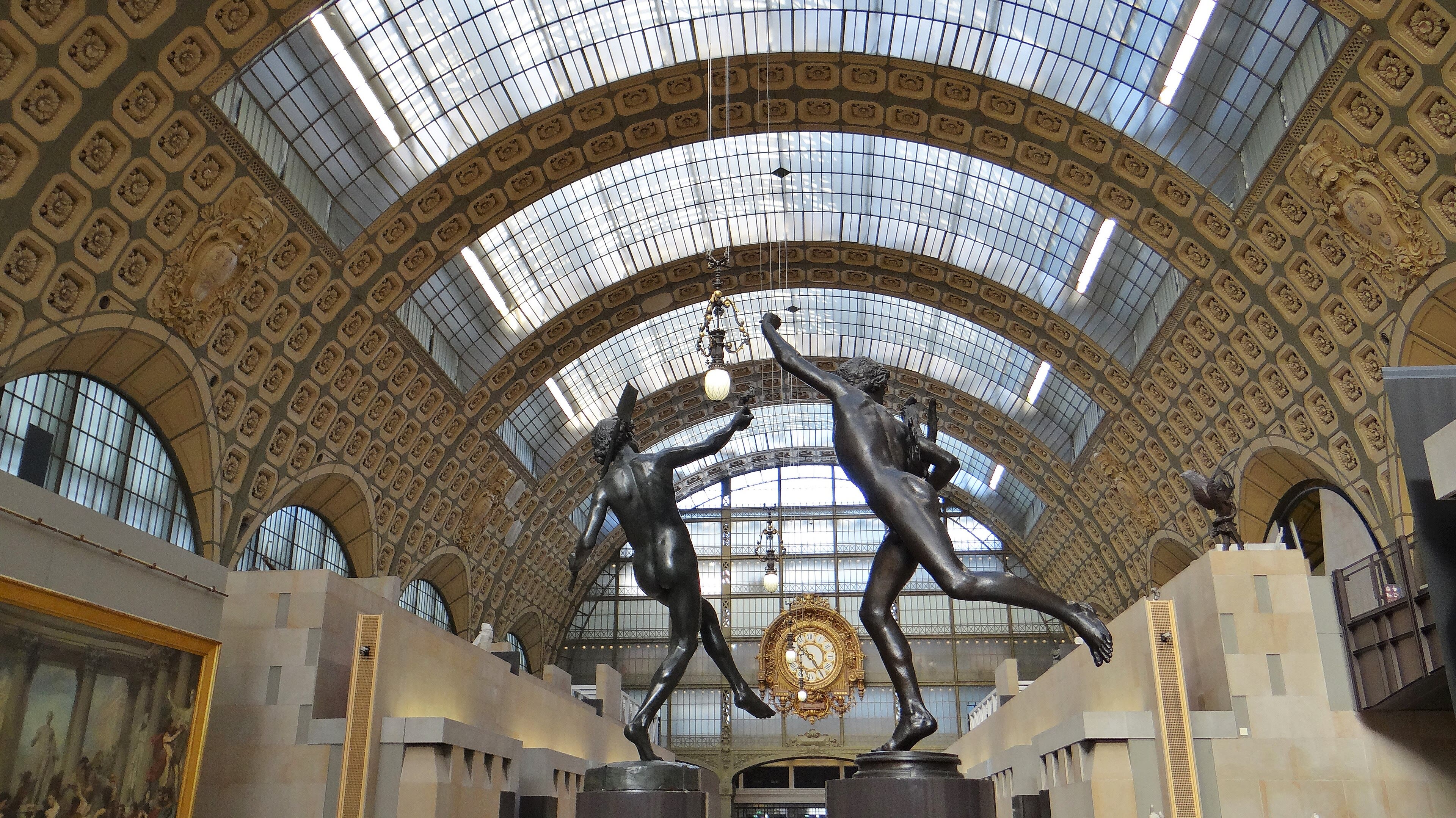
Cross the river now — seven minutes' walk — to the museum that began as a railway station. The Beaux-Arts facade of the Orsay station opened for the World Fair of nineteen hundred, all stone and glass and optimistic iron, and for decades the great trains from the south-west rolled in beneath its barrel vault. By nineteen eighty-six the station had become a museum of the most inventive century in art: eighteen forty-eight to nineteen fourteen — Courbet to Monet to Van Gogh — in a building that is itself the first exhibit. Where the platforms ran, a canyon of light now falls through terraced galleries; the old hotel rooms above keep their gilding; and the station clock still keeps the time over all of it, as if the trains had only just left and the art had moved in with the luggage.
See this place in the galleryMusée d'Orsay — the Arrival — our interpretation, created from the reference photographs belowReference photographs — Musée d'Orsay — the Arrival · 3 photographs
Musée d'Orsay — the Great Clock
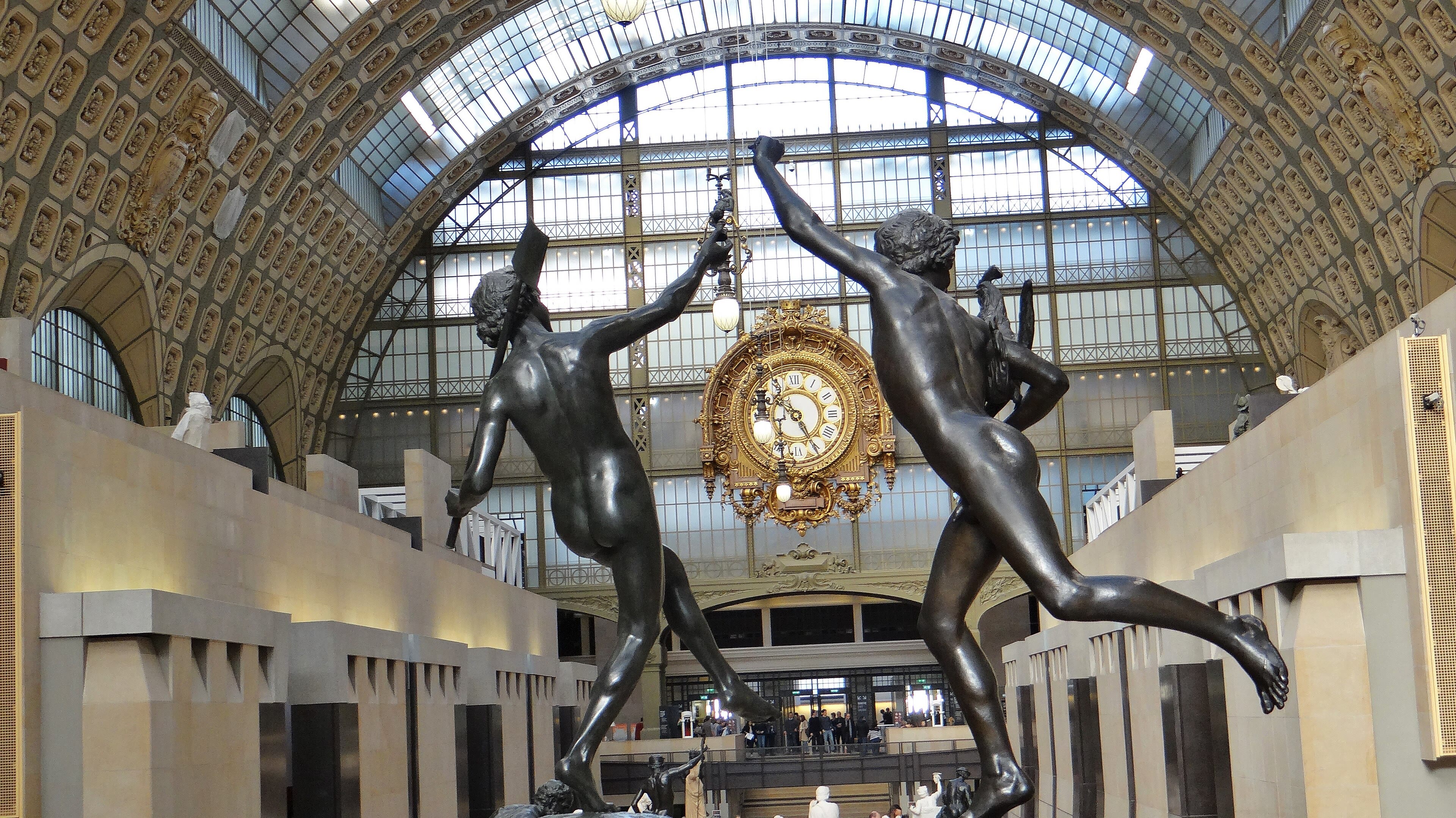
Everyone photographs the great clock from inside: its gilded Roman numerals and frosted glass filling a whole window of the main hall, the city reduced to a soft silhouette beyond — Sacré-Cœur on its hill, the river crawling with boats. But I love the clock best for what it says about this building. A station clock exists to be obeyed; a museum clock exists to be ignored, and the Orsay's does both at once, still ticking over a hall where nobody is in a hurry any more. Below it the central aisle runs like a nave — sculpture down the middle, Manet's Olympia and Déjeuner in the side chapels of painting, Courbet's vast canvases anchoring the far end. Take the long view from the clock end at least once: it is the nineteenth century arranged as a single avenue, and you can walk its whole length in ten minutes, or in ten years.
See this place in the galleryMusée d'Orsay — the Great Clock — our interpretation, created from the reference photographs belowReference photographs — Musée d'Orsay — the Great Clock · 3 photographs
Musée d'Orsay — the Impressionist Gallery
Upstairs, under the roof on the fifth floor, the light changes — and so does art. The Impressionist gallery runs the length of the old station in one long, daylit sweep: Monet's Rouen cathedrals dissolving in morning mist, Renoir's dancers at the Moulin de la Galette swirling in dappled shade, Degas's ballerinas caught at the unglamorous angles of rehearsal. Then, in the rooms beyond, the temperature rises: Van Gogh's Starry Night Over the Rhône, painted here in Paris's sister city of Arles, the gaslight doubling in the dark water; his portrait of himself, all blue turbulence, watching you watch him. These pictures were rejected, mocked, Salon-refused — and now the queues shuffle past them in reverent silence, which would have made Vincent laugh and then, I think, cry a little. Next we cross to Amsterdam, where a quieter Dutch light is waiting in the Gallery of Honour.
See this place in the galleryMusée d'Orsay — the Impressionist Gallery — our interpretation, created from the reference photographs belowReference photographs — Musée d'Orsay — the Impressionist Gallery · 3 photographs
Chapter Three — Amsterdam
6 scenes · 18 reference photographs
The Rijksmuseum — the Arrival
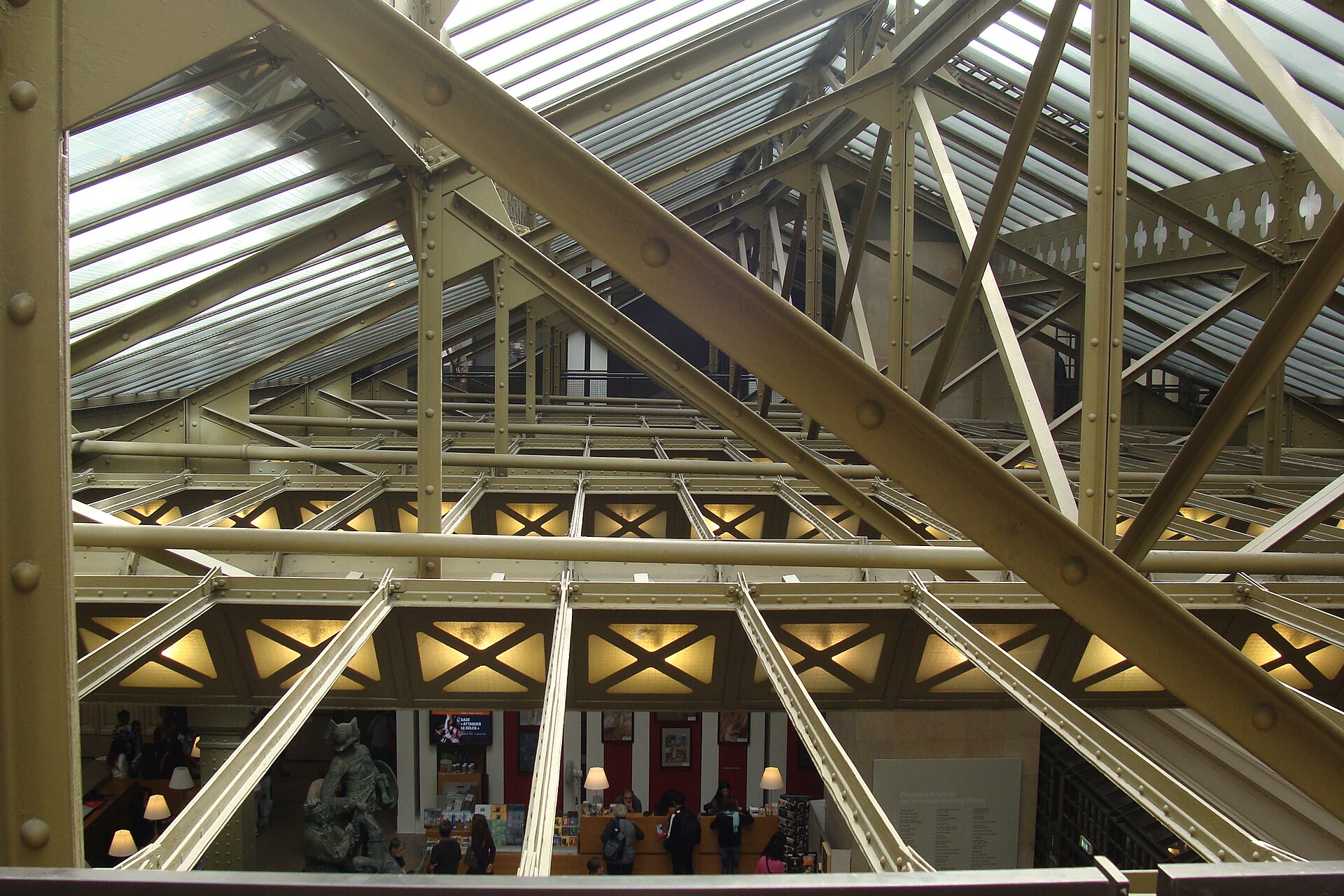
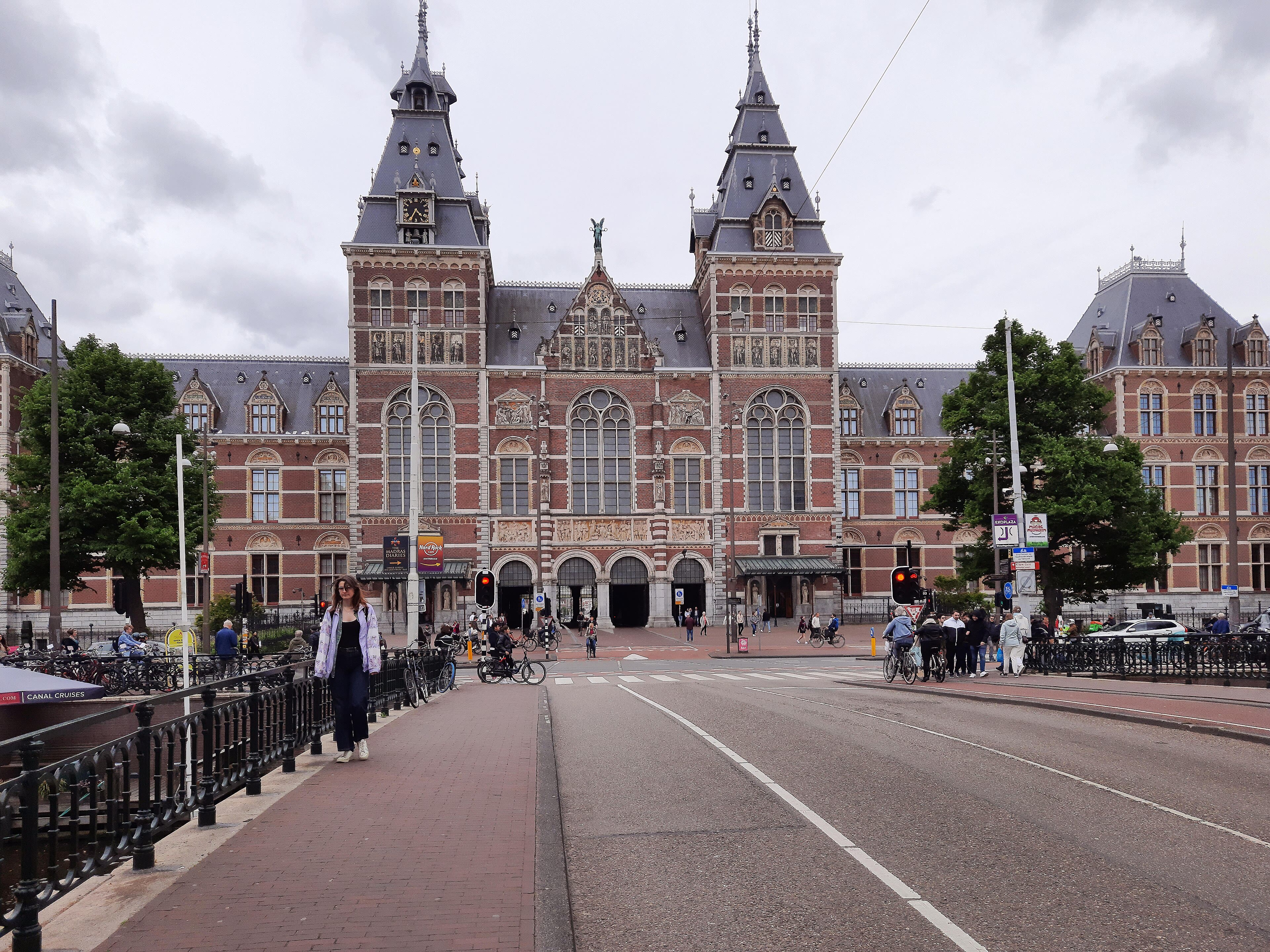
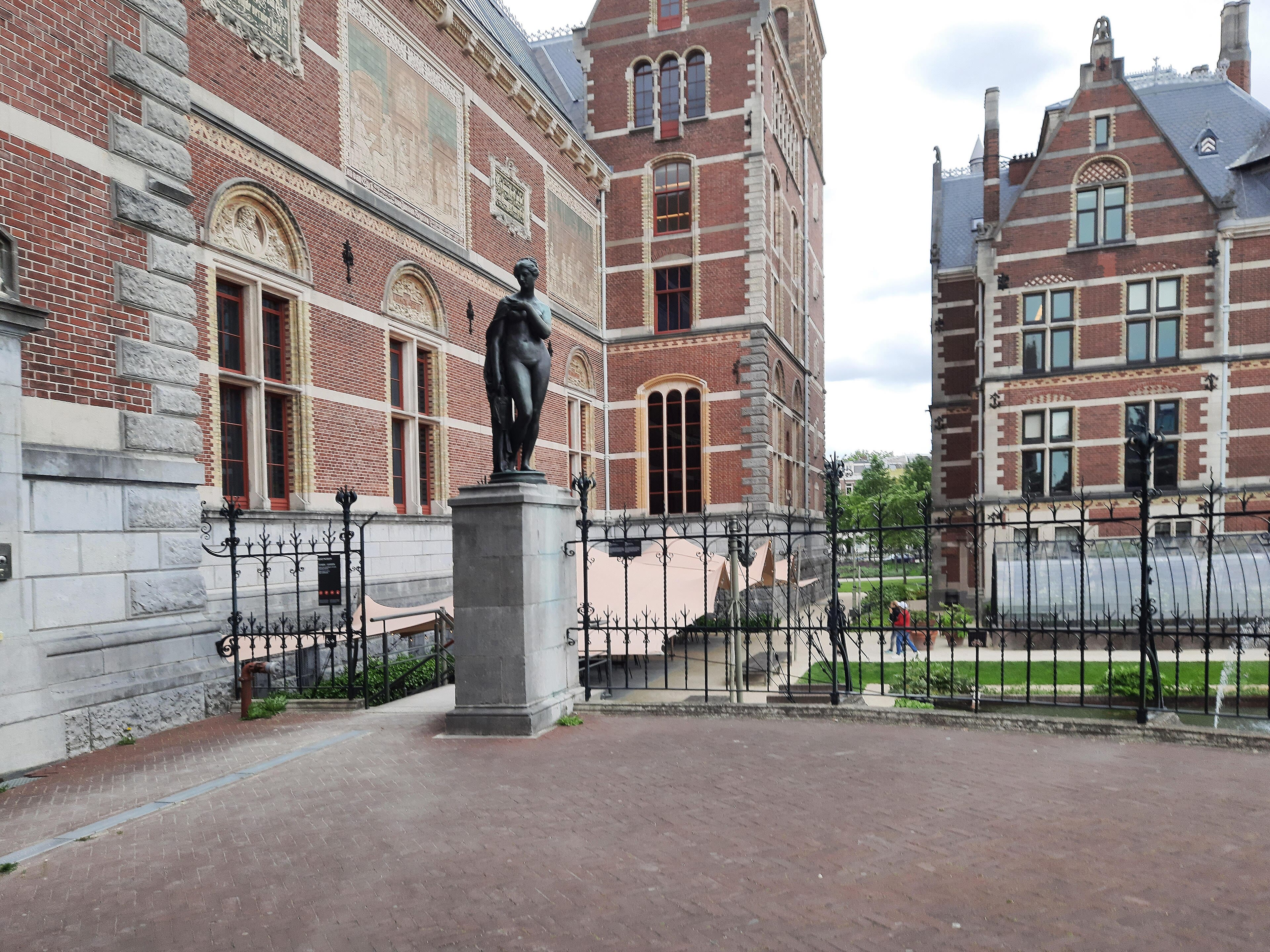
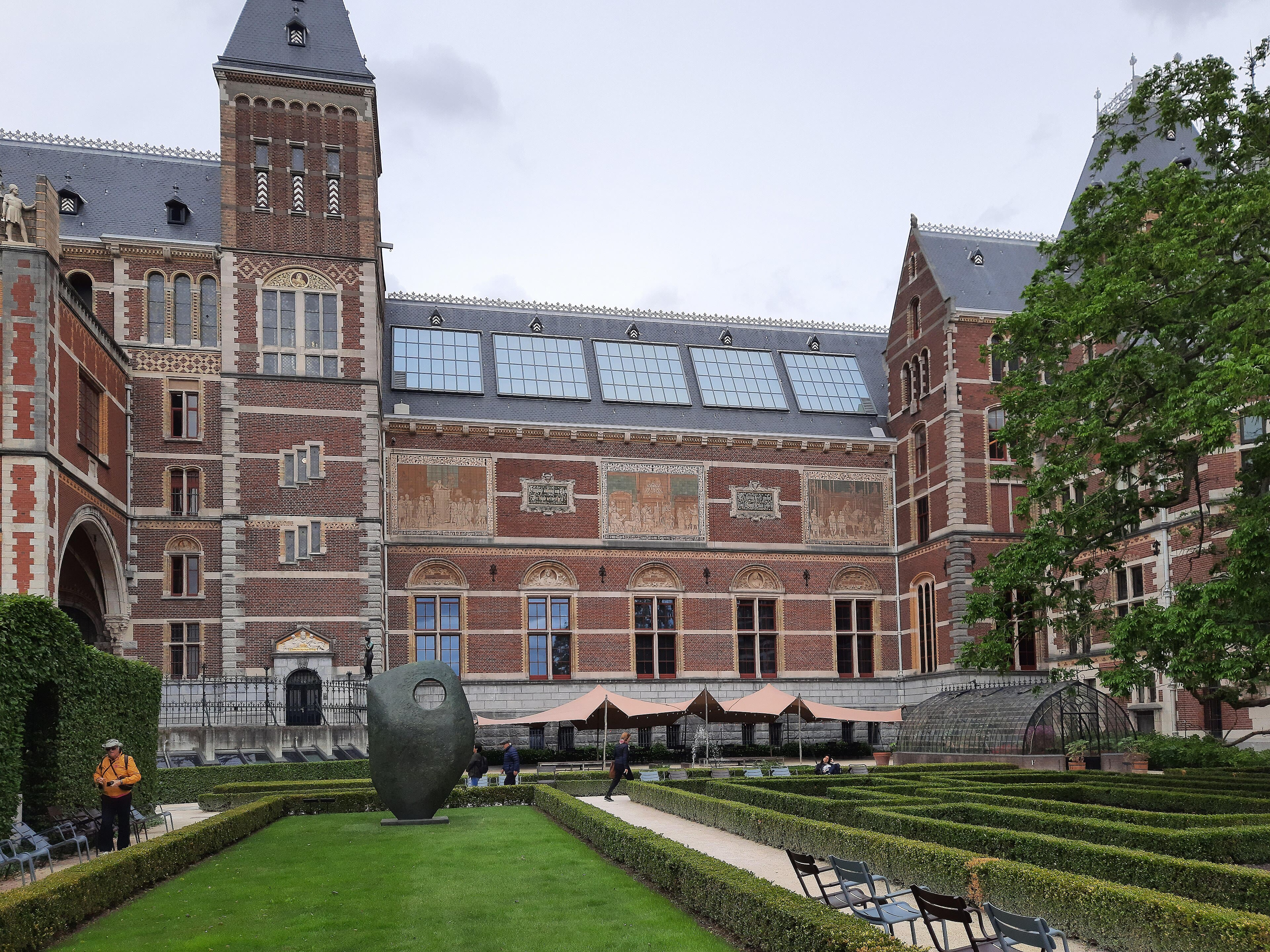
Amsterdam keeps its treasures on one green square, and the greatest of them announces itself in brick and spires: the Rijksmuseum, Pierre Cuypers' cathedral of art from eighteen eighty-five, part palace, part church, with a public road running clean through its heart — cyclists still pedal through the archway beneath the galleries, which tells you everything about this city. Inside, the entrance atrium is a surprise of light: an old courtyard glassed over, staircases floating, the hush of a library and the bustle of a station atrium at once. Eight thousand objects are on display from a collection of a million — Dutch masters above all, the art of a small republic that traded with the whole world and painted what it saw: its ships, its skies, its burghers, its milkmaids. I have a weakness for national museums that know exactly who they are. This one does. Up the stairs with me — the Gallery of Honour is waiting, and it ends with the most famous painting in the Netherlands.
See this place in the galleryThe Rijksmuseum — the Arrival — our interpretation, created from the reference photographs belowReference photographs — The Rijksmuseum — the Arrival · 3 photographs
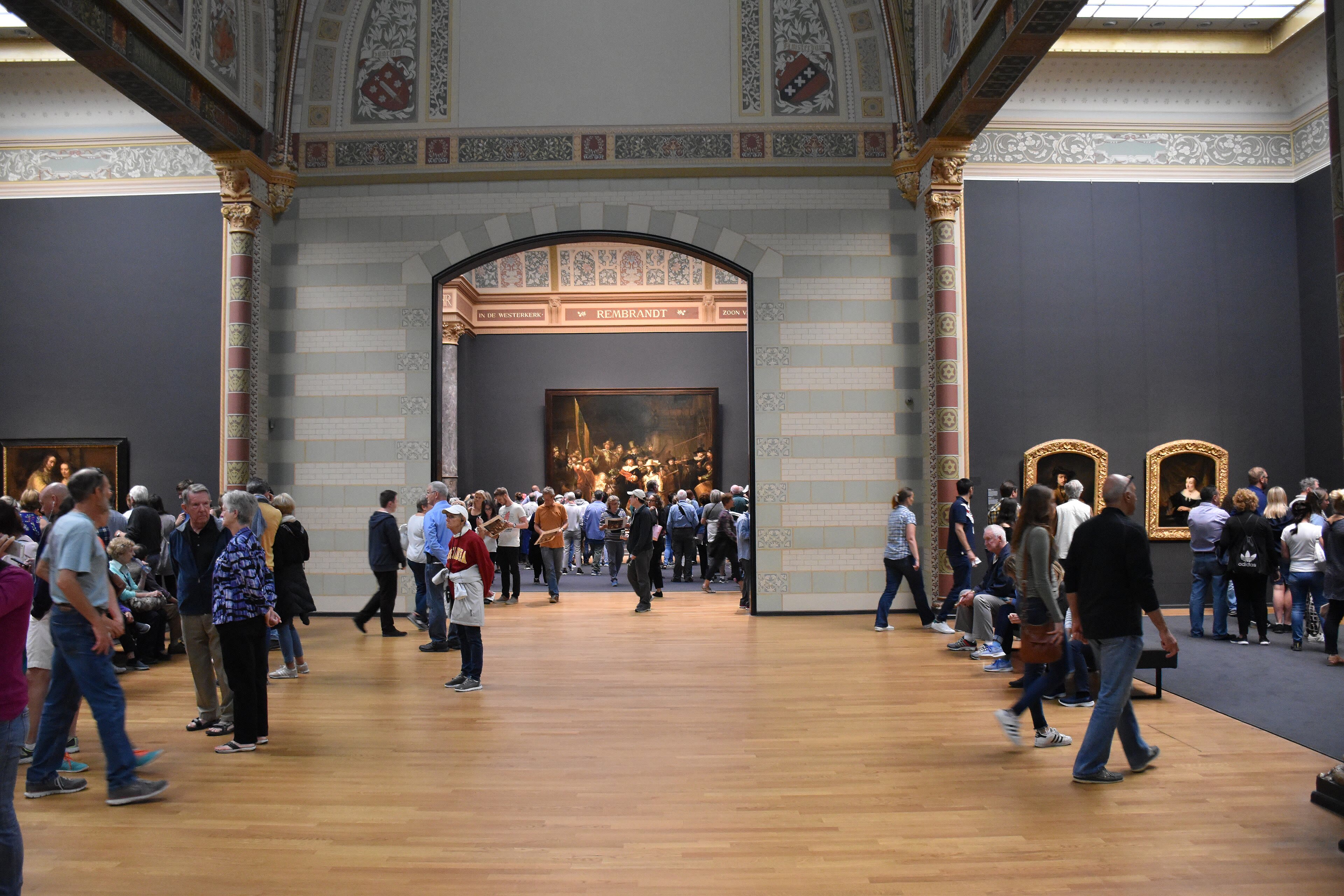
The Rijksmuseum — the Gallery of Honour
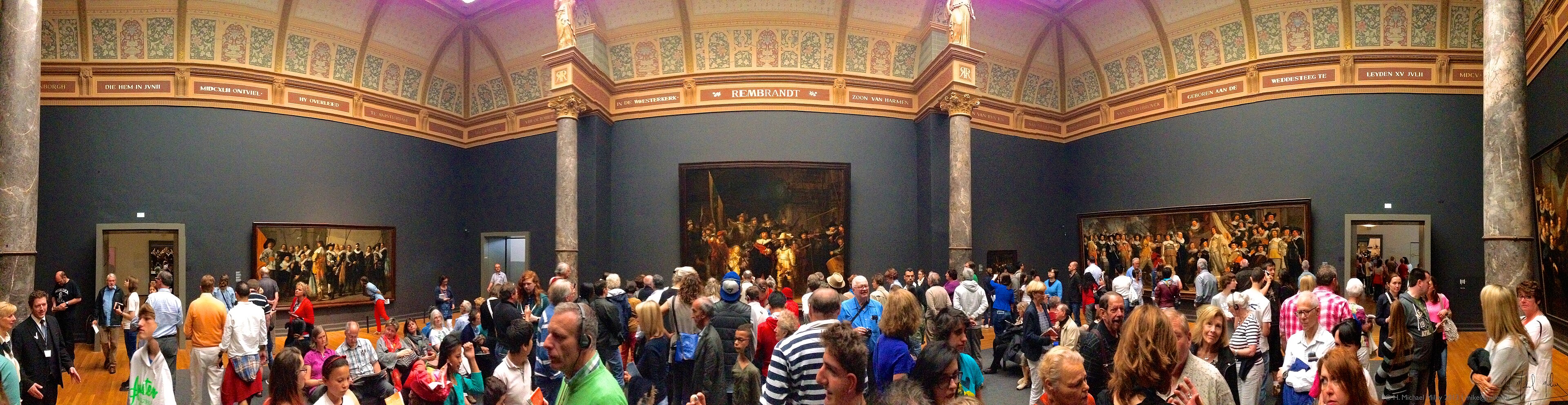
Some rooms you enter; this one you process down. The Gallery of Honour is a long, vaulted nave of a hall, alcoves opening left and right like side chapels, each holding an altarpiece of the Dutch Golden Age: Vermeer's quiet streets and milkmaids, Frans Hals' laughing civic guards, Steen's cheerful chaos, Avercamp's skaters on silver ice. The light is low and reverent, the frames dark gold, and every alcove rewards a pause — look for the tiny, perfect Vermeer blues, a colour mixed from lapis lazuli worth more than the canvas it sits on. But notice what the room is doing to you: the perspective, the rising hush, the glimpse of something enormous at the far end. The gallery was designed as a pilgrimage, and the shrine at its end is a single painting eleven feet high and fourteen wide, guarded, glowing, and never — in forty years of my visiting — without its congregation. Walk slowly. We are nearly there.
See this place in the galleryThe Rijksmuseum — the Gallery of Honour — our interpretation, created from the reference photographs belowReference photographs — The Rijksmuseum — the Gallery of Honour · 3 photographs
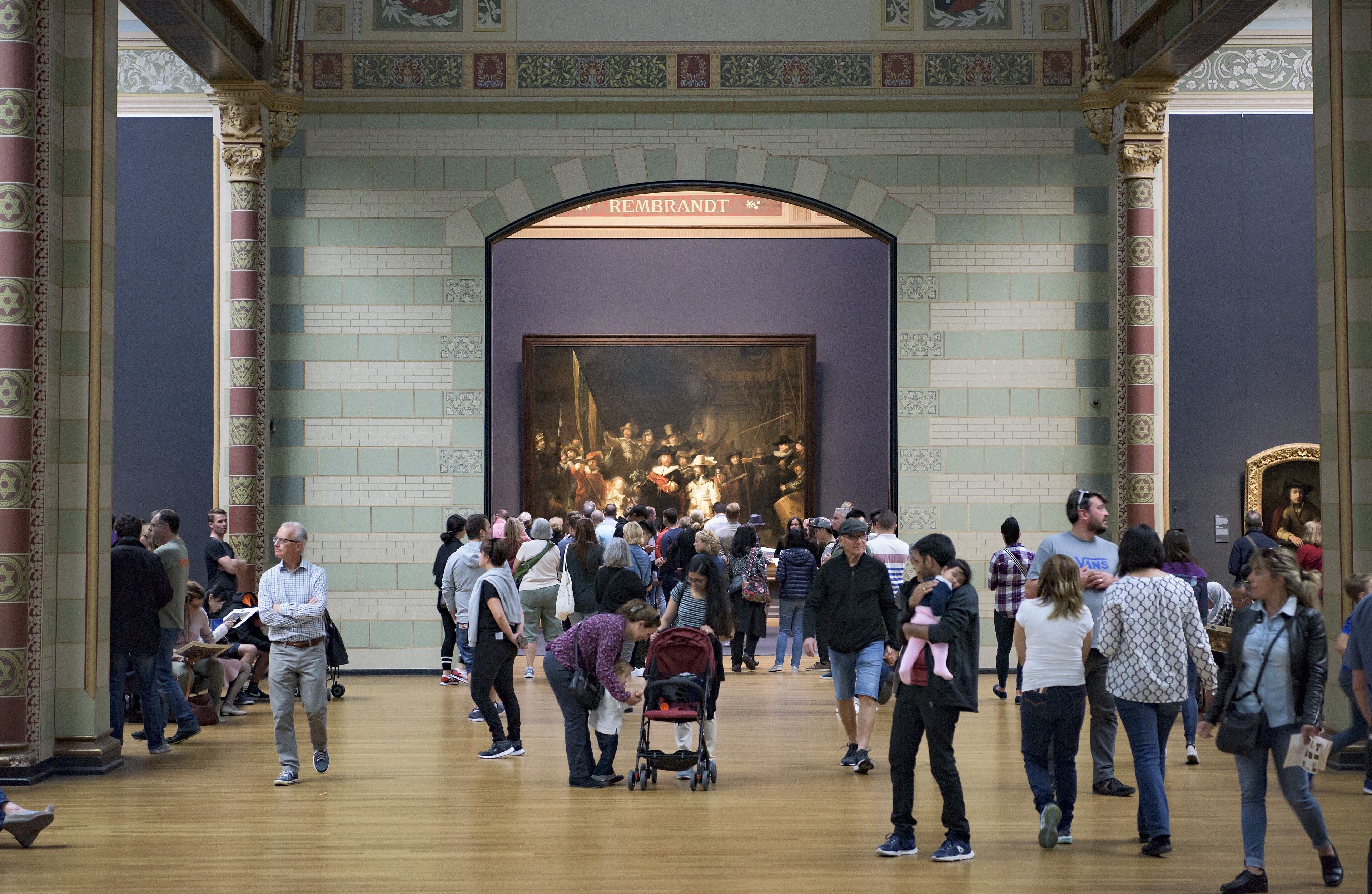
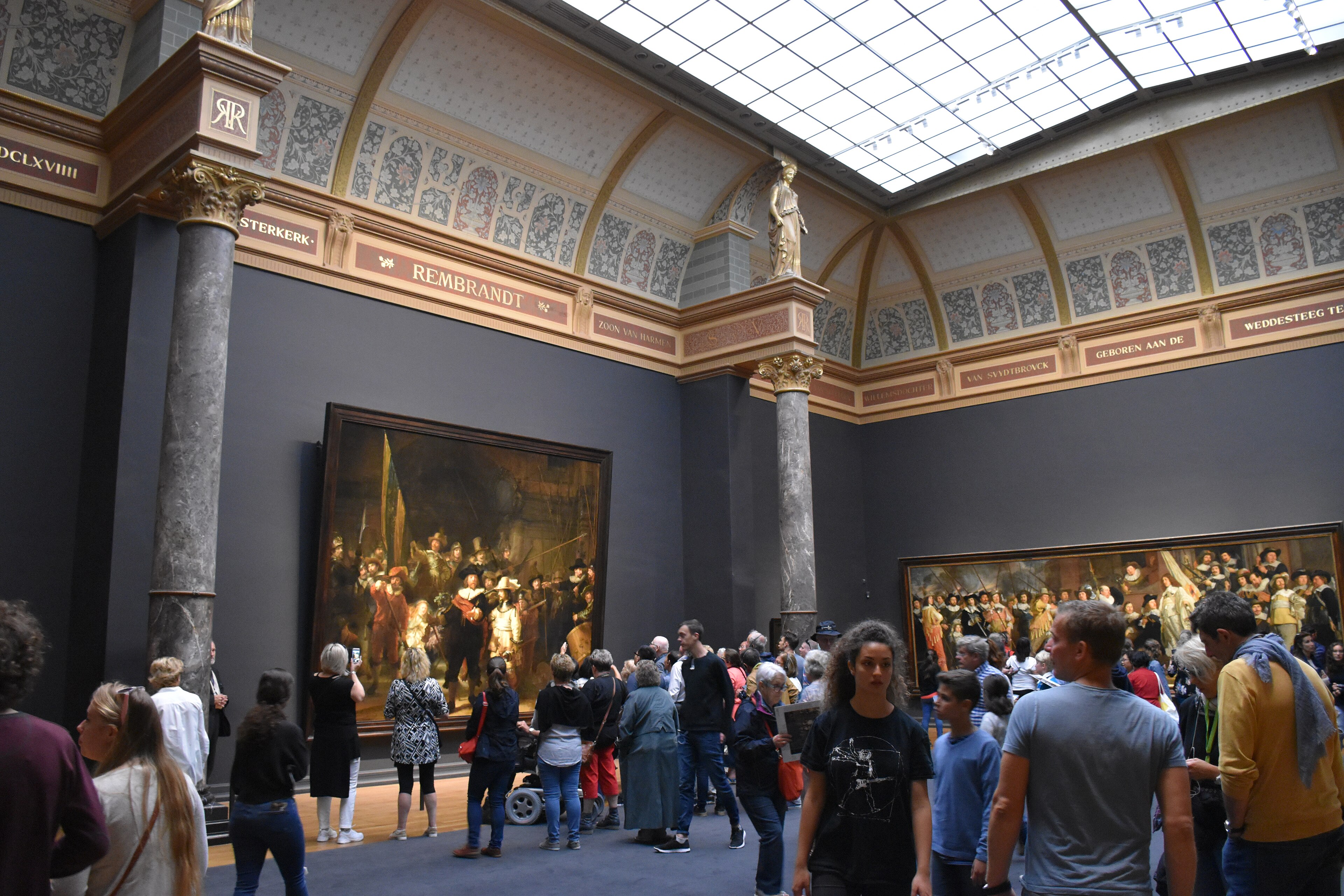
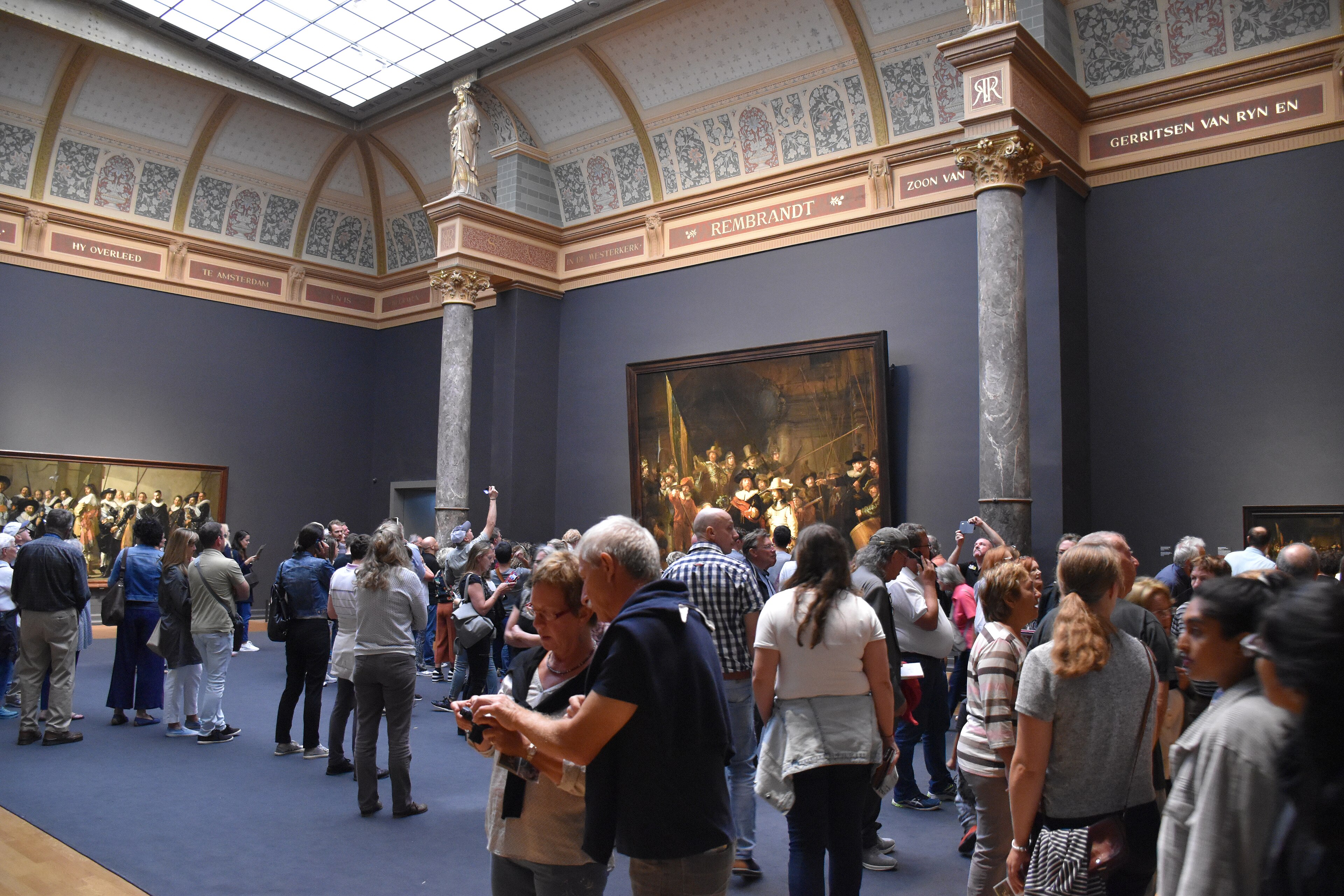
The Rijksmuseum — the Night Watch
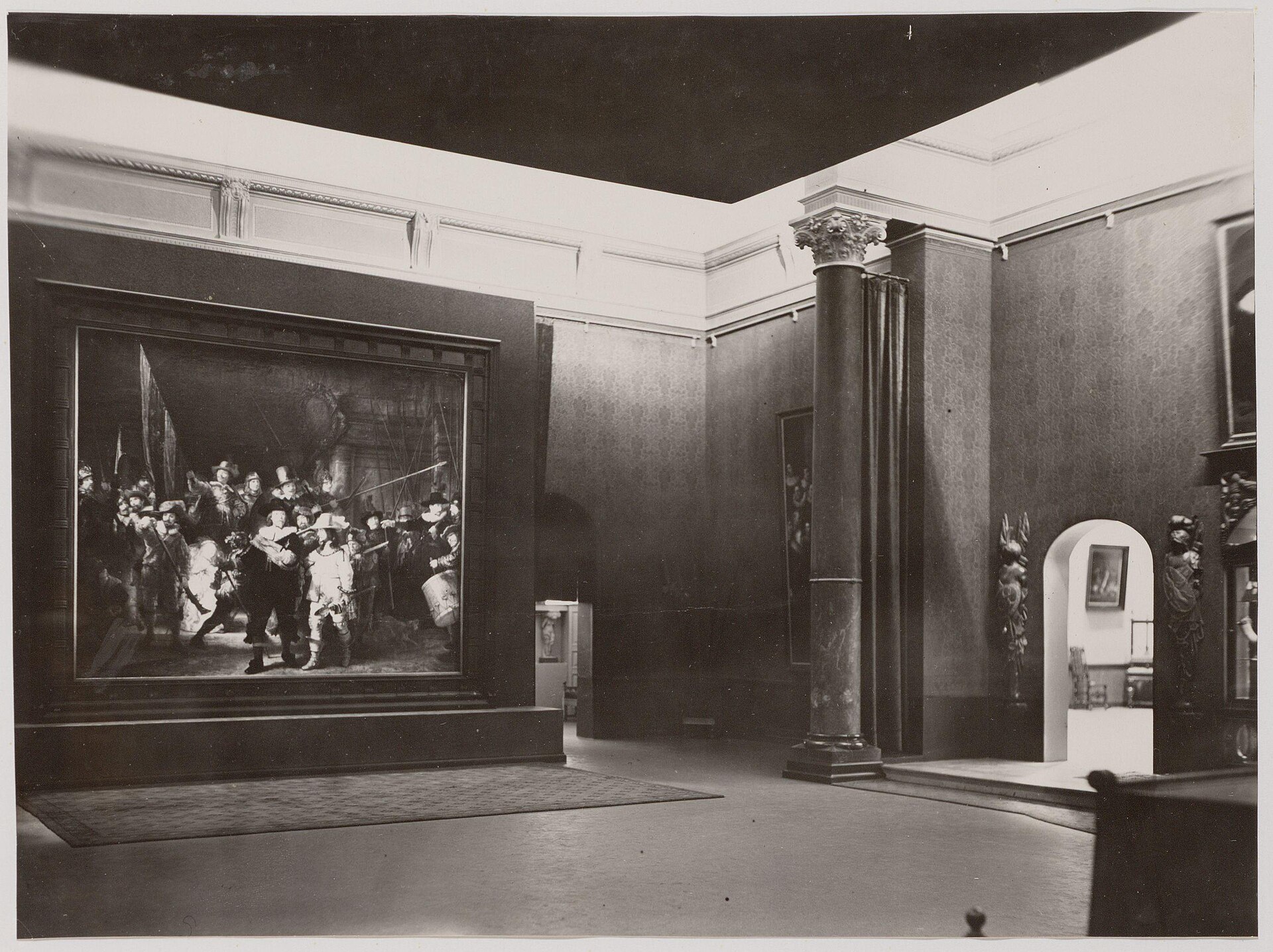
And here it is. In sixteen forty-two, Rembrandt van Rijn painted the civic guard company of Captain Frans Banninck Cocq marching out into daylight — and broke every rule of group portraiture doing it. Nobody stands in a polite row. The company surges: banners rising, a drummer drumming, a small girl in gold glowing at the centre like a mascot, the captain's hand throwing a shadow across his lieutenant's yellow sleeve that painters have studied for four centuries. It was trimmed down in seventeen fifteen to fit a town hall wall — we lost the edges, and it still fills its room like weather. The Night Watch is not even at night; the varnish darkened, the name stuck, and the daylight has been coming back with every careful cleaning since. Stand at the rope a while. Of all the pictures on our journey, this is the one I would save from a fire — though at eleven by fourteen feet, I should need help carrying it.
See this place in the galleryThe Rijksmuseum — the Night Watch — our interpretation, created from the reference photographs belowReference photographs — The Rijksmuseum — the Night Watch · 3 photographs
The Van Gogh Museum — the Arrival
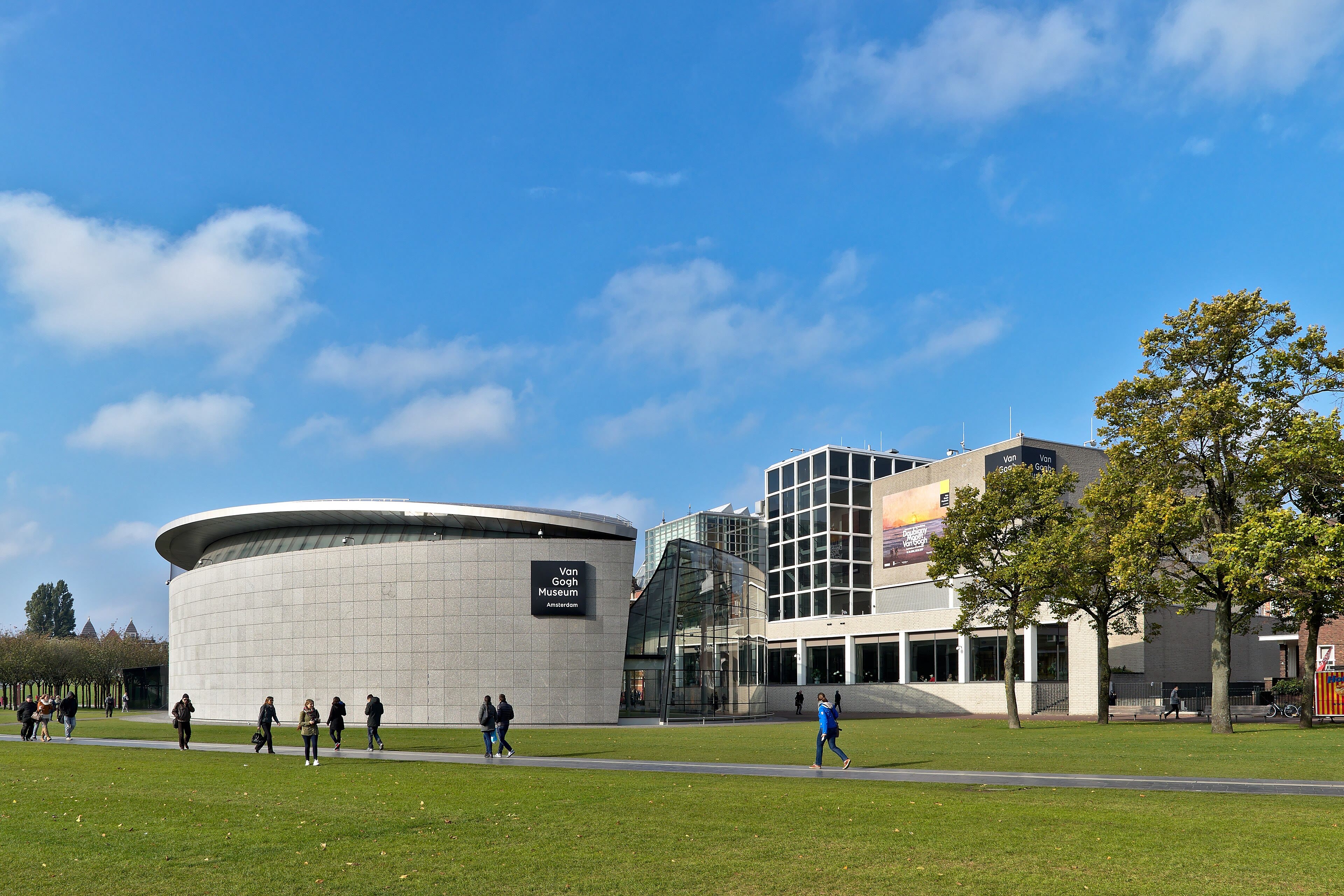
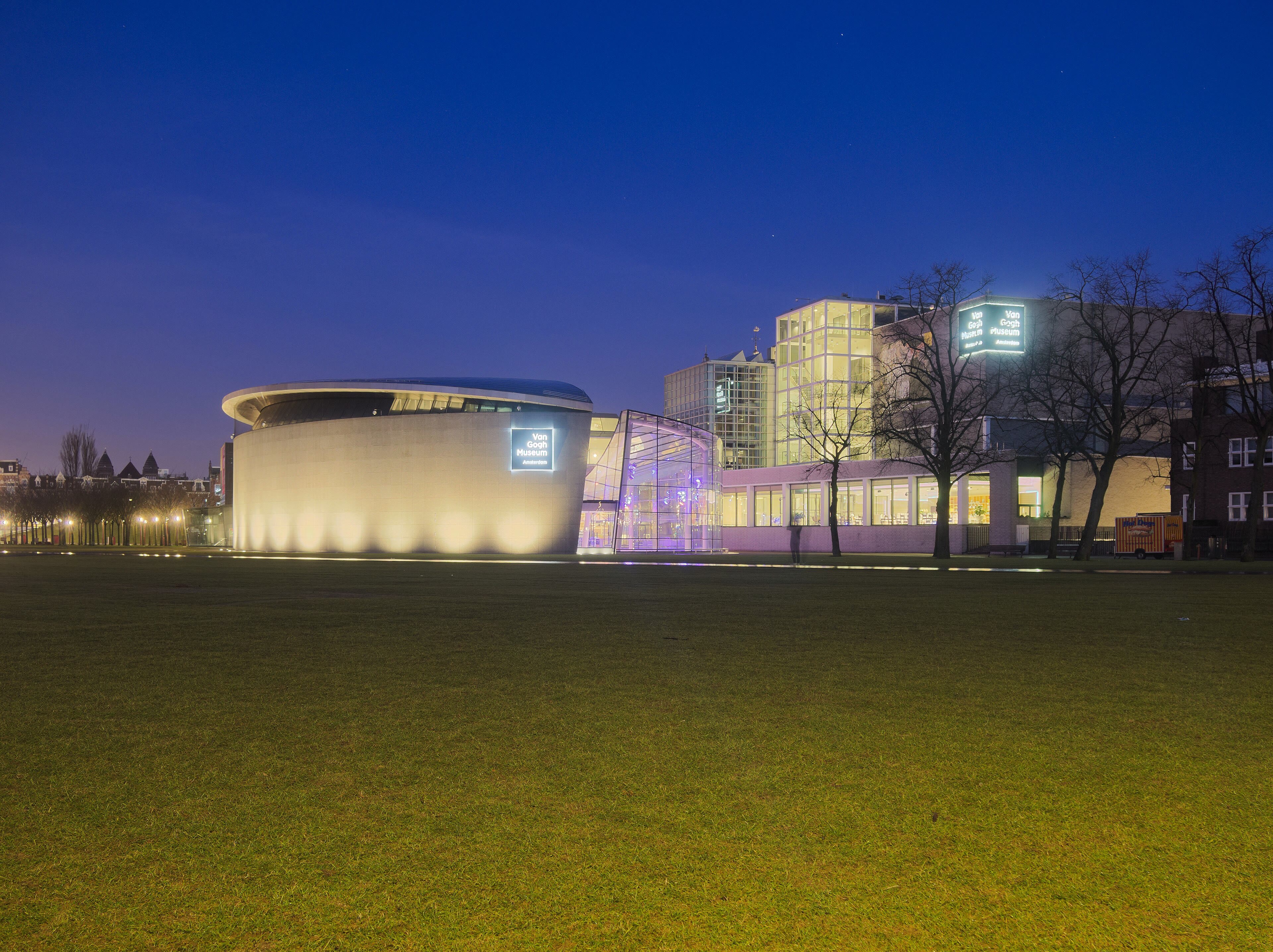
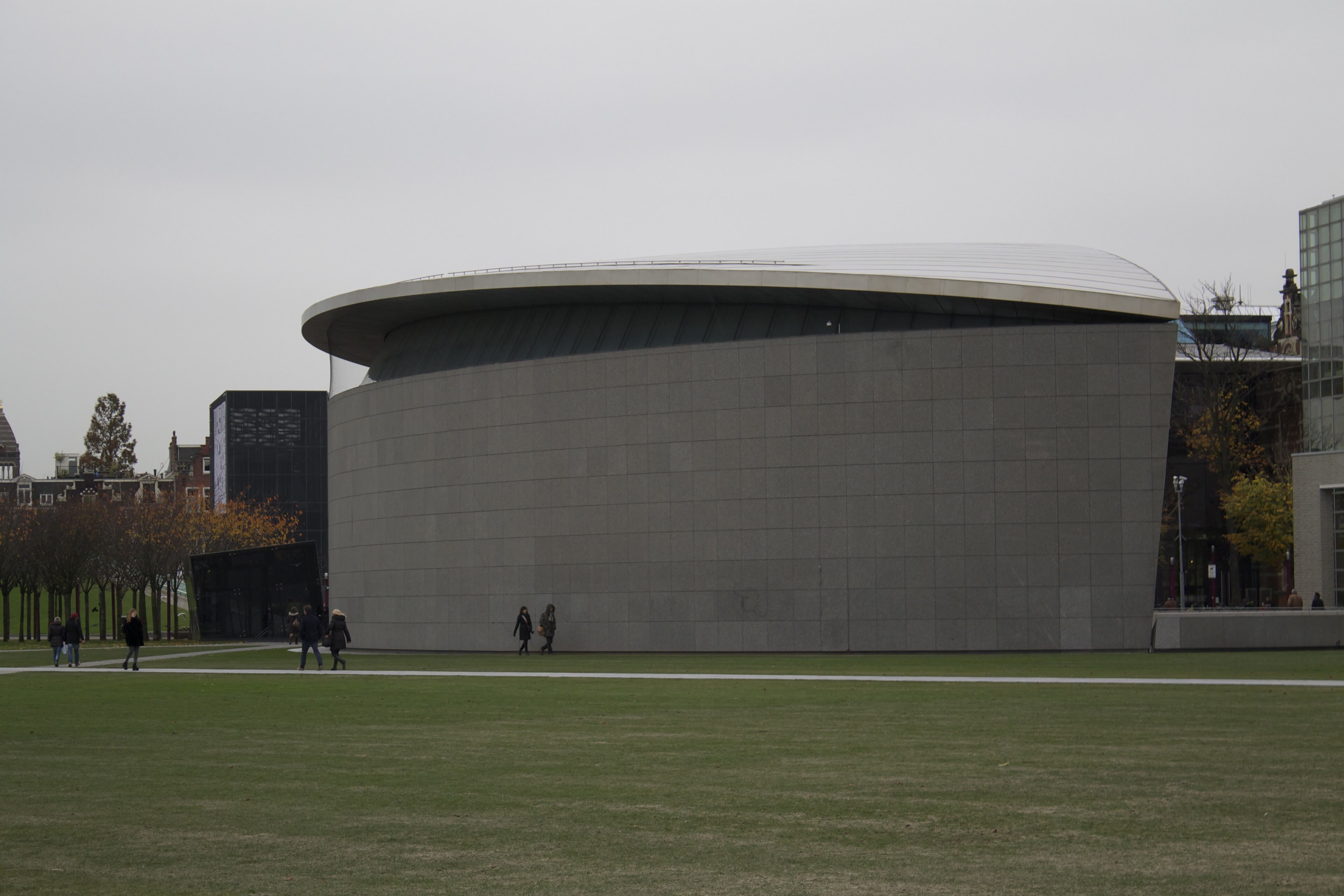
Two hundred paces across the Museumplein stands the other Amsterdam pilgrimage — a building of pale brick curves and glass, designed by Gerrit Rietveld and opened in nineteen seventy-three, holding the largest collection of one man's work on Earth: over two hundred paintings by Vincent van Gogh, and hundreds of his drawings and letters. The collection exists because one family kept faith — Vincent's brother Theo, who supported him; Theo's widow Jo, who refused to sell the work cheap or let the story die; their son, who carried it into this museum. Every picture here hung once in a small room in Paris or Arles, unsold. You will climb through the life floor by floor: the dark Dutch earth of the eighteen eighties at the bottom, the blaze of France at the top, ten years of painting — only ten — that changed what colour could say. Go gently in the early rooms. He begins in peat and potato fields, and so shall we.
See this place in the galleryThe Van Gogh Museum — the Arrival — our interpretation, created from the reference photographs belowReference photographs — The Van Gogh Museum — the Arrival · 3 photographs
The Van Gogh Museum — Sunflowers and Self-Portraits
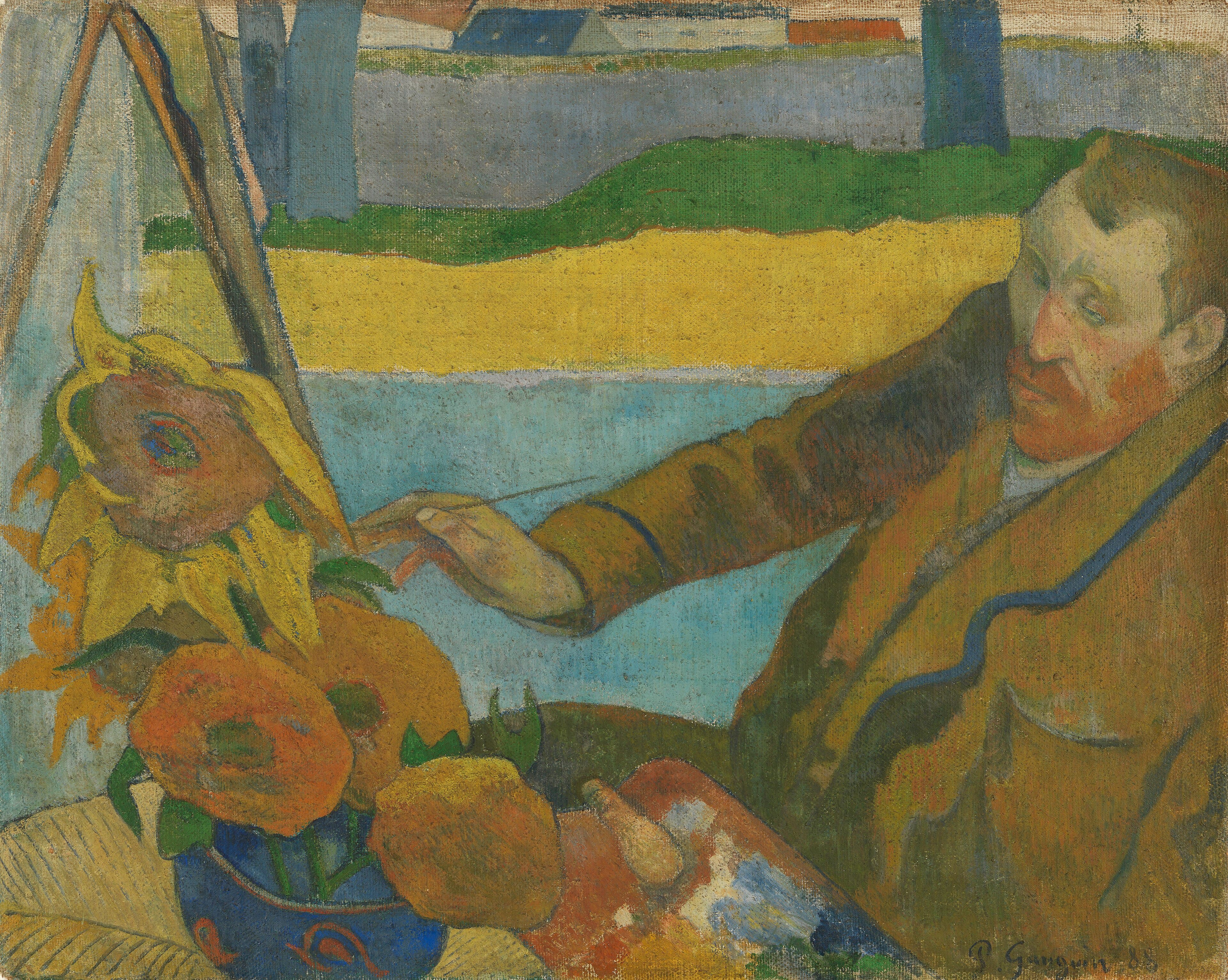
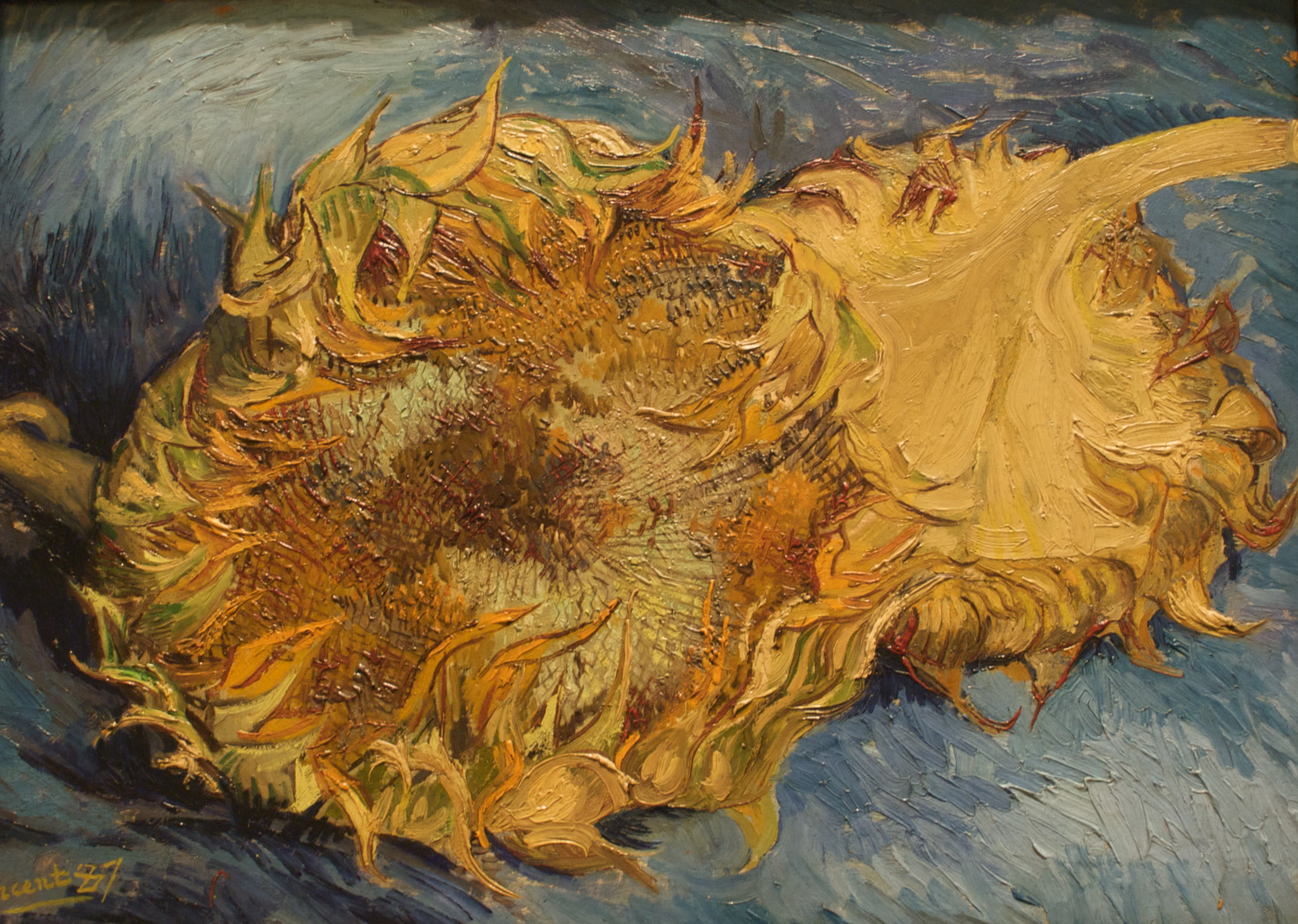
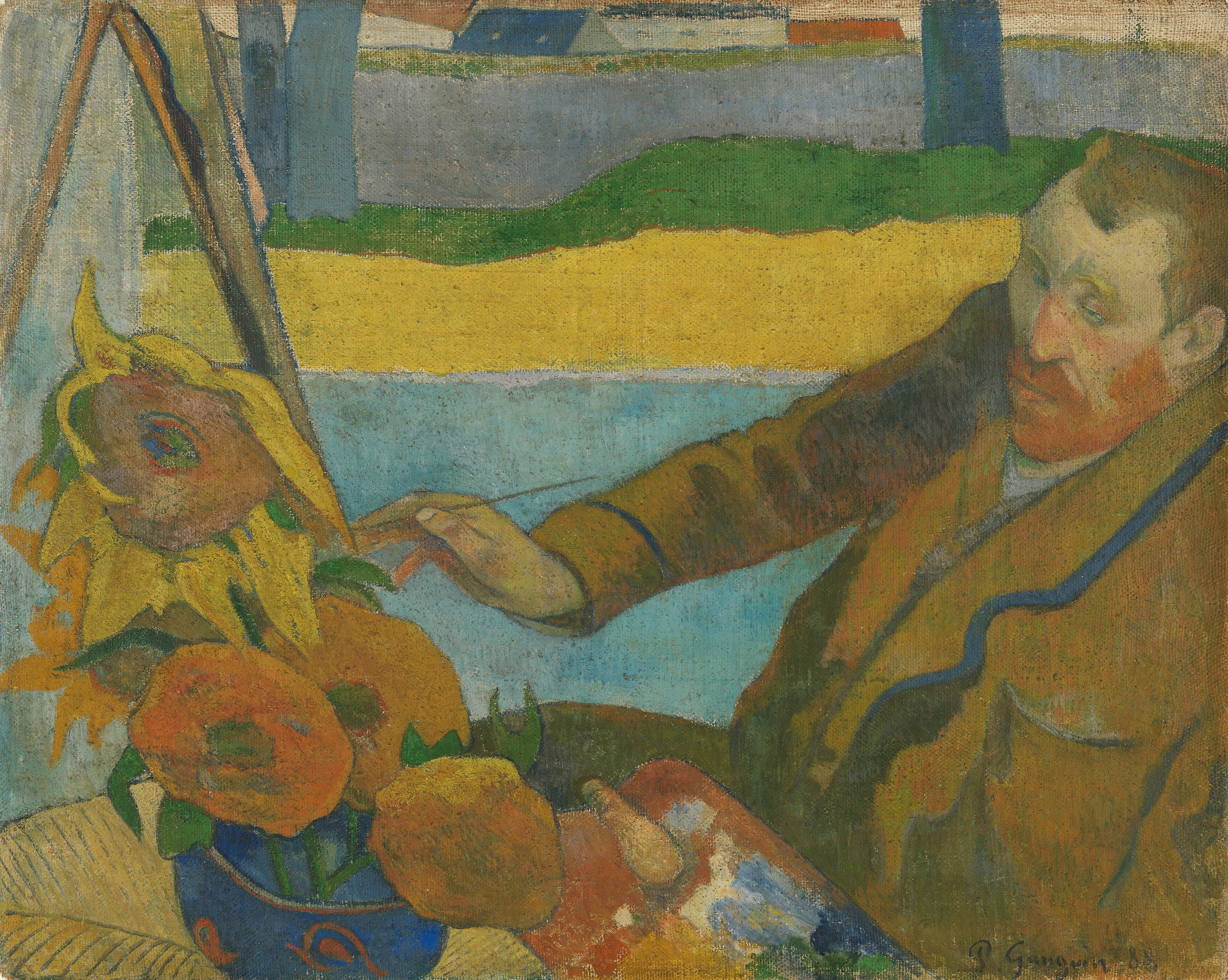
Here is the room where the light turns to gold. In Arles in eighteen eighty-eight, preparing a yellow house for the friend he longed to impress, Vincent painted his sunflowers — vase after vase of them, chrome yellow on yellow, some fresh as suns and some already dying, and he knew they were his signature: "the sunflower is mine," he wrote. One of the great versions hangs here, and near it the self-portraits keep watch — the face he painted because models cost money he did not have: the bandaged ear's companion pieces, the straw hat, the pipe, those eyes that seem to be looking at you and through you at once. The brushwork is not decoration; it is handwriting. Stand close — as close as the rope allows — and the paint resolves into pure energy, ridges and furrows of it. Stand back, and it is simply a vase of flowers on a chair-side table, saying welcome to a friend. He sold one painting in his lifetime. This room is the reply.
See this place in the galleryThe Van Gogh Museum — Sunflowers and Self-Portraits — our interpretation, created from the reference photographs belowReference photographs — The Van Gogh Museum — Sunflowers and Self-Portraits · 3 photographs
The Van Gogh Museum — the Almond Blossom
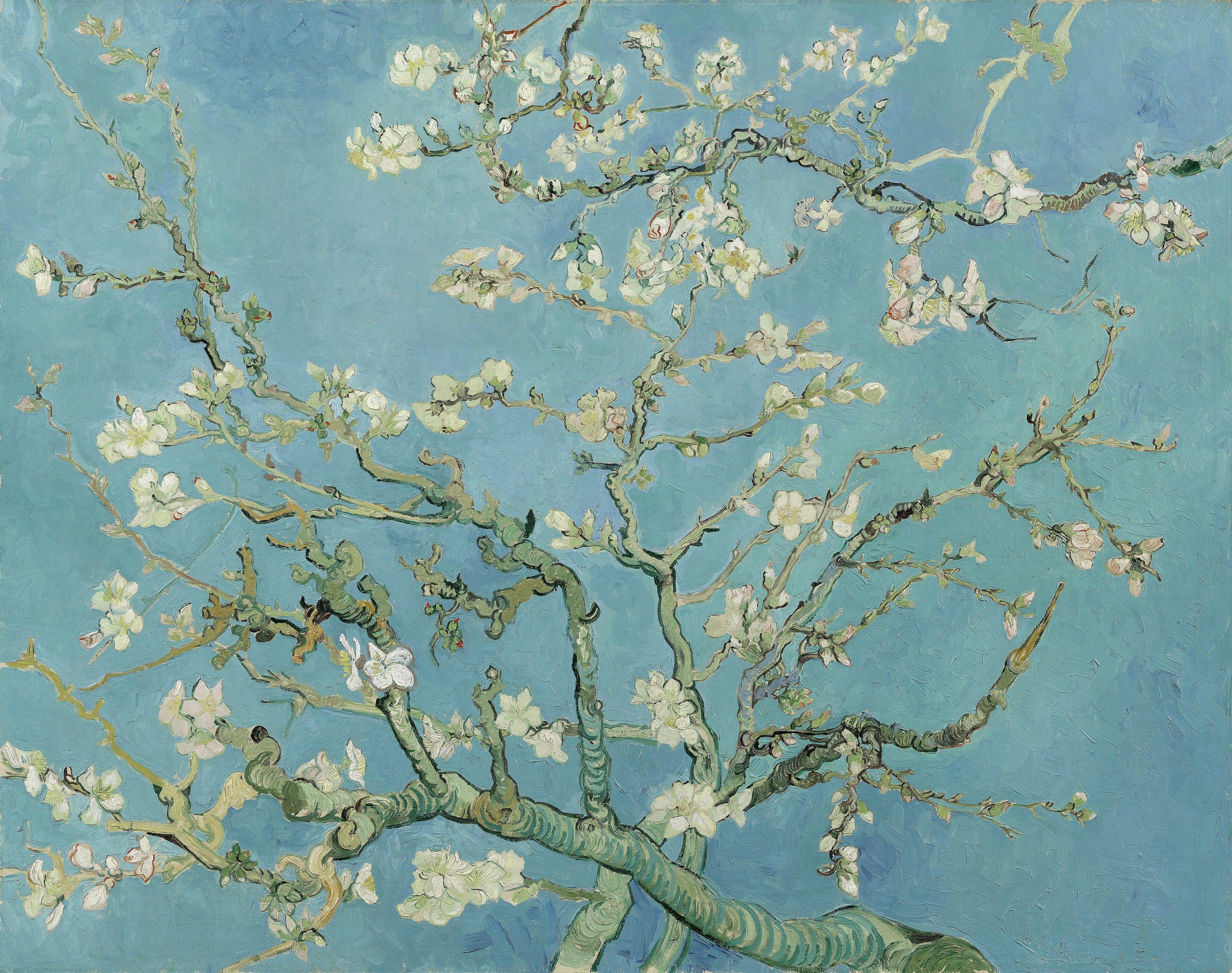
We end our Amsterdam day with the picture I love most in this building — perhaps in any building. In January eighteen ninety, Vincent's brother Theo wrote that his wife Jo had given birth to a son, and they had named him Vincent. From his asylum room at Saint-Rémy, working between storms of illness, the new uncle painted the baby a gift: branches of almond blossom against a turquoise sky, the first flowers of spring on the edge of winter, filling the whole canvas the way hope fills a room — no ground, no horizon, just blossom and blue. He called such pictures his best, the most patient and carefully worked. Five months later he was gone, at thirty-seven; the baby in the cradle grew up to found this museum, and the blossom still hangs where the family story comes full circle. Take that with you across the square in the evening light. Next, Berlin — an island of museums in a river, and a queen who has been waiting three thousand years to meet you.
See this place in the galleryThe Van Gogh Museum — the Almond Blossom — our interpretation, created from the reference photographs belowReference photographs — The Van Gogh Museum — the Almond Blossom · 3 photographs
Chapter Four — Berlin
3 scenes · 9 reference photographs
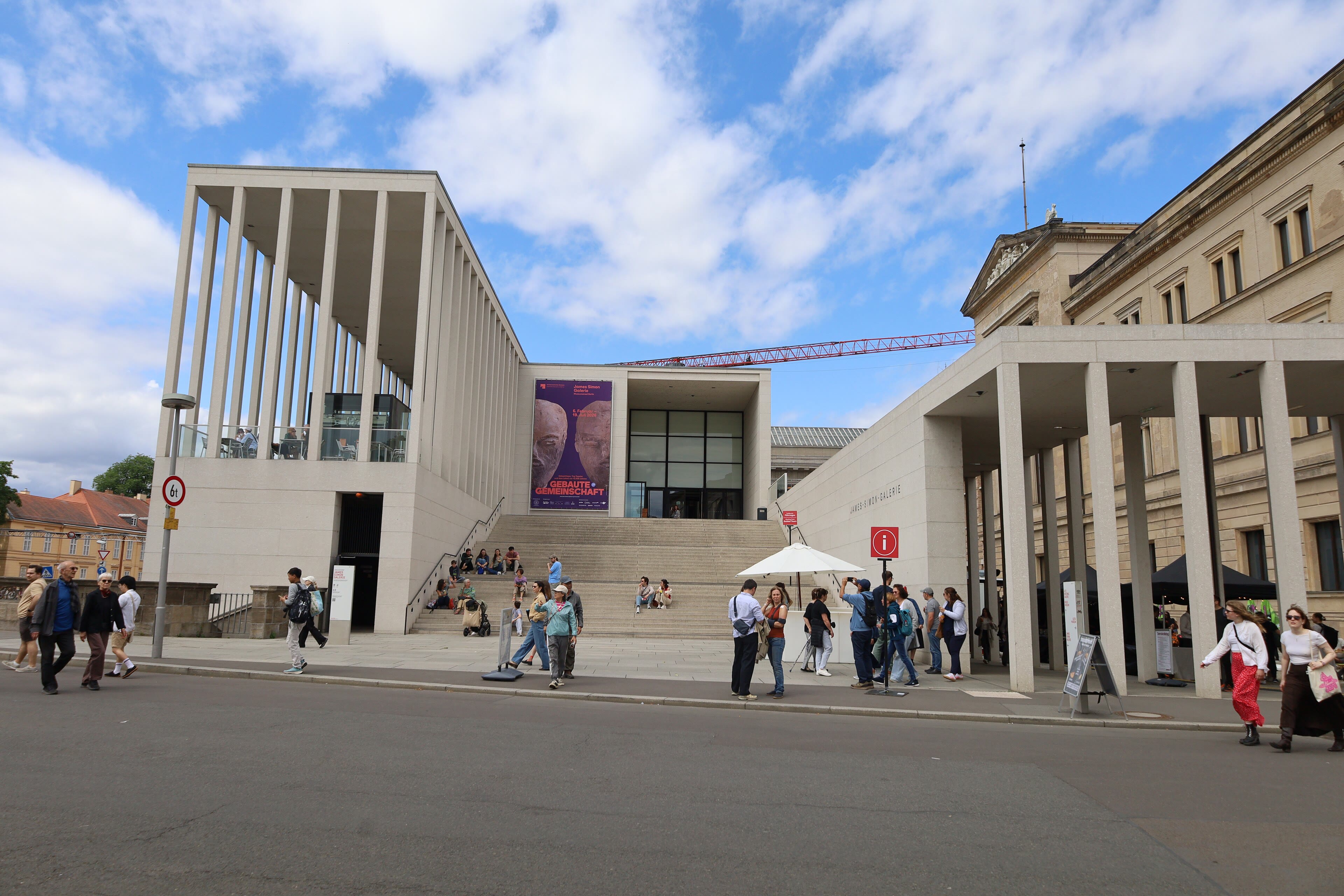
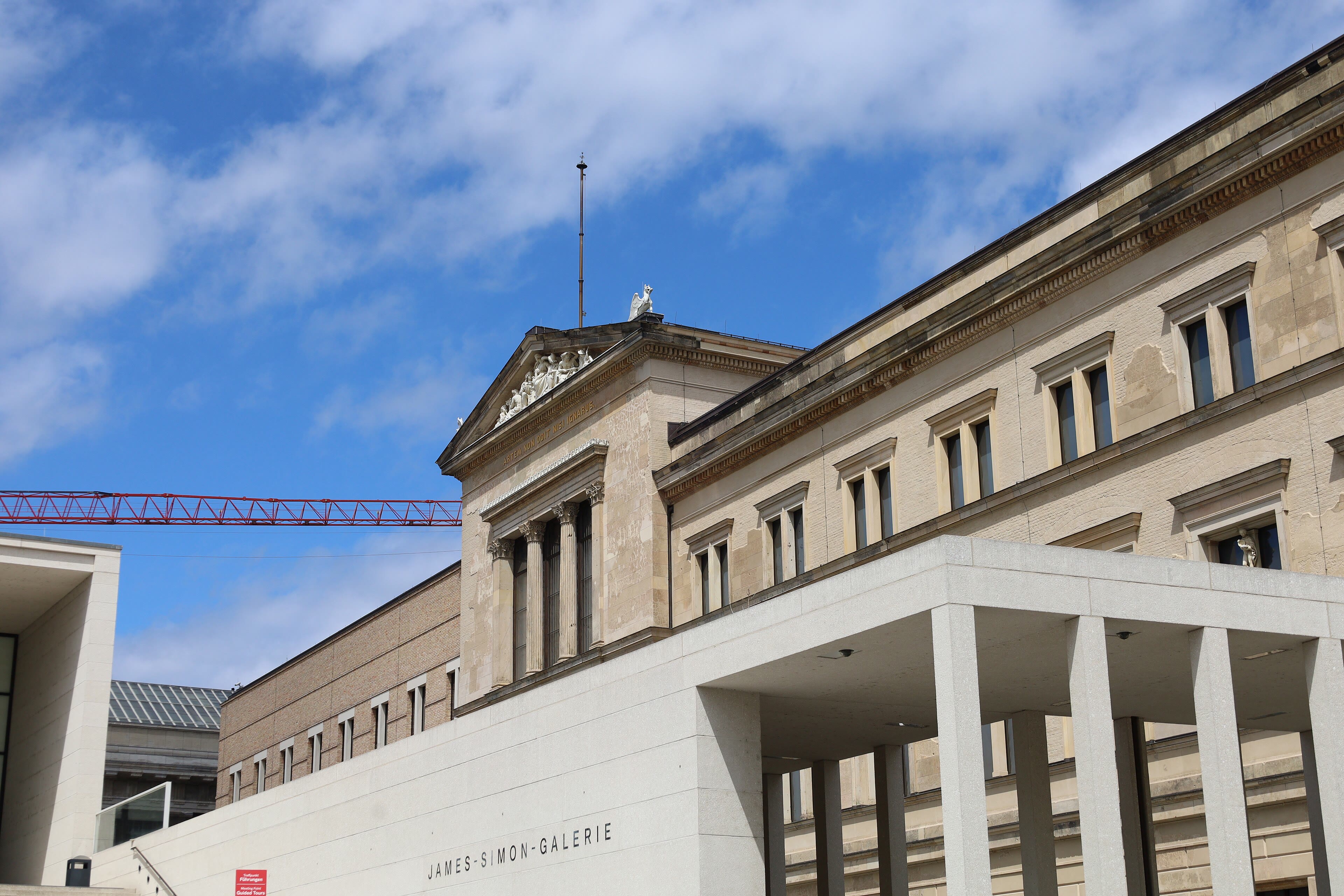
Museum Island and the Neues Museum — the Arrival
Berlin keeps its greatest treasures on an island in the Spree, and the crossing itself is a small ceremony: colonnades, a cathedral, five temples of art raised in the nineteenth century when a young empire decided that antiquities were a kind of power. The Neues Museum — the New Museum, though it opened in eighteen fifty-nine — was Friedrich Stüler's masterpiece, its stair hall frescoed with the whole sweep of human history. Then came the twentieth century. Bombs gutted the building in nineteen forty-three; for sixty years it stood as a roofless ruin in the middle of the divided city, pigeons in the stair hall, frost working the frescoes. Most capitals would have demolished it. Berlin, eventually, did something harder: architect David Chipperfield spent a decade stitching the wound — new brick beside scarred brick, the bullet marks left legible, the ruin and the restoration in one honest building. We go in gently. This museum is not only about what it holds. It is about what it survived.
See this place in the galleryMuseum Island and the Neues Museum — the Arrival — our interpretation, created from the reference photographs belowReference photographs — Museum Island and the Neues Museum — the Arrival · 3 photographs
The Neues Museum — Nefertiti
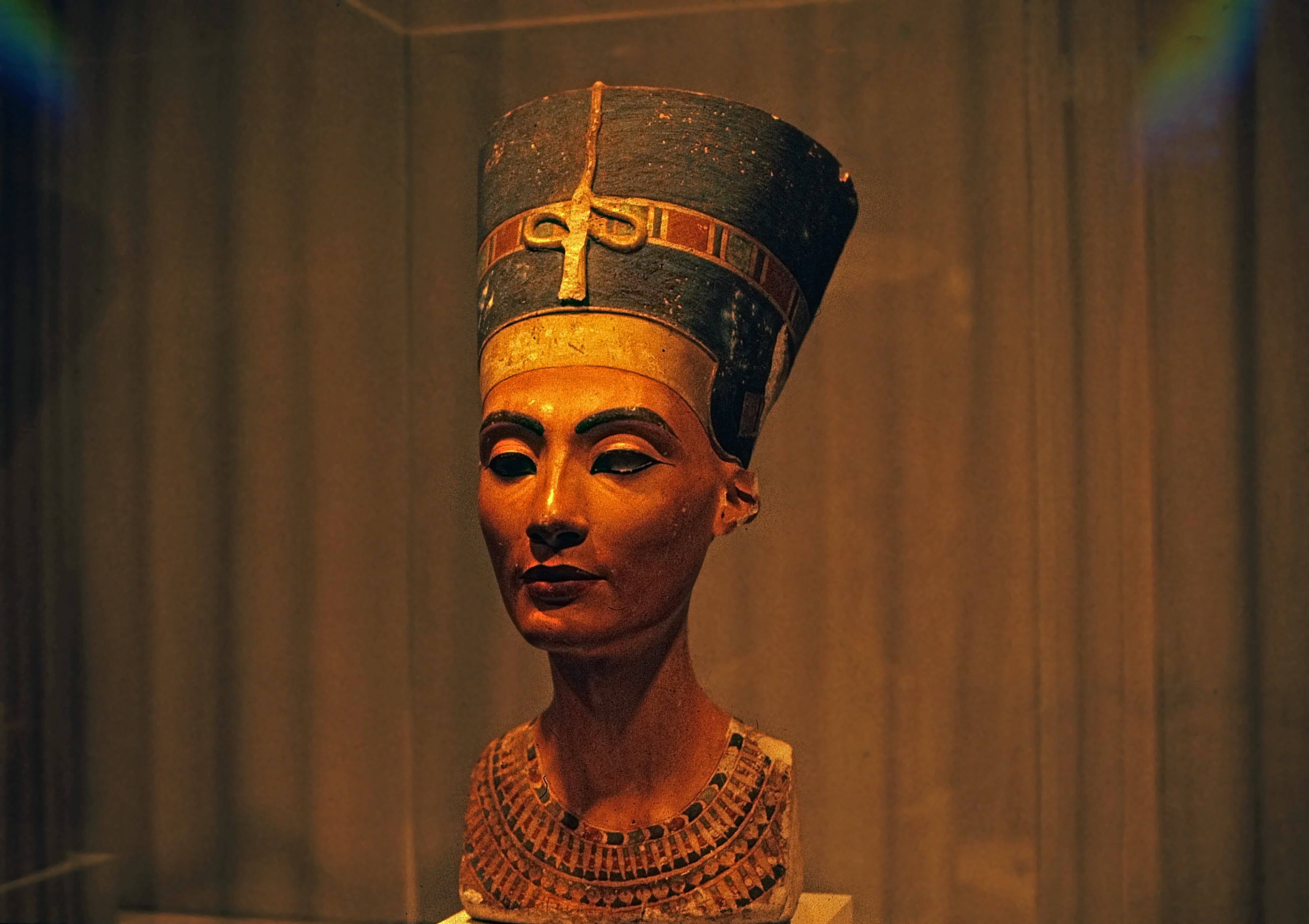
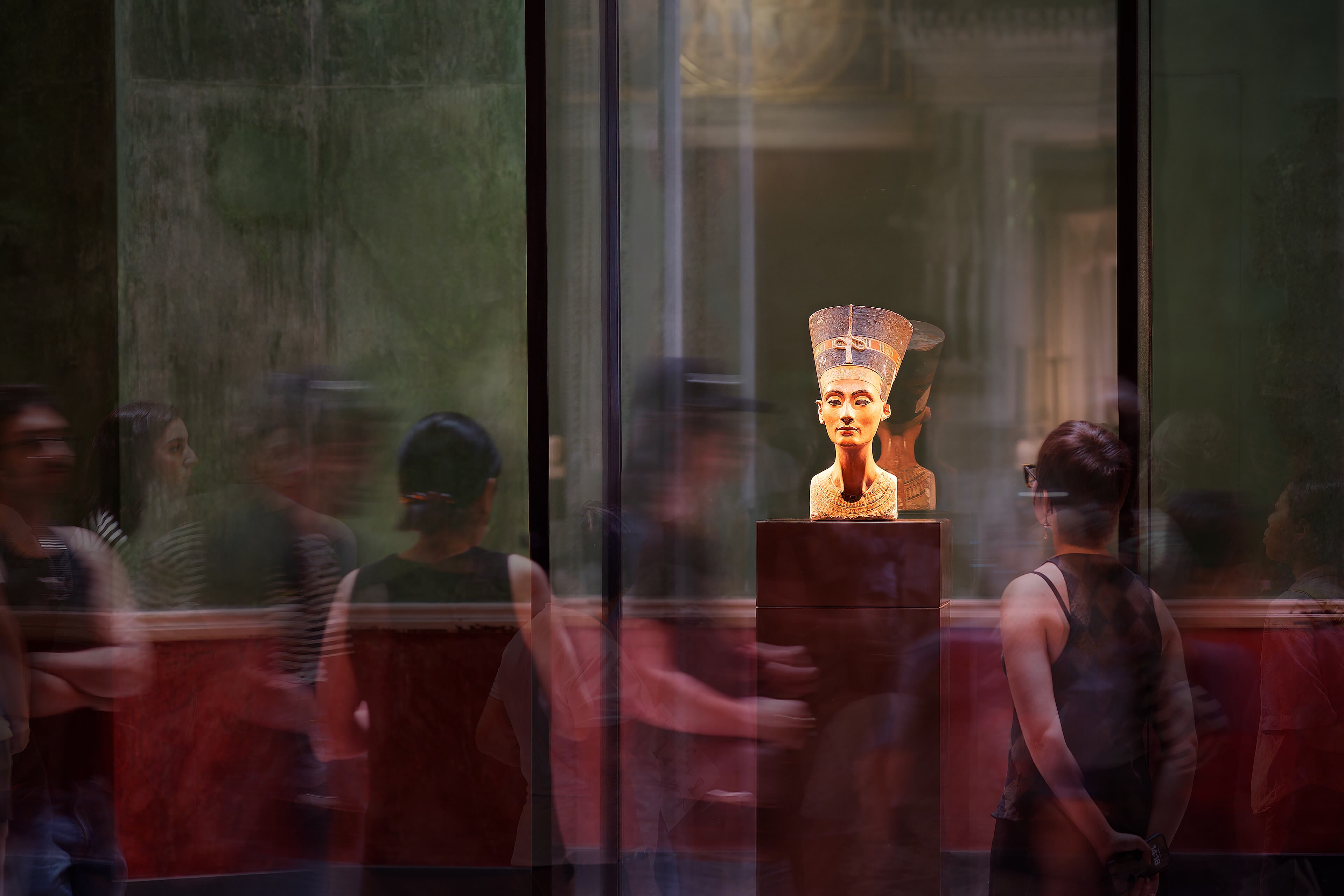
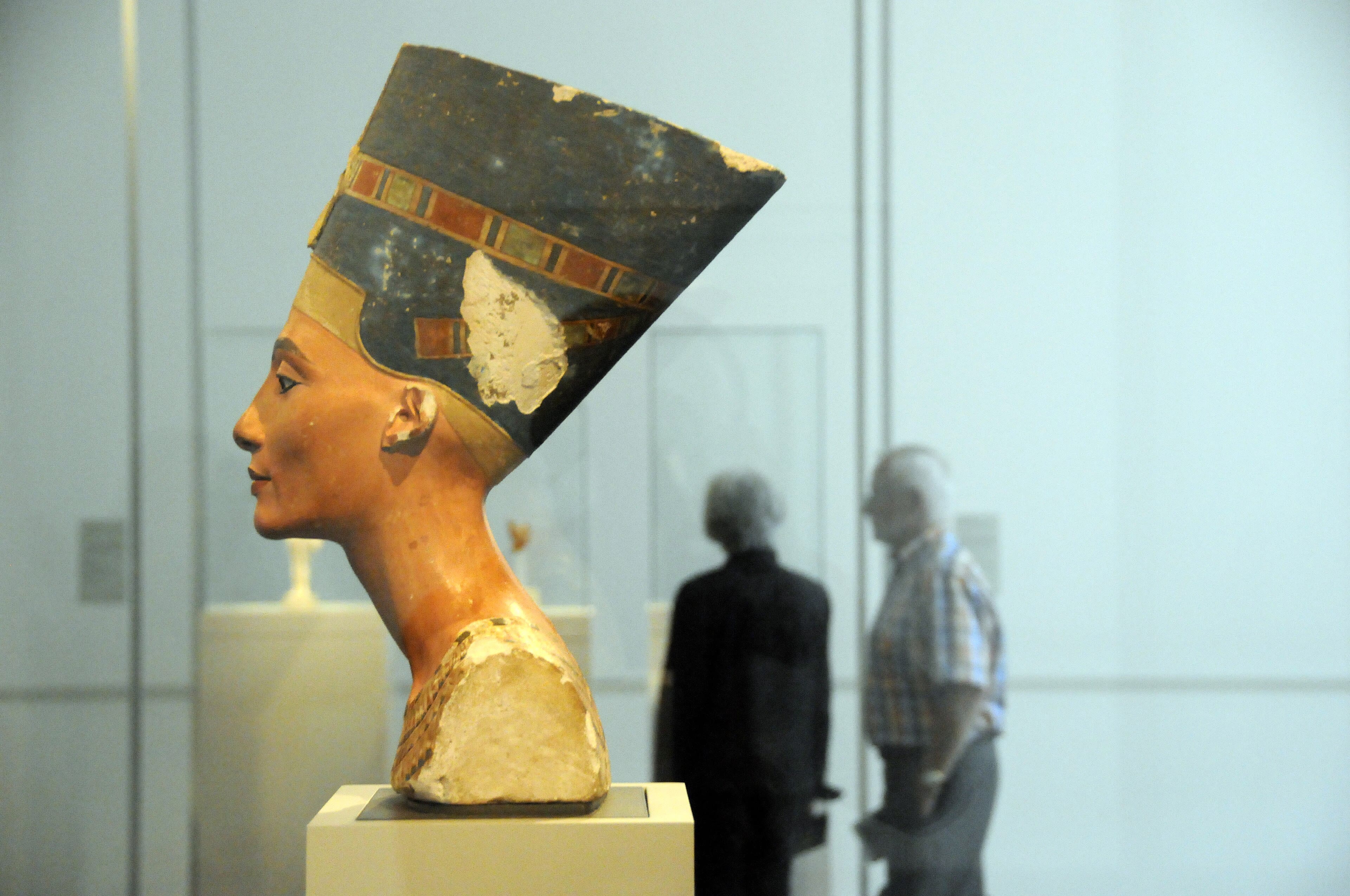
She waits in the North Dome, alone in her glass case at the centre of a tall, quiet room — and three thousand three hundred years fall away. The bust of Nefertiti, Great Royal Wife of the pharaoh Akhenaten, was carved around thirteen forty-five BC by the court sculptor Thutmose, and she is — I have stood before her in four different decades — quite simply the most beautiful object on this entire journey. The long neck, the serene profile, one eye inlaid with rock crystal, the other left blank, because the bust was a workshop model, never meant for a tomb: the sculptor's master copy, painted in colours still improbably fresh — the blue of her crown, the gold of her collar. She was found at Amarna in nineteen twelve and has been Berlin's contested queen ever since; Egypt asks for her return, Berlin keeps her, and the argument itself is part of her story now. Look at her slowly. Perfection this calm is rarer than gold.
See this place in the galleryThe Neues Museum — Nefertiti — our interpretation, created from the reference photographs belowReference photographs — The Neues Museum — Nefertiti · 3 photographs
The Neues Museum — the Golden Hat and the Scarred Stairs
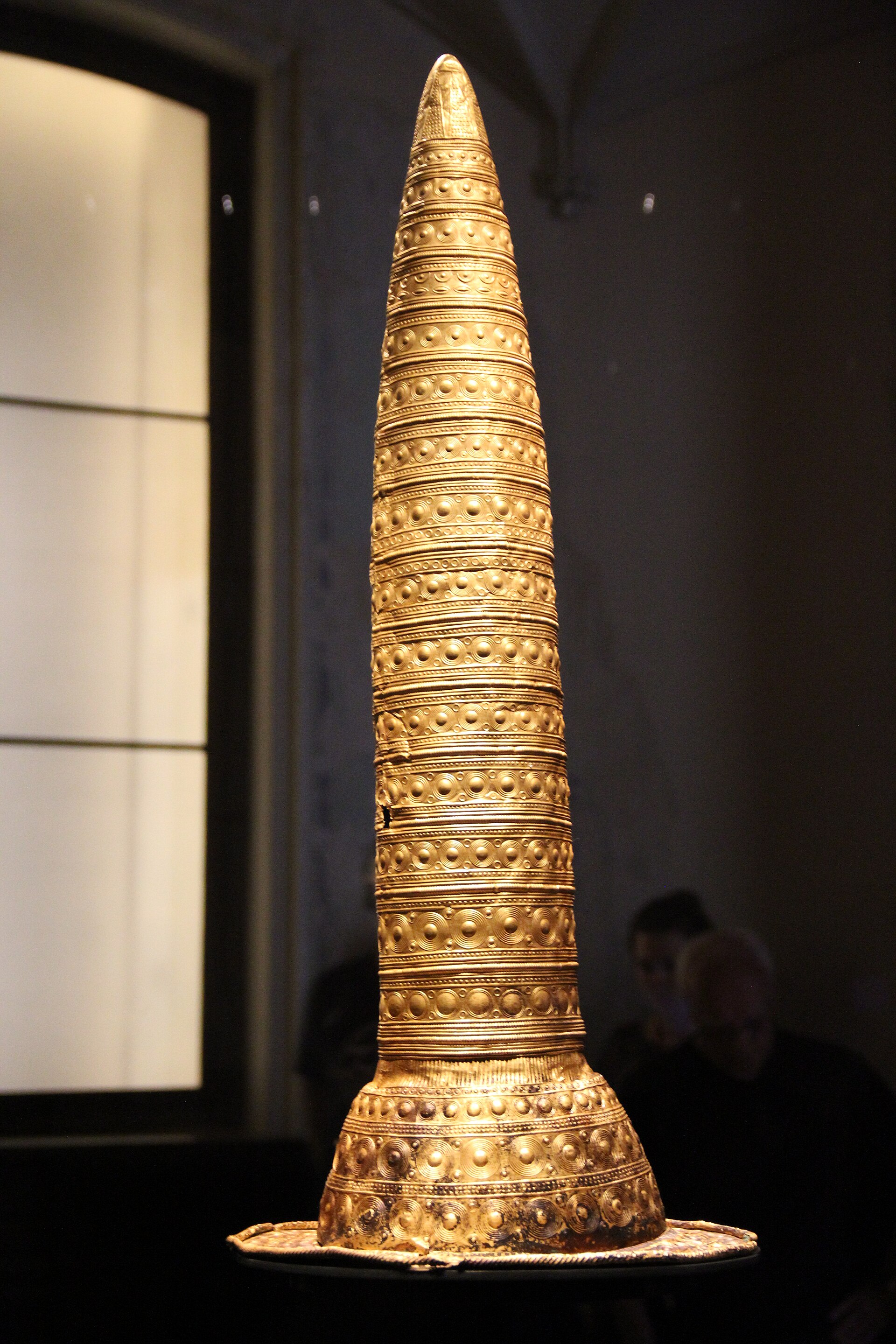
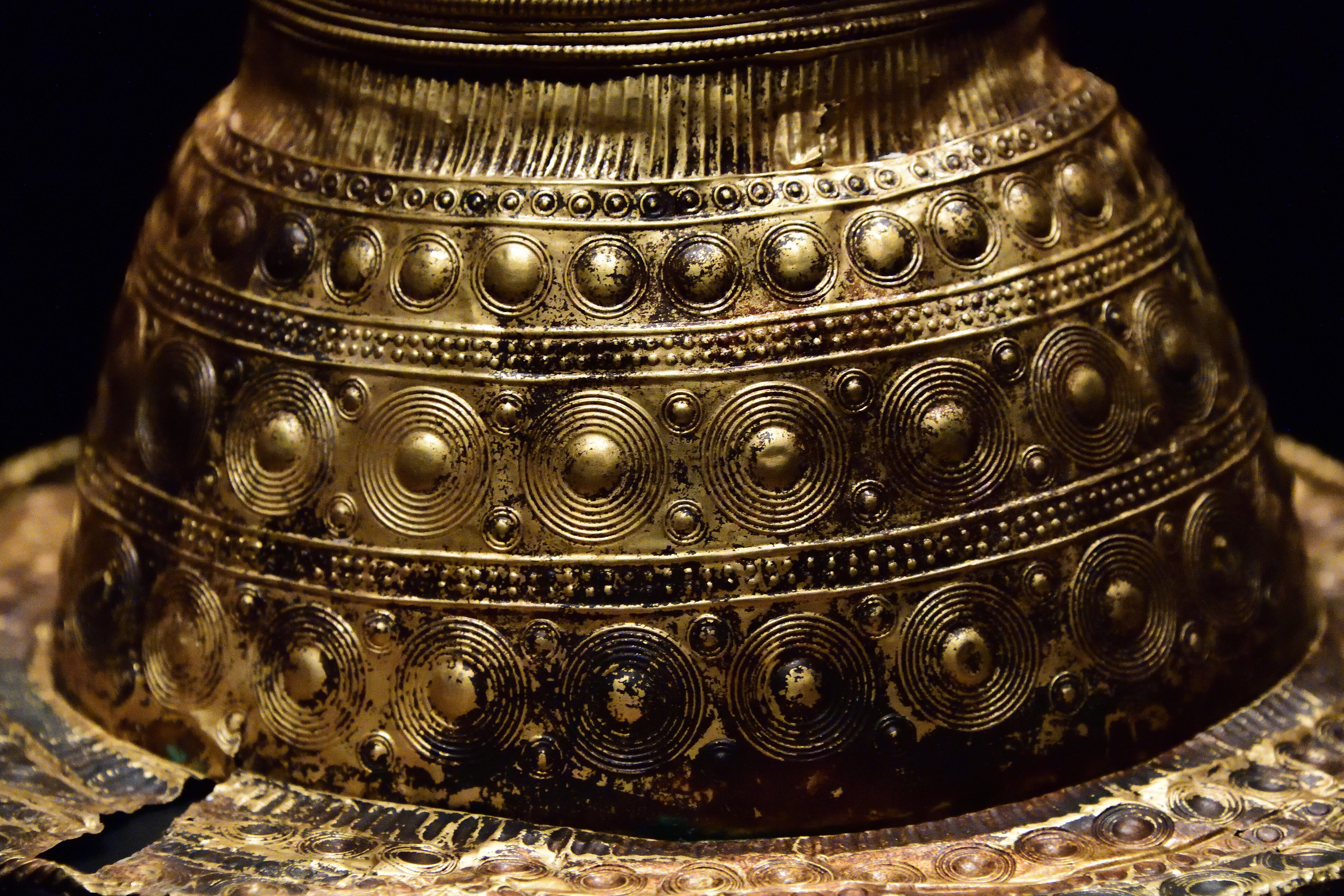
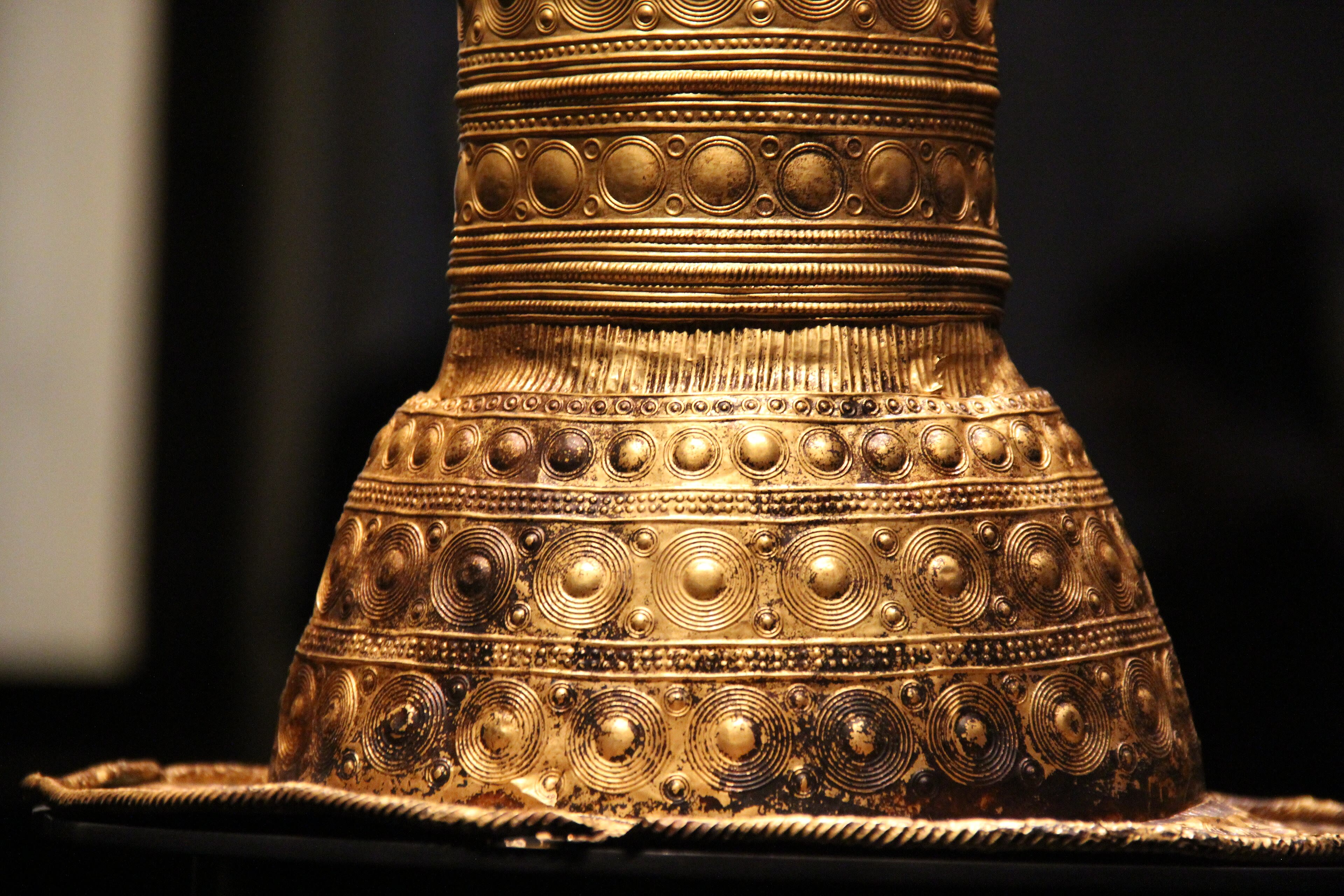
Before we leave, two last wonders, one gleaming and one grey. The gleaming one: a cone of beaten gold nearly three feet tall, covered in embossed suns and moons — the Berlin Golden Hat, made some three thousand years ago in the Bronze Age, a priest-astronomer's calendar you could wear, its rings of symbols encoding the cycles of sun and moon with an accuracy that startles astronomers today. Nobody knows who wore it. Everybody who sees it understands it was holy. And the grey wonder is the building itself, under your feet as we climb out: the great stair hall, where Chipperfield rebuilt the staircase in plain modern concrete inside the bomb-shattered walls — scorch marks, shrapnel scars and all. Most museums hide their wounds. This one frames them. It seemed the right note on which to leave Berlin: beauty and damage, side by side, neither pretending. South now, to Vienna — where an empire built its treasure house as a palace, and meant it.
See this place in the galleryThe Neues Museum — the Golden Hat and the Scarred Stairs — our interpretation, created from the reference photographs belowReference photographs — The Neues Museum — the Golden Hat and the Scarred Stairs · 3 photographs
Chapter Five — Vienna
3 scenes · 9 reference photographs
The Kunsthistorisches Museum — the Arrival
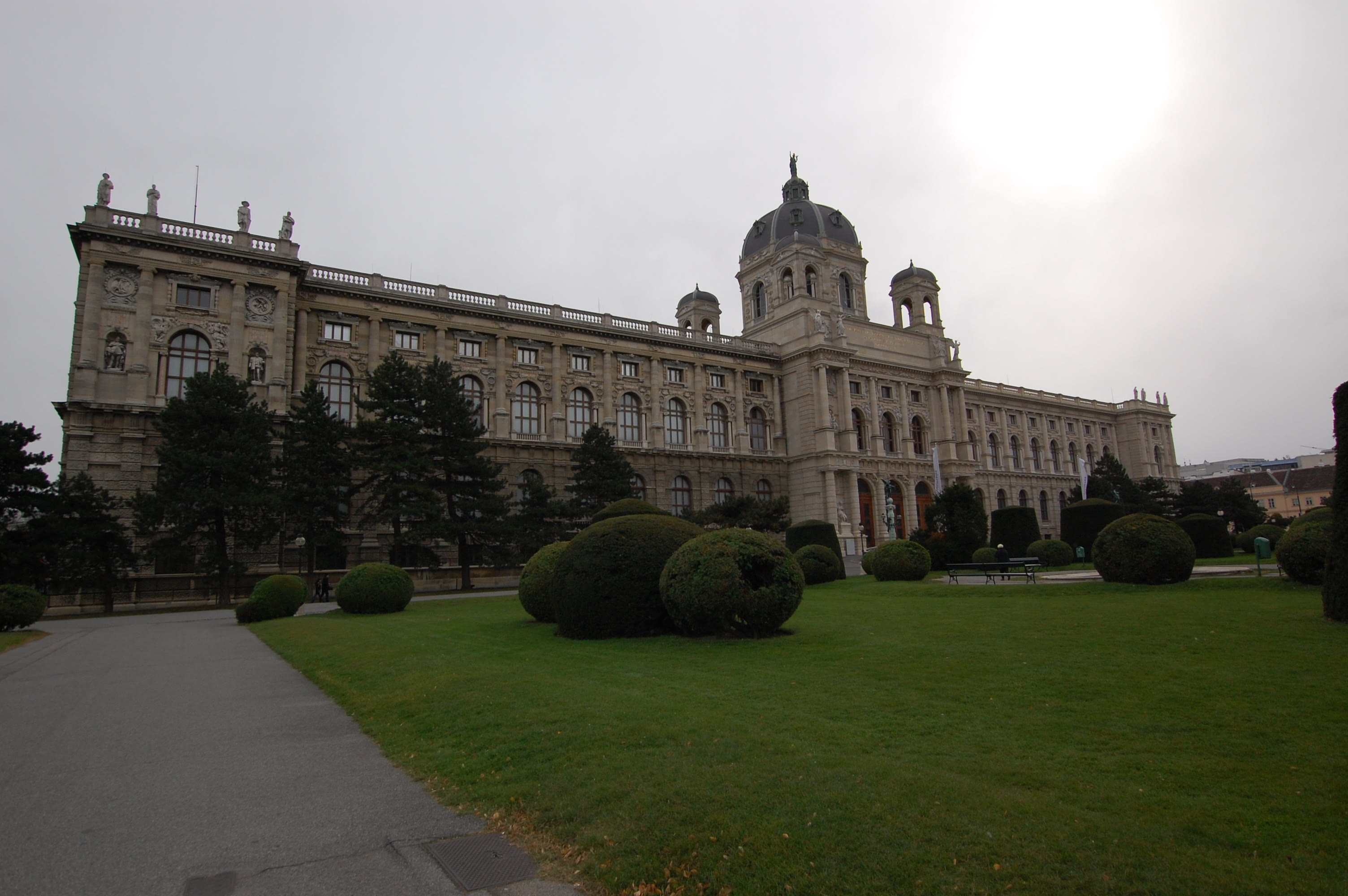
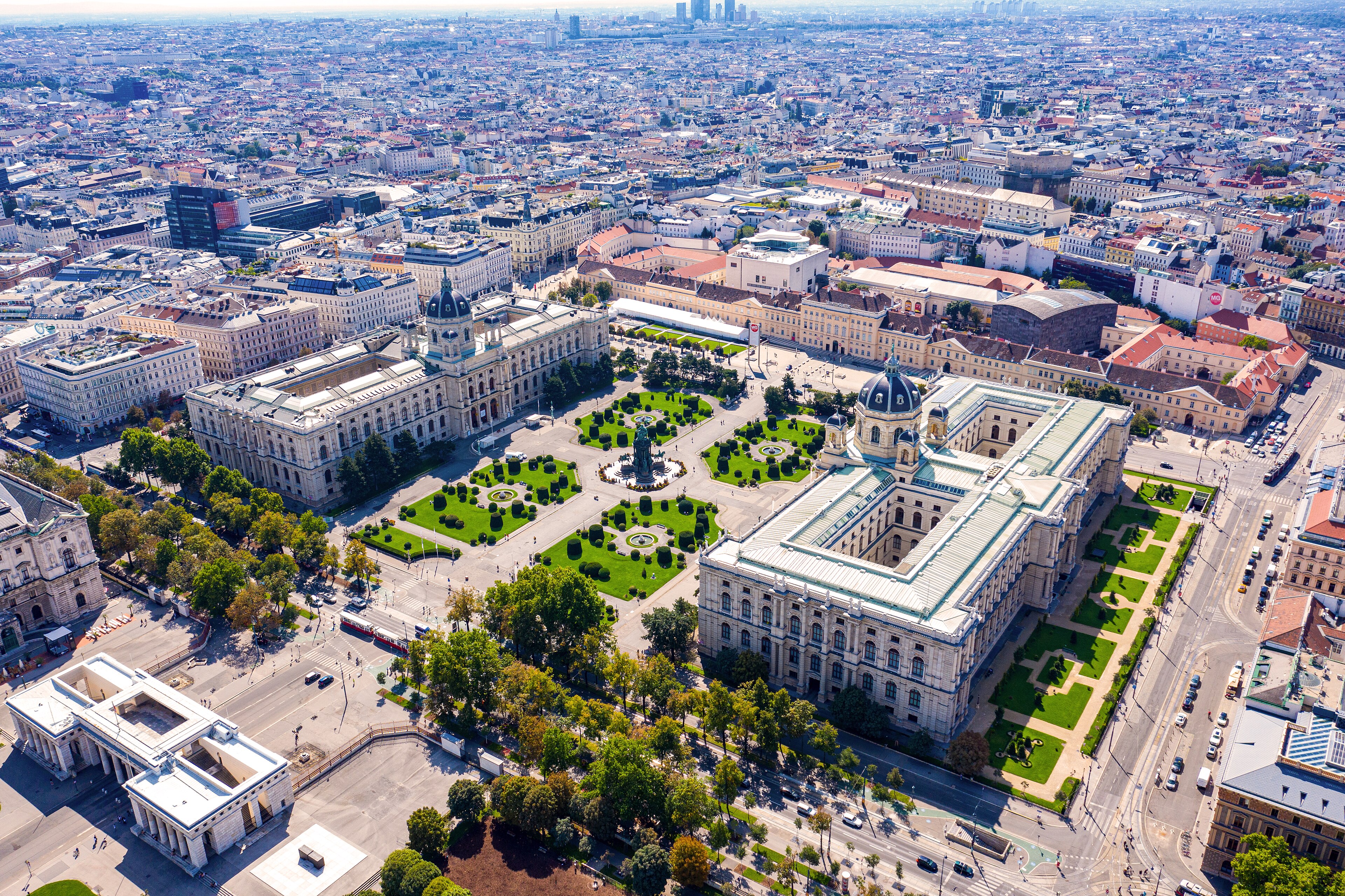
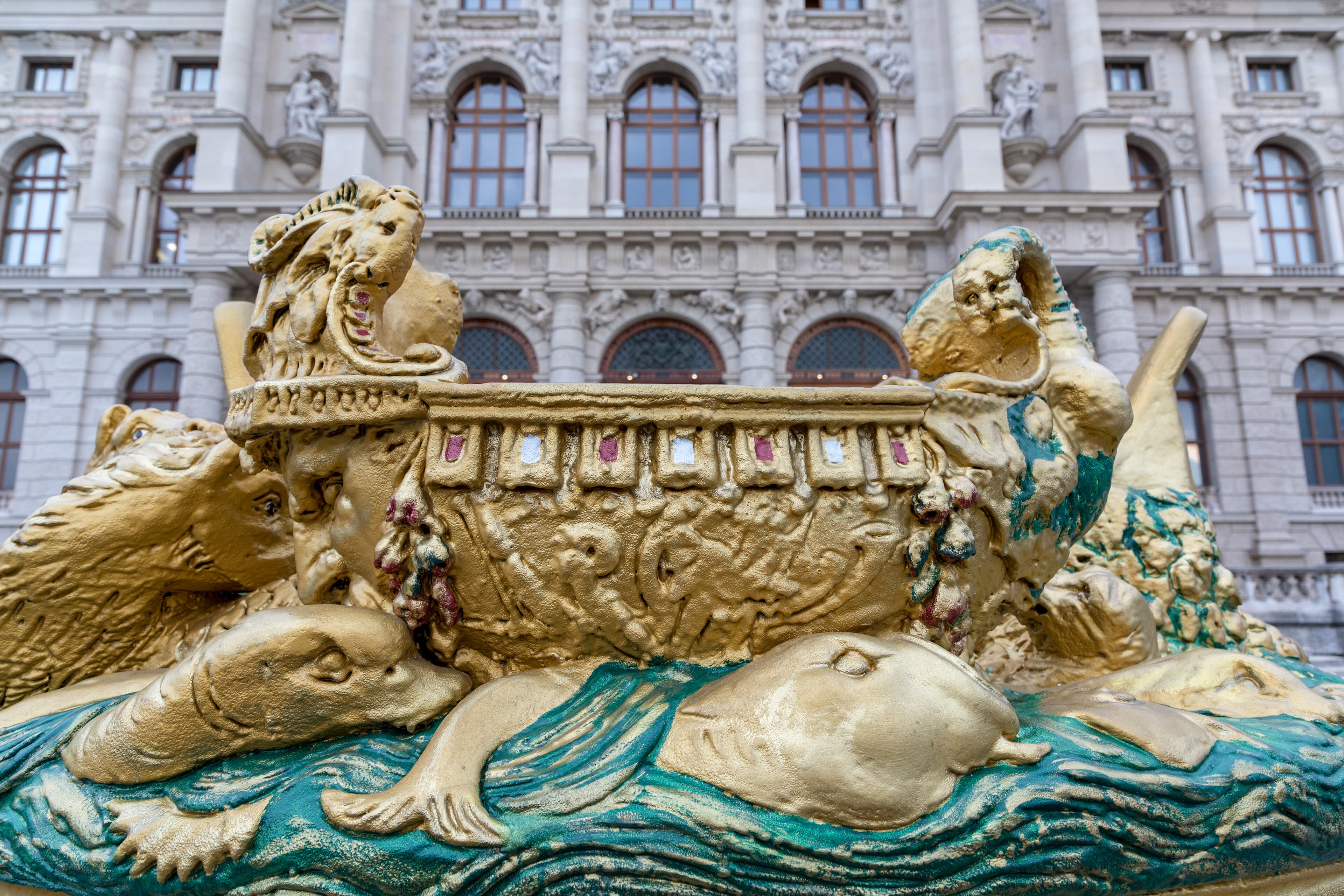
Vienna did not build its museum so much as enthrone it. Across the Ringstrasse from its twin, the natural history museum, the Kunsthistorisches Museum rises in sandstone and dome over Maria Theresa Square — opened in eighteen ninety-one as the Habsburgs' own treasure house, the place where six centuries of imperial collecting came to rest. And the collecting is the story: this was never a nation's attic; it is one family's eye, the taste of emperors and archdukes who bought Titian and Vermeer the way other men bought horses. Inside, the entrance is a ceremony — a staircase of white Carrara marble wide enough for a carriage, Canova's Theseus slaying the centaur at its landing, frescoes climbing to a dome under which the young Gustav Klimt painted corner pieces before anyone knew his name. Take the stairs slowly. You are not entering a warehouse of art. You are being received at court.
See this place in the galleryThe Kunsthistorisches Museum — the Arrival — our interpretation, created from the reference photographs belowReference photographs — The Kunsthistorisches Museum — the Arrival · 3 photographs
The Kunsthistorisches Museum — the Picture Gallery and Bruegel
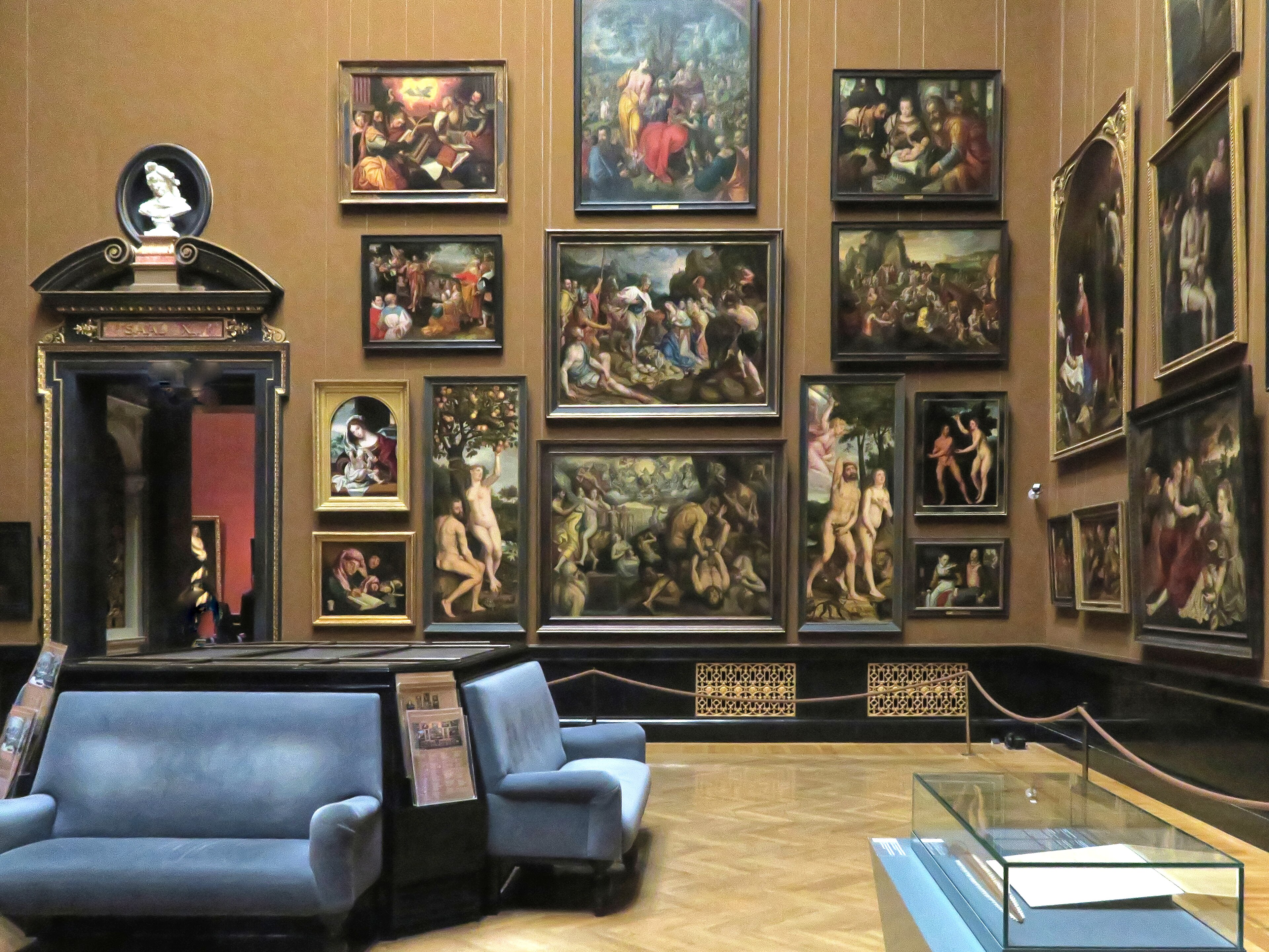
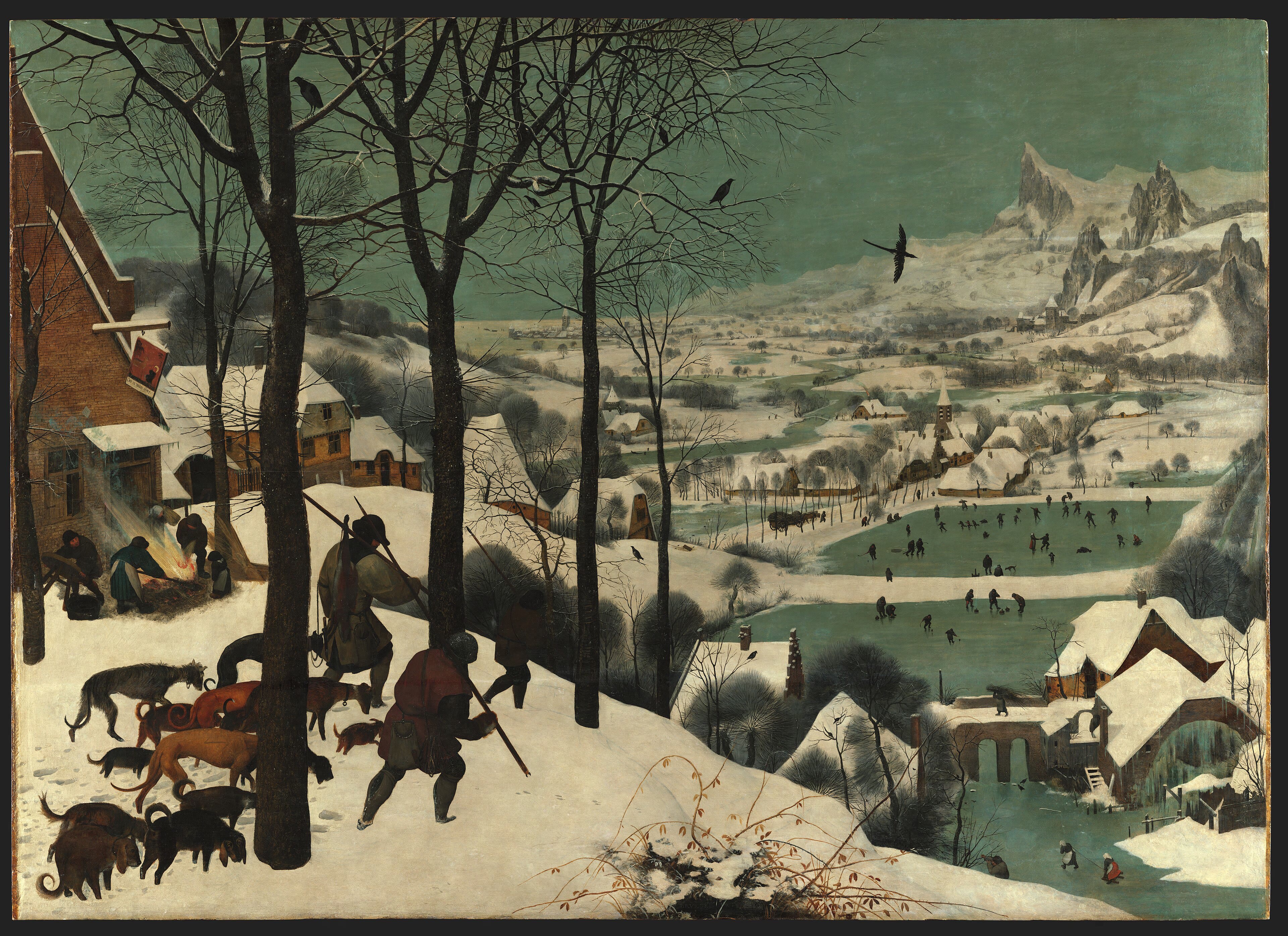
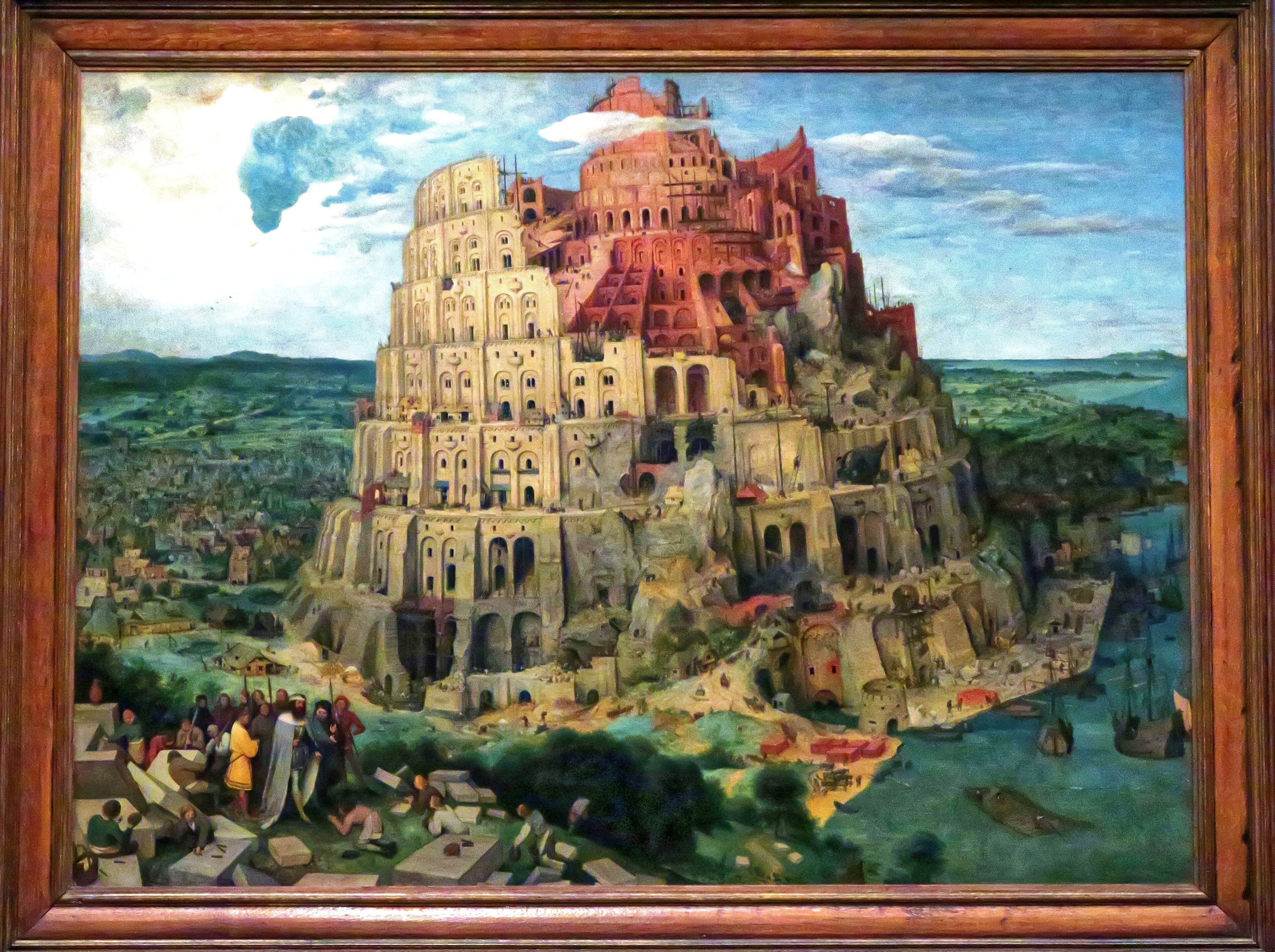
Upstairs, the picture gallery runs in enfilade — Titian's warmth, Veronese's pageantry, the single Vermeer, Caravaggio's thorns — but one room stops every visitor I have ever watched walk into it: the Bruegel room. Vienna holds the largest collection of Pieter Bruegel the Elder on Earth, a dozen of his forty-odd surviving paintings, gathered by Habsburg archdukes who had the sense to buy genius before the world agreed on the price. Here are the Hunters in the Snow, coming home over a frozen world in the winter of fifteen sixty-five — the most famous winter ever painted, every skater and fireside true. Here is the Tower of Babel rearing over a Dutch harbour town, and the Peasant Wedding, all appetite and elbows. Stand in the middle of that room and turn slowly: it is the whole of human life, painted by one man watching it with love and absolutely no illusions. He is the painter I would cross Europe for. I have, several times.
See this place in the galleryThe Kunsthistorisches Museum — the Picture Gallery and Bruegel — our interpretation, created from the reference photographs belowReference photographs — The Kunsthistorisches Museum — the Picture Gallery and Bruegel · 3 photographs
The Kunsthistorisches Museum — the Kunstkammer
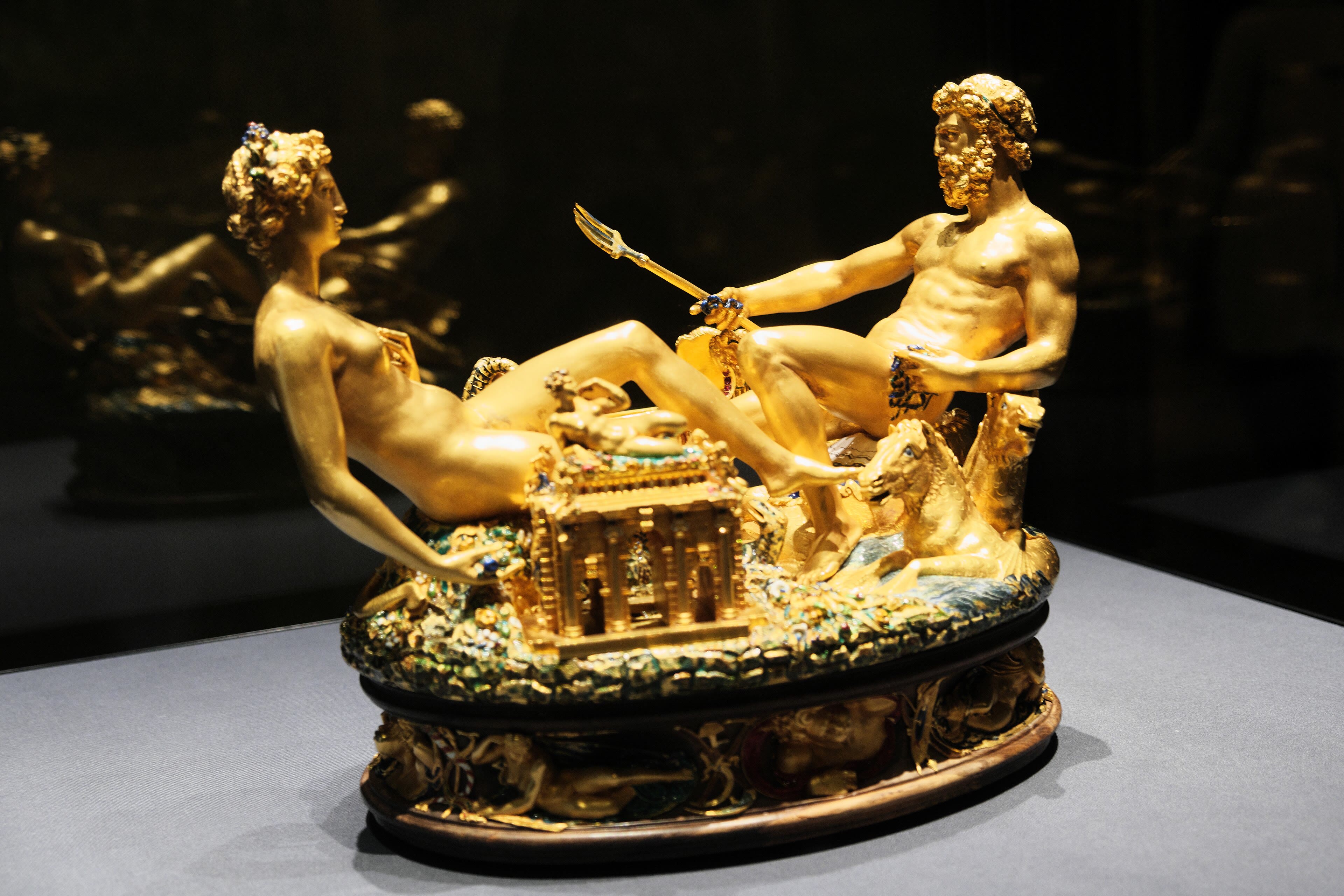
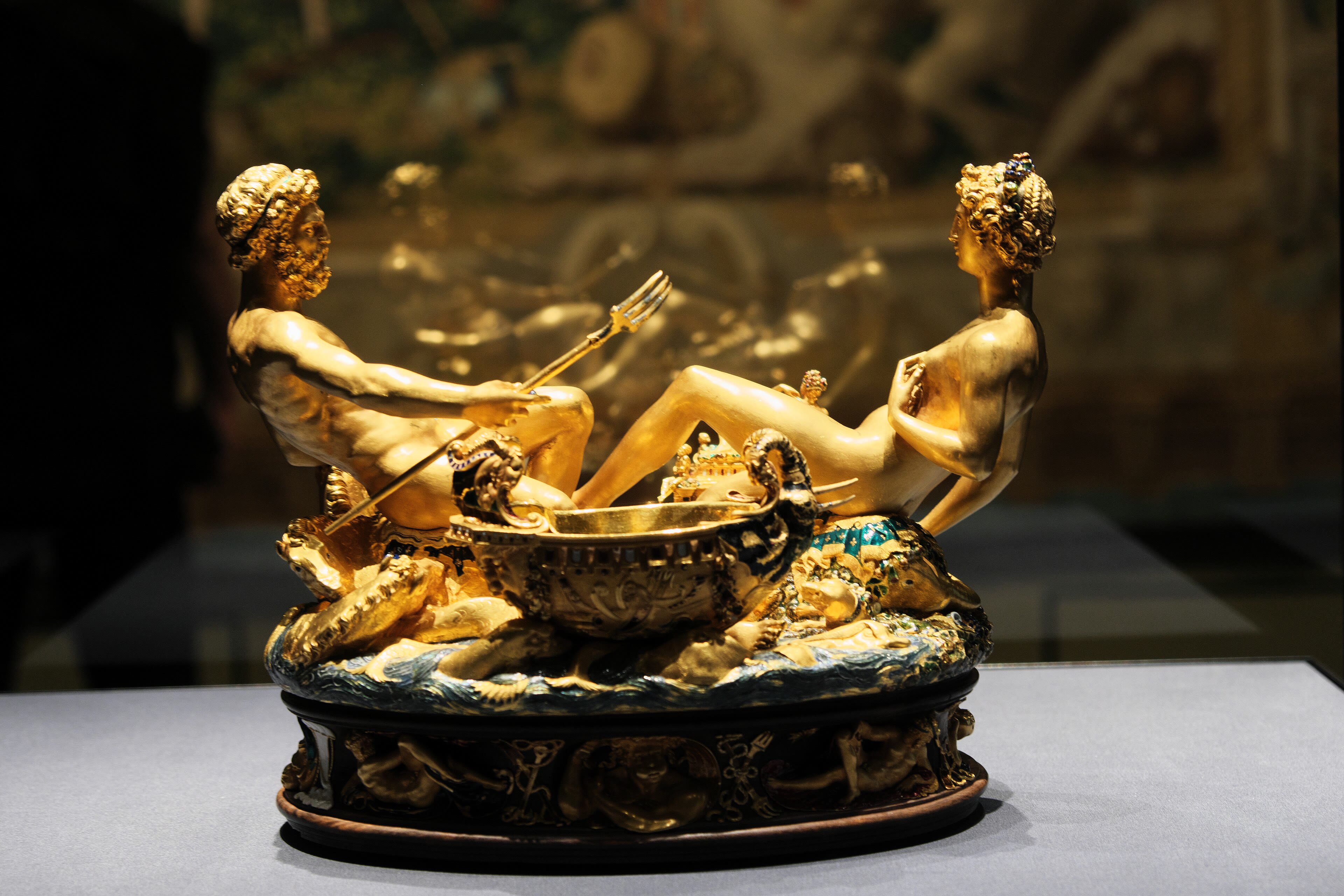
One floor holds what the emperors kept closest — the Kunstkammer, the chamber of art and wonders, where the Habsburgs stored the things too strange or too precious for any gallery. The most famous salt cellar in the world is here: Benvenuto Cellini's Saliera, a golden Neptune and Earth made for a king of France, stolen from this museum in two thousand and three and found buried in a forest — Cellini's only surviving goldsmith work, worth the drama. Around it, the whole Renaissance imagination in object form: automatons that still move, cups carved from rhinoceros horn and coconut, rock-crystal vessels cut so thin they hold light, a mechanical celestial globe, ivory turned on a lathe into impossible lace. A Kunstkammer was the world in one room, arranged to prove its owner understood it. Ours is the greatest that survives intact. Linger — wonder was the point. Then south, over the Alps: Florence is waiting, and Botticelli with it.
See this place in the galleryThe Kunsthistorisches Museum — the Kunstkammer — our interpretation, created from the reference photographs belowReference photographs — The Kunsthistorisches Museum — the Kunstkammer · 3 photographs
Chapter Six — Florence
3 scenes · 9 reference photographs
The Uffizi — the Arrival
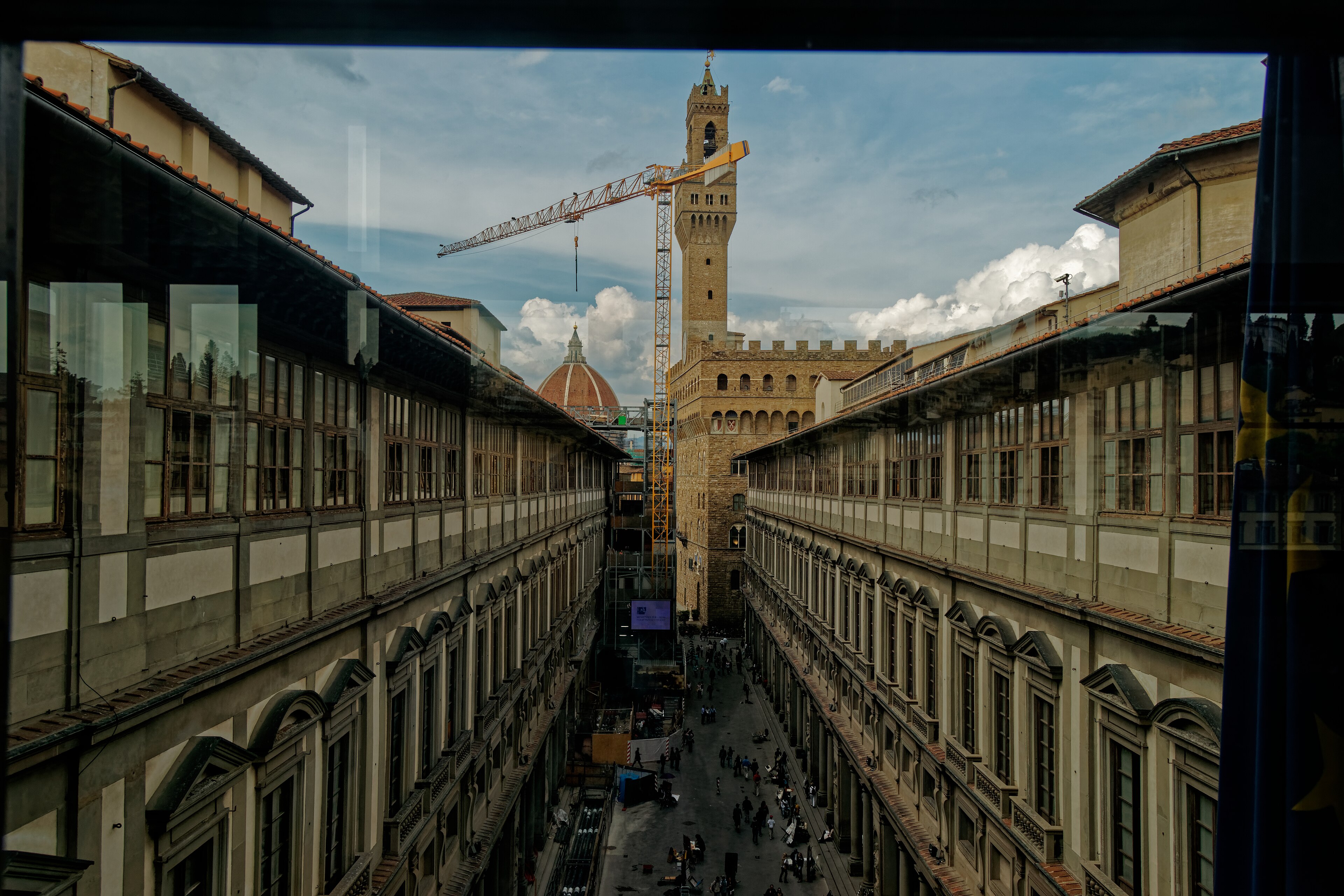
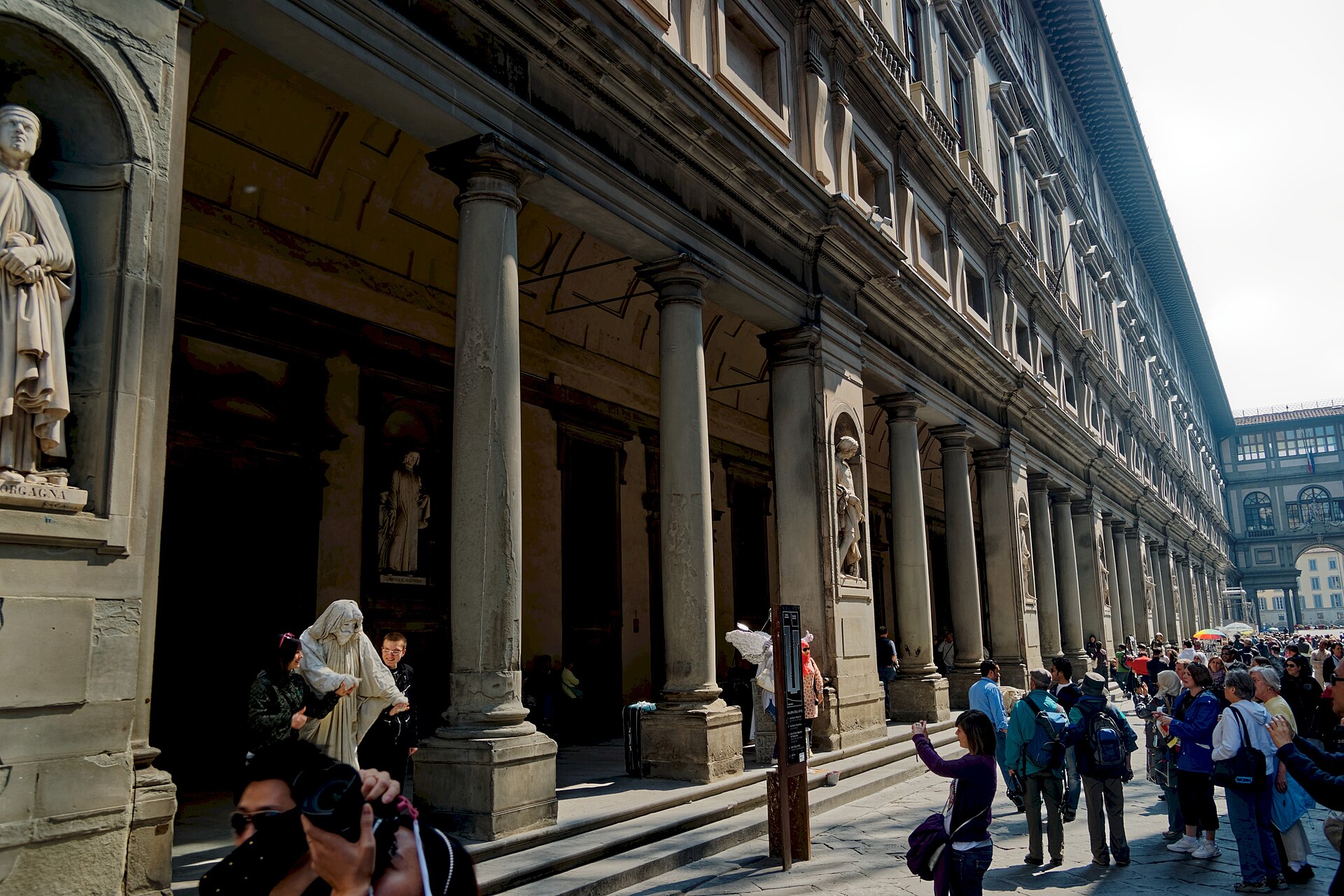
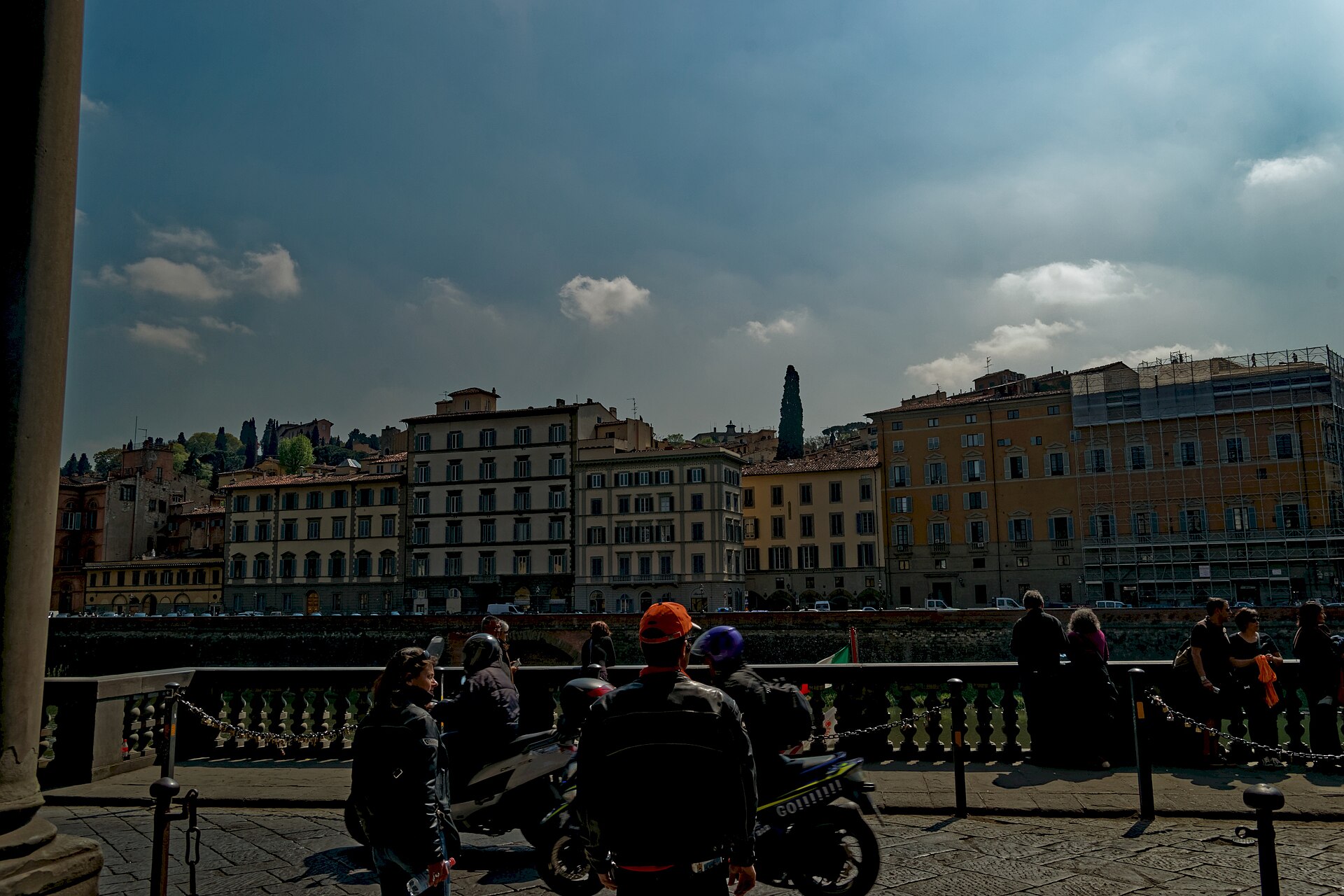
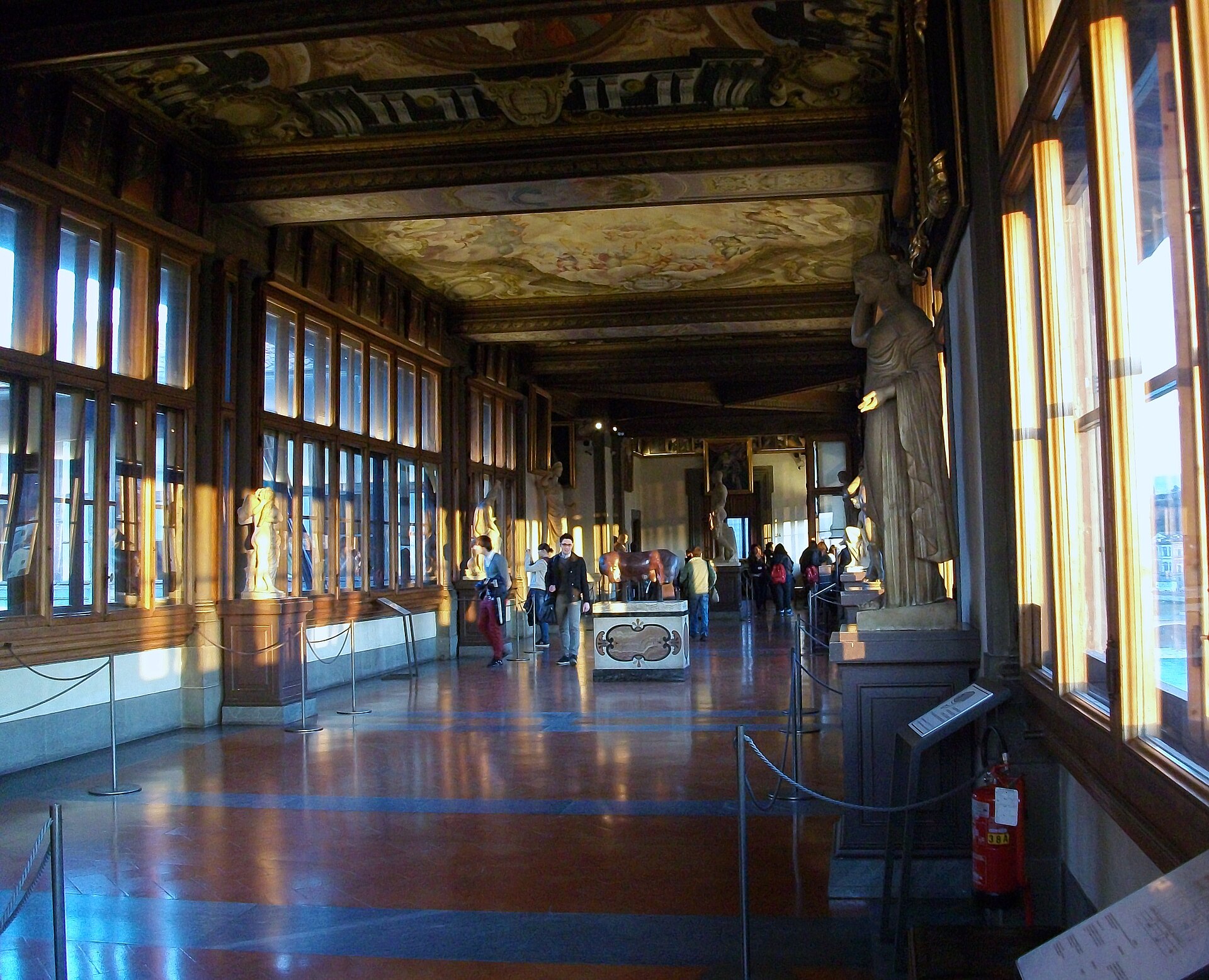
The most visited museum in Italy began as paperwork. In fifteen sixty, Giorgio Vasari built the Grand Duke a palace of offices — uffizi means offices — a long, elegant horseshoe of grey stone running from the Palazzo Vecchio down to the River Arno, its courtyard colonnade lined with statues of Tuscany's great men, all gazing at the river. The Medici, being the Medici, could not leave a roof empty: the top floor became a gallery for the family's paintings, and when the last Medici, Anna Maria Luisa, died in seventeen forty-three, she signed the most generous document in museum history — the Family Pact, leaving everything to Tuscany forever, on the condition it never leave Florence. Everything you will see today is here because one woman insisted it stay. The queues outside are formidable and entirely deserved. Come — we enter as her guests, with four centuries of art above the offices.
See this place in the galleryThe Uffizi — the Arrival — our interpretation, created from the reference photographs belowReference photographs — The Uffizi — the Arrival · 3 photographs
The Uffizi — Botticelli
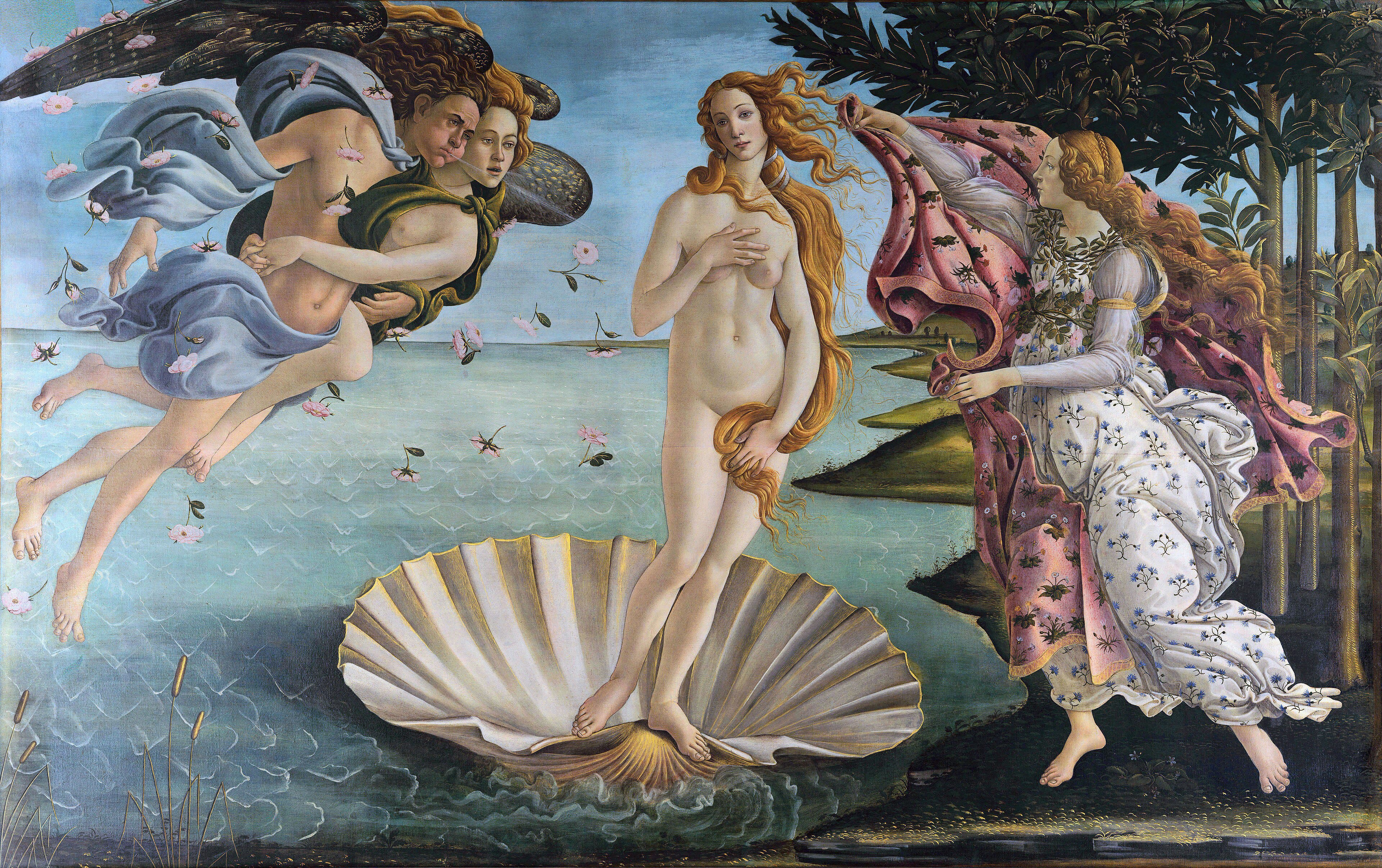
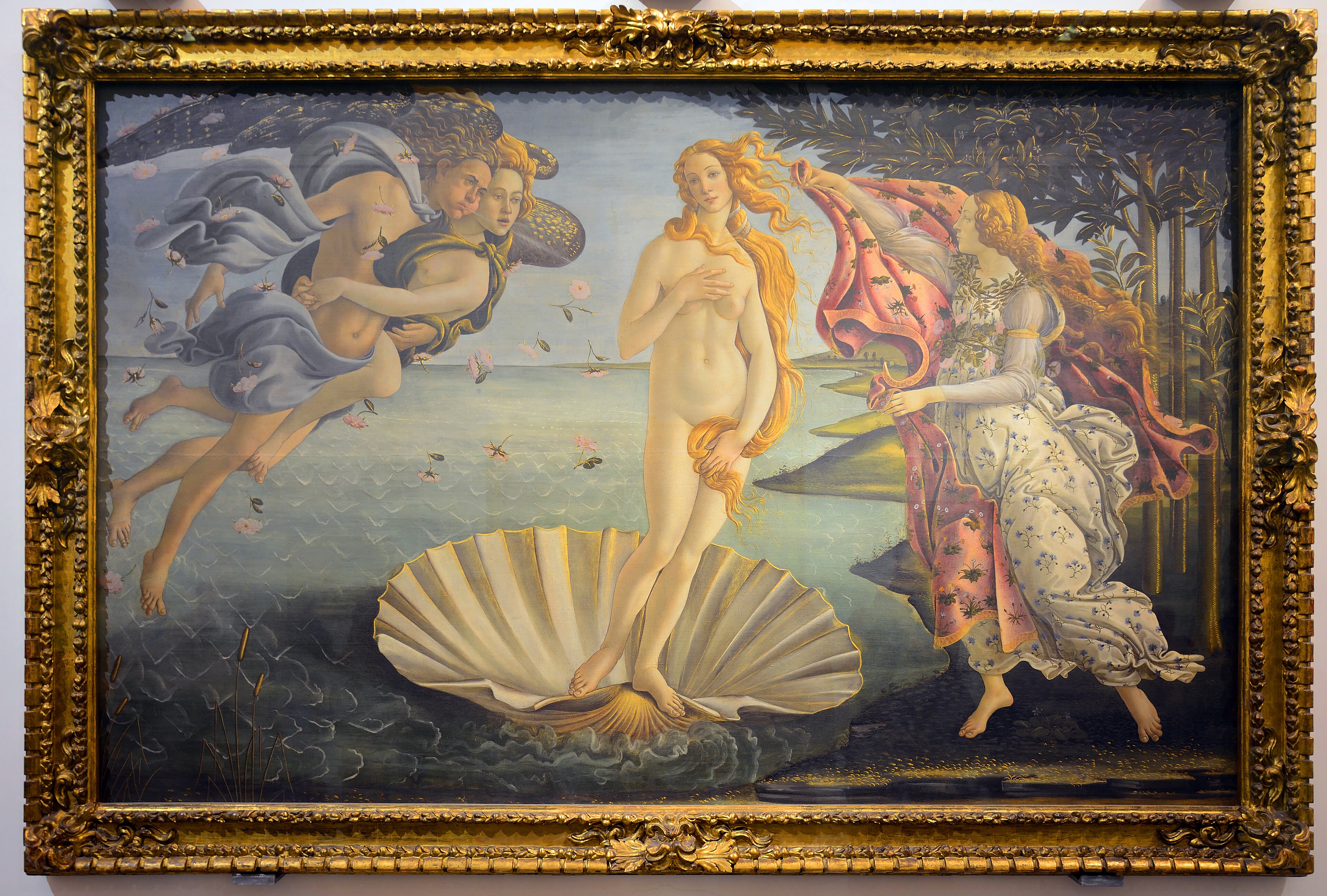
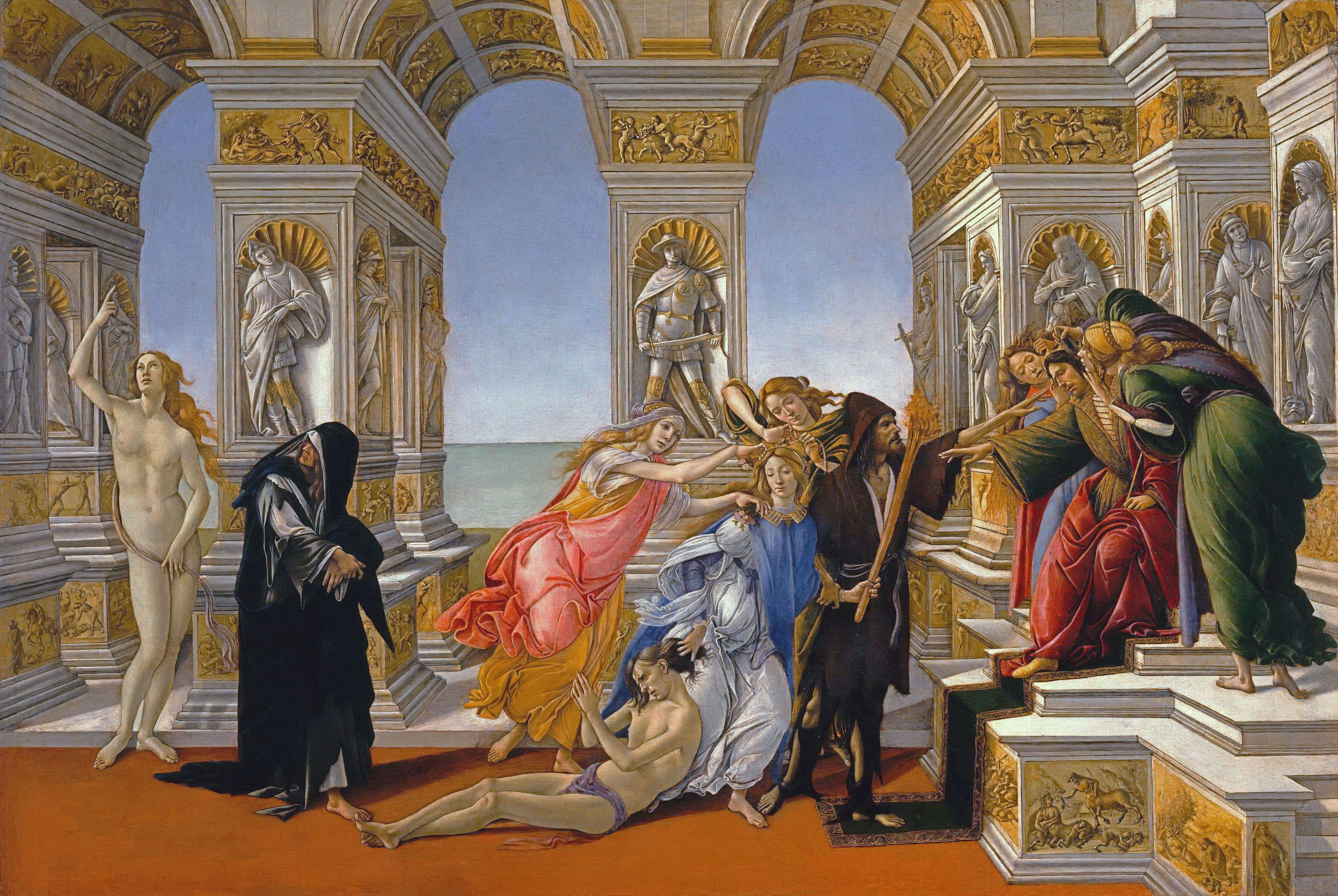
Two rooms in this building stop time. Sandro Botticelli painted for the Medici when Florence was inventing the modern world, and his two great mythologies hang here like windows into a spring that never ends. The Birth of Venus: the goddess arriving on a shell at the shore of Cyprus, blown in by the winds, her body drawn with a line so pure it seems remembered rather than painted — the first full-length female nude of the Renaissance, and still its most graceful. Beside it, the Primavera, an orange grove of allegory — Zephyr chasing Chloris, Flora scattering flowers, the Graces dancing, Mercury parting the clouds — nine figures in a garden that scholars have argued over for five centuries without exhausting. These are public-domain old friends; they hang in the open light of their rooms and wait for you the way they have waited for everyone since the fourteen eighties. Botticelli fell under a preacher's spell late in life and burned some of his own pagan pictures. These two survived. Stand between them a while.
See this place in the galleryThe Uffizi — Botticelli — our interpretation, created from the reference photographs belowReference photographs — The Uffizi — Botticelli · 3 photographs
The Uffizi — the High Renaissance
The last rooms of our Florence day hold the moment Italian art reached its summit, three names deep. Leonardo first: the Annunciation of his youth, all lilies and mountain distance, and the unfinished Adoration of the Magi, a sepia storm of faces around a calm centre — abandoned when he left for Milan, and all the more magnetic for it. Then Michelangelo, who claimed paint was not his trade, represented by his only panel painting: the Doni Tondo, a Holy Family of sculpted, twisting muscle in a round frame, bright as enamel. And Raphael, dead at thirty-seven, with the Madonna of the Goldfinch, gentle as breath. Three men, one generation, one small city — it will never happen again, and this corridor is the proof under one roof. Eleanor's rule for rooms like this: choose one picture, give it five full minutes, and let the rest wait for another lifetime. Mine, today, is the Tondo. Choose yours. Tomorrow, Rome — twice over.
See this place in the galleryThe Uffizi — the High Renaissance — our interpretation, created from the reference photographs belowReference photographs — The Uffizi — the High Renaissance · 3 photographs
Chapter Seven — Rome
6 scenes · 18 reference photographs
The Vatican Museums — the Arrival
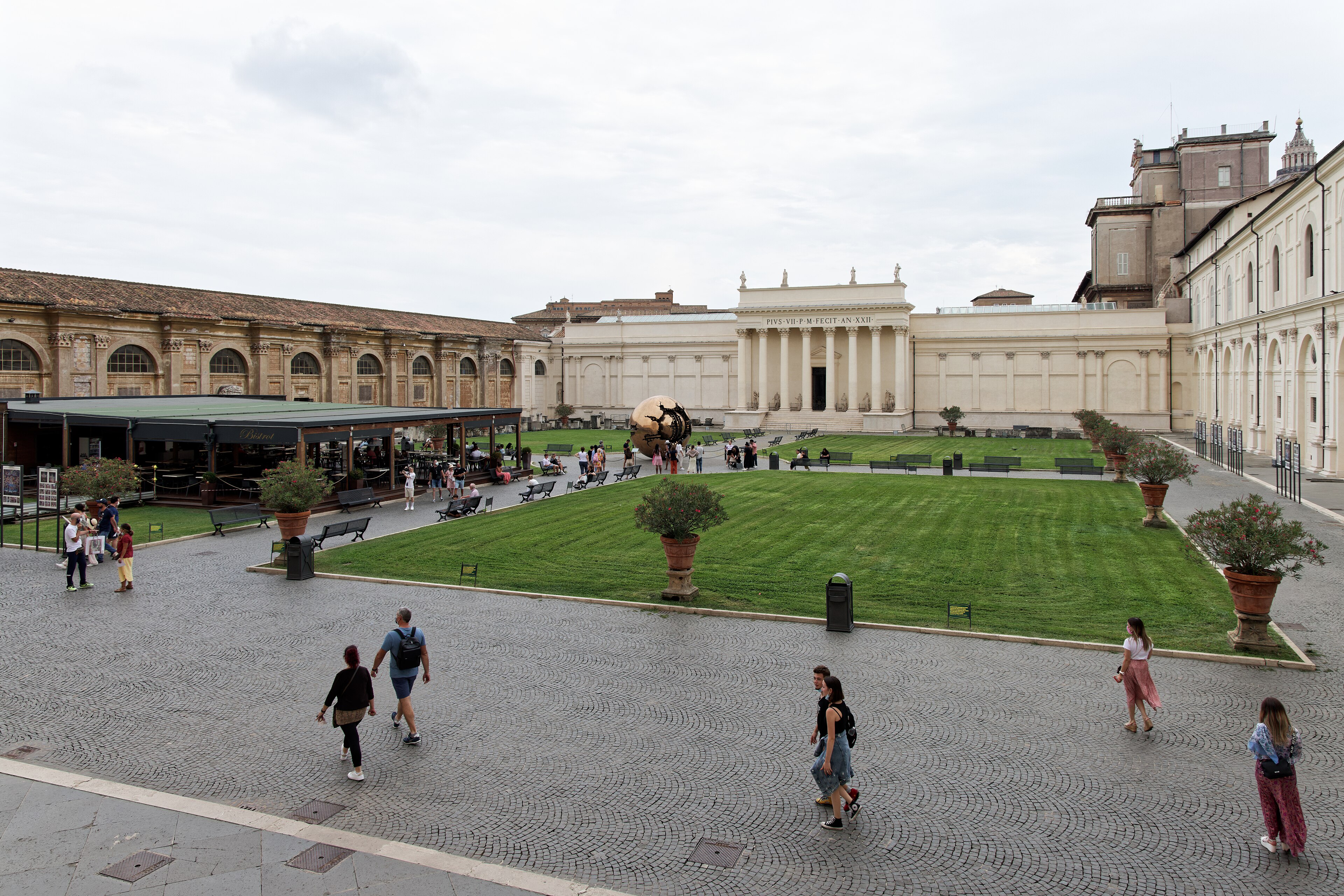
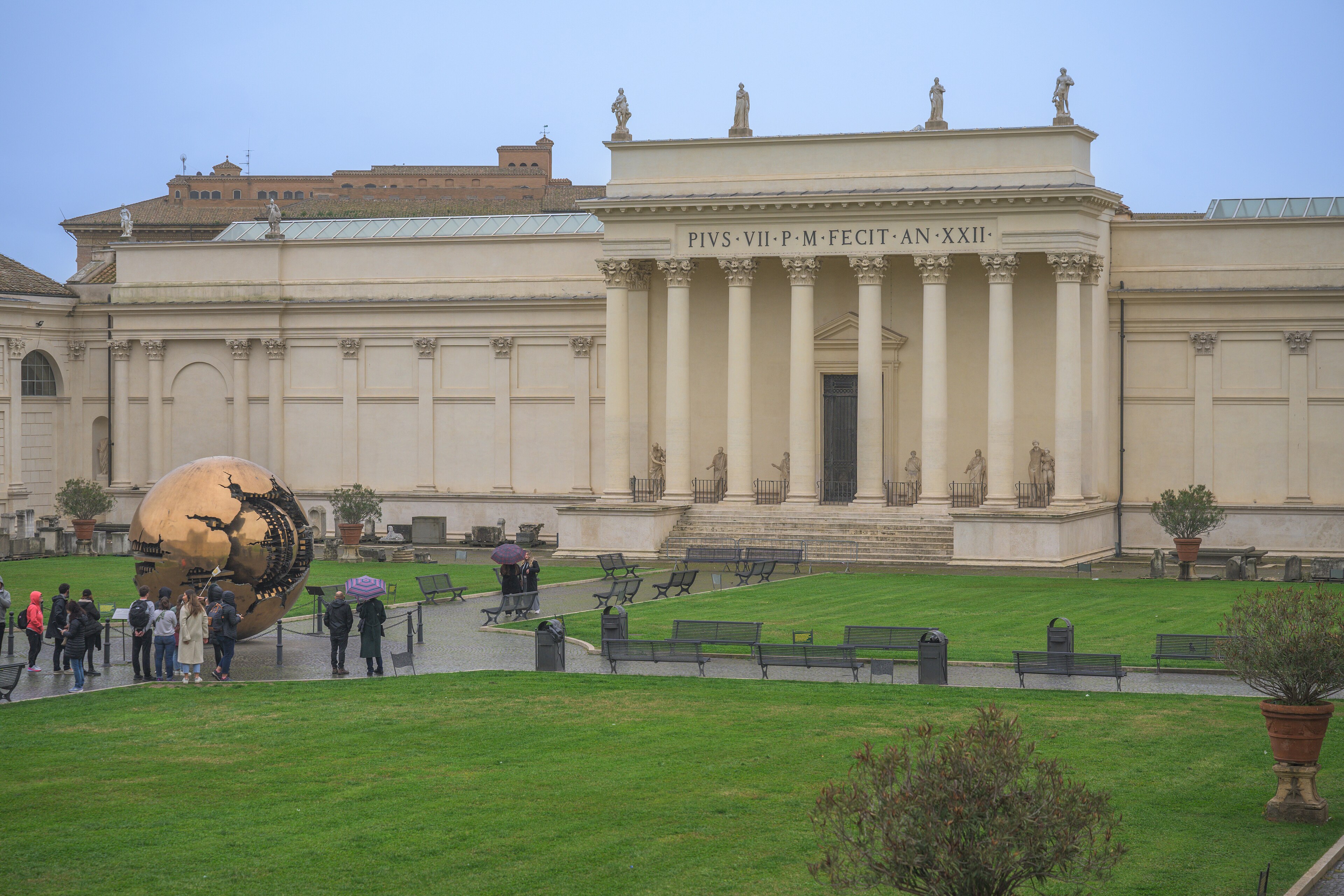
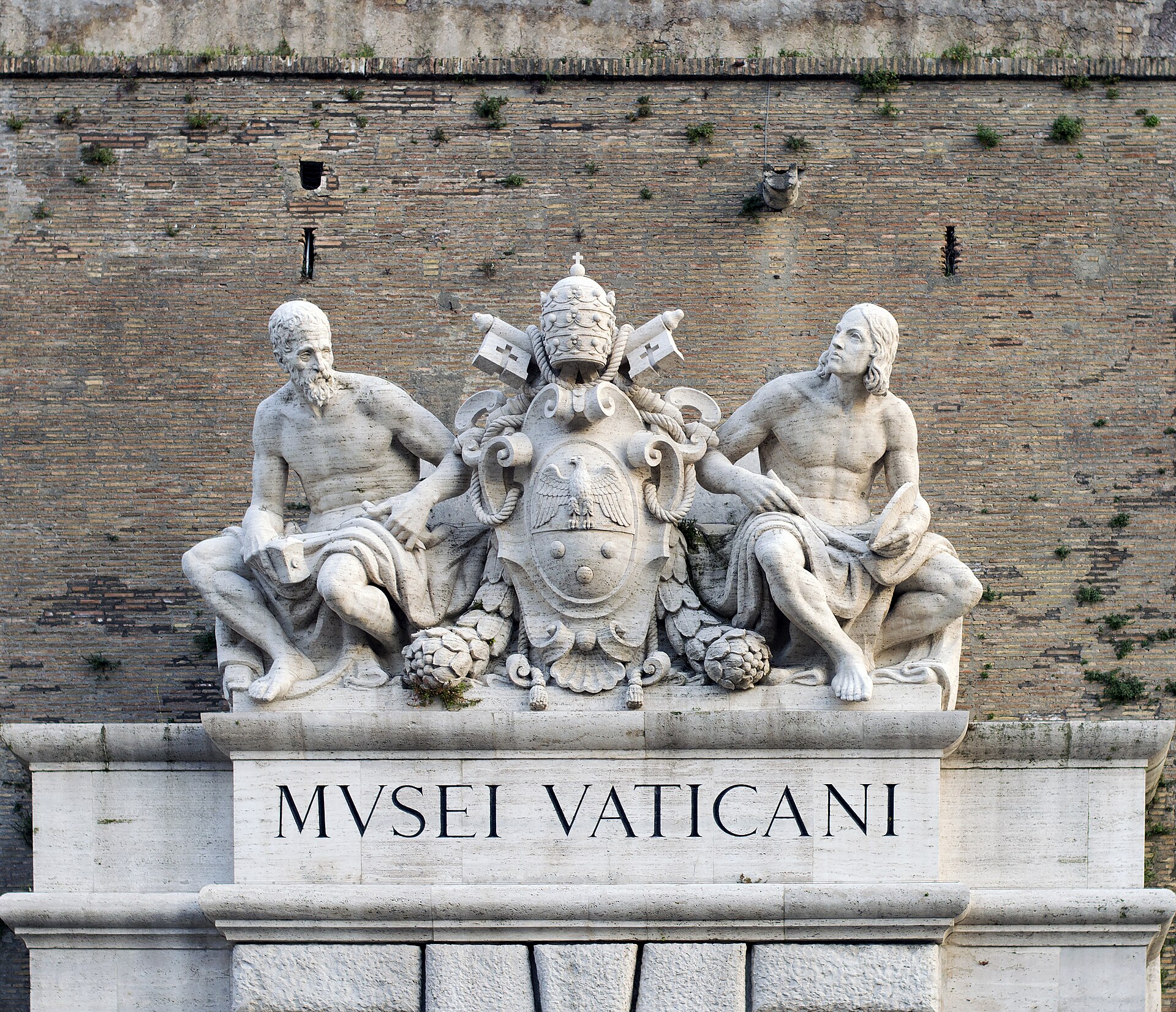
Nine miles of art begin, as all things in Rome begin, with a wall. The Vatican Museums are not one museum but a city of them — palace built upon palace, courtyard upon courtyard, gathered by popes across five centuries until the collection simply outgrew every plan ever made for it. You enter beneath the great walls of the smallest country on Earth, and almost at once the palace begins to show off: the Cortile della Pigna, where a colossal bronze pine cone, old when emperors still ruled, keeps company with a modern bronze sphere that turns like the world itself. Ahead of you lie the Egyptian halls, the long candelabra galleries, the statues — Apollo Belvedere, the Laocoön, a marble world in white. My rule for this place, learned the hard way over forty years: do not try to see it. Choose your road, walk it slowly, and let the rest remain a promise. Our road today runs through one golden corridor to the most famous room on Earth. Come. The guards open at nine, and for one hushed hour, so does the silence.
See this place in the galleryThe Vatican Museums — the Arrival — our interpretation, created from the reference photographs belowReference photographs — The Vatican Museums — the Arrival · 3 photographs
The Vatican — the Gallery of Maps
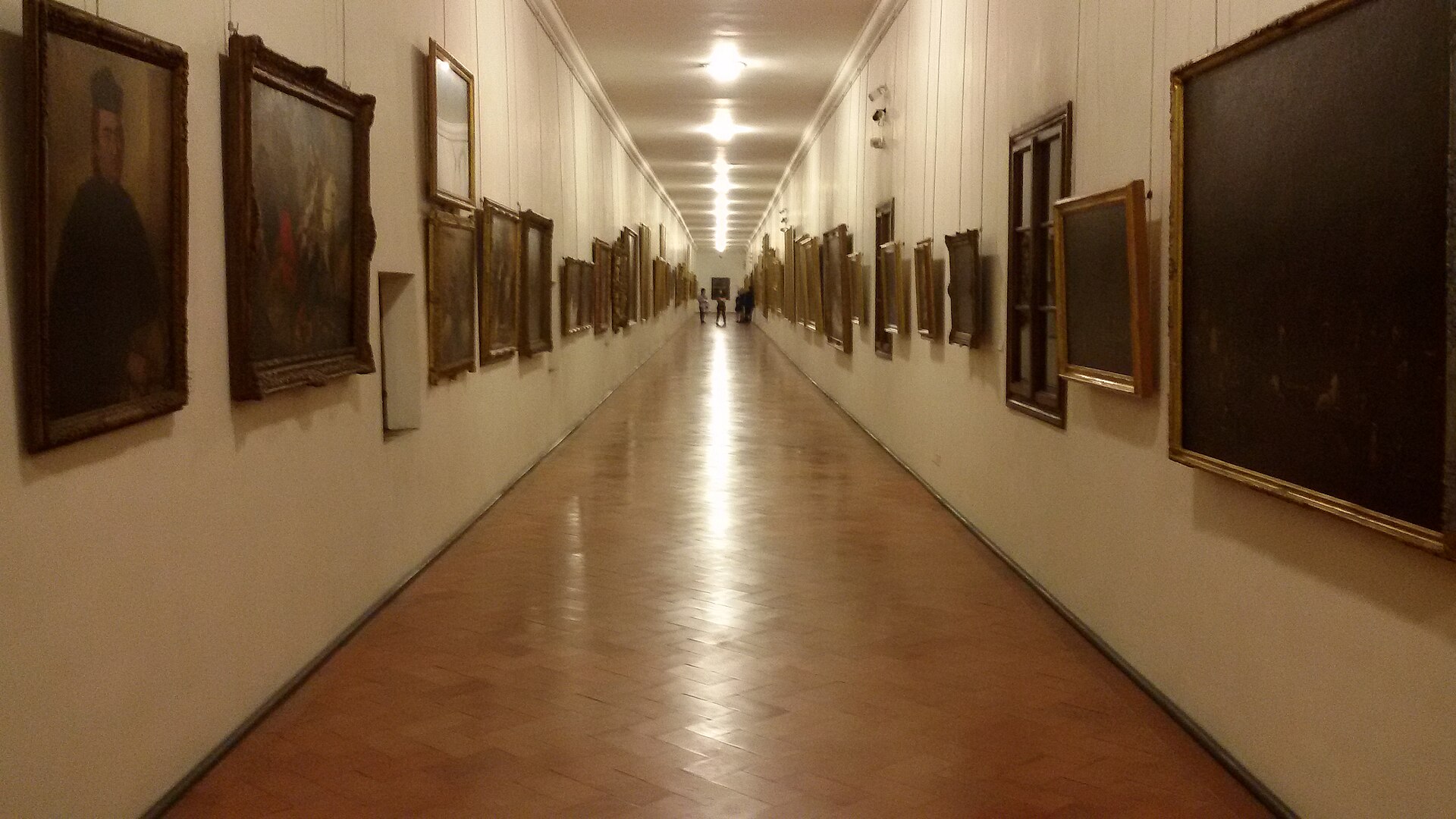
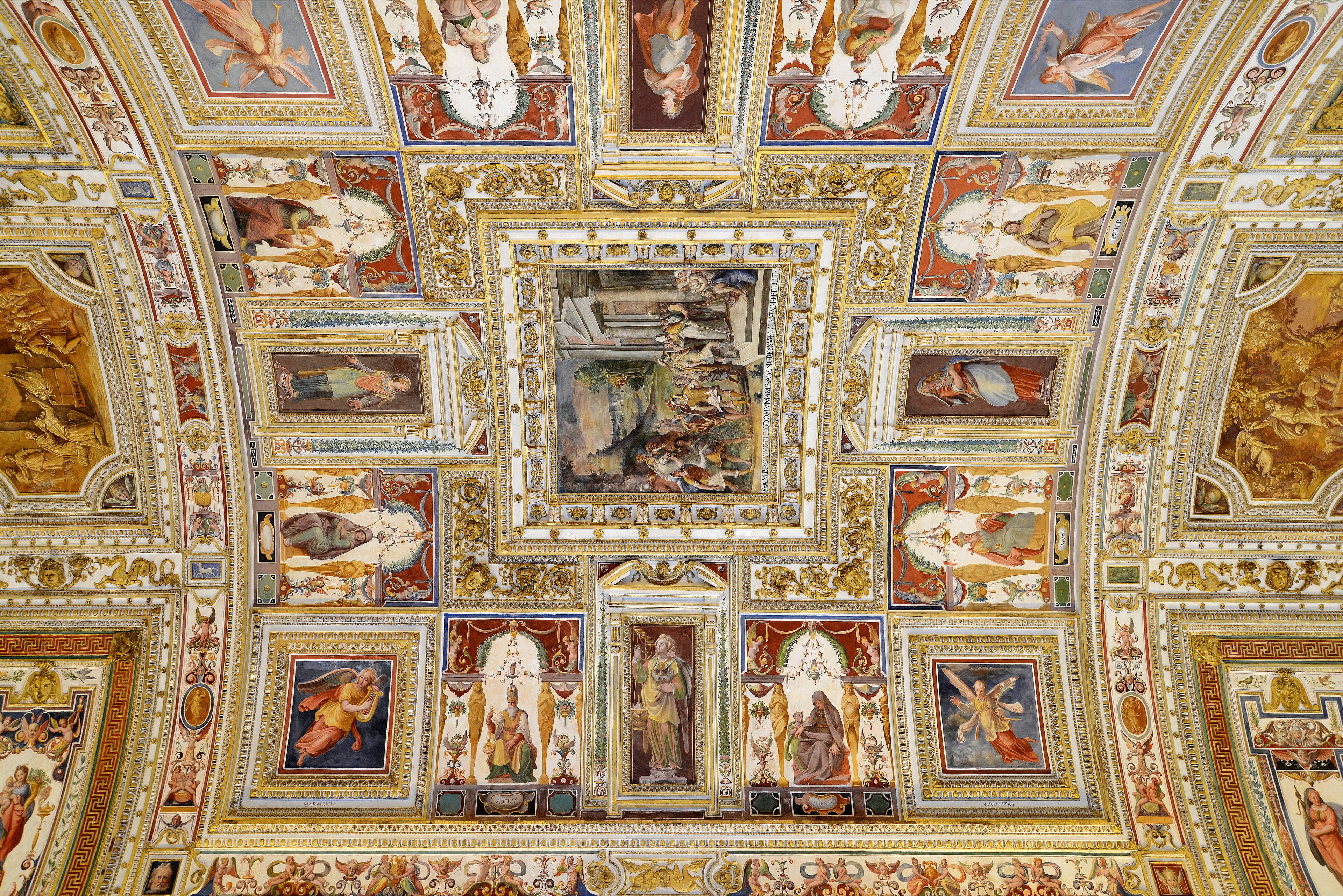
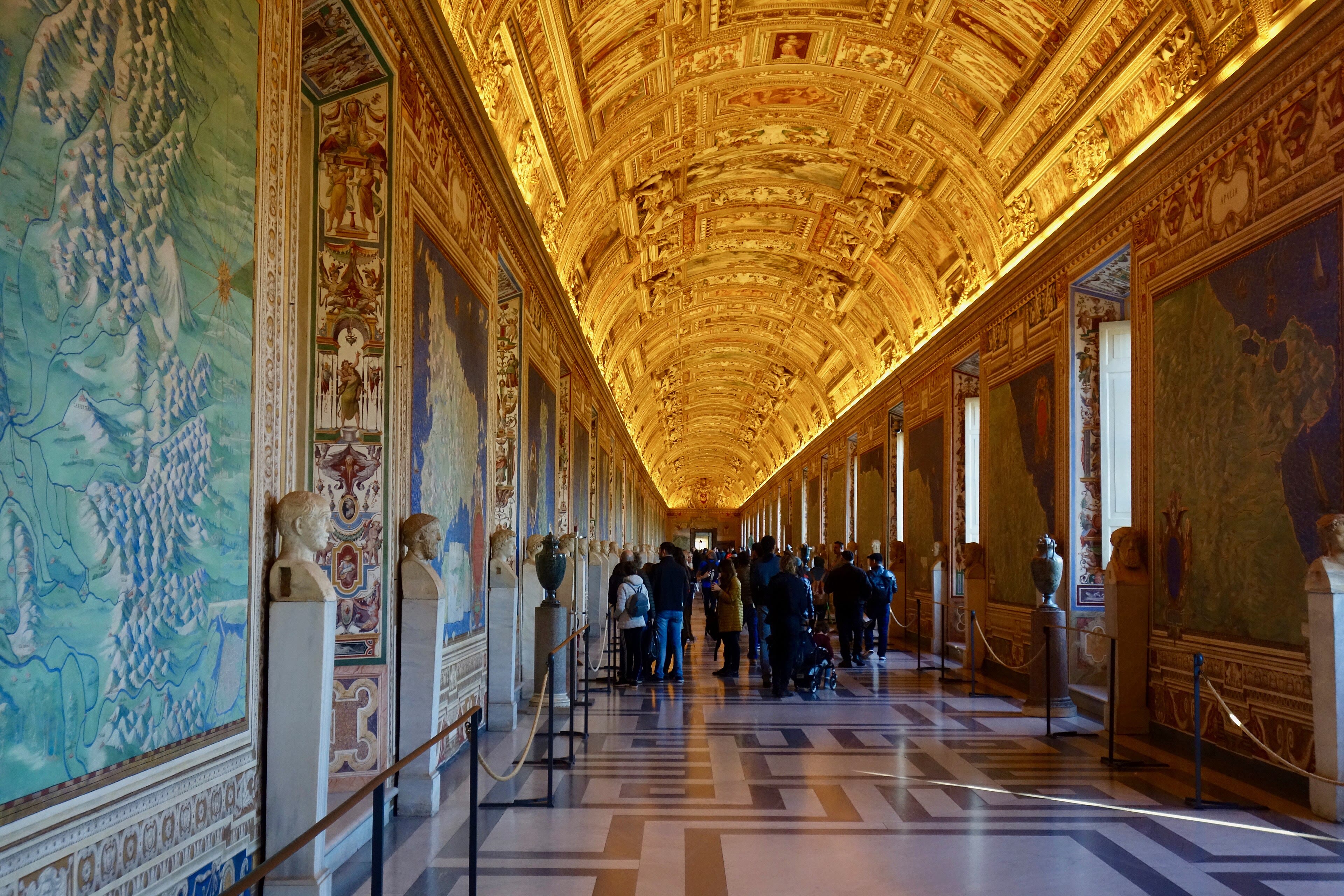
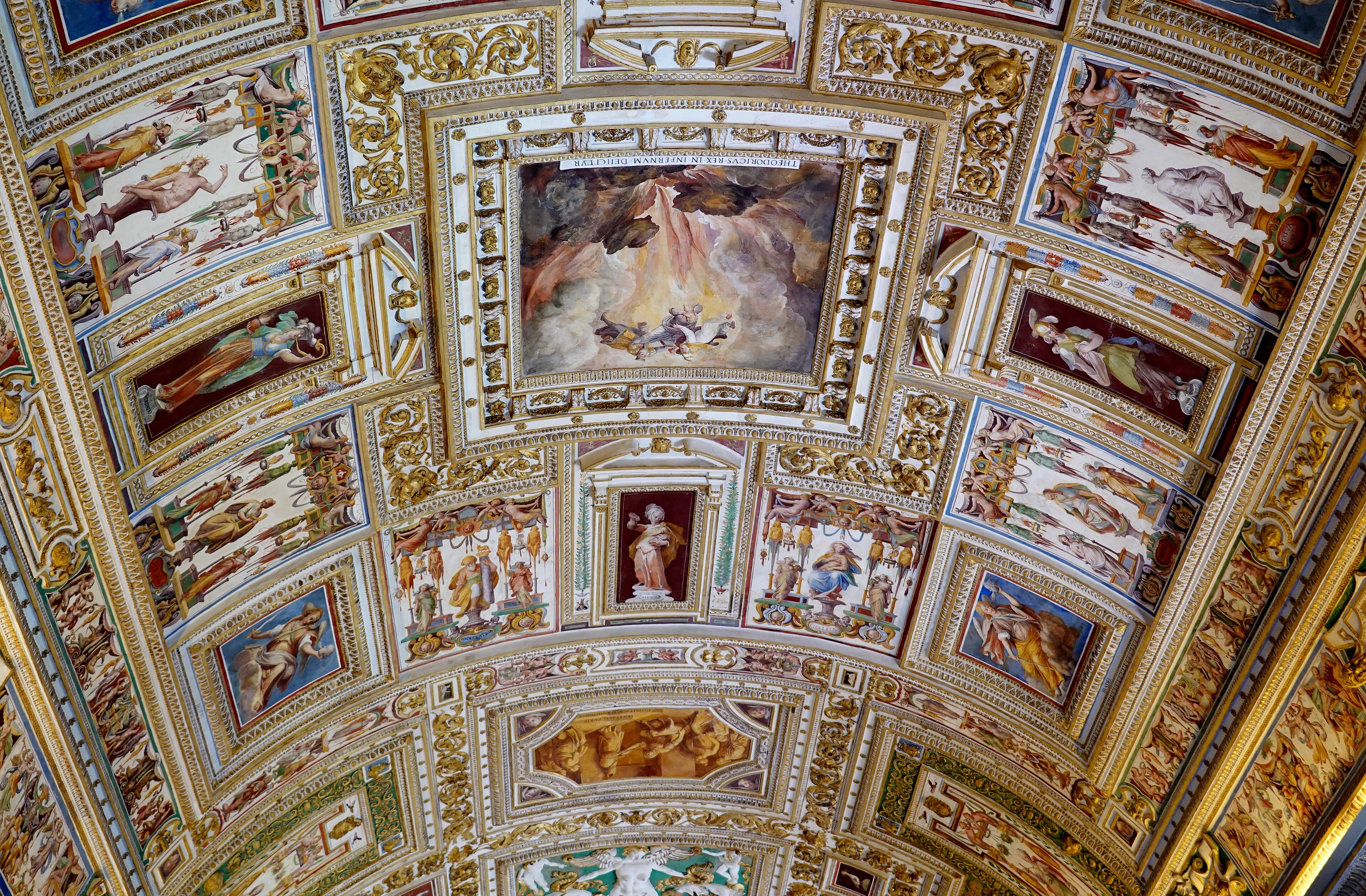
This is the corridor I would save if the whole palace could keep only one. One hundred and twenty metres of it — a river of a room — commissioned by Pope Gregory the Thirteenth in fifteen eighty, and painted in three short years by a team under the Dominican friar and geographer Ignazio Danti. Down both walls, forty enormous frescos map Italy region by region, as Italians then understood their own land: the Alps at one end, Sicily at the other, each landscape alive with little ships, sieges, festivals and miracles, every coastline argued over with Rome's best astronomers. Above you, a gilded barrel vault of stucco and painting so rich that visitors forget to look up, which is a tragedy — look up. The cleverness of this gallery is that it is a journey inside a journey: pilgrims walked it reading the country they had just crossed, or were about to. Stand in the middle, find the region your own family springs from, or the one you have loved longest. Everyone has a map in this room. Find yours before we turn the corner into the quiet.
See this place in the galleryThe Vatican — the Gallery of Maps — our interpretation, created from the reference photographs belowReference photographs — The Vatican — the Gallery of Maps · 3 photographs
The Vatican — the Sistine Chapel
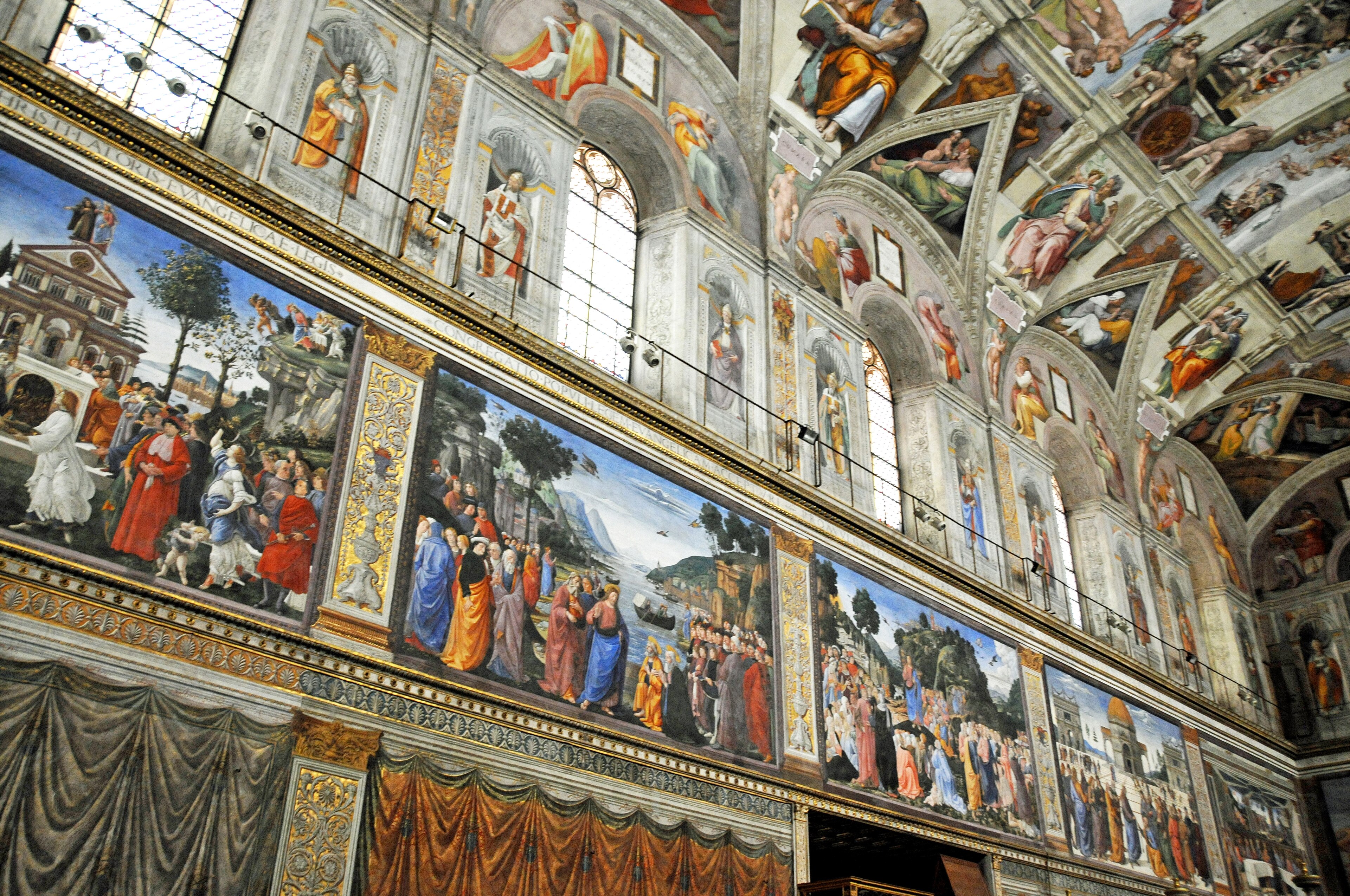
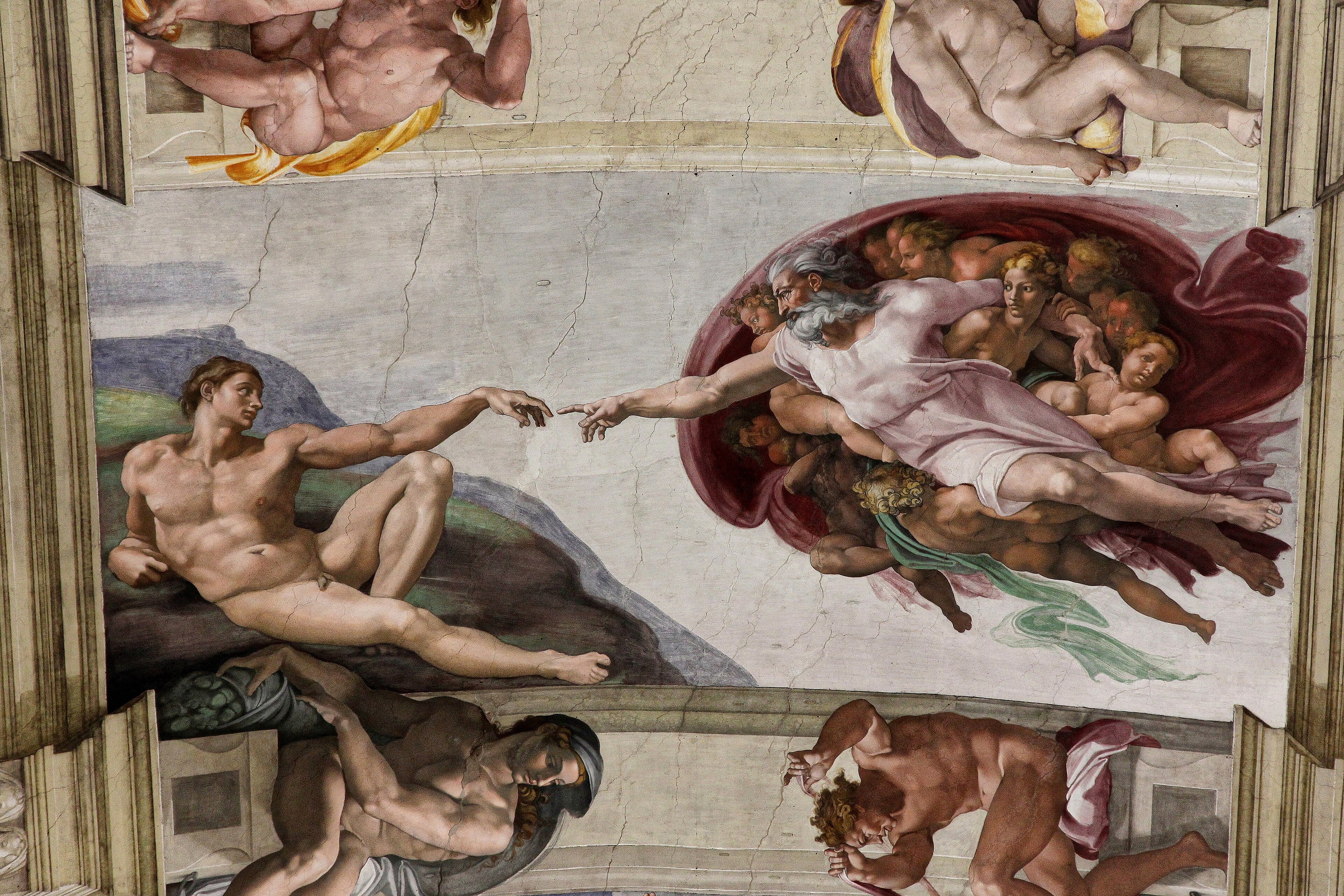
And so we arrive — not through a door so much as through a narrowing of the whole world. The Sistine Chapel is smaller than its legend: a high, plain hall built for Pope Sixtus the Fourth in the fourteen seventies, its side walls already great with frescos by Botticelli, Ghirlandaio and Perugino before Michelangelo was ever summoned. Then, in fifteen oh eight, the twenty-six-year-old sculptor who insisted painting was not his trade was ordered up a scaffold — and over four years, lying on his back, he covered the ceiling with the story of everything: the creation of light, of Adam, the Flood, the prophets and sibyls, three hundred figures in a turning sky. Twenty-four years later he returned for the Last Judgment on the altar wall, and art has been measured against this room ever since. The guards will hush you — rightly. Some rooms you photograph; this one you keep in the other way, the way it has been kept for five hundred years, in memory. Look up. Take all the time the hush allows. Tomorrow, one more Roman house — smaller, and in its way no less astonishing.
See this place in the galleryThe Vatican — the Sistine Chapel — our interpretation, created from the reference photographs belowReference photographs — The Vatican — the Sistine Chapel · 3 photographs
The Galleria Borghese — the Arrival
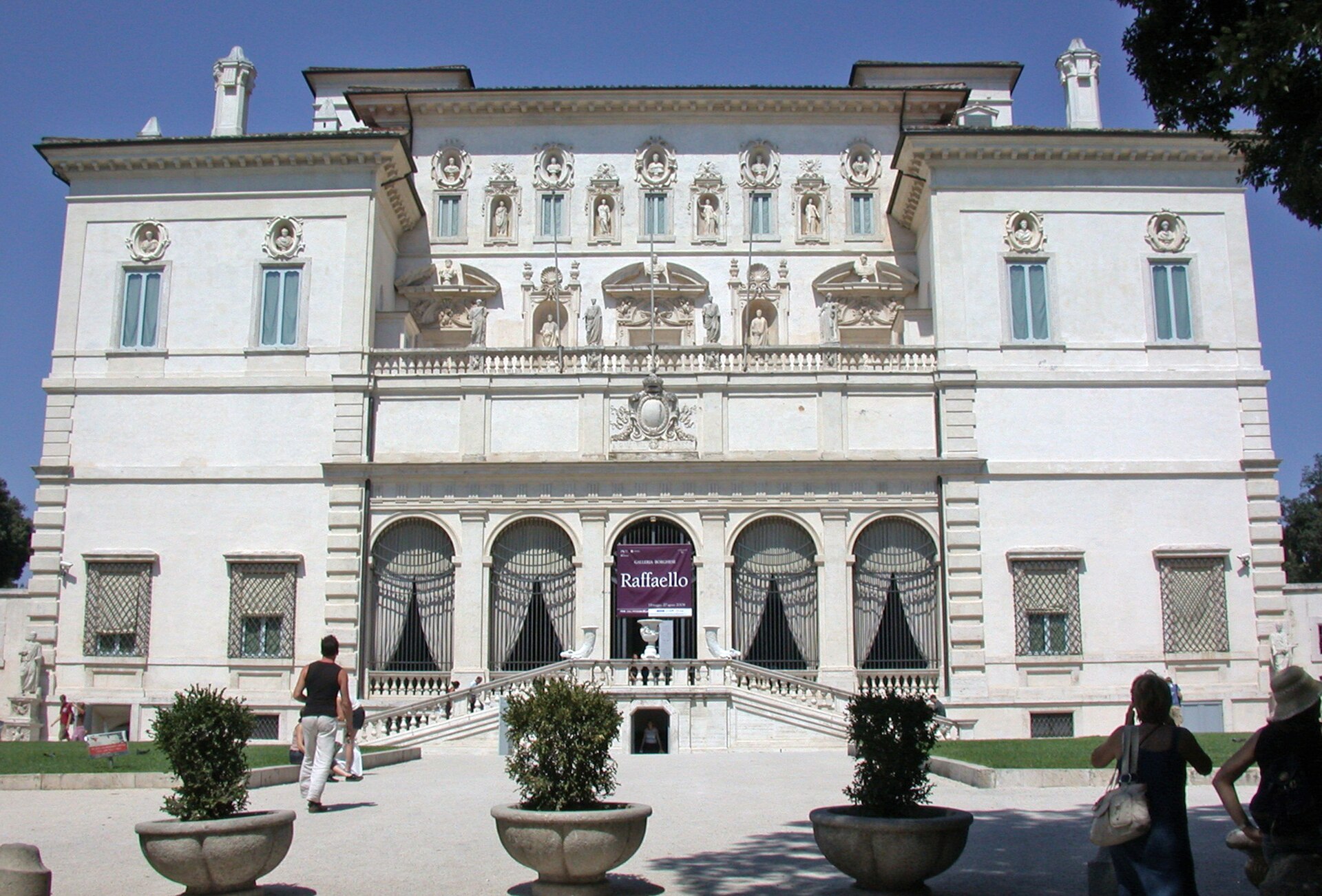
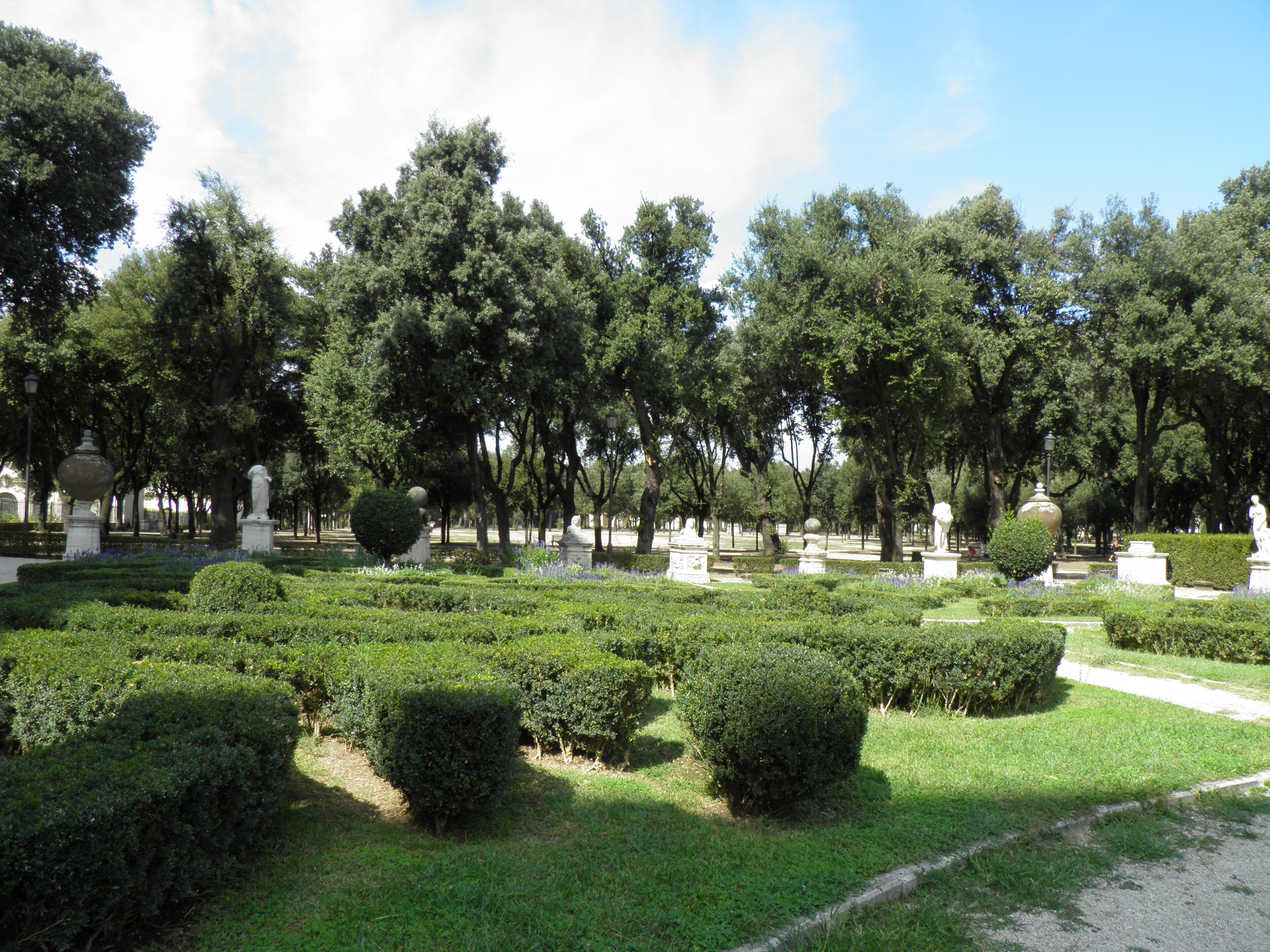
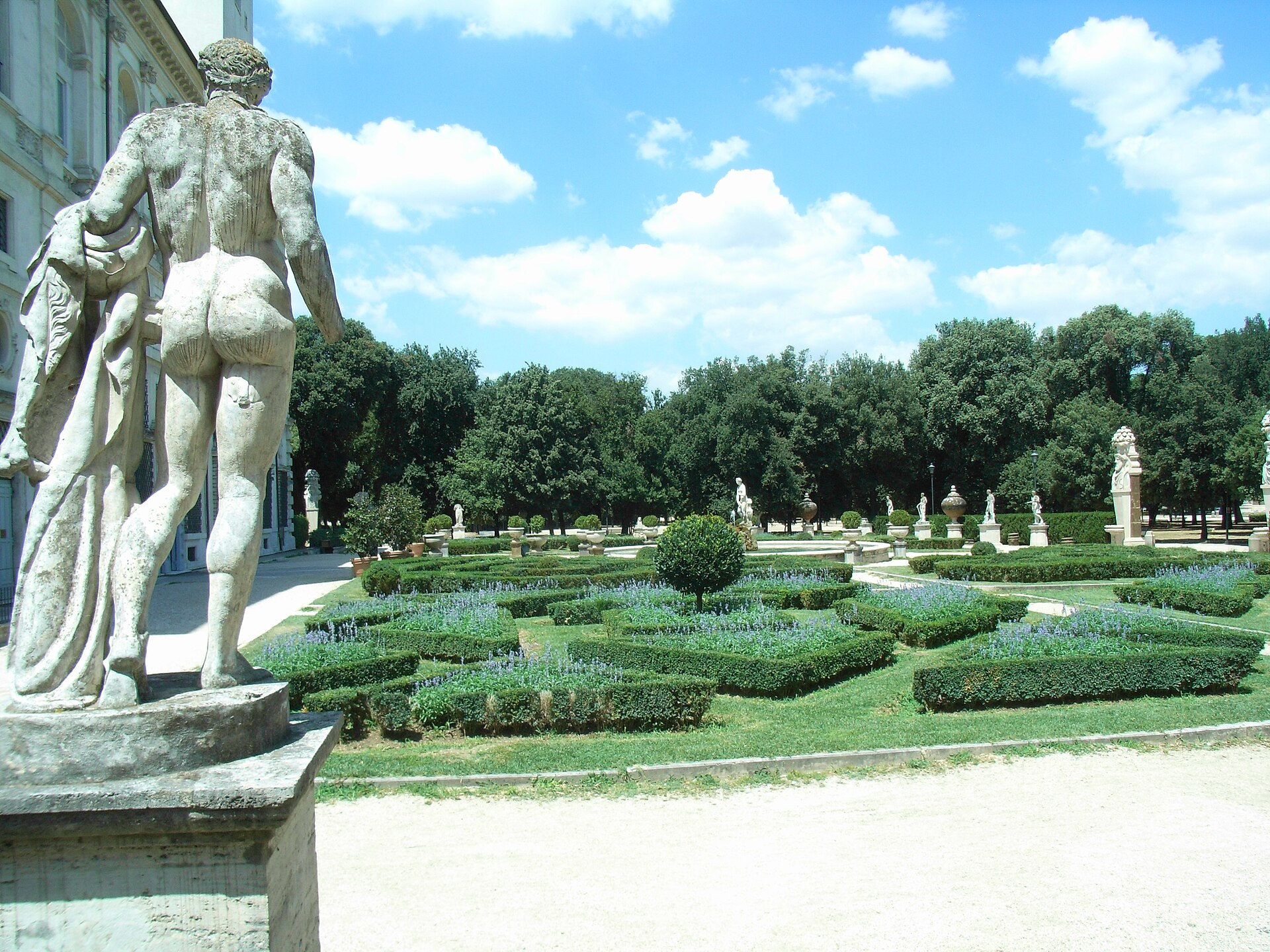
After the Vatican's nine miles, Rome's other great house is a garden party. The Galleria Borghese stands at the top of the Borghese park, in a villa built in the sixteen tens for Cardinal Scipione Borghese — nephew of a pope, richest patron of his age, and a collector of positively piratical energy. Scipione did not browse; he acquired — by purchase, by pressure, and on one famous occasion by having a painter's altarpiece seized from its chapel in the night. What his appetite gathered became the most perfectly sized museum in Europe: twenty rooms, no more, in a villa that was always meant for delight rather than state. You climb from the gardens through pines and fountains, and enter under ceilings painted like open skies. Everything here was chosen by one man's eye, good and ruthless in equal measure, and the rooms still feel personal — a conversation, not an institution. Timed tickets mean the rooms stay mercifully uncrowded; two hours, and the villa keeps its secrets politely. Our two hours are well spent. We begin with the cardinal's favourite sculptor, a young man named Bernini.
The Galleria Borghese — the Arrival — our interpretation, created from the reference photographs belowReference photographs — The Galleria Borghese — the Arrival · 3 photographs
The Borghese — Bernini
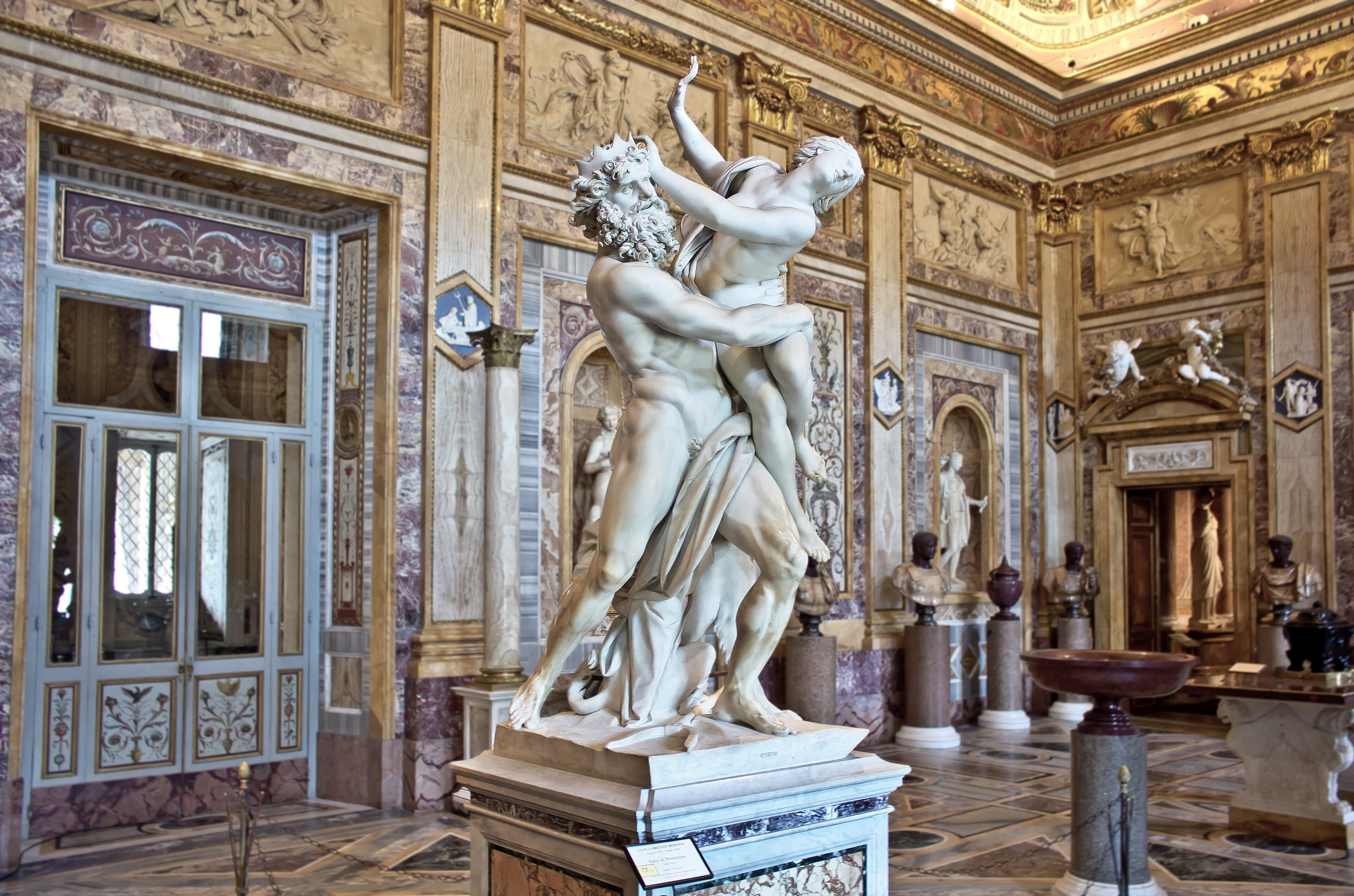
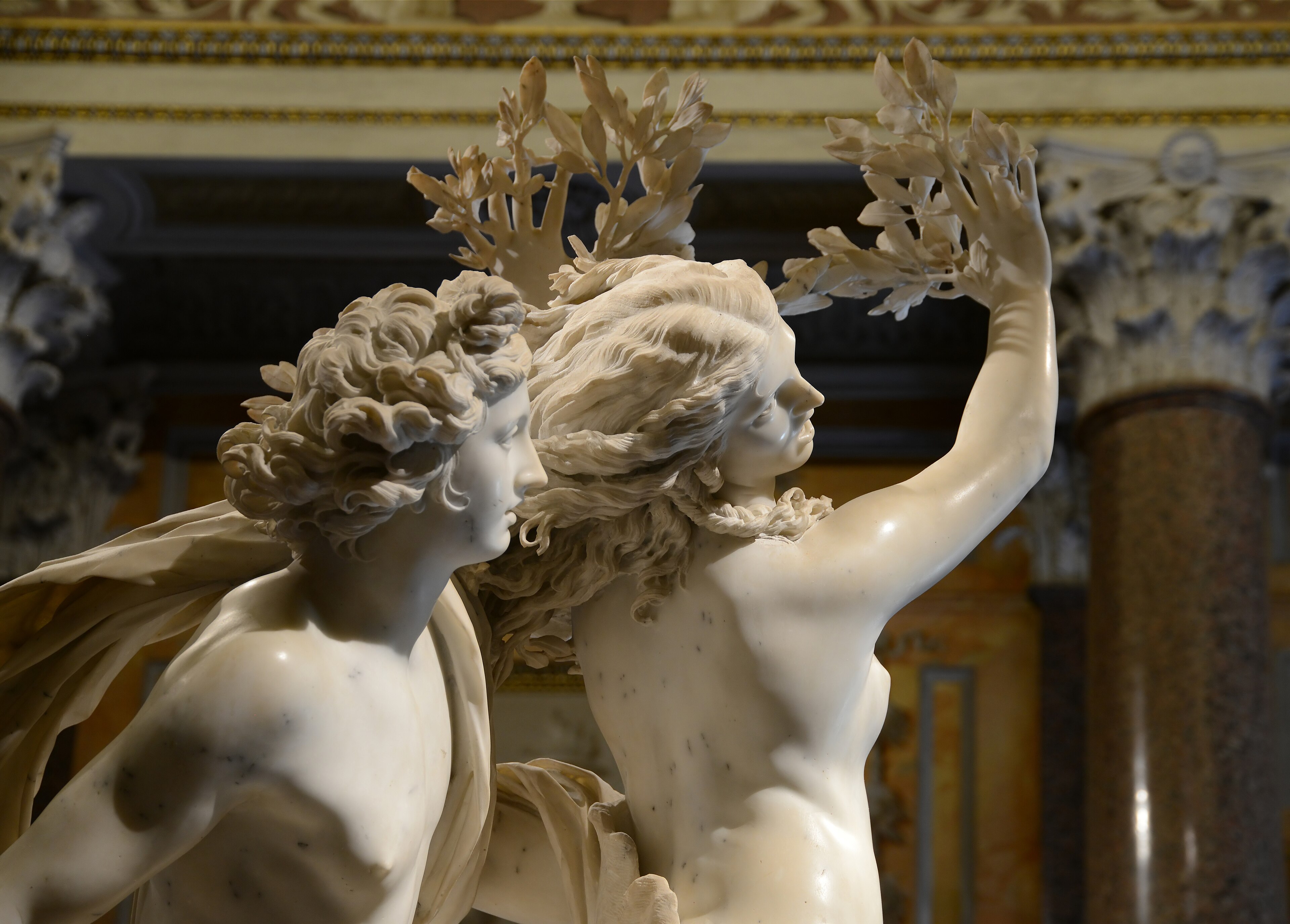
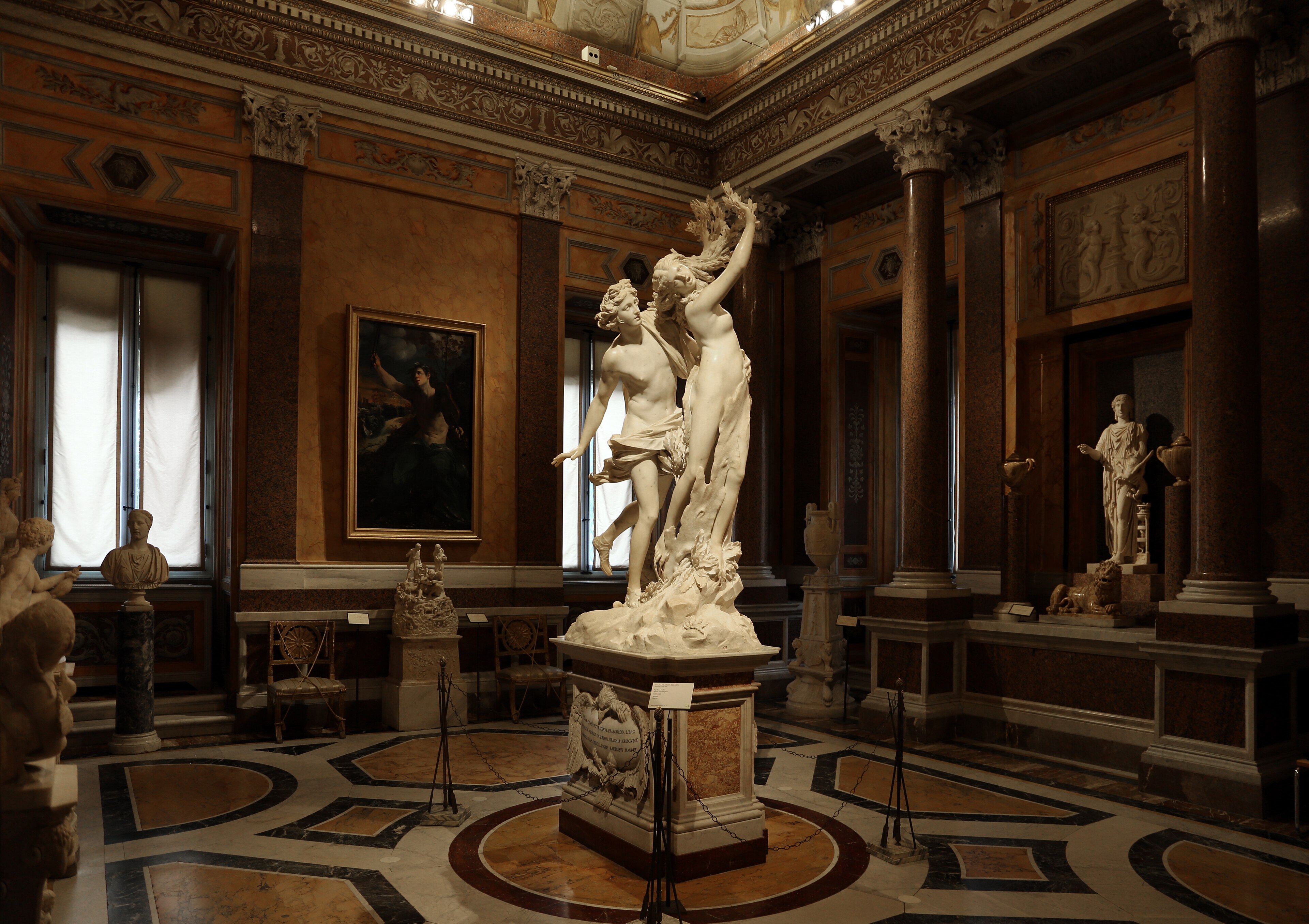
Gian Lorenzo Bernini was twenty years old when the cardinal set him to carve the stories you are about to walk among, and marble has never quite recovered. Here is Aeneas fleeing burning Troy, his father on his shoulders, three generations in one straining group. Here is the Rape of Proserpina, where Pluto's fingers press into marble flesh so softly that visitors lean in, disbelieving, to check that it is stone. And here — the room Eleanor crosses an ocean for — Apollo and Daphne: the god lunging, the nymph mid-escape, her fingers already leaves, her toes already roots, bark closing over her waist, the whole myth caught in the half-second of transformation. Walk around it. The sculpture is a film in a single frame, and it only plays if you move. Bernini went on to build half of baroque Rome — the colonnade of Saint Peter's, the fountains, the angels — but he never surpassed the white fire of these early rooms, carved for one cardinal, in one garden villa, before he was twenty-five. Genius is not the word. Evidence is closer.
The Borghese — Bernini — our interpretation, created from the reference photographs belowReference photographs — The Borghese — Bernini · 3 photographs
The Borghese — Canova and Caravaggio
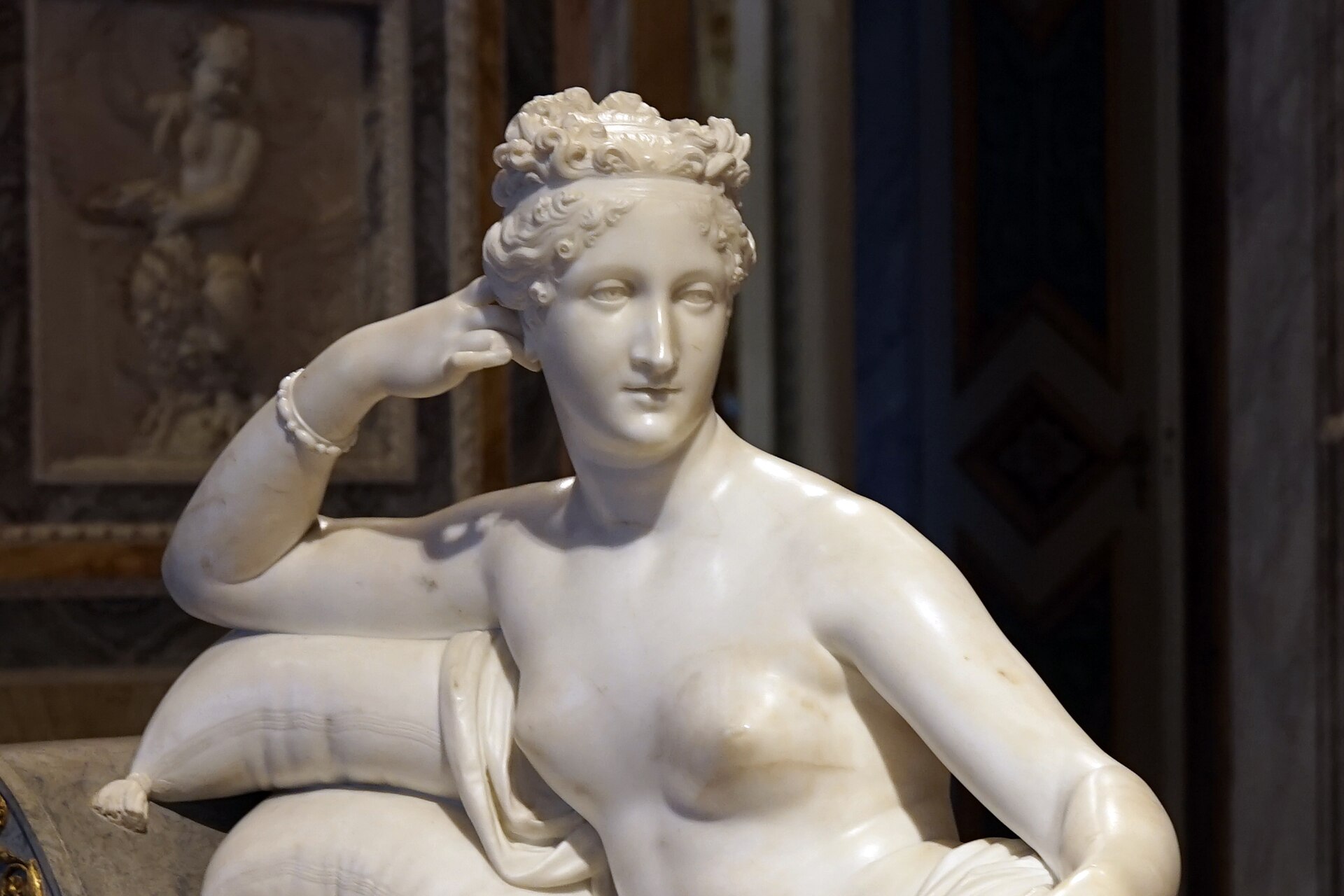
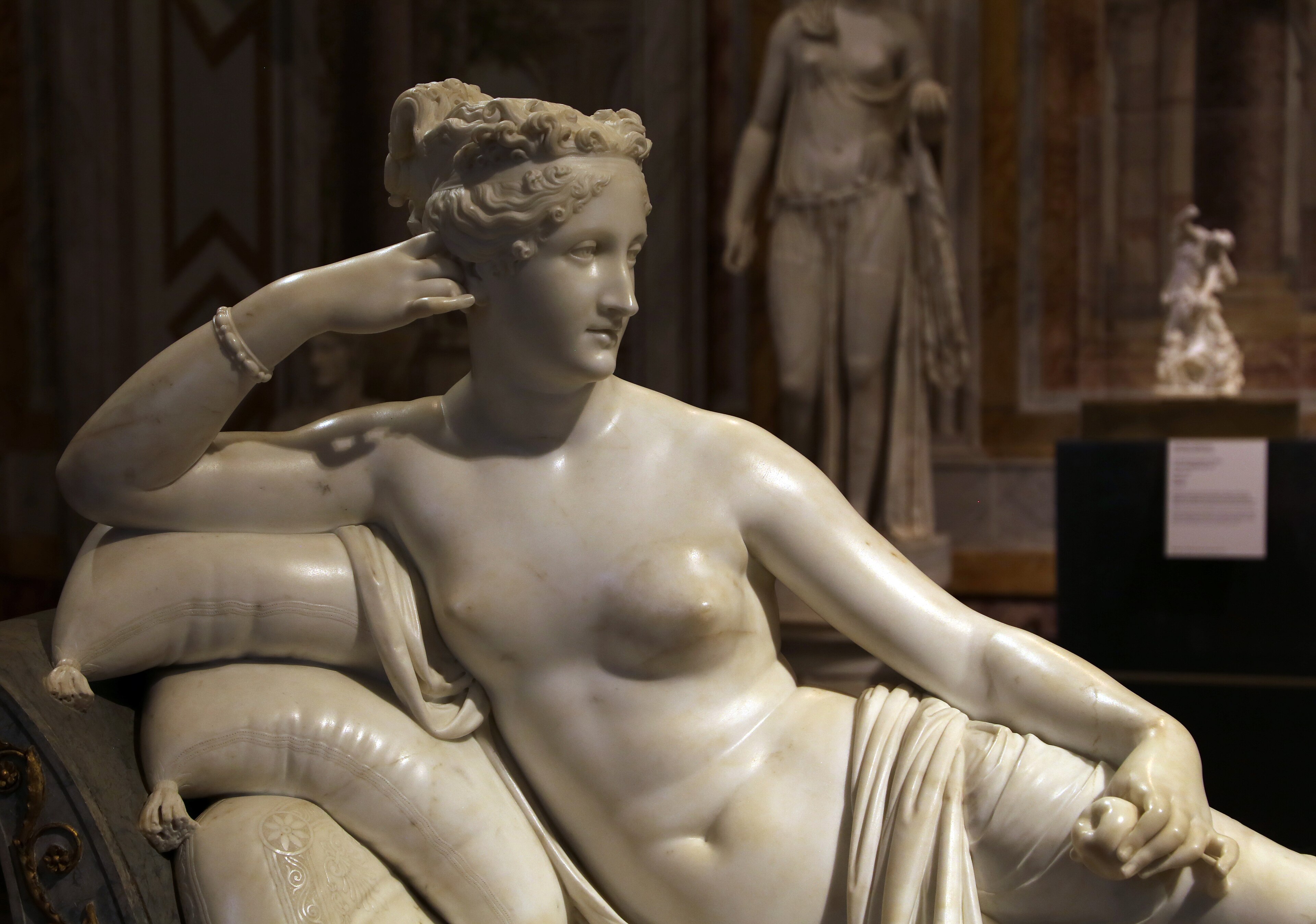
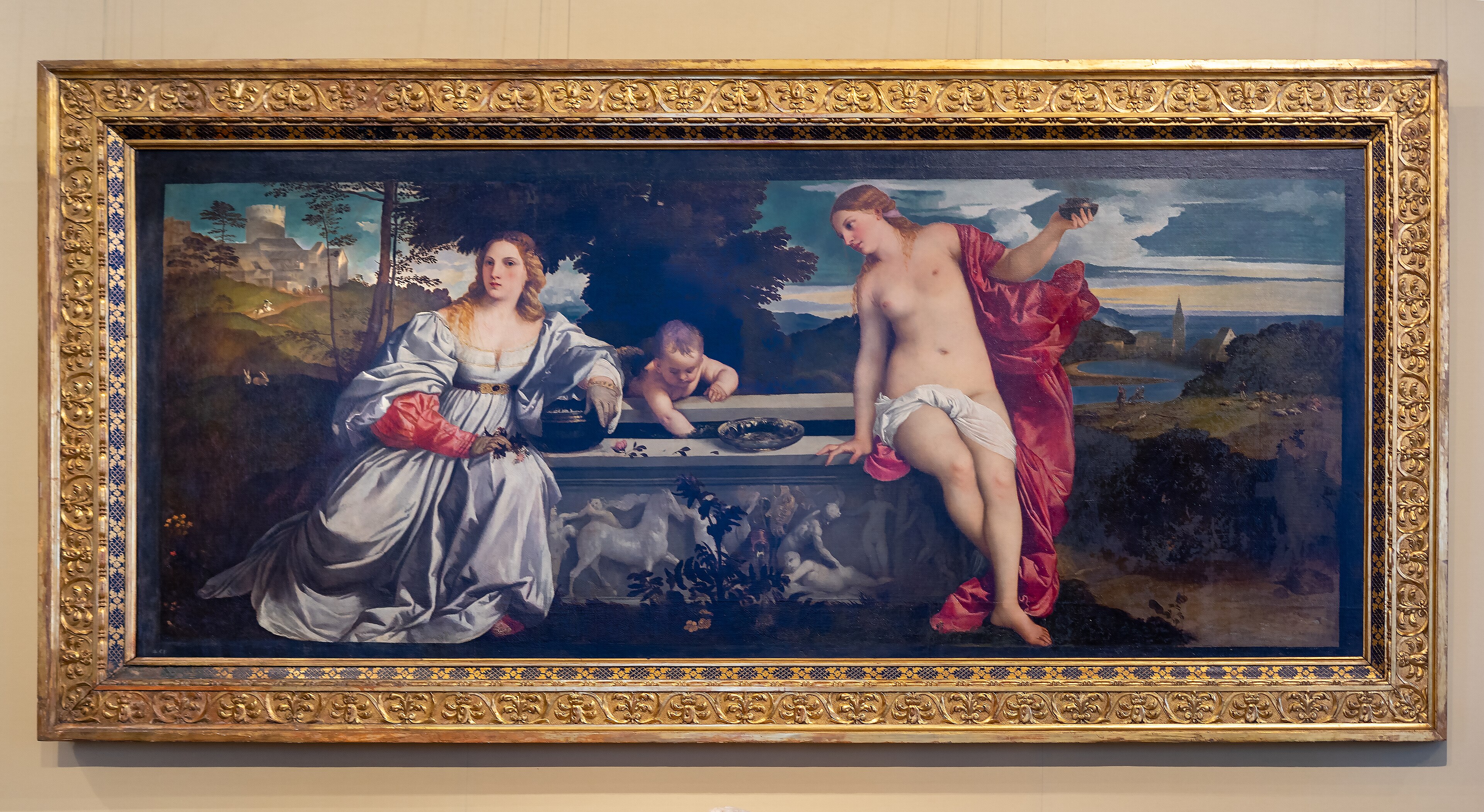
Two last rooms, two last tempers of genius. Downstairs, Antonio Canova's Paolina: the cardinal's sister, Napoleon's sister too, Pauline Bonaparte, reclining as Venus Victrix on a marble mattress so softly carved that the cushion seems to give beneath her weight. The couch once rotated, so guests could admire her without the exertion of walking around; she, asked how she could pose nearly unclothed, is said to have answered that there was a fire in the studio. Upstairs, the paintings change the light itself: Caravaggio, who fled Rome with a murder on his hands, is here in force — David with the Head of Goliath, the head being the painter's own, sent to beg a cardinal's pardon; Saint Jerome writing in a pool of lamplight; the Madonna of the Palafrenieri, all shadow and muscle and grace. Raphael's Deposition and Titian's Sacred and Profane Love keep them company like royalty tolerating a brilliant criminal. It is the whole seventeenth century in twenty rooms. Tomorrow we leave Rome for Madrid — and the largest front door in art.
The Borghese — Canova and Caravaggio — our interpretation, created from the reference photographs belowReference photographs — The Borghese — Canova and Caravaggio · 3 photographs
Chapter Eight — Madrid
3 scenes · 9 reference photographs
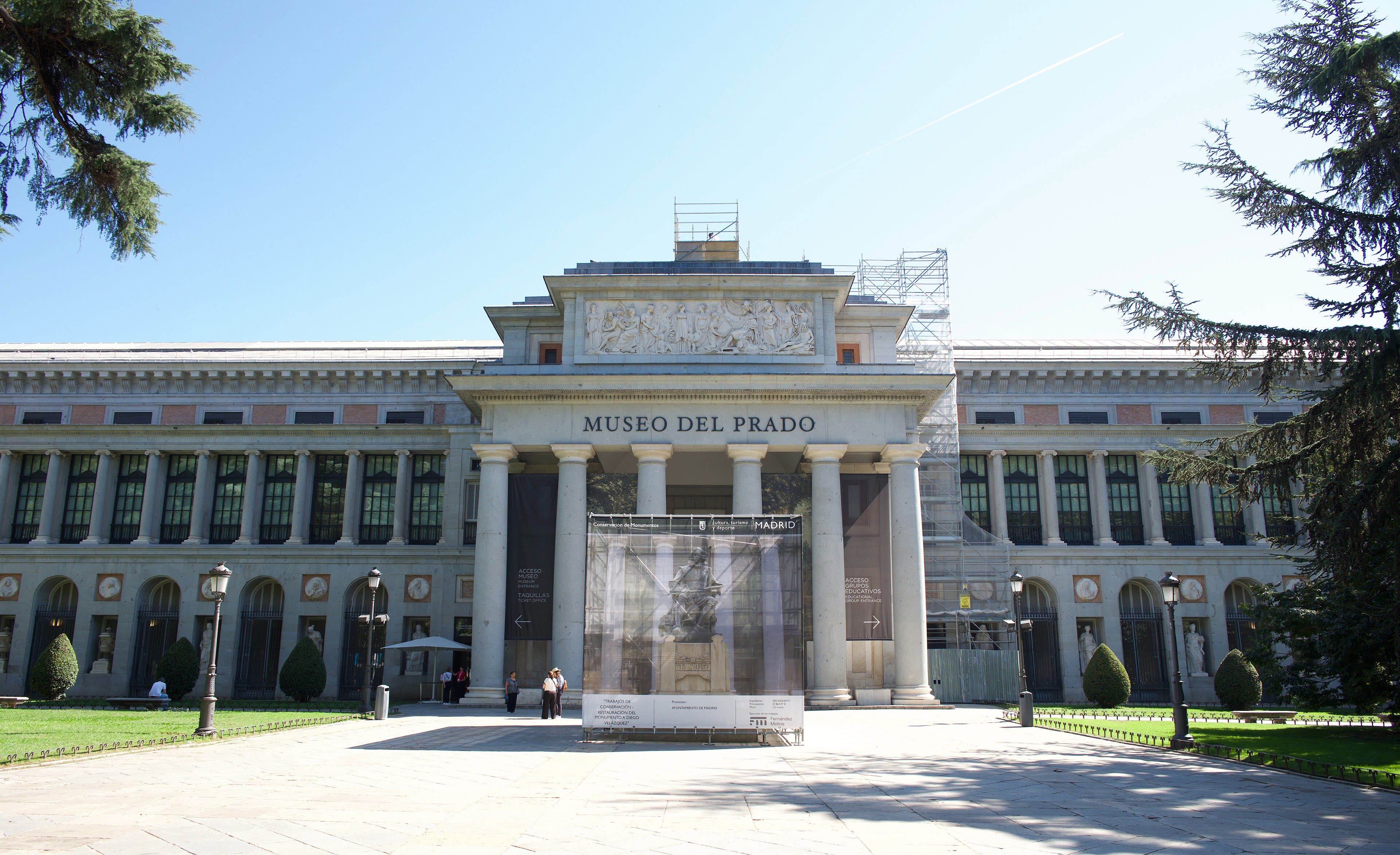
The Prado — the Arrival
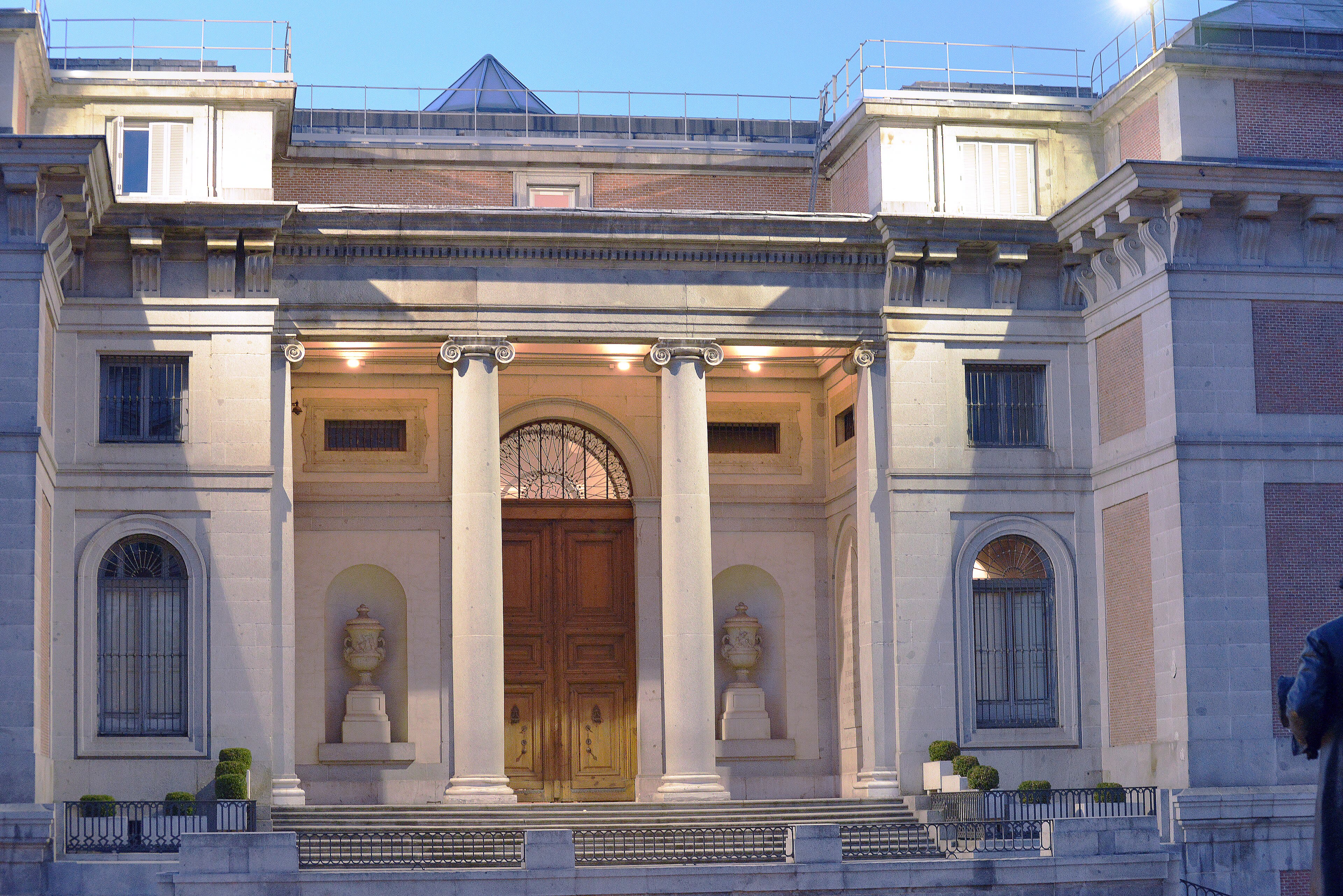
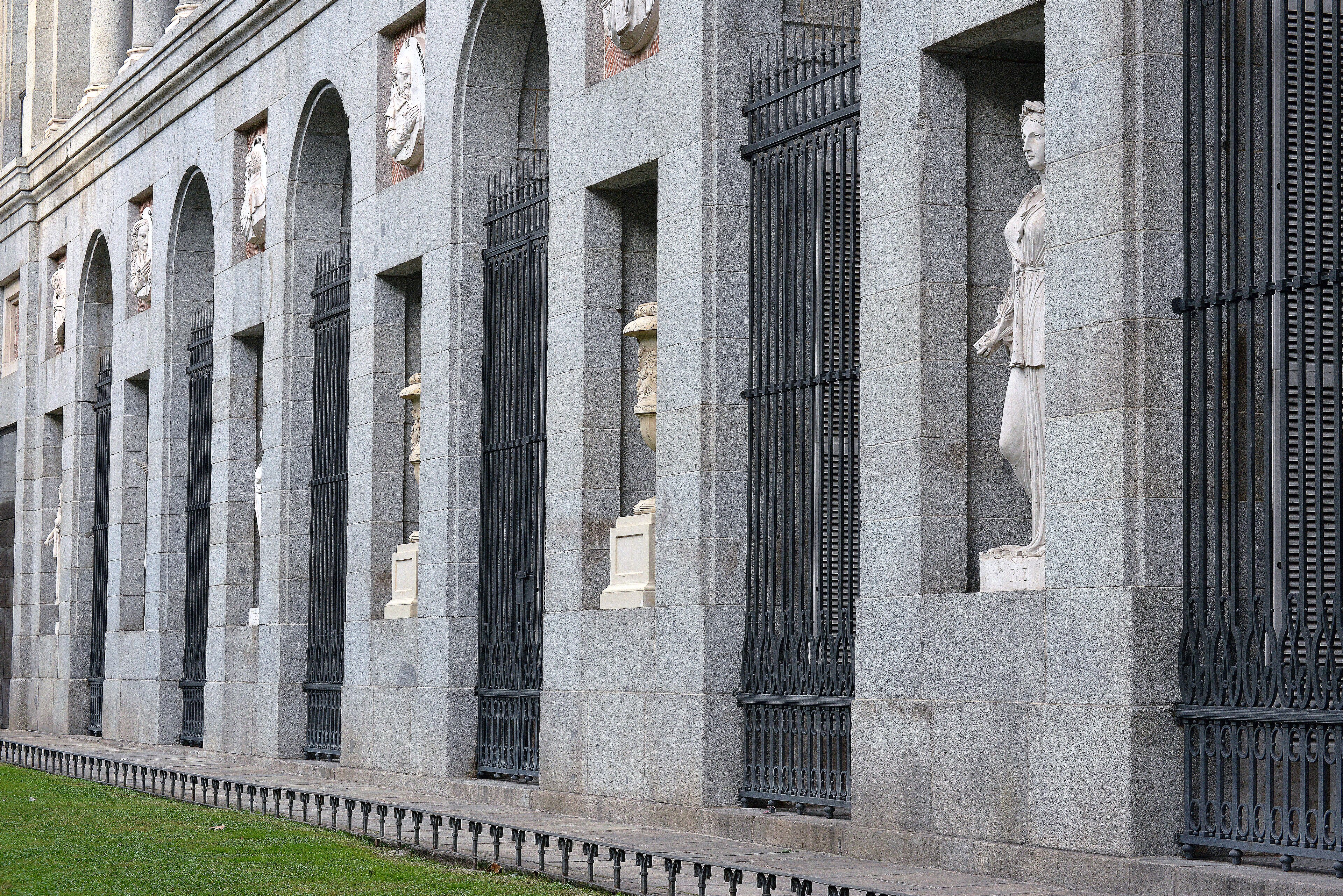
Madrid keeps its treasure on a tree-lined hill, in a building that cannot decide whether it is a palace or a temple — which, for a museum, is exactly right. The Prado was designed in seventeen eighty-five by Juan de Villanueva, as a cabinet of natural history; kings redirected it to painting, and in eighteen nineteen it opened its doors as a royal museum, holding what the Spanish crown had gathered across three golden centuries. Think about what that means: this is not a collection assembled by shoppers. It is the accumulated taste of one family — Titian's emperors, Rubens's diplomats, Bosch's fever-dreams, bought and commissioned by the very monarchs whose portraits line these walls. Goya stands in bronze outside the main door, keeping his own counsel, and Velázquez guards the other entrance, the two of them like bouncers at the greatest club in Spain. Inside: twelve thousand drawings, a thousand sculptures, and some seventeen hundred paintings on display, every one of them with a pedigree. We take the two summits in order — first the court painter who saw through everyone, then the genius who outlived the light. Come up the hill.
The Prado — the Arrival — our interpretation, created from the reference photographs belowReference photographs — The Prado — the Arrival · 3 photographs
The Prado — Velázquez
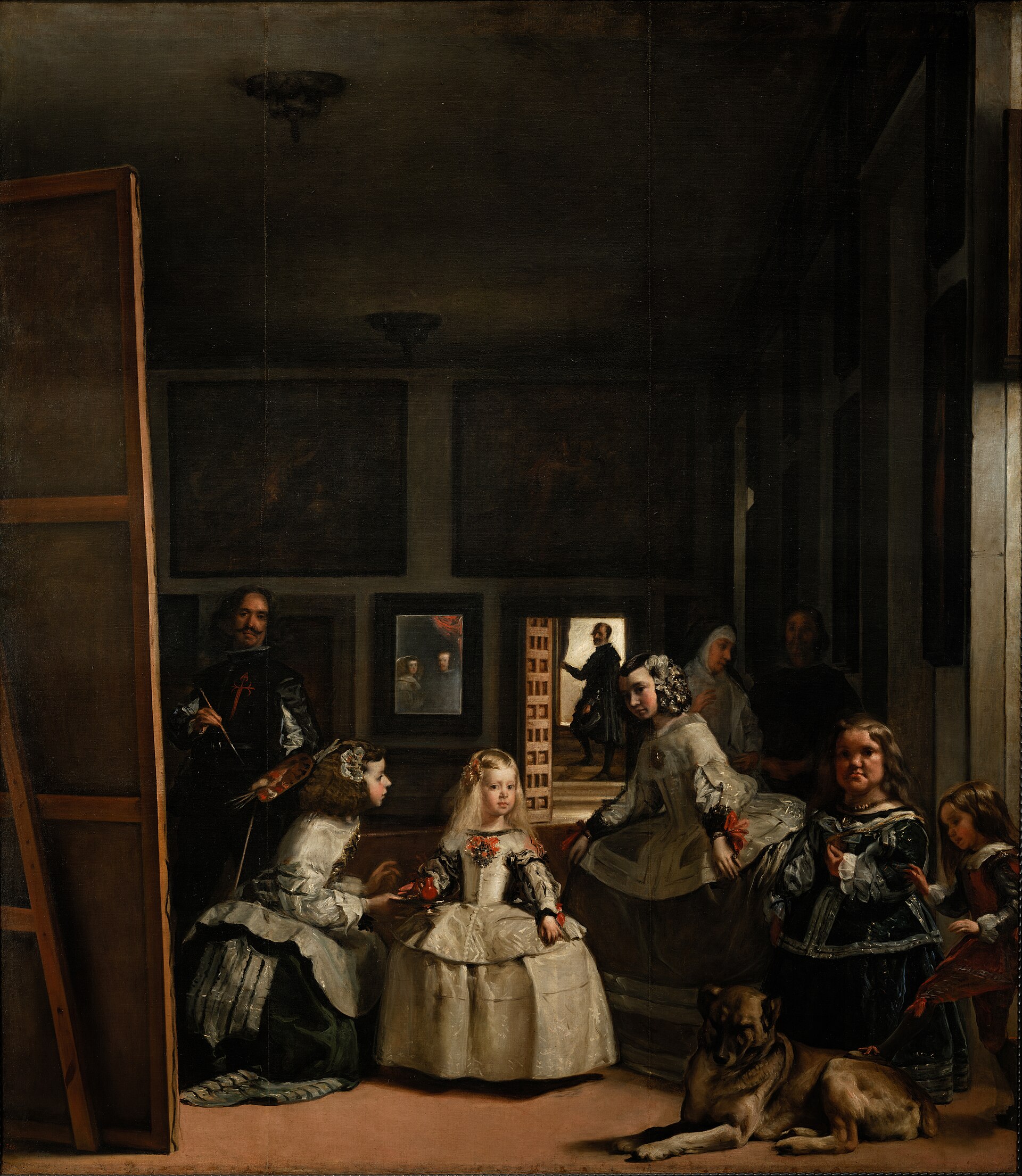
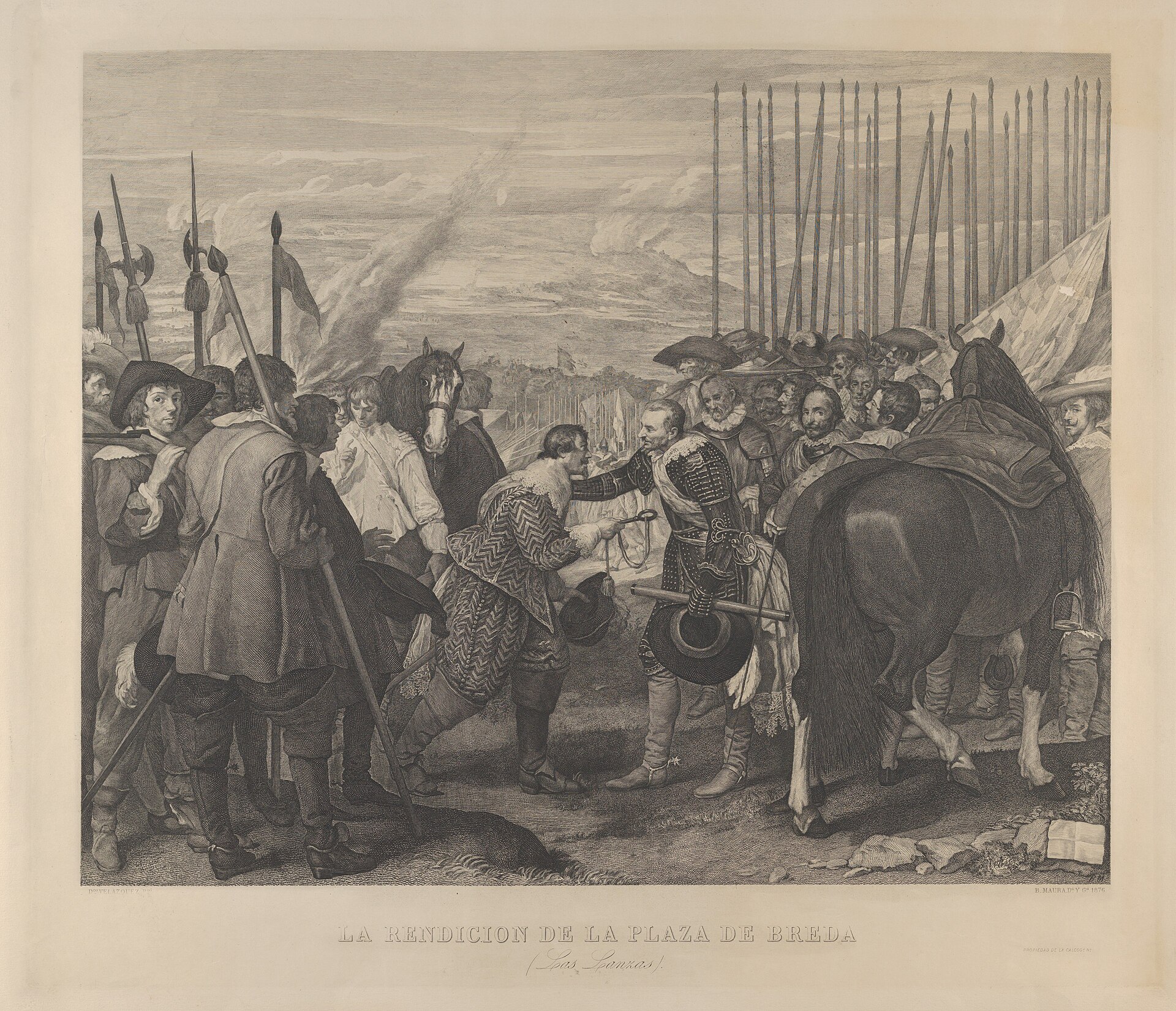
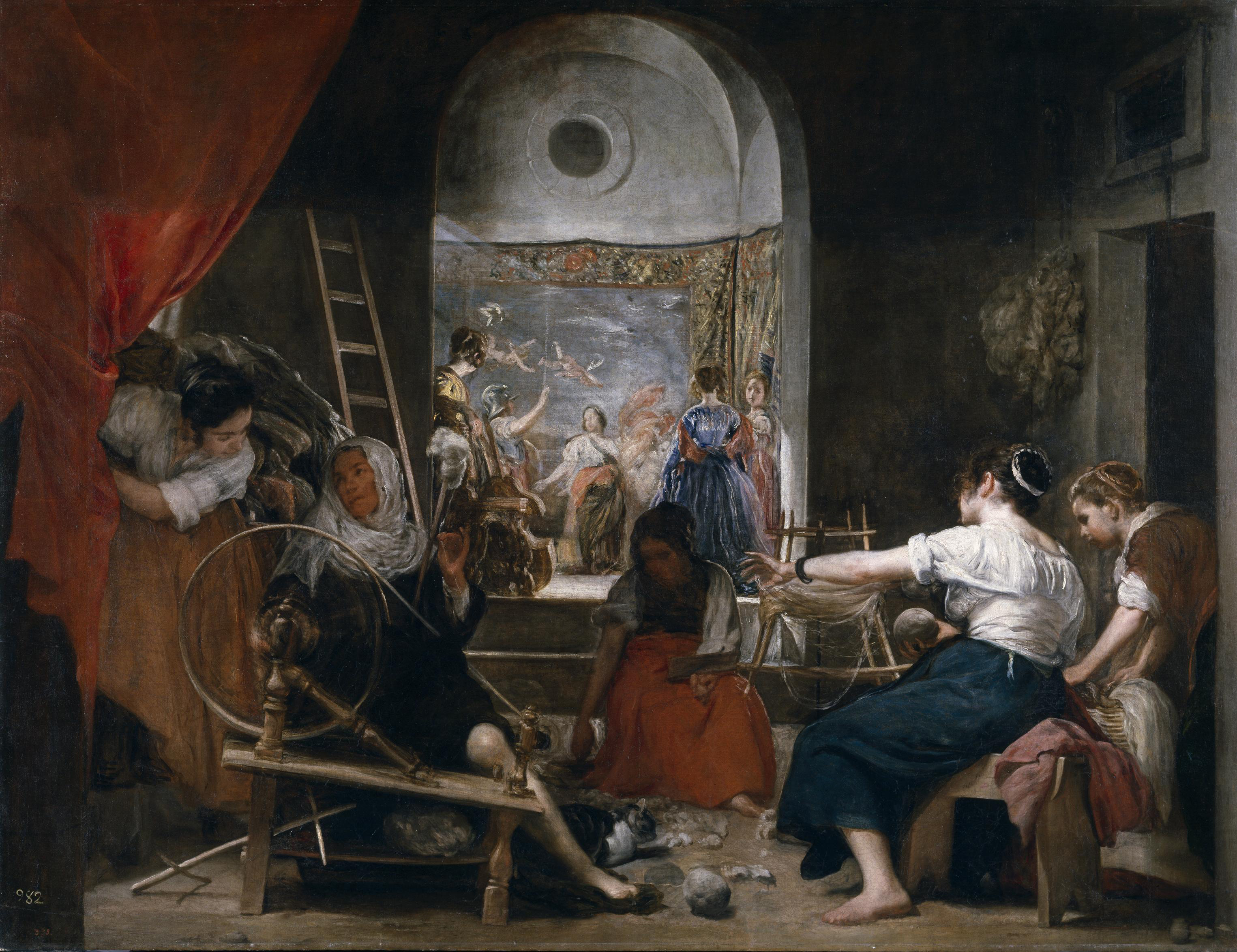
Room twelve. It is not the largest room in the Prado, and yet the whole museum quietly orbits it, the way the Spanish court once orbited a king. Diego Velázquez painted Las Meninas in sixteen fifty-six, in this very palace quarter of Madrid — the little Infanta Margarita in her wide silver dress, her maids of honour kneeling and fluttering, the dwarf, the dog, the chaperone, and at the left, brush in hand, the painter himself, staring out at the people he is painting: the king and queen, whose small reflections hang in the mirror on the far wall — which means he is painting us, standing where royalty stood. Four centuries of artists, from Manet to Picasso, have made the pilgrimage to this canvas and gone away changed; Picasso painted it fifty-eight times trying to unlock it. Around it hang the rest of the court: the surrender at Breda, all courtesy and lances; the little prince on his pony; the buffoons and dwarfs Velázquez painted with more dignity than he gave their masters. Eleanor's rule applies with force here: one painting, five full minutes. This is the painting. Give it ten.
The Prado — Velázquez — our interpretation, created from the reference photographs belowReference photographs — The Prado — Velázquez · 3 photographs
The Prado — Goya
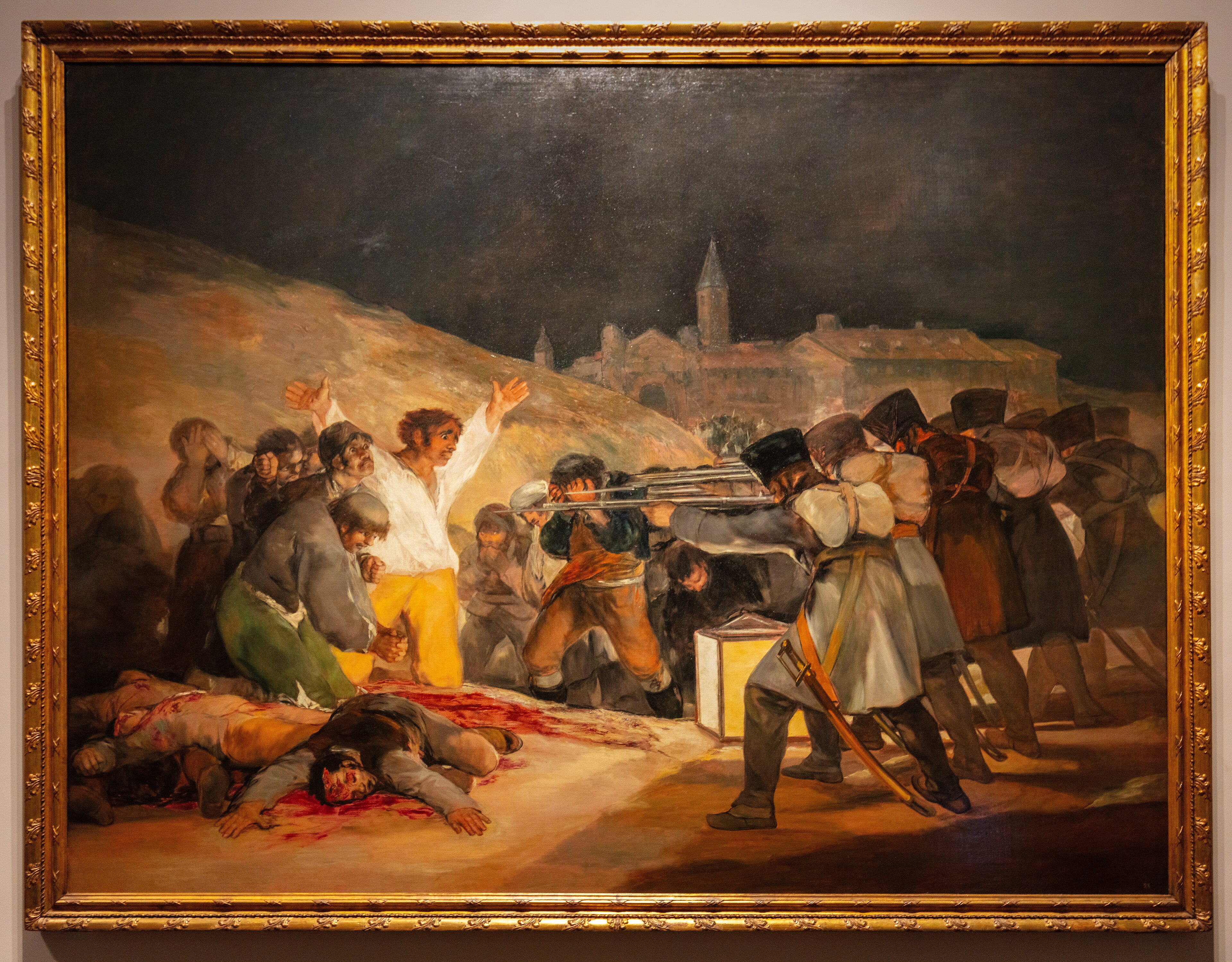
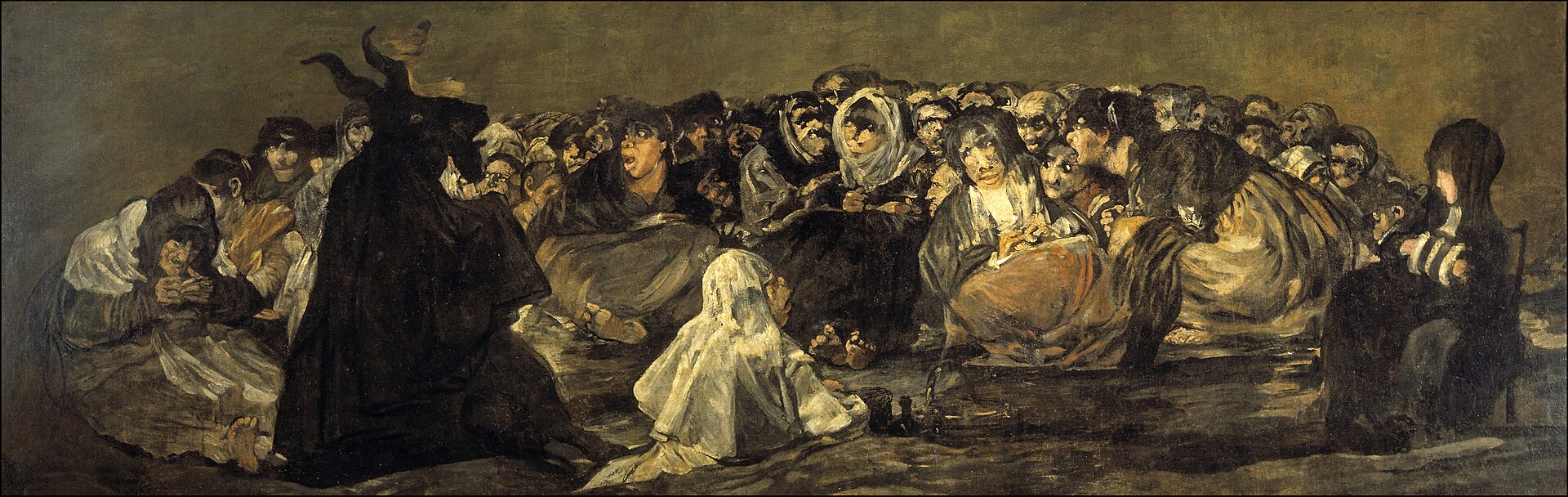
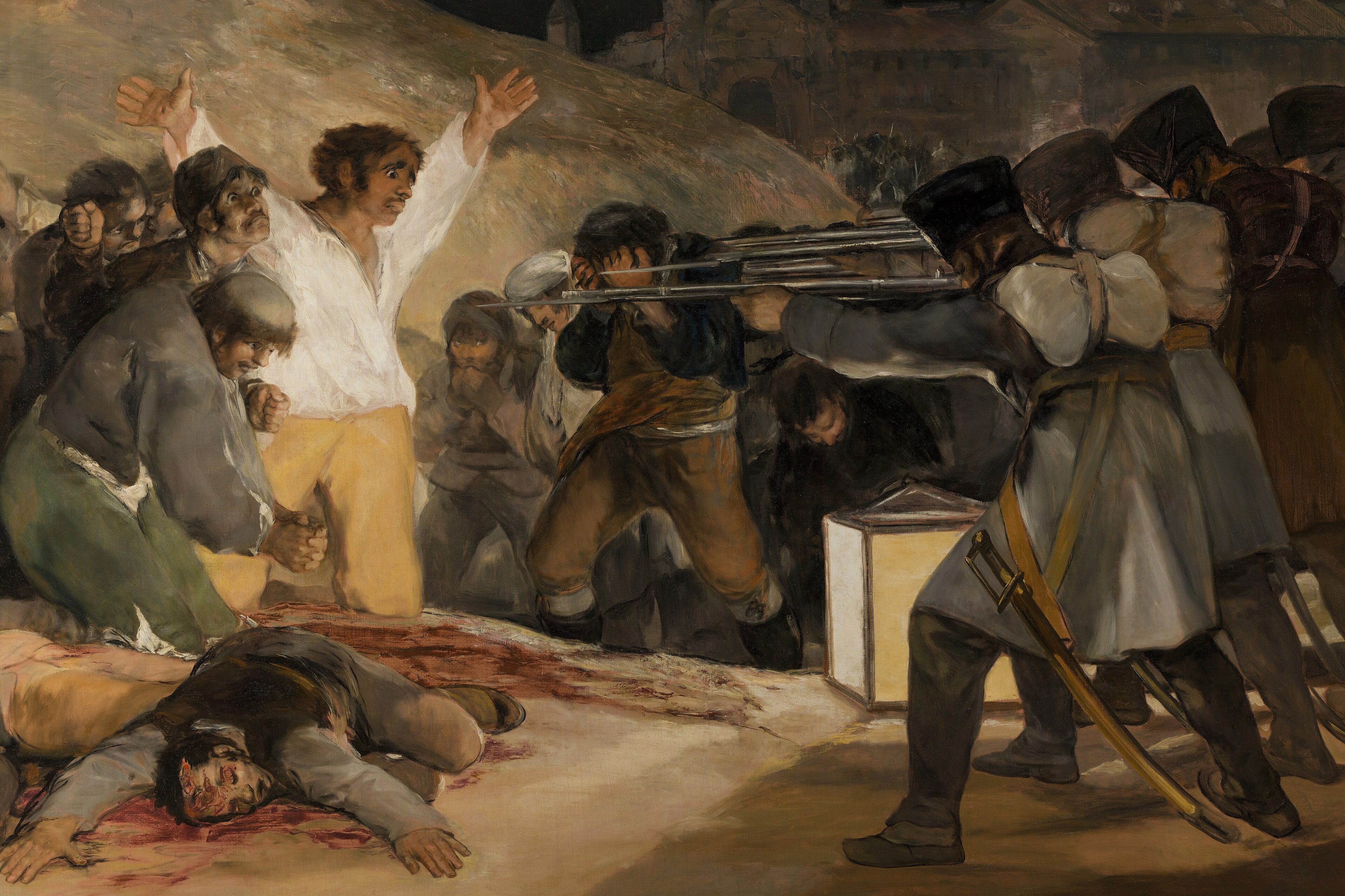
The last rooms belong to a man who watched his country eat itself and refused to look away. Francisco Goya begins upstairs in sunlight — tapestry cartoons, the parasol, the Duchess's smile — and ends downstairs in the dark. In eighteen nineteen, old, deaf, and twice a survivor of war's fevers, he bought a house outside Madrid, the Quinta del Sordo, the Deaf Man's House, and painted directly onto its walls the fourteen pictures we now call the Black Paintings: Saturn devouring his son, teeth at the shoulder; the dog, half-buried, staring up at nothing; the witches, the pilgrims, the duel with cudgels waist-deep in mud. They were never meant for us — no titles, no patron, no exhibition — and they hang now in one hushed room at the Prado's heart, the most honest room in Europe. Nearby, the Third of May eighteen oh eight: the white-shirted man on the hill at Moncloa, arms flung wide before the firing squad, the first great painting of the modern world's sorrows. Tomorrow, titanium and a northern river. Sleep on Goya tonight; everyone does, uneasily, forever.
The Prado — Goya — our interpretation, created from the reference photographs belowReference photographs — The Prado — Goya · 3 photographs
Chapter Nine — Bilbao
3 scenes · 9 reference photographs
The Guggenheim Bilbao — the Arrival
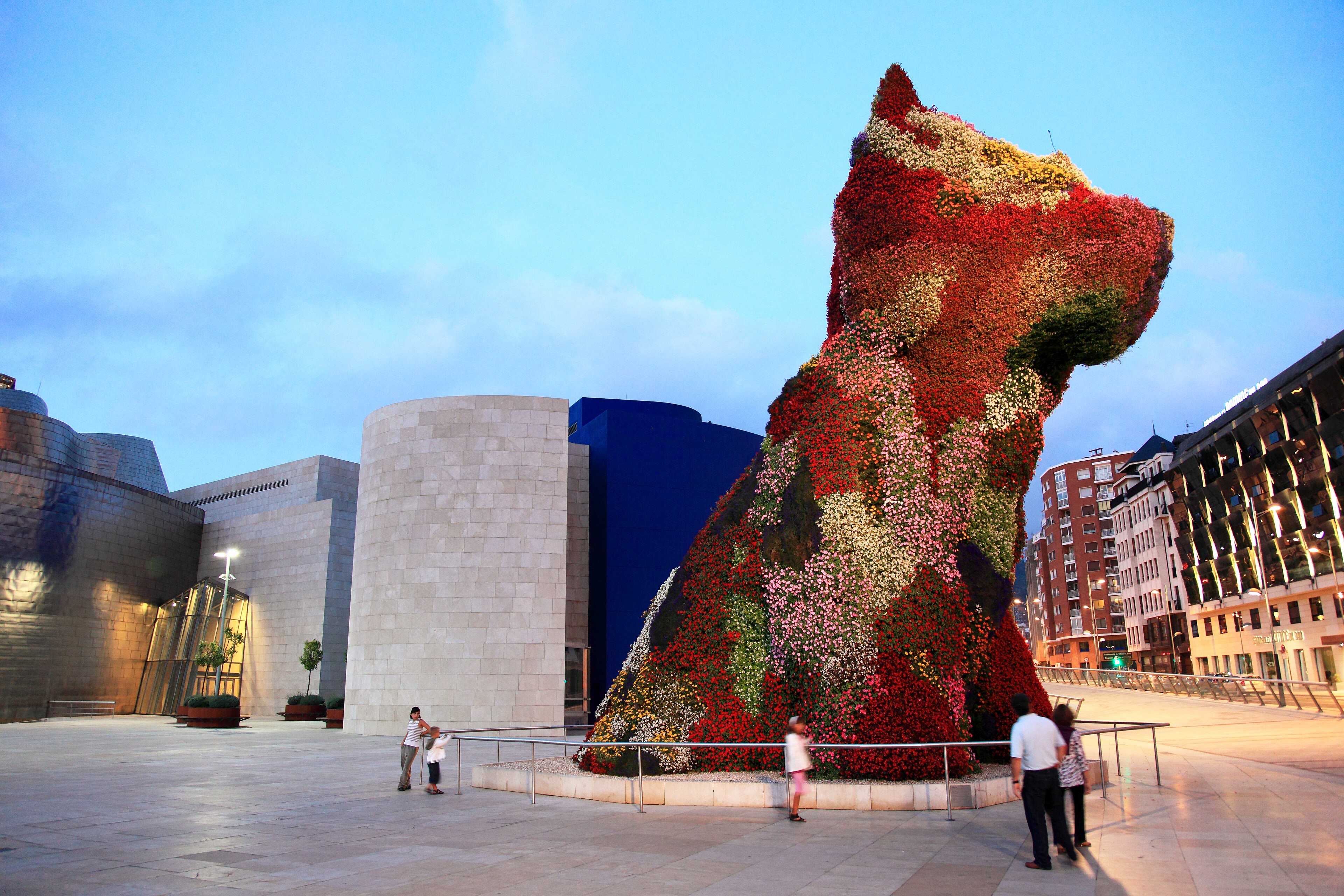
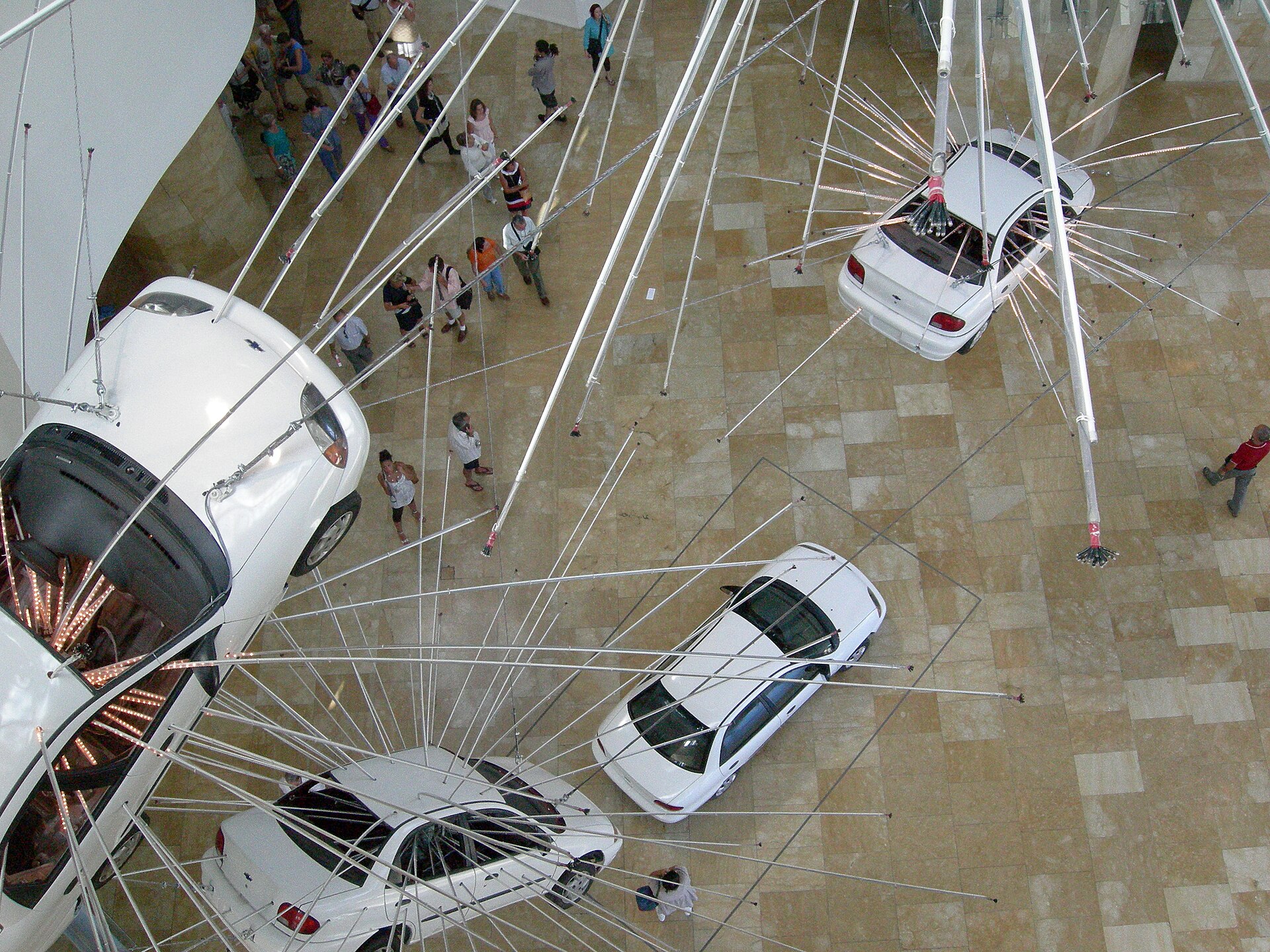
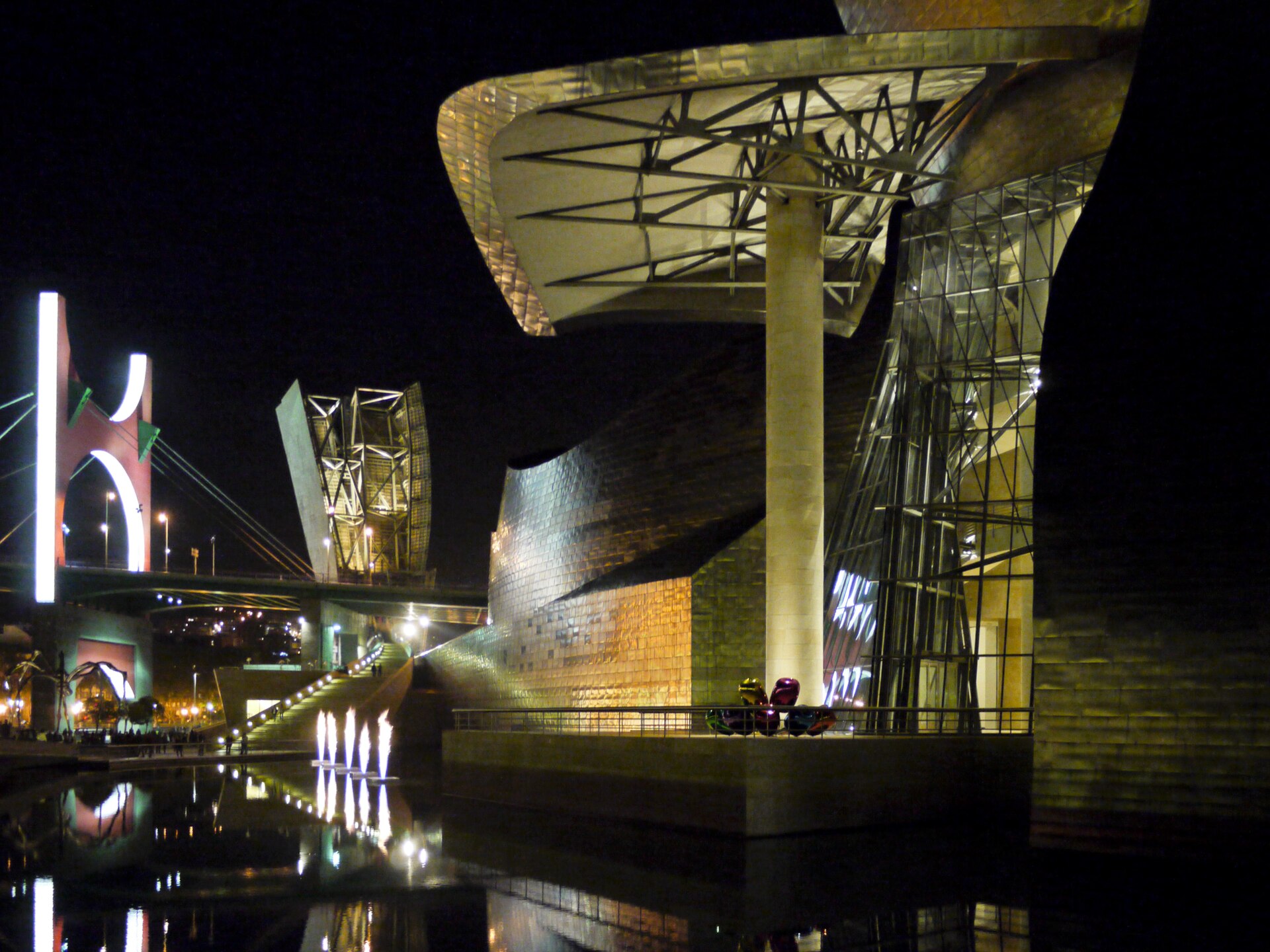
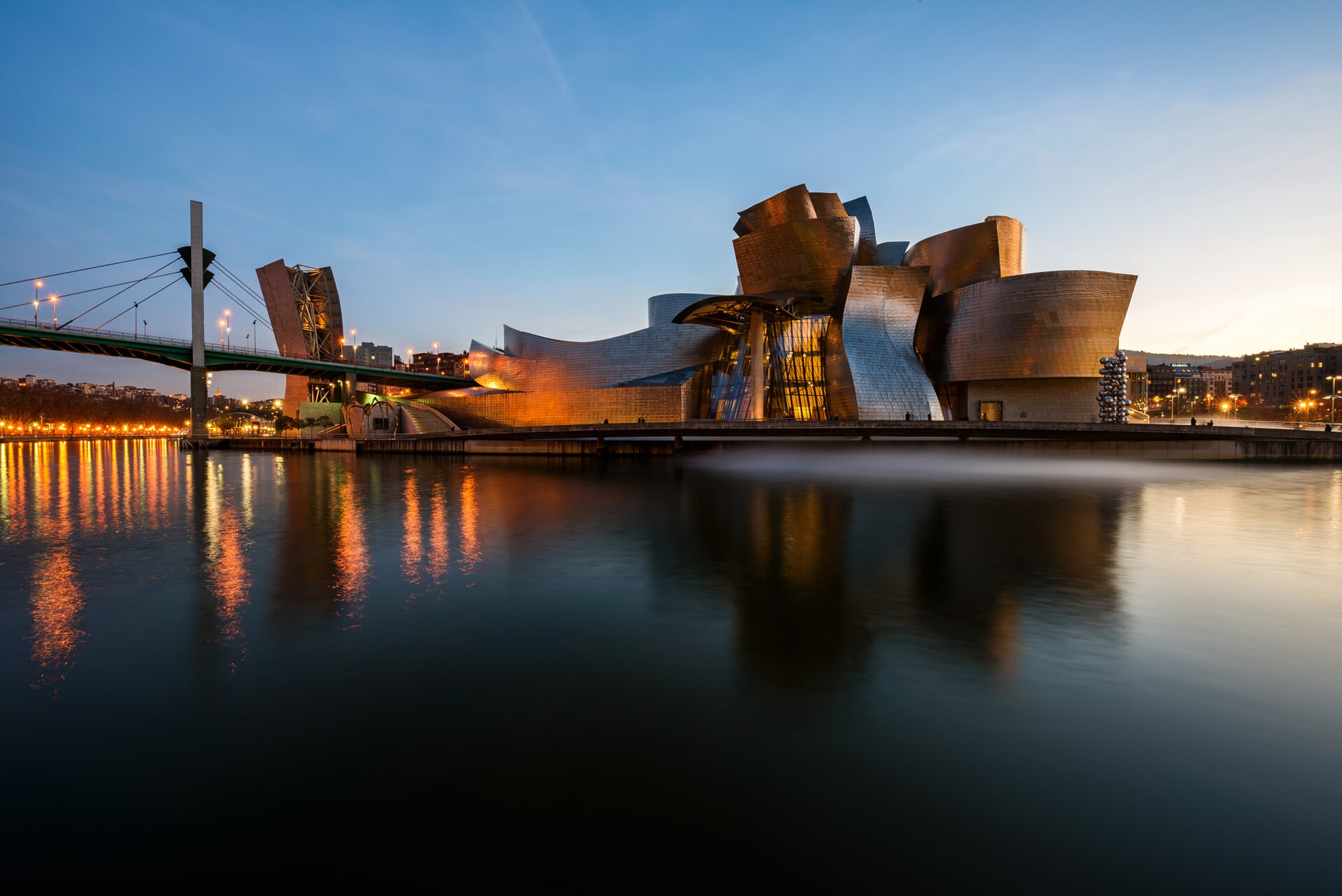
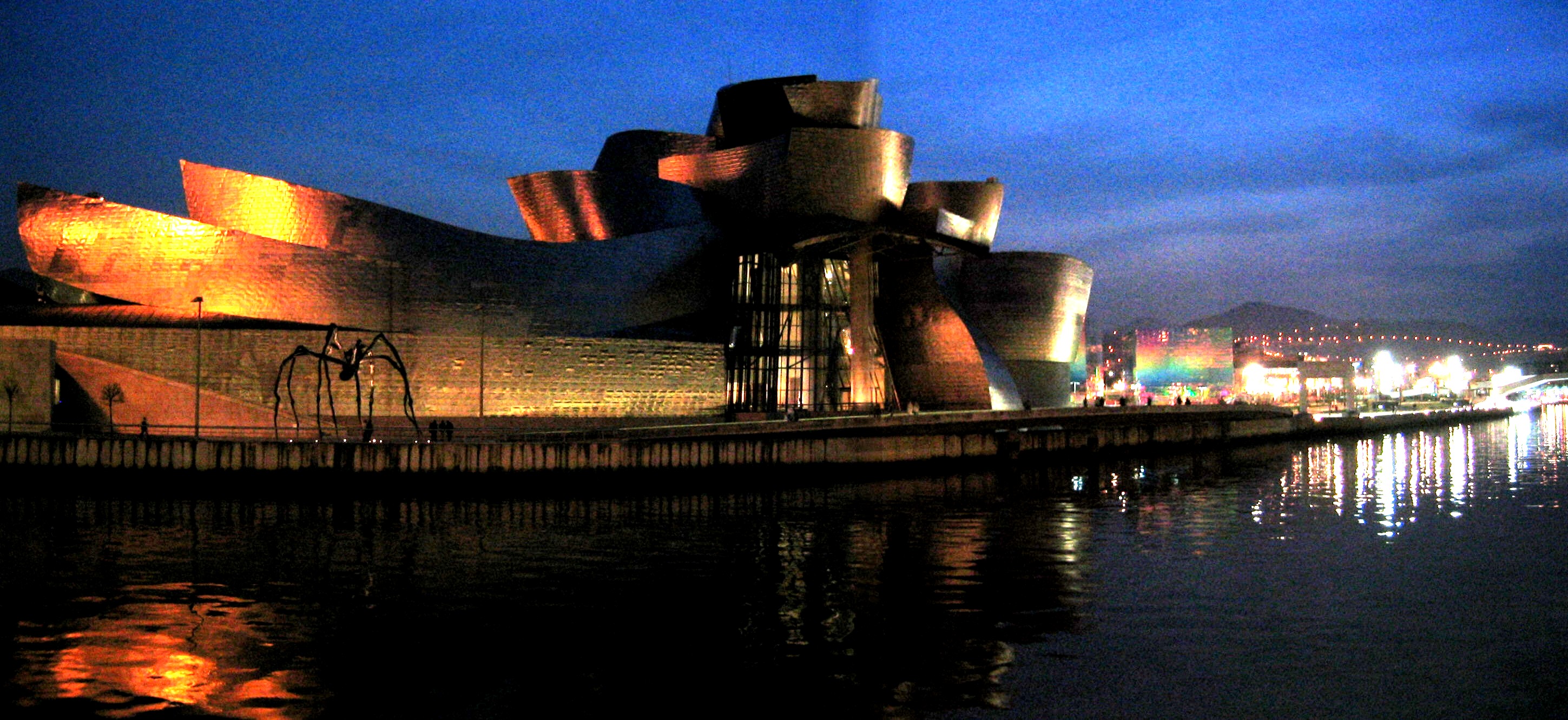
Every museum on our journey so far has been older than its art. This one is younger than most of its visitors' phones — and it changed what the world expects a museum to do. In October nineteen ninety-seven, on a derelict dockside of the Nervión river in Bilbao, Frank Gehry's titanium flower opened: thirty-three thousand whisper-thin titanium plates over limestone and glass, a building that reads simultaneously as a ship, a fish, a waterfall and a rose, depending on the Basque weather, which obliges by changing hourly. A steel city that had lost its shipyards bet everything on a building, and won — the world now calls it the Bilbao Effect, and a hundred cities have tried to repeat the miracle. Outside the door stands the doorman: Puppy, Jeff Koons's twelve-metre West Highland terrier built of living flowers, replanted twice a year, absurd and perfect. Eleanor confesses a soft spot — after eleven museums of marble gravity, this place grins. It also, not incidentally, holds serious art in serious rooms. Take the long way in, along the river. The building deserves an approach march, and so do you.
See this place in the galleryThe Guggenheim Bilbao — the Arrival — our interpretation, created from the reference photographs belowReference photographs — The Guggenheim Bilbao — the Arrival · 3 photographs
The Guggenheim — the Atrium
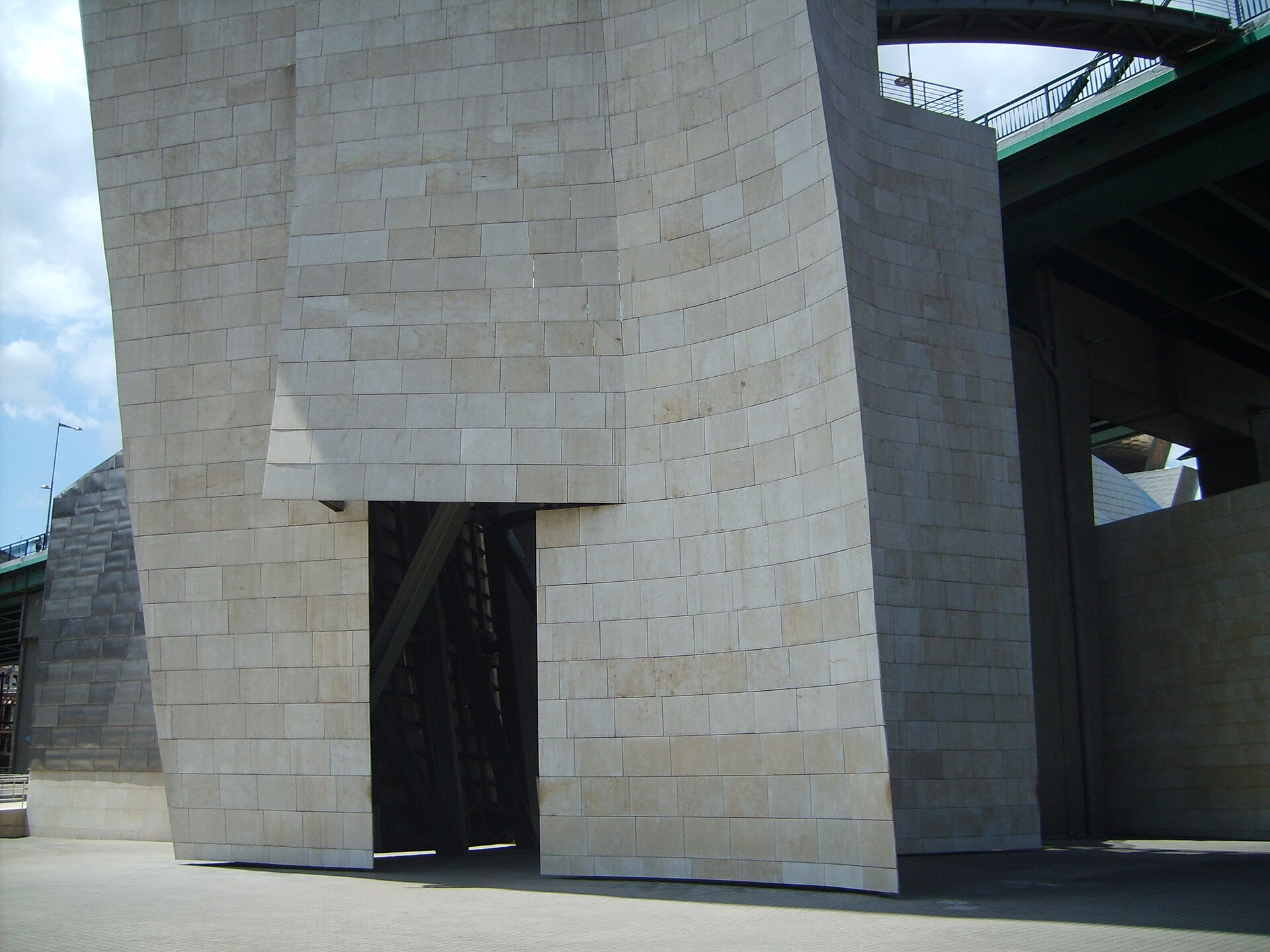
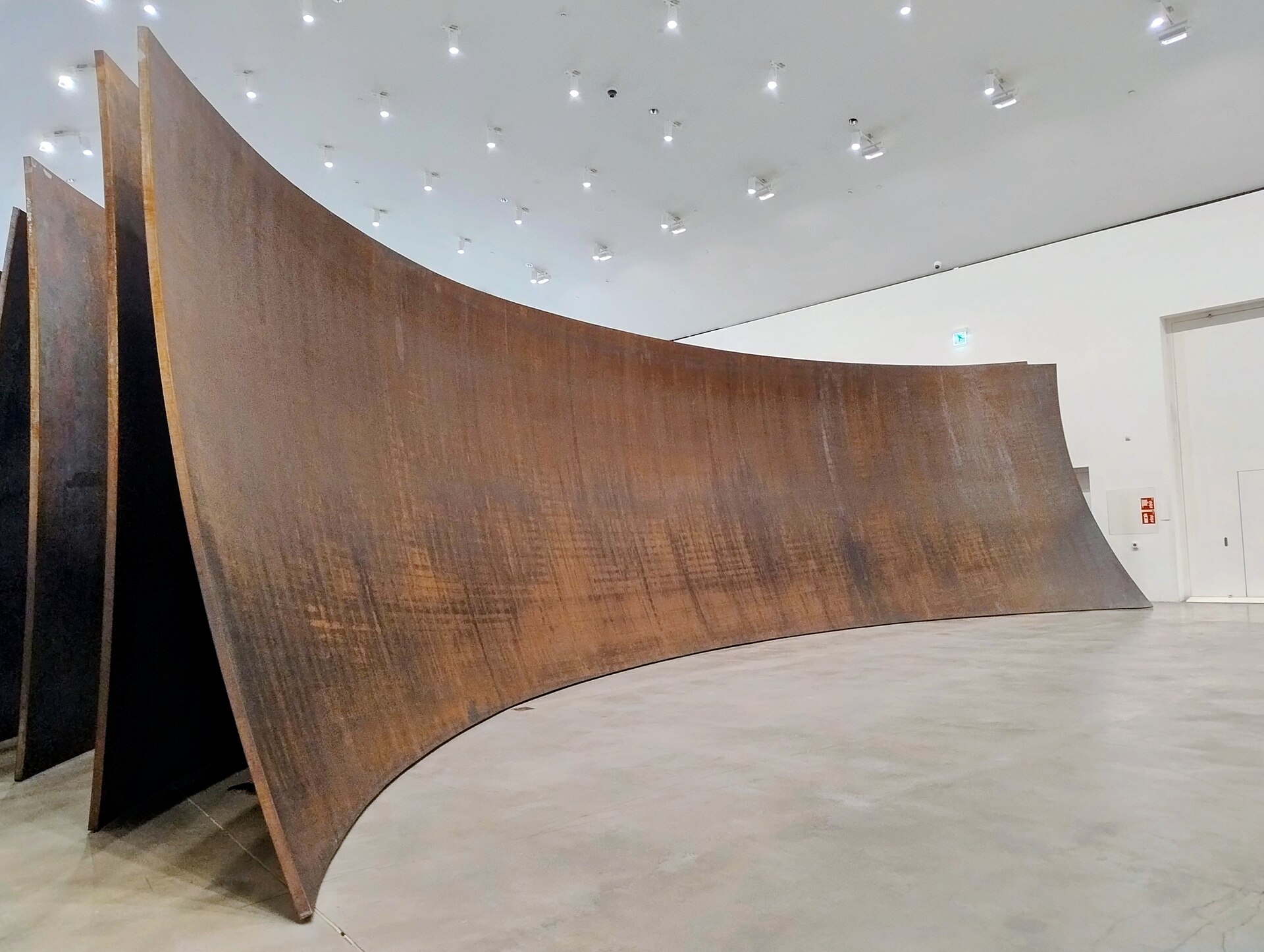
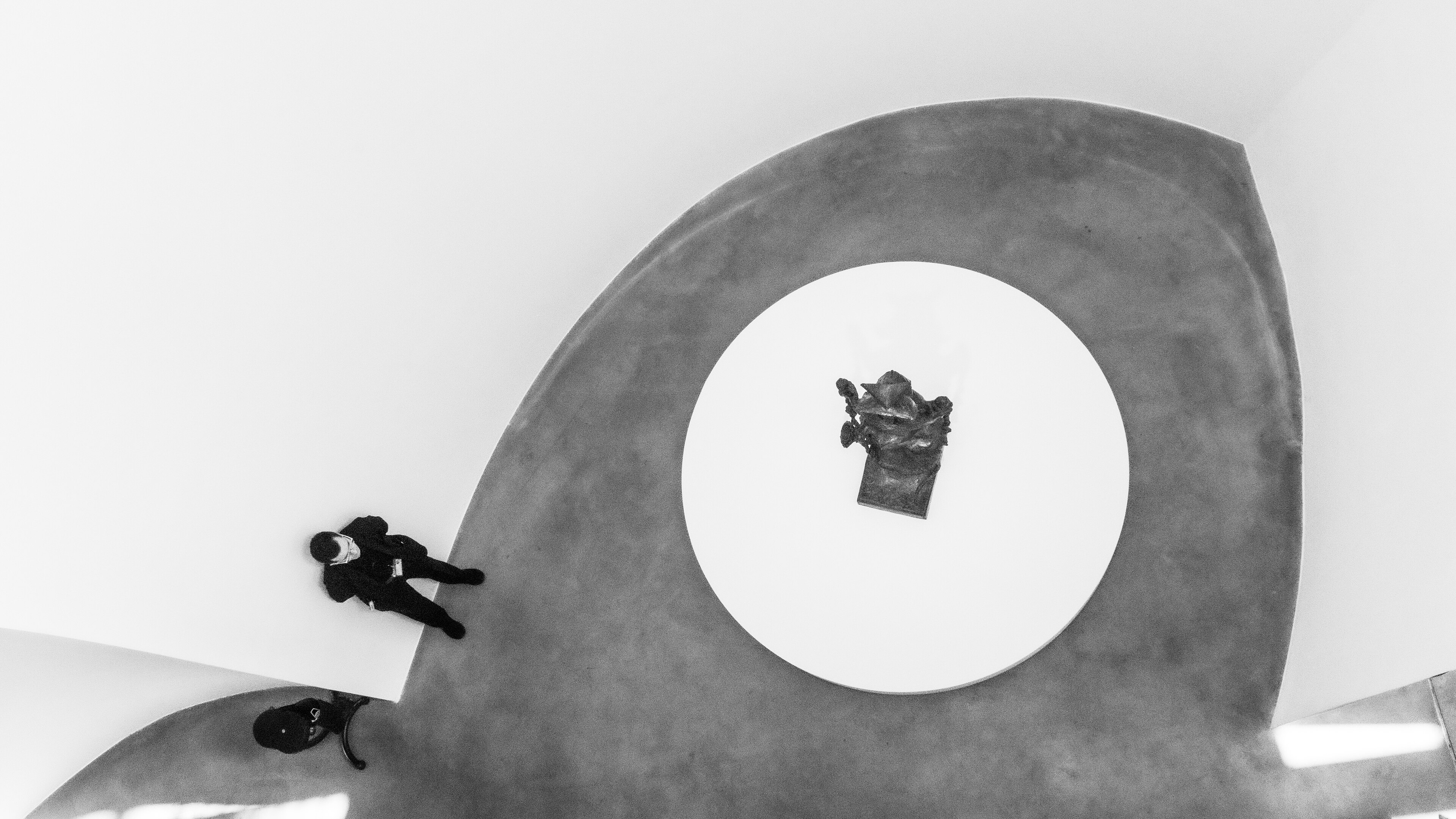
Step inside and the building exhales upward. The atrium rises fifty metres in a swirl of glass, limestone and white steel — Gehry called spaces like this the room between the rooms, and here it is the true gallery: walkways curve like gangplanks, glass lifts climb like bubbles in a water column, and every floor offers a new betrayal of the view you thought you had. Off it opens the museum's great argument-stopper, a single gallery one hundred and thirty metres long — longer than a football pitch — column-free, built to hold what no museum could hold before. There, Richard Serra's The Matter of Time torques eight enormous weathered-steel ellipses into a labyrinth you walk inside of, where time genuinely misbehaves: the walls lean, the corridor breathes, and your own balance becomes part of the exhibit. Eleanor will not pretend the moderns always move her as the old masters do — but this room, this steel weather, is one of the great museum experiences of her lifetime, and it could exist nowhere else on Earth. Walk it slowly. Get pleasantly lost. That is the design.
See this place in the galleryThe Guggenheim — the Atrium — our interpretation, created from the reference photographs belowReference photographs — The Guggenheim — the Atrium · 3 photographs
The Guggenheim — the River Side
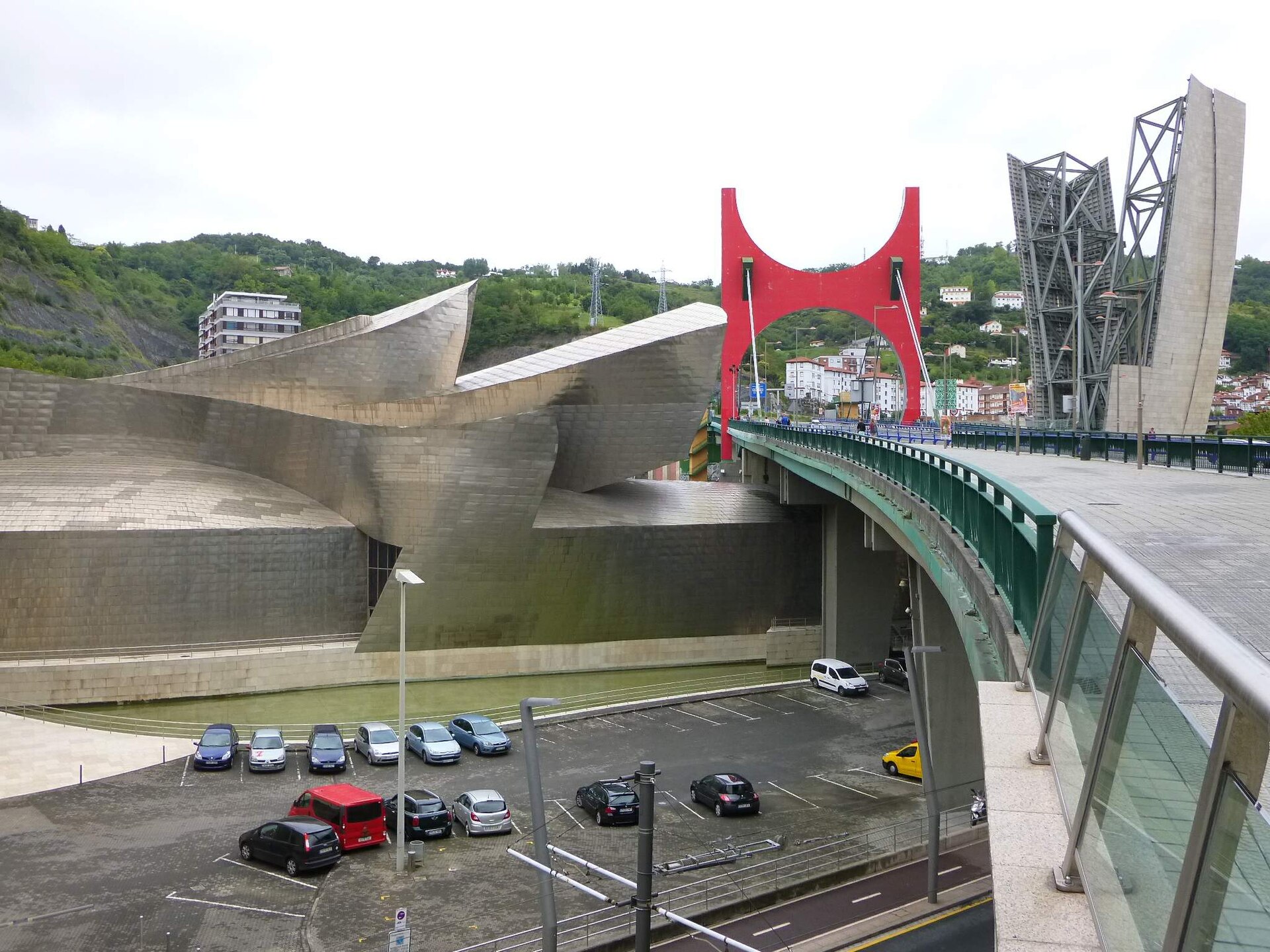
End the day as the city does: on the water. From the Salve Bridge — painted, on the museum's tenth birthday, with Daniel Buren's great red arch of light — the building shows its favourite face: the titanium scales over the river, flashing silver, then gold, then violet as the northern light does its evening arithmetic. Beneath the bridge's shadow crouches Maman, Louise Bourgeois's nine-metre spider, all bronze legs and marble eggs, a mother's monument the artist carried through a lifetime of work — half the visitors find her terrifying, half find her tender, and Bourgeois, who named her for her own mother, would have accepted both verdicts. It is the right note to end Bilbao on: a museum that began as a gamble now organically part of the river walk, the dog walk, the commute. Tomorrow we fly the length of the Mediterranean to the oldest stones on our journey — a museum that looks up at the hill that made it. Athens, and the end of our road.
See this place in the galleryThe Guggenheim — the River Side — our interpretation, created from the reference photographs belowReference photographs — The Guggenheim — the River Side · 3 photographs
Chapter Ten — Athens
3 scenes · 9 reference photographs
The Acropolis Museum — the Arrival
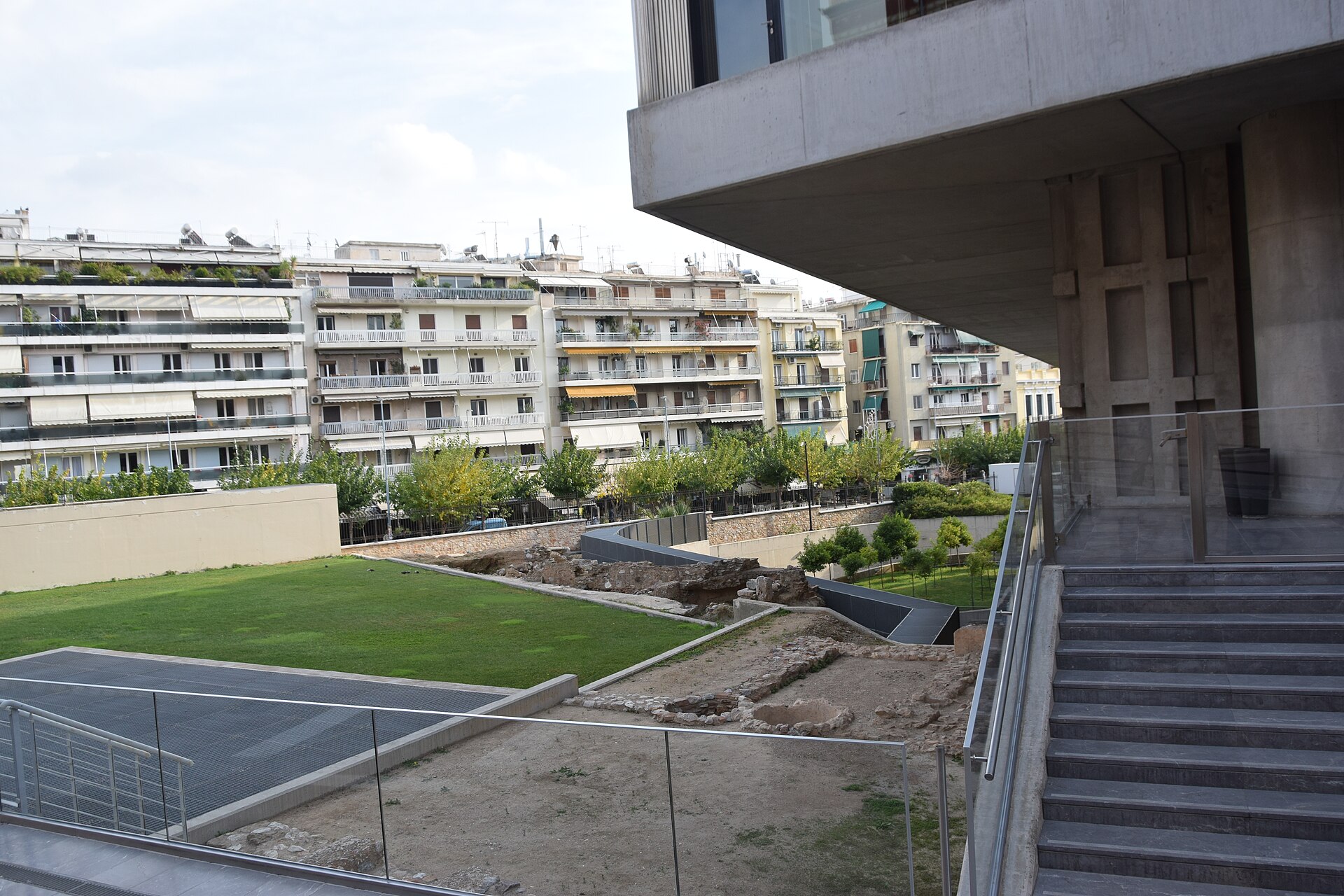
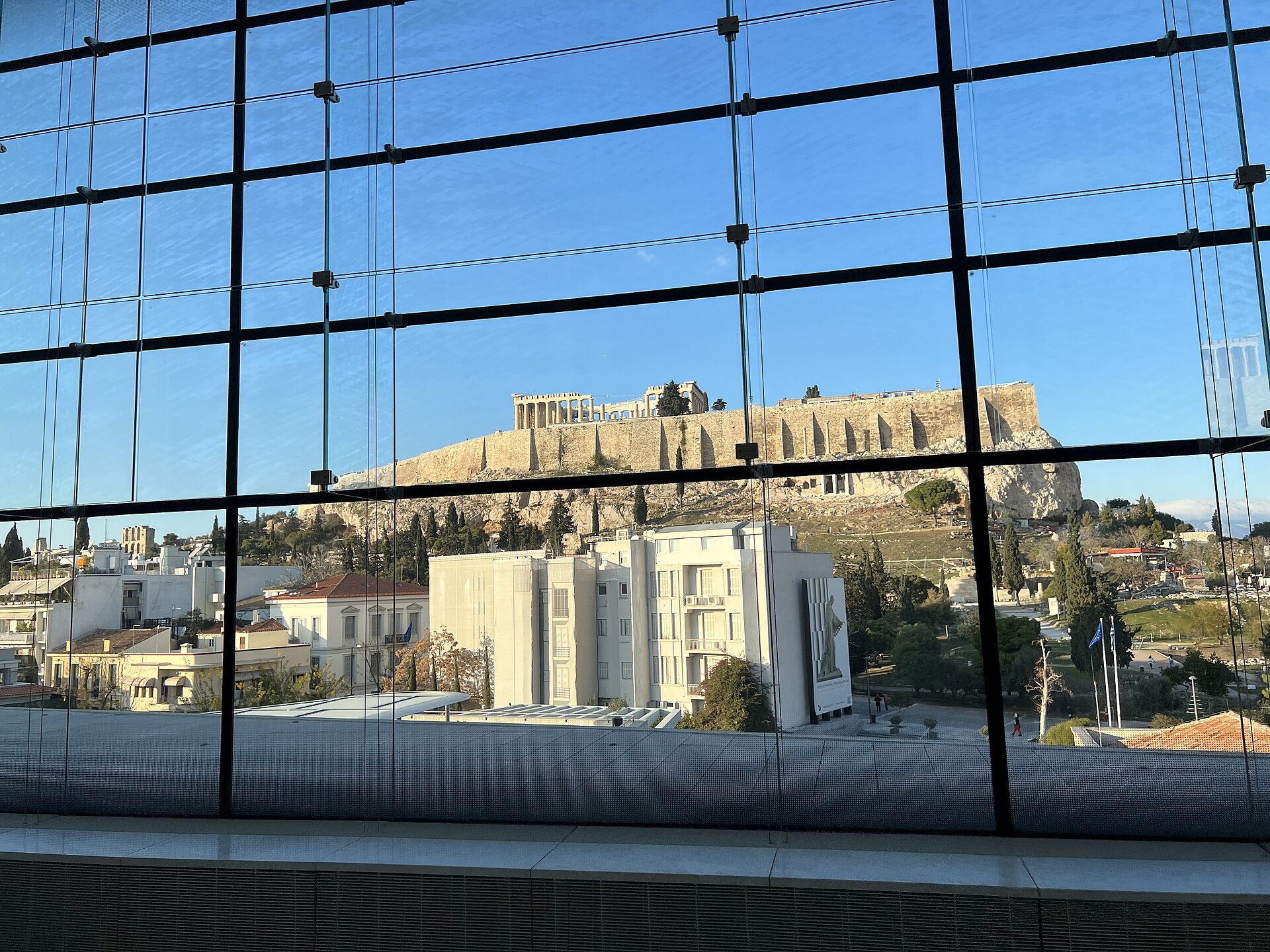
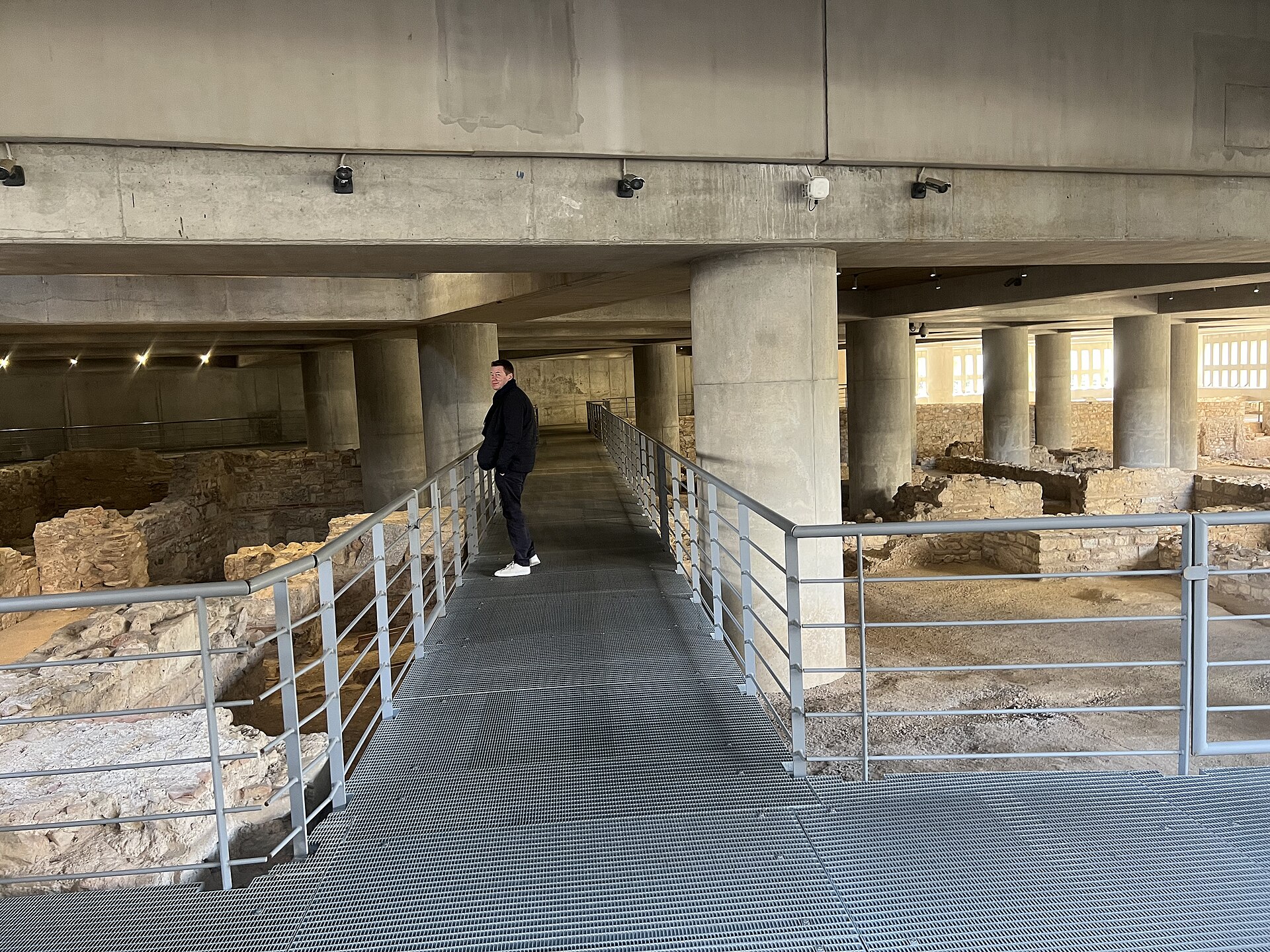
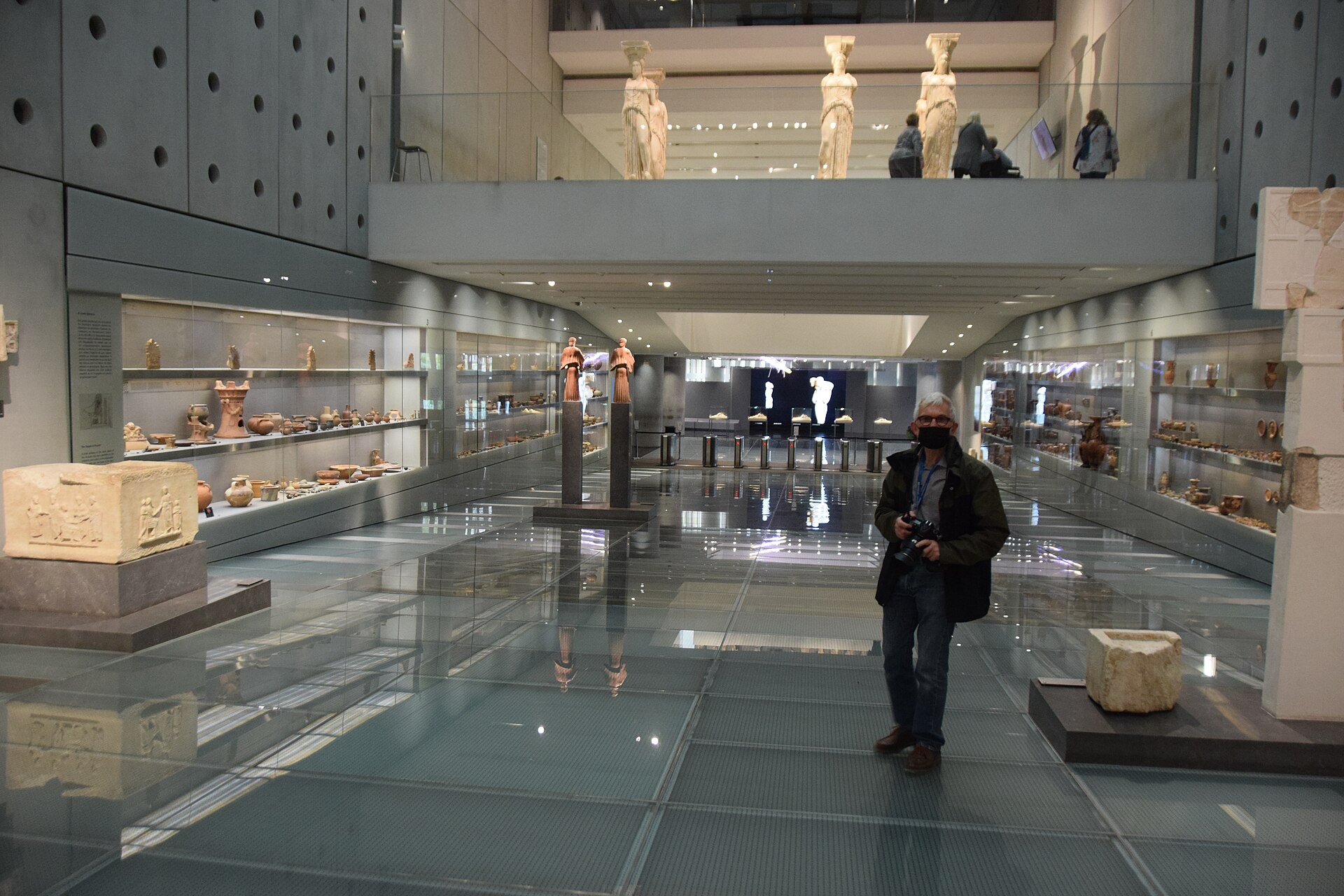
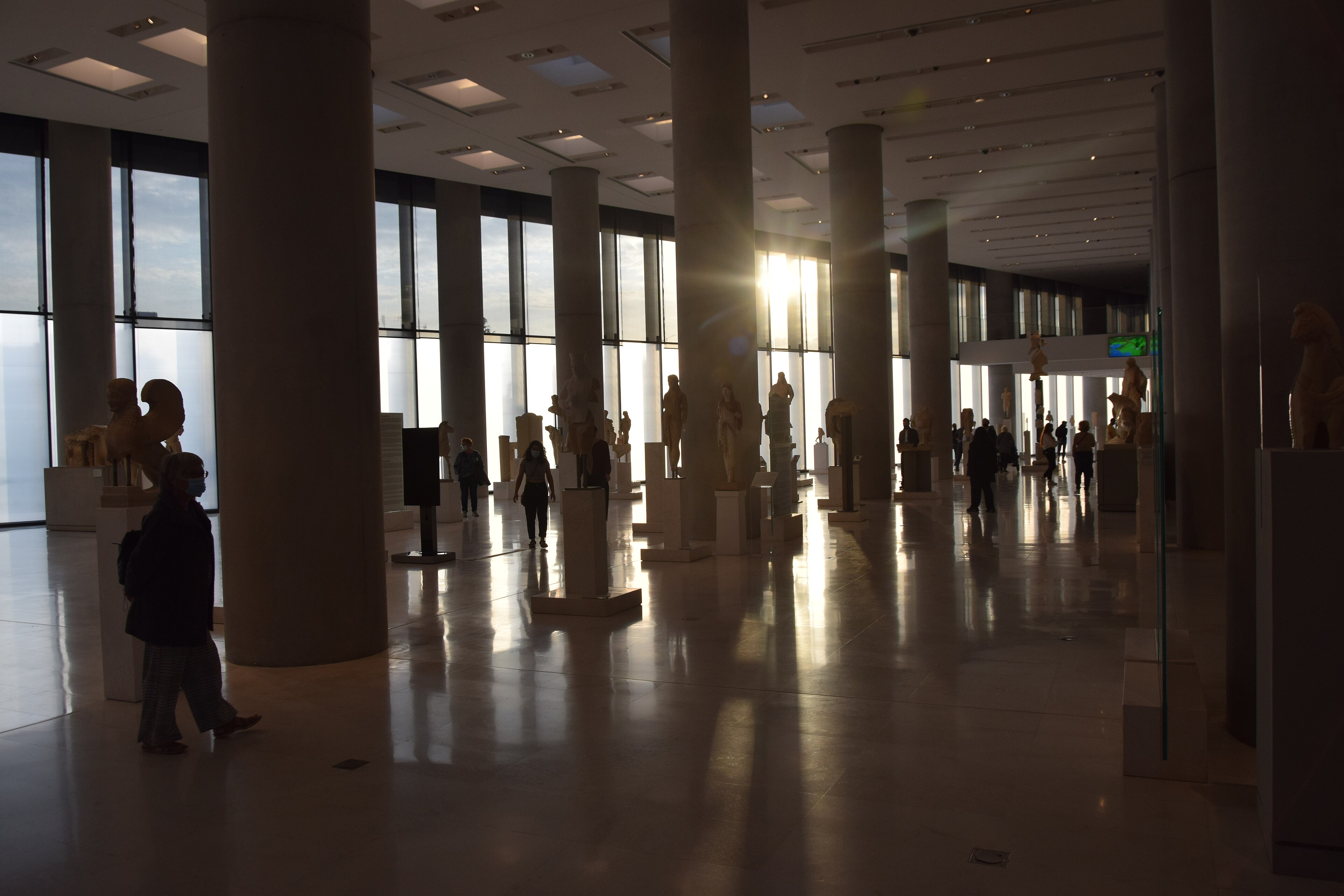
Our last museum stands in the shadow of the oldest presence on our whole journey. The Acropolis Museum opened in two thousand and nine, at the southern foot of the rock, designed by Bernard Tschumi on a forest of concrete pilotis — because the ground here is itself an exhibit: beneath the glass floors of the entrance court runs an excavated Athenian neighbourhood, lanes and wells and bath houses of late antiquity, and you walk into this museum across two thousand years on bridges of glass. The building makes one decision from which everything follows: it turns, level by level, until its top floor aligns exactly with the Parthenon, whose columned silhouette fills the glass in permanent conversation with the sculptures inside. Everything in this museum came from that one hill — nothing imported, nothing bought; a single site's memory, gathered under a single roof two hundred and eighty metres from its source. The light is Attic light, unfiltered and merciless and beautiful. Eleanor has saved this museum for the end because it reverses all the others: here the museum is the frame, and the masterpiece — the hill itself — stands outside the window. Come in. Mind the glass.
See this place in the galleryThe Acropolis Museum — the Arrival — our interpretation, created from the reference photographs belowReference photographs — The Acropolis Museum — the Arrival · 3 photographs
The Acropolis Museum — the Archaic Gallery
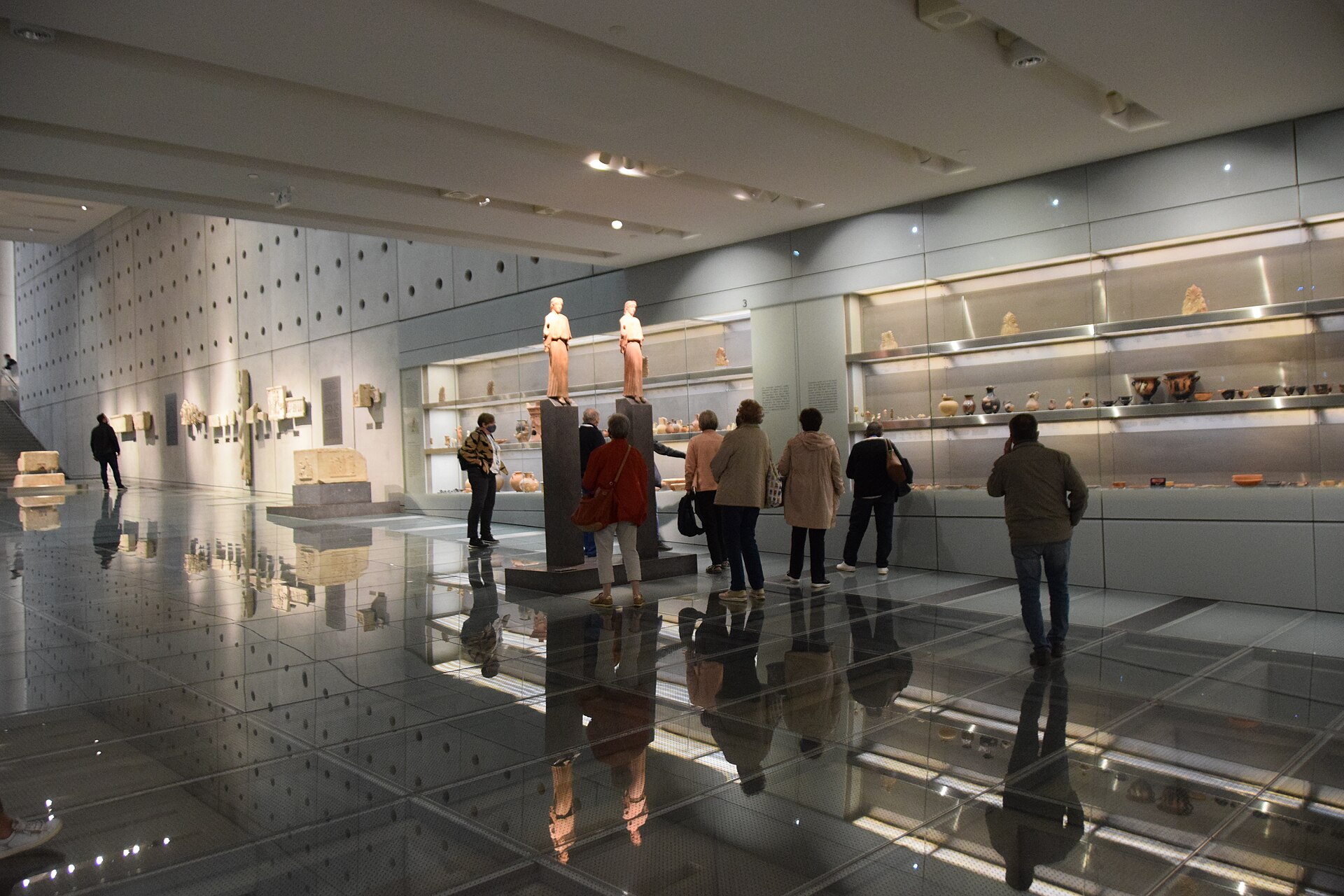
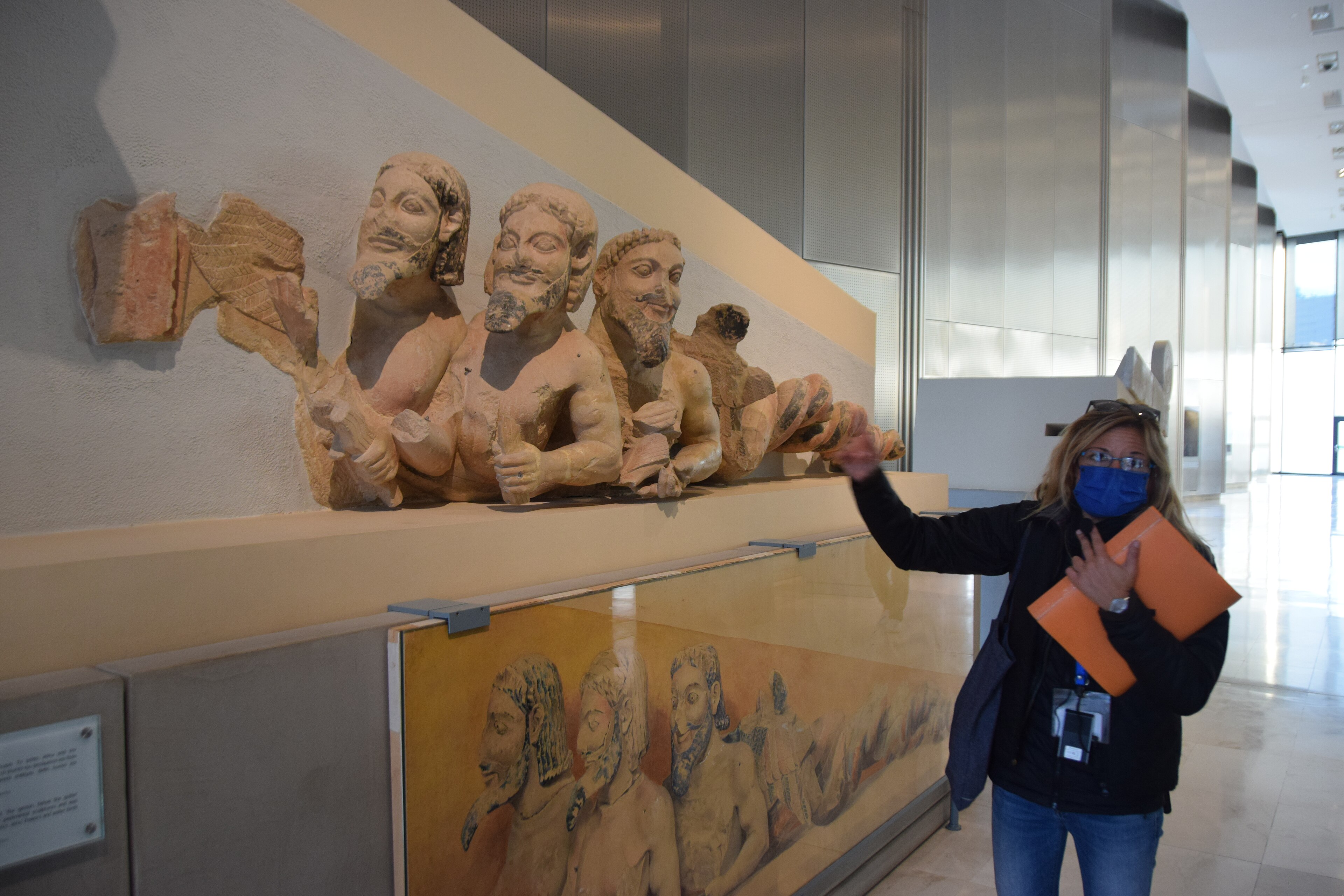
The first great gallery is a crowd of the young and smiling. Before the Parthenon was dreamed of, the hill was dressed by the archaic age — the sixth century before Christ — and its korai stand here in a sunlit forest of marble: maidens in peplos and chiton, their hair in carved curls, traces of red and blue paint still ghosting on the folds, each wearing the famous archaic smile, which is not happiness exactly, but aliveness — the sculptor's signature that stone had learned to breathe. Among them strides the Moschophoros, the calf-bearer, carrying his offering up the hill in five forty-six and smiling too, the oldest beloved face in the building. These statues were smashed by the Persians in four eighty and buried by the Athenians in pits on the rock — a broken world reverently interred — which is why their paint survived for us: they spent twenty-three centuries in the dark, waiting. Stand among them a moment. Every museum we have visited together keeps something of youth in it; only this one keeps youth itself, two and a half millennia old, still first in the morning light.
See this place in the galleryThe Acropolis Museum — the Archaic Gallery — our interpretation, created from the reference photographs belowReference photographs — The Acropolis Museum — the Archaic Gallery · 3 photographs
The Acropolis Museum — the Parthenon Gallery
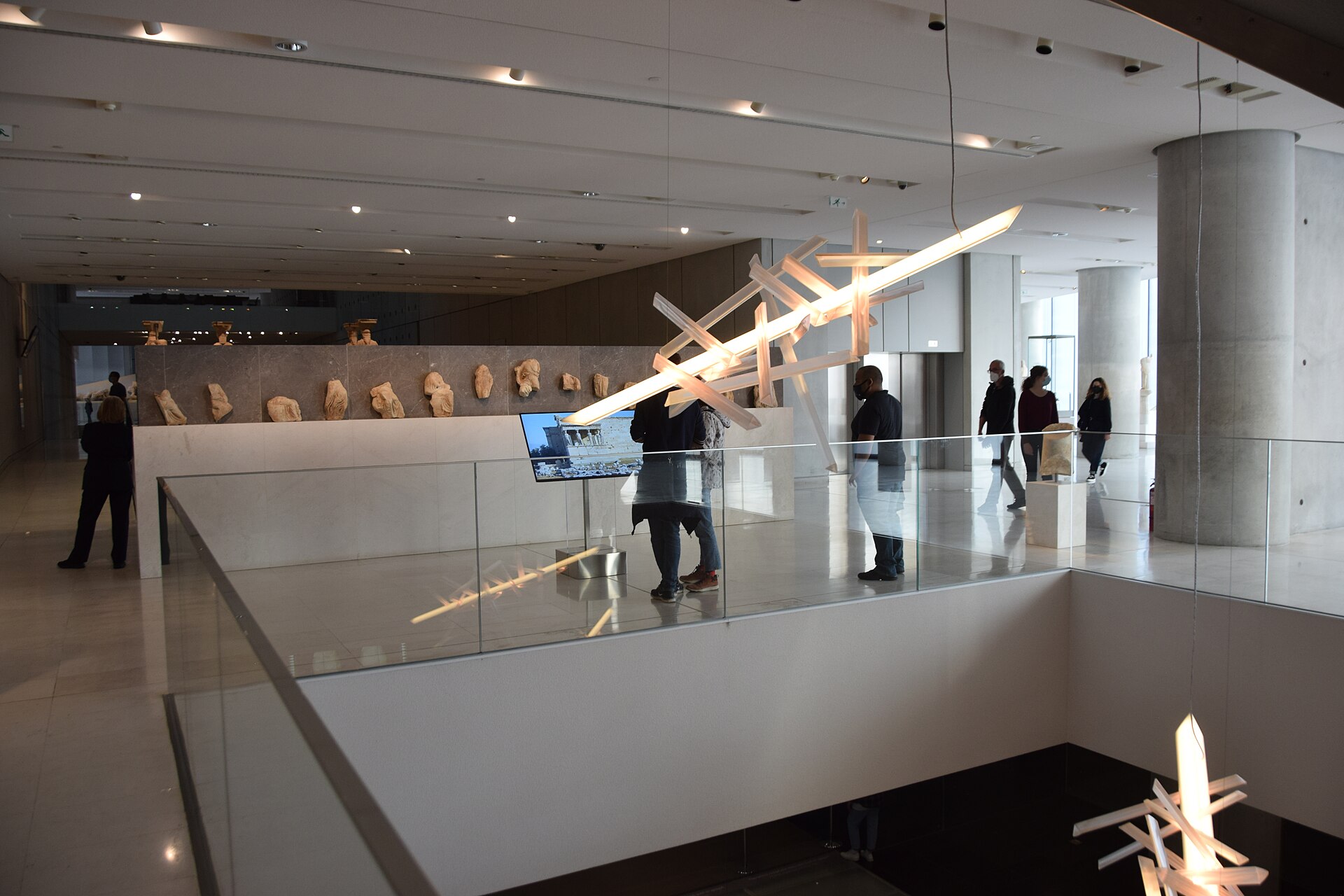
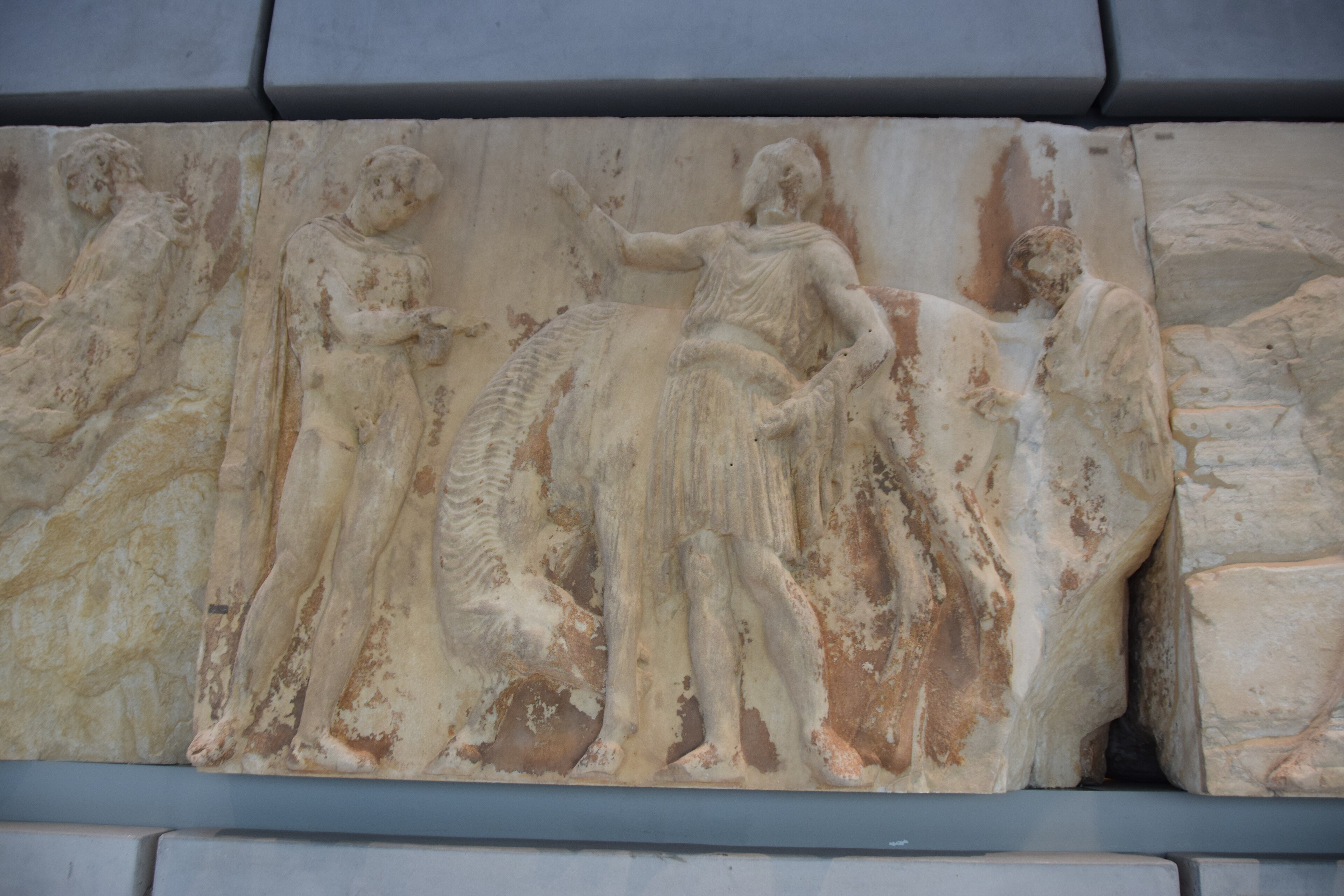
The top floor turns, and there it is: the Parthenon itself, outside the glass, at eye level, the same distance as the day its sculptures came down. Inside, the gallery repeats the temple exactly — the same orientation, the same column spacing — and around a central core, at the height where carved gods once rode in procession, runs the frieze: one hundred and sixty metres of horsemen, maidens, musicians and sacrificial cattle, carved with a lightness that two thousand years of weather and war could not dull. Here a pediment figure rises like a river god shaking off water; there the metopes clash with centaurs; everywhere, the empty spaces are left honestly empty, and every visitor from London completes the sentence silently. And so our journey ends where the long story of European art begins — fourteen museums, eleven cities, from a great glass court in London to this glass hall in Athens, and one rule held throughout: look slowly, and give the best of it your full heart. Thank you for walking beside me. The hill is yours now. Go gently, and look up.
See this place in the galleryThe Acropolis Museum — the Parthenon Gallery — our interpretation, created from the reference photographs below
Reference photographs — The Acropolis Museum — the Parthenon Gallery · 3 photographs
Journey's End — Athens
The last gallery looks through glass at the hill where the long story of European art begins — and where this journey, fittingly, ends. Fourteen museums, ten cities, forty-two stops: thank you for walking them with Eleanor.
 Jason D’s Vision