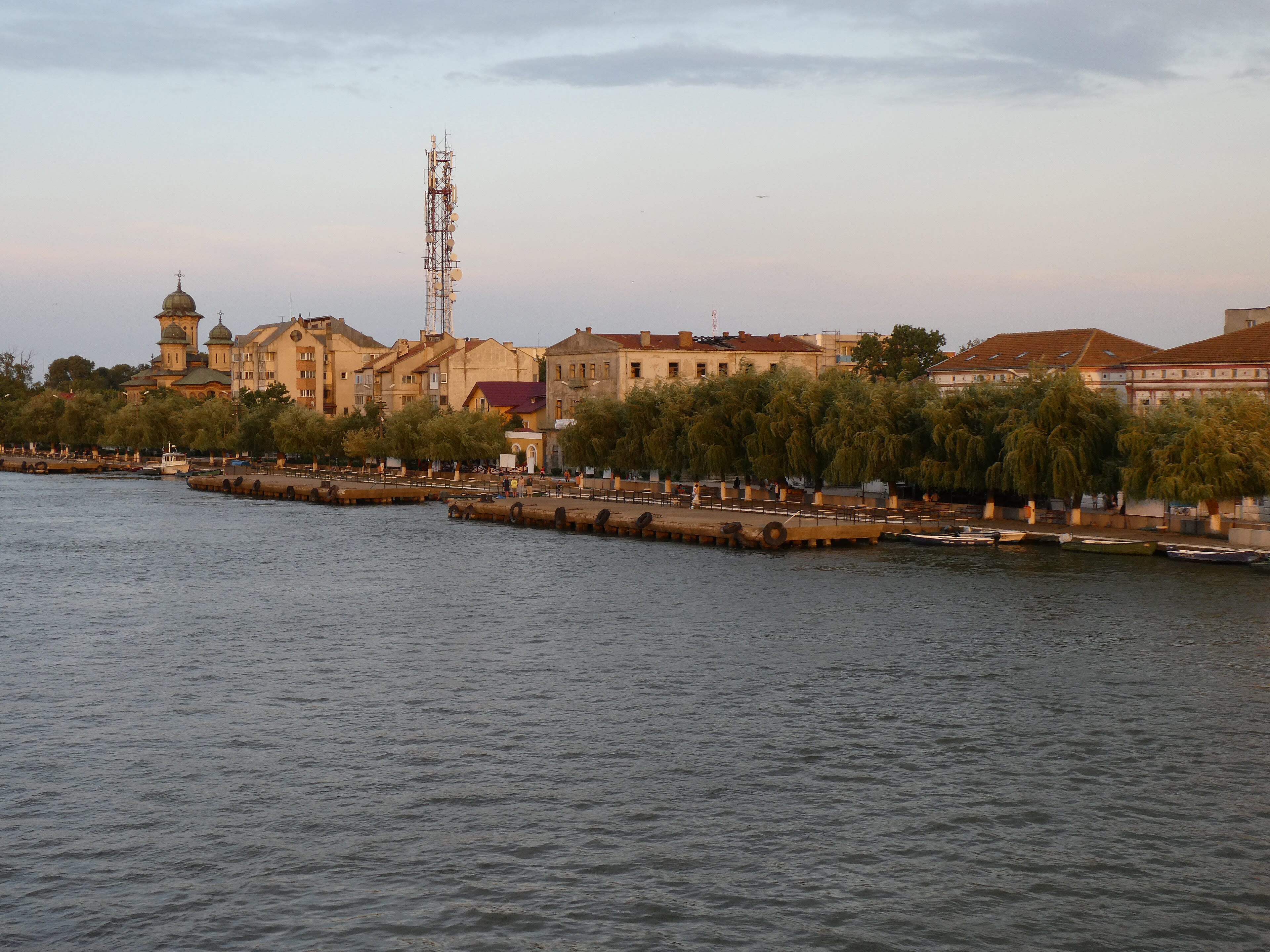
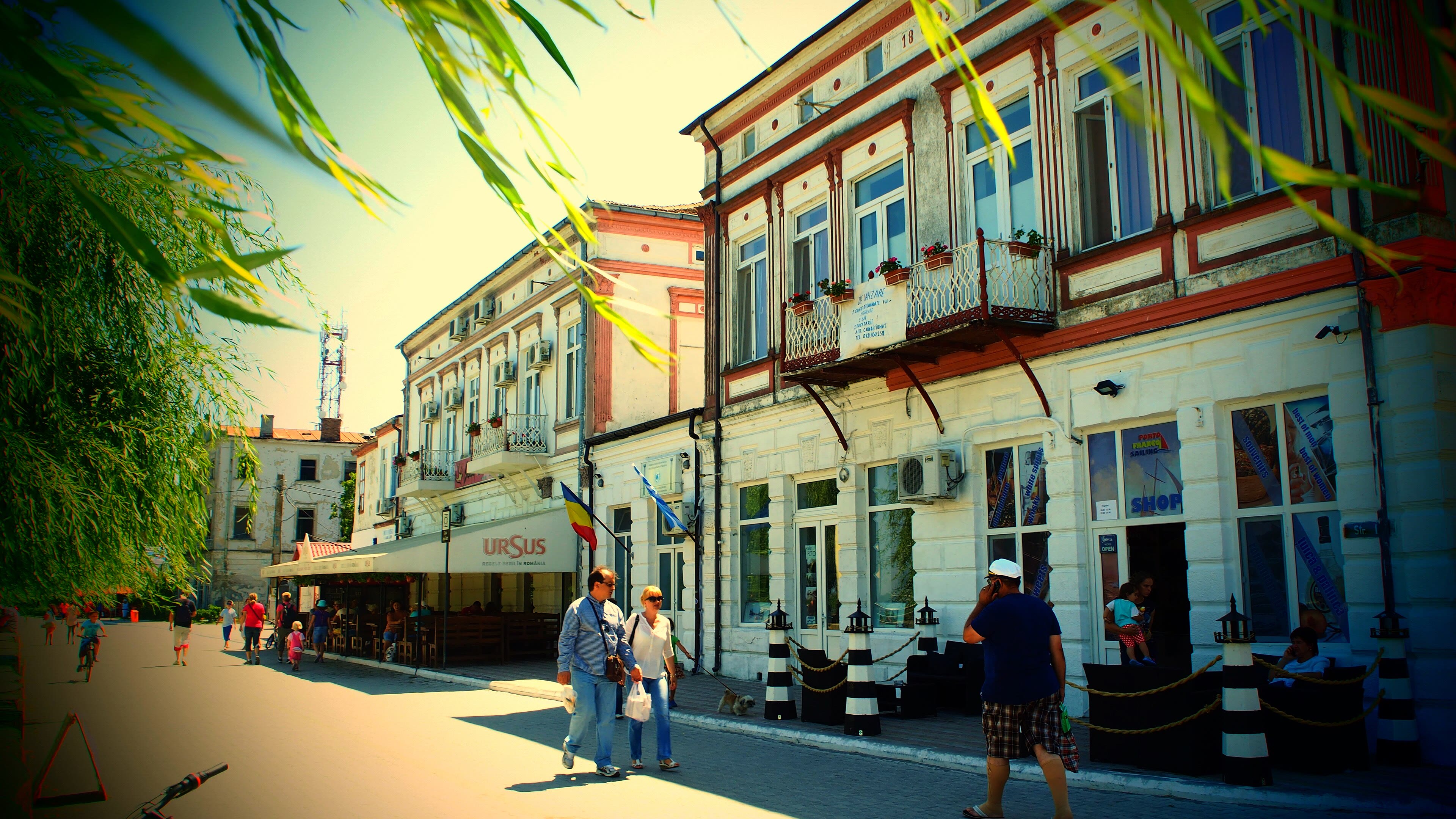
One boat, one river road, one continent — with Pieter, aboard the Zwaluw
This journey follows the great waterway that crosses Europe: from Amsterdam up the Rhine, along the Main, over the canal that joins two river worlds, and down the Danube to the Black Sea — some three thousand kilometres of working river, sailed slowly in a small Dutch barge. It opens with the Delta and the Lower Rhine: the canals of Amsterdam, the giant harbour of Rotterdam, Dordrecht where three rivers meet, the broad Waal, the inland sea-port of Duisburg, Düsseldorf and Cologne, and quiet Bonn beneath the first hills — and continues into the Romantic Rhine: the gorge of castles from Koblenz to the Loreley, Bacharach and the toll castle of Kaub, to Mainz and the great turn east — then up the Main and the Canal: Frankfurt, Würzburg and Bamberg, over the roof of Europe to the Danube at Kelheim — and down the Danube to Vienna: Regensburg, three-river Passau and the Wachau — and at last the Danube to the sea: Bratislava, Budapest, Belgrade and the Iron Gates, through the Delta to journey’s end at the Black Sea. The through-voyage is complete.
Every scene here is our own interpretation of the real place, created from its reference photographs. The photographs themselves — one hundred and twenty-six of them in these five chapters — are folded beneath each scene below: open a set to see what the scene was made from, and tap any photograph to see it large.
To hear the whole voyage: press the tour button below and put the phone down — the page travels from scene to scene on its own, scrolling as Pieter speaks. Or wander freely and tap Listen at any stop.
Your host: Pieter — twenty years on the rivers of Europe aboard his own small barge, the Zwaluw. His welcome:
Hello — I'm Pieter, and this is the Zwaluw, my boat. She's a small Dutch barge, older than I am, and she has carried me up and down the rivers of Europe for the better part of twenty years. This time, we're going all the way. From Amsterdam we follow the Rhine into Germany, climb the Main, and cross the canal that joins two river worlds — then we give ourselves to the Danube, past Vienna and Budapest and the Iron Gates, until the river lets us go at the Black Sea. Cast off with me. The water is waiting.
Chapter One — The Delta and the Lower Rhine
8 scenes · 24 reference photographs
Amsterdam — Cast Off
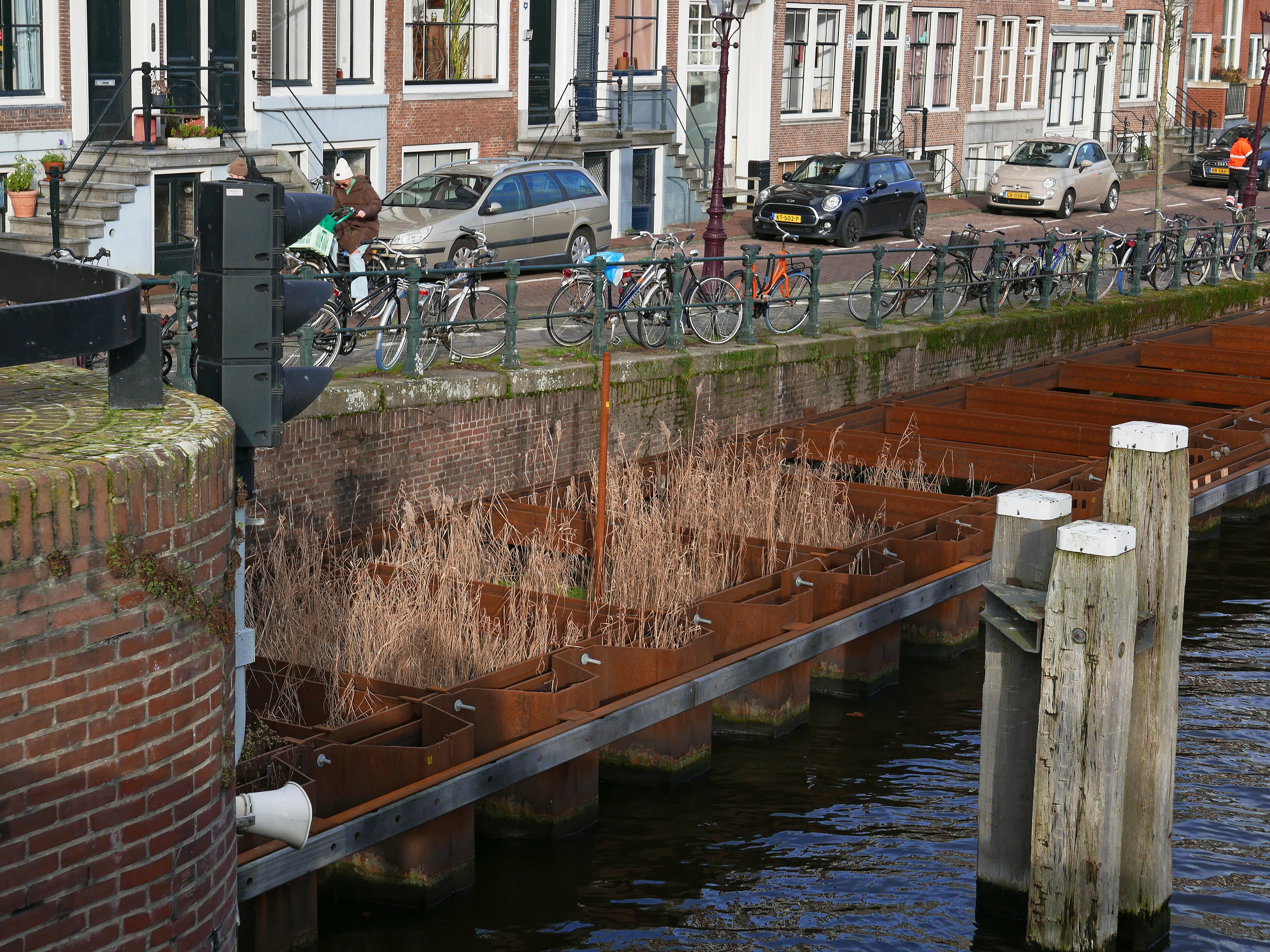
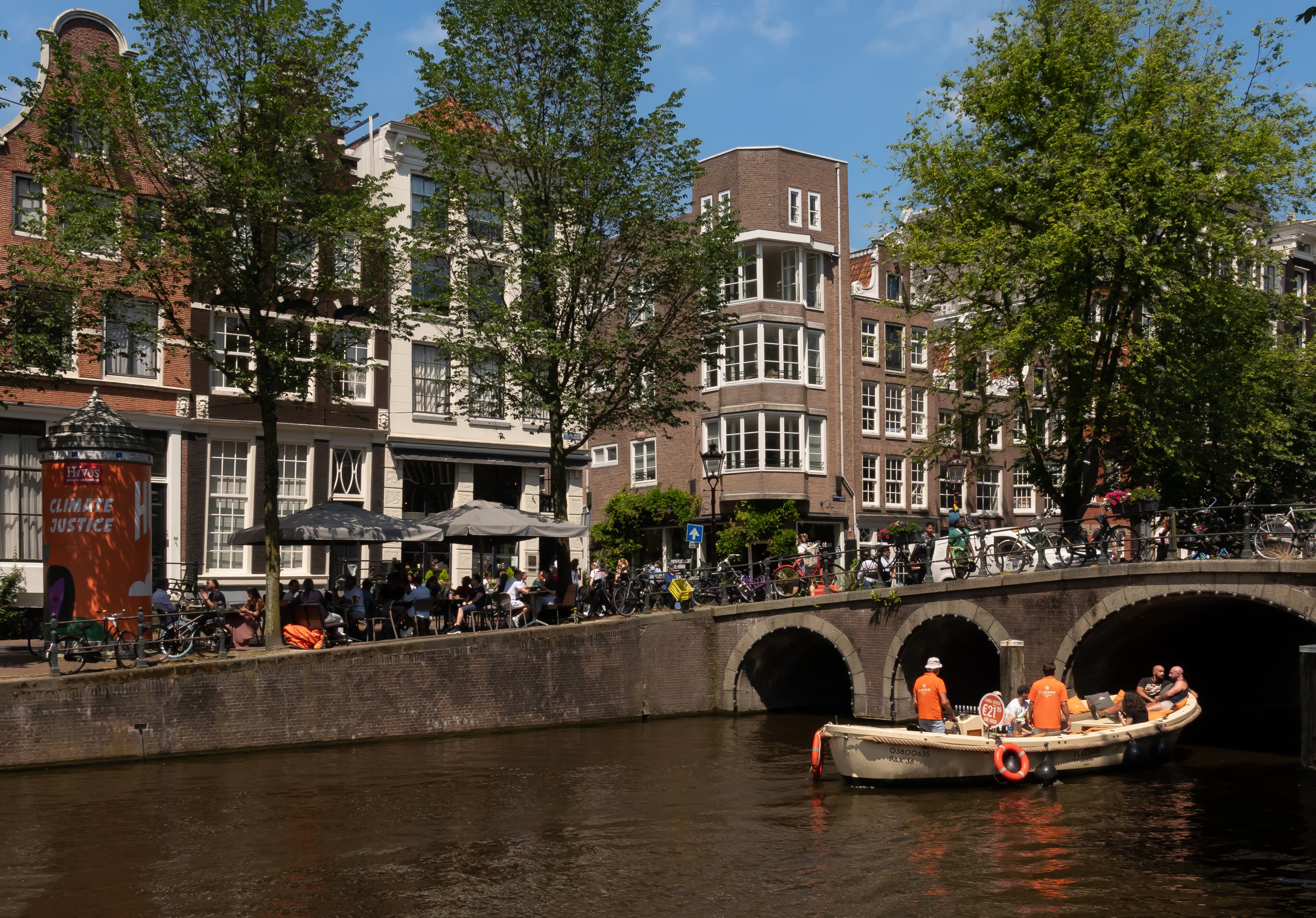
We begin where I began, on a grey-green canal in Amsterdam, with the gulls complaining and the bicycles rattling over the bridges above us. The Zwaluw has been my home for twenty years, and this morning she is loaded for the longest journey of her life: full tanks, a bicycle lashed on the roof, and charts for rivers she has never seen. We cast off quietly, the way you leave a sleeping house. Amsterdam does not wave goodbye; it simply lets you go, past the leaning merchant houses and the houseboats with their window boxes of geraniums. A city built on water understands boats. Everything here floats, or once did, or is held up by piles driven into the mud by men who refused to be told where a city could not stand. By the time the canal opens toward the river, the church towers have given us up to the wide sky of Holland. This is the first lesson of the water: you do not conquer a river. You ask its permission, every single day, and if the answer is yes, you go slowly, and you pay attention.
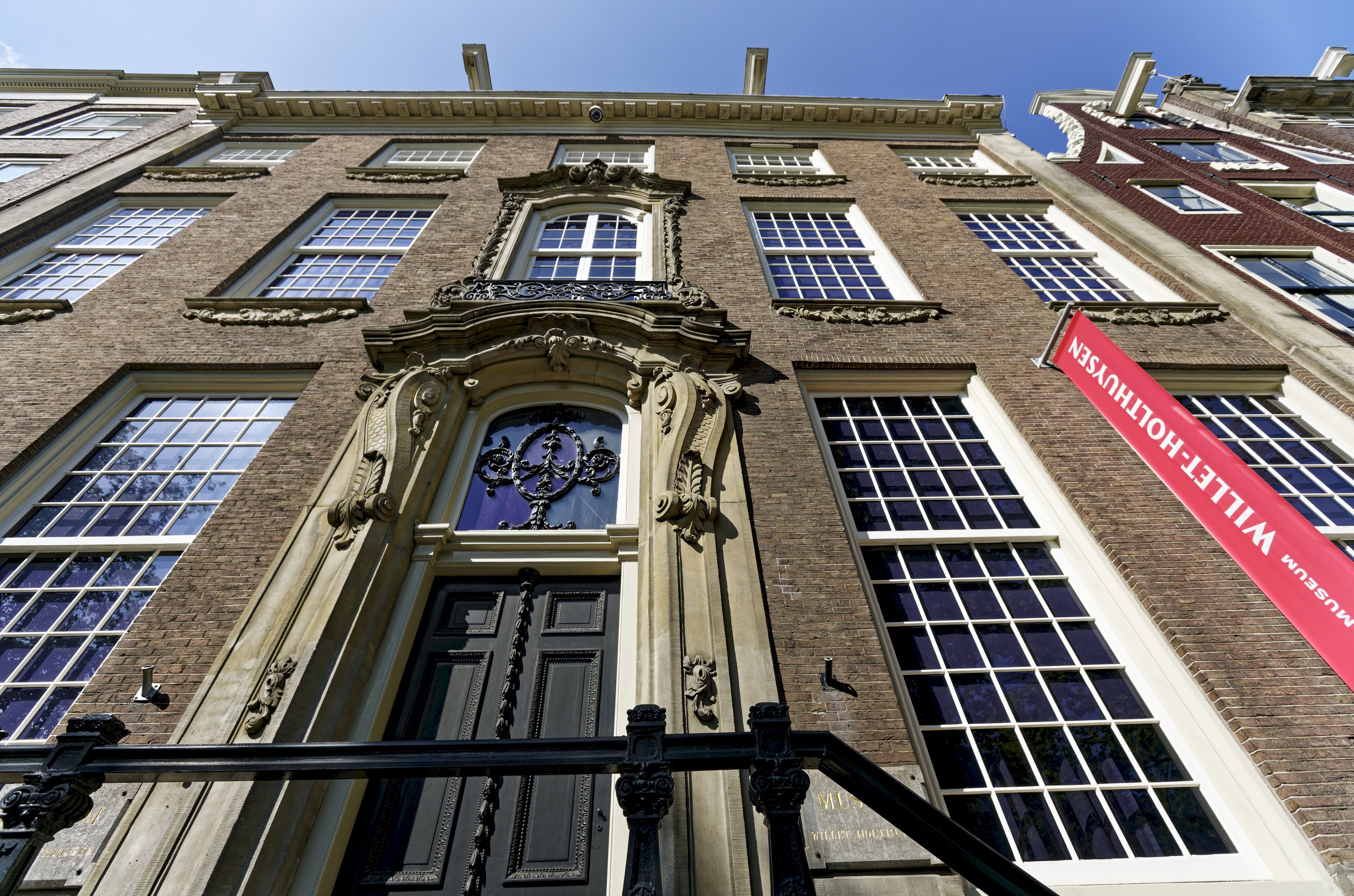
See this place in the galleryAmsterdam — Cast Off — our interpretation, created from the reference photographs belowReference photographs — Amsterdam — Cast Off · 3 photographs
Rotterdam — the Working River
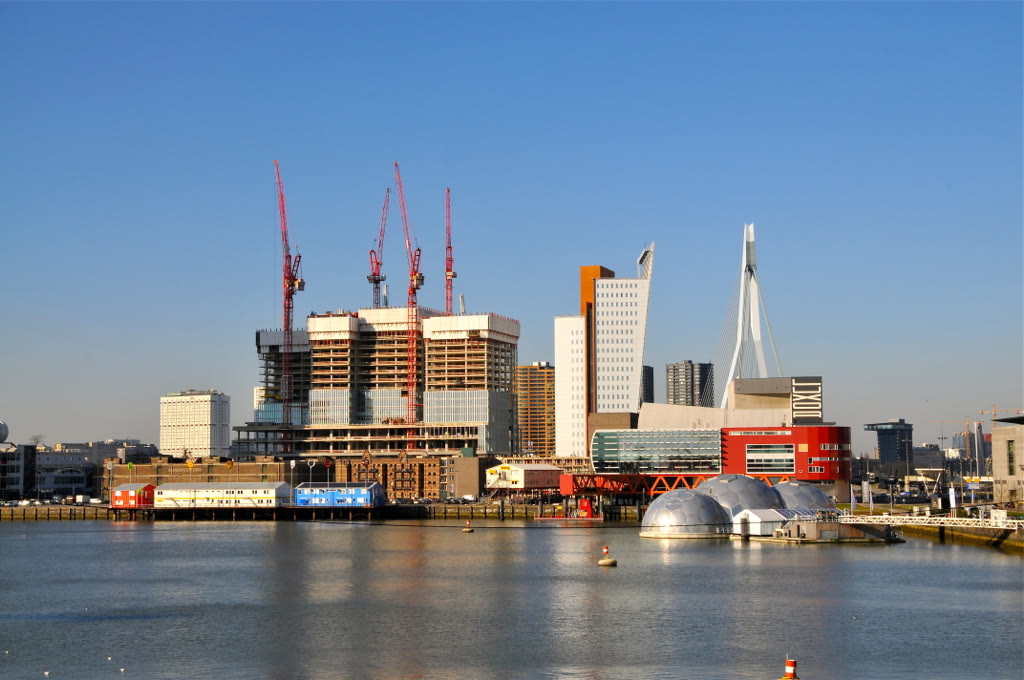
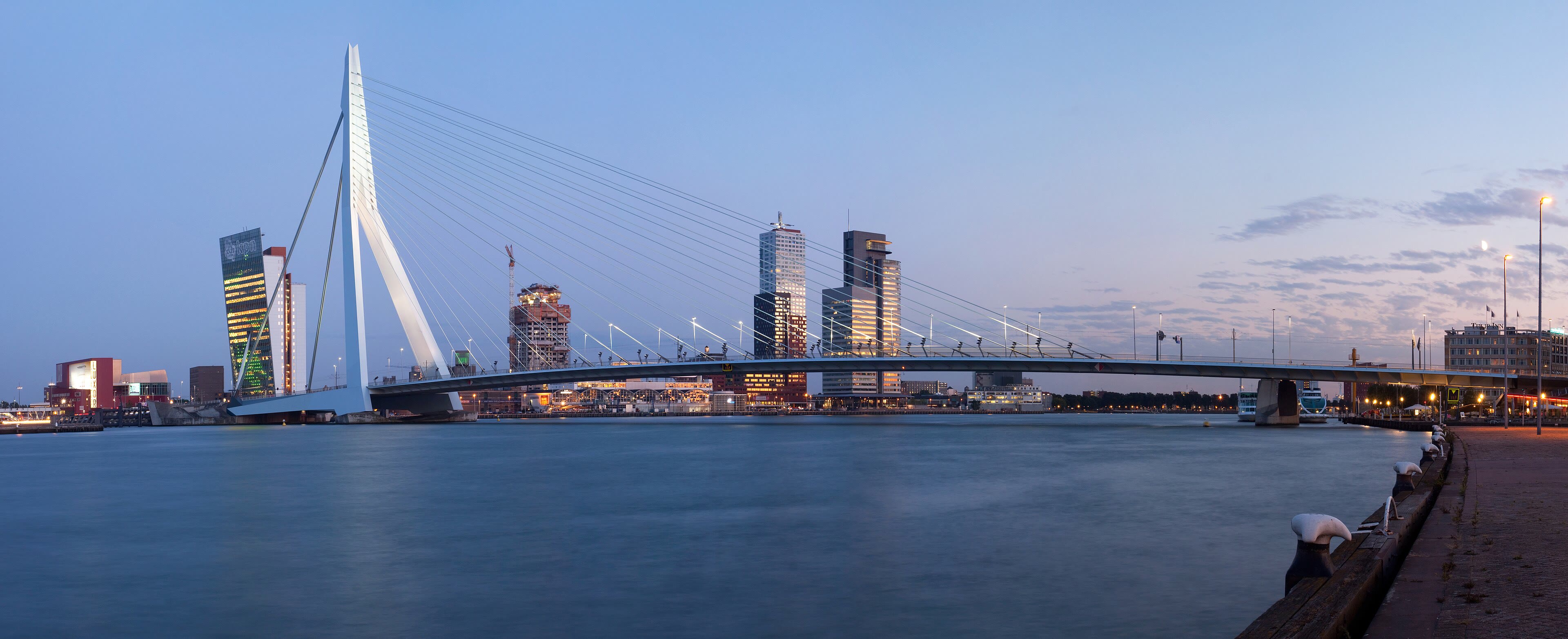
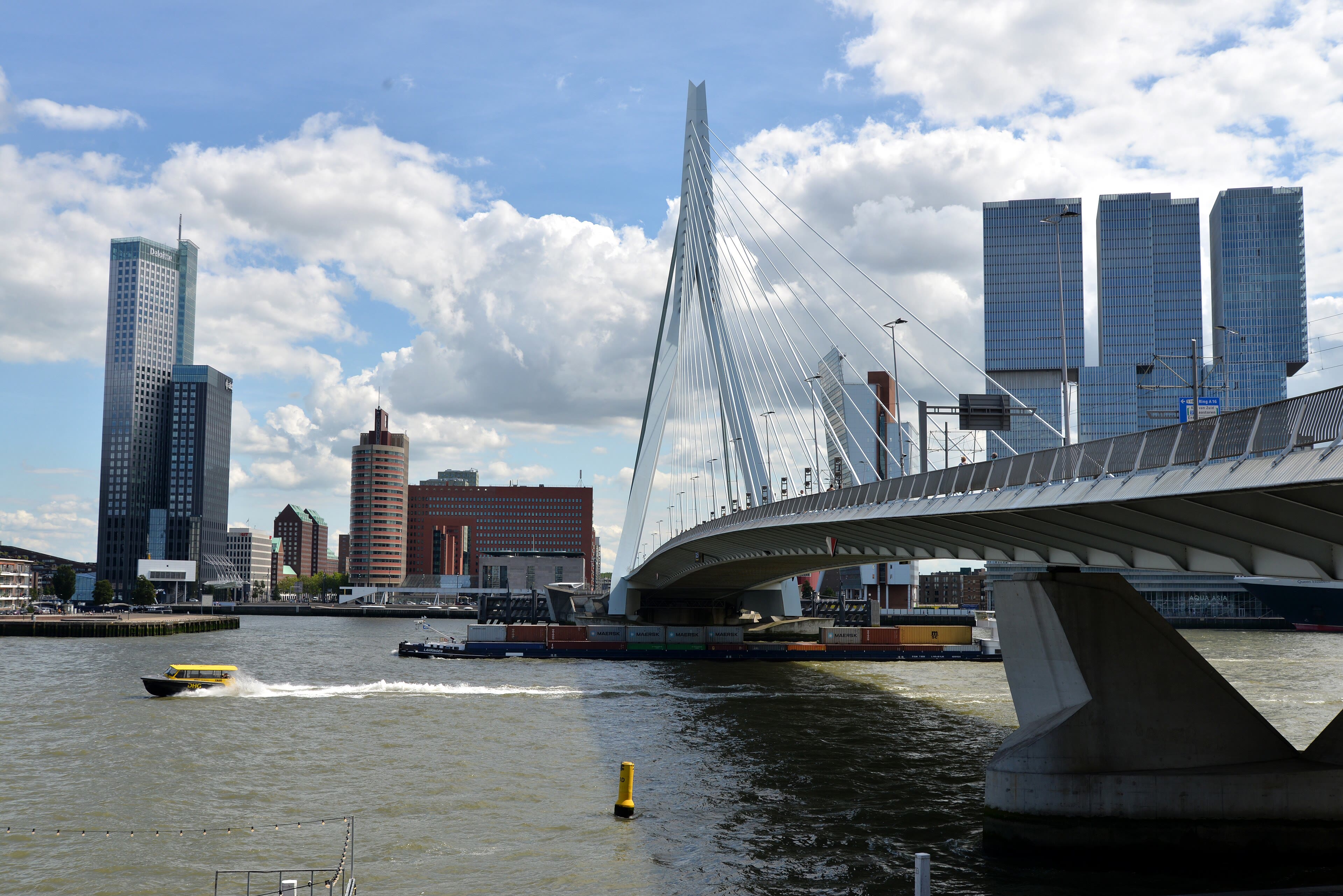
South first, by the narrow canals through Gouda, and then the river takes us by the collar: Rotterdam. Forget the postcard Holland of windmills; this is the hardest-working water in Europe. The port of Rotterdam is the largest on the continent, and from the deck of a small barge it feels like sailing through a city built by giants — cranes like herons, container ships stacked with colour, tugs shouldering great hulls around corners with a patience I can only envy. The Zwaluw keeps to her lane and minds her manners. A river pilot once told me that on this water, size is not arrogance; it is simply physics, and the small boat that understands physics lives to be an old boat. We tie up beneath the white span of the Erasmus Bridge as the light goes, and the whole harbour turns to amber and violet. Tomorrow we turn our bow east and begin, properly, to climb: from here the water runs against us all the way to the mountains, and every harbour town between here and the Black Sea is waiting.
See this place in the galleryRotterdam — the Working River — our interpretation, created from the reference photographs belowReference photographs — Rotterdam — the Working River · 3 photographs
Dordrecht — Where Three Rivers Meet
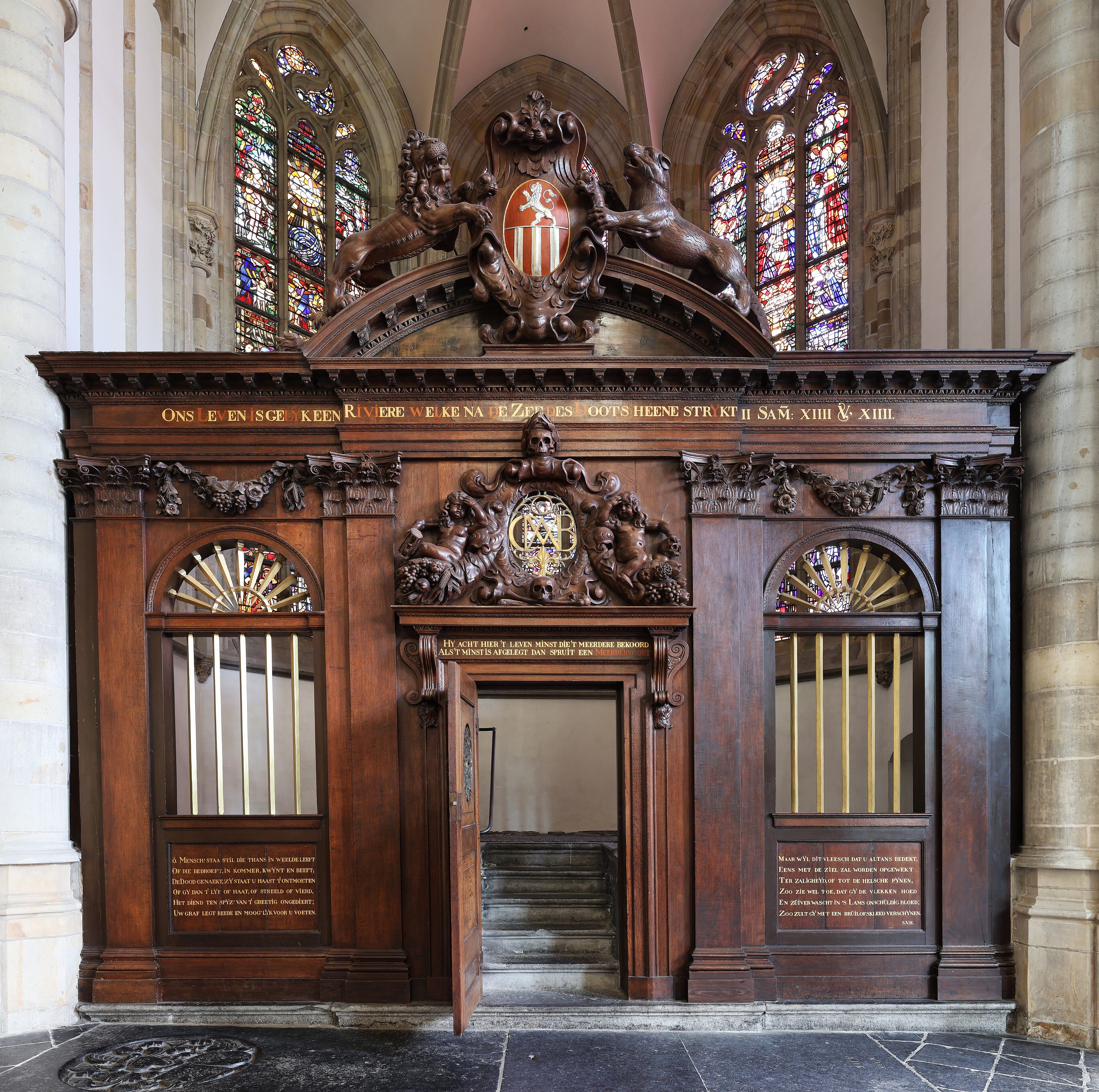
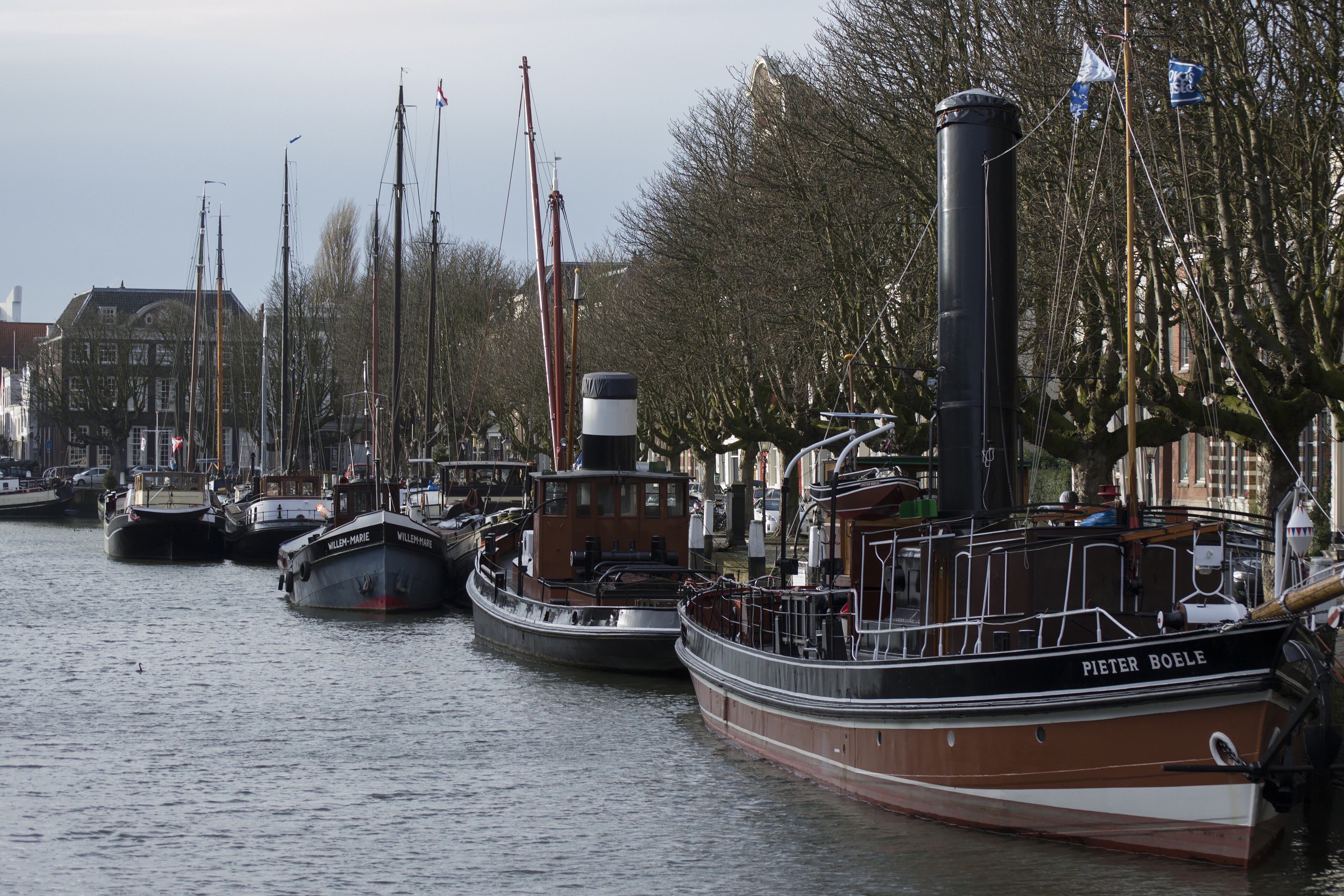
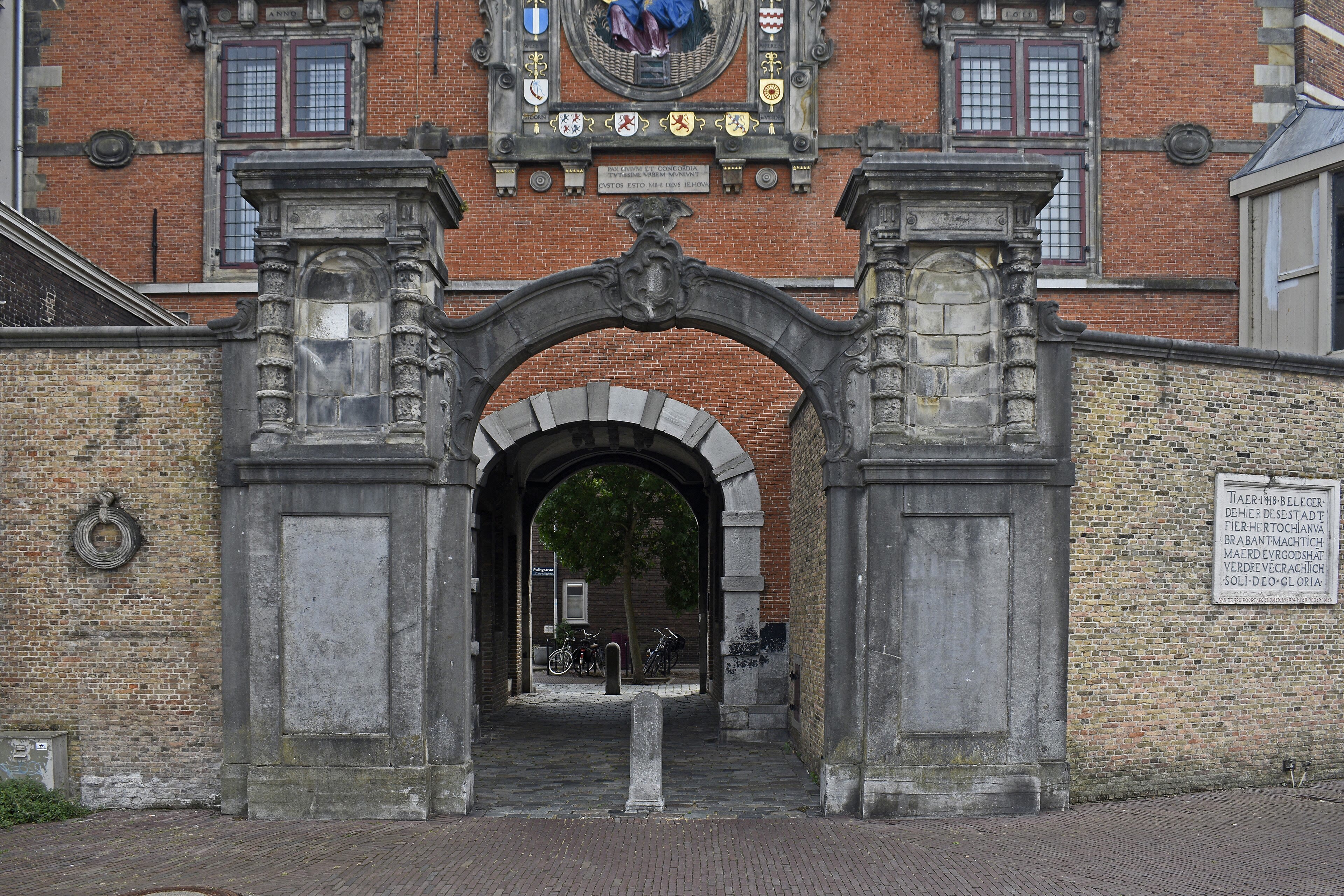
Dordrecht is the oldest city in Holland, and it sits at a crossroads of water where the rivers argue about which way to go. We come in on the Oude Maas and tie up in a harbour that has received boats for eight hundred years. Everything here is brick, gabled, and reflected. The great church tower leans a little, the way old men lean on a bar to tell you a story they have told before. I take the bicycle down and ride the quiet streets, because a skipper who never leaves the boat learns the rivers but not the land, and this journey is about both. In sixteen eighteen, the great Synod of Dort argued theology here for six months — bishops and professors in the hall, and the boats waiting outside on the water, exactly as they wait now. That is the secret geography of this whole journey: Europe was not built beside its rivers by accident. The rivers were the roads, the markets and the meeting halls, long before the railways came. Dordrecht remembers. Most towns have forgotten, and part of our work, yours and mine, is remembering for them.
See this place in the galleryDordrecht — Where Three Rivers Meet — our interpretation, created from the reference photographs belowReference photographs — Dordrecht — Where Three Rivers Meet · 3 photographs
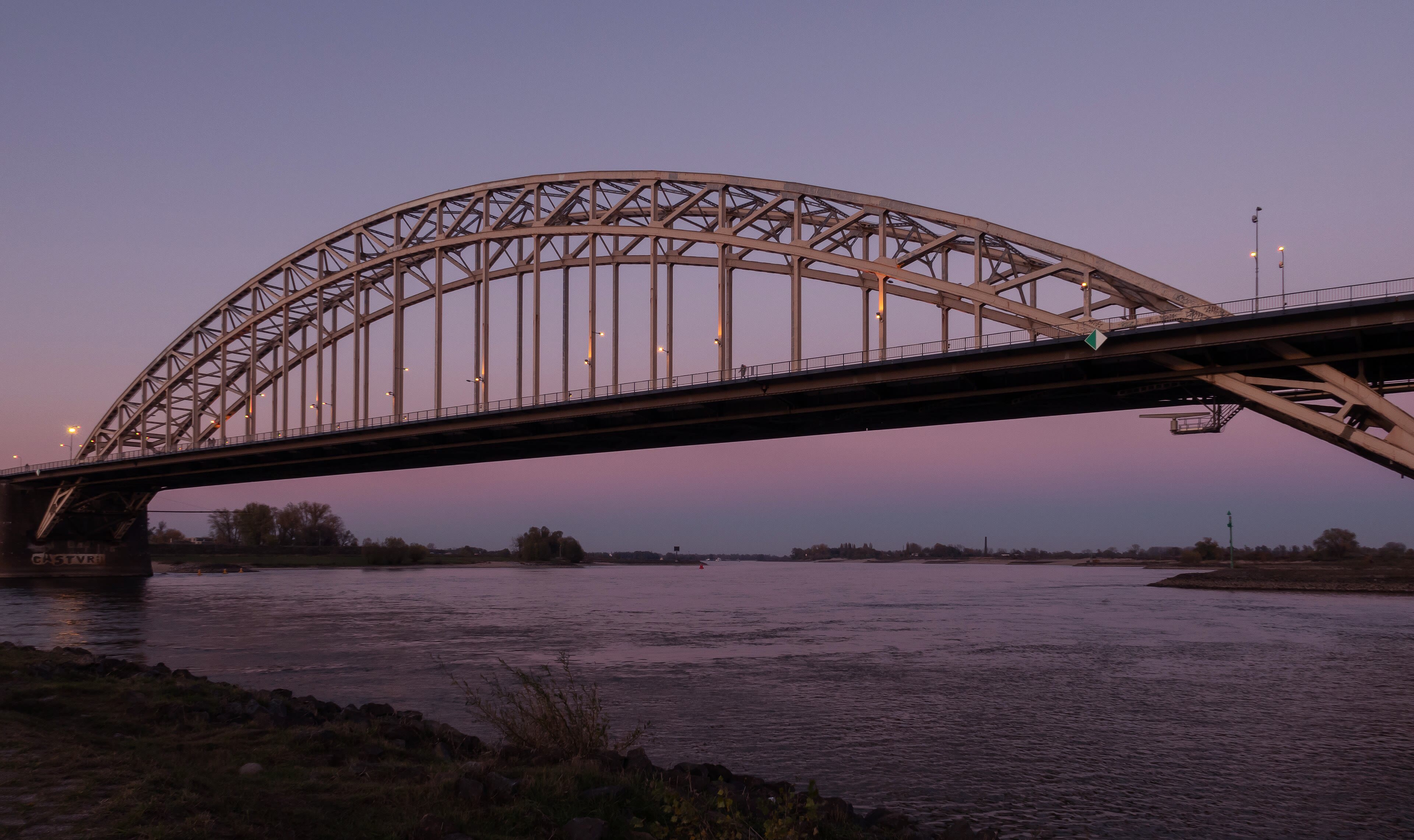
The Waal at Nijmegen
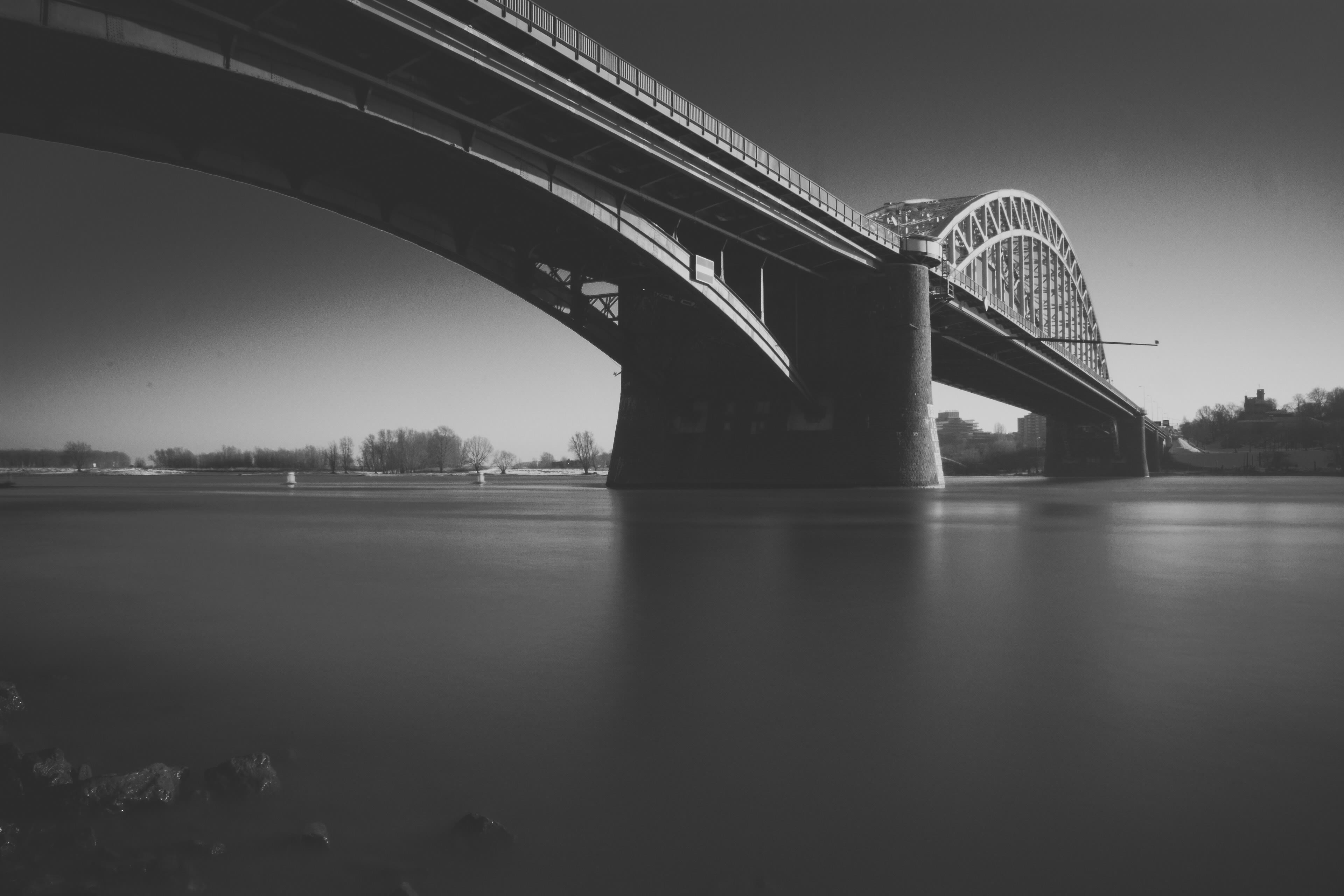
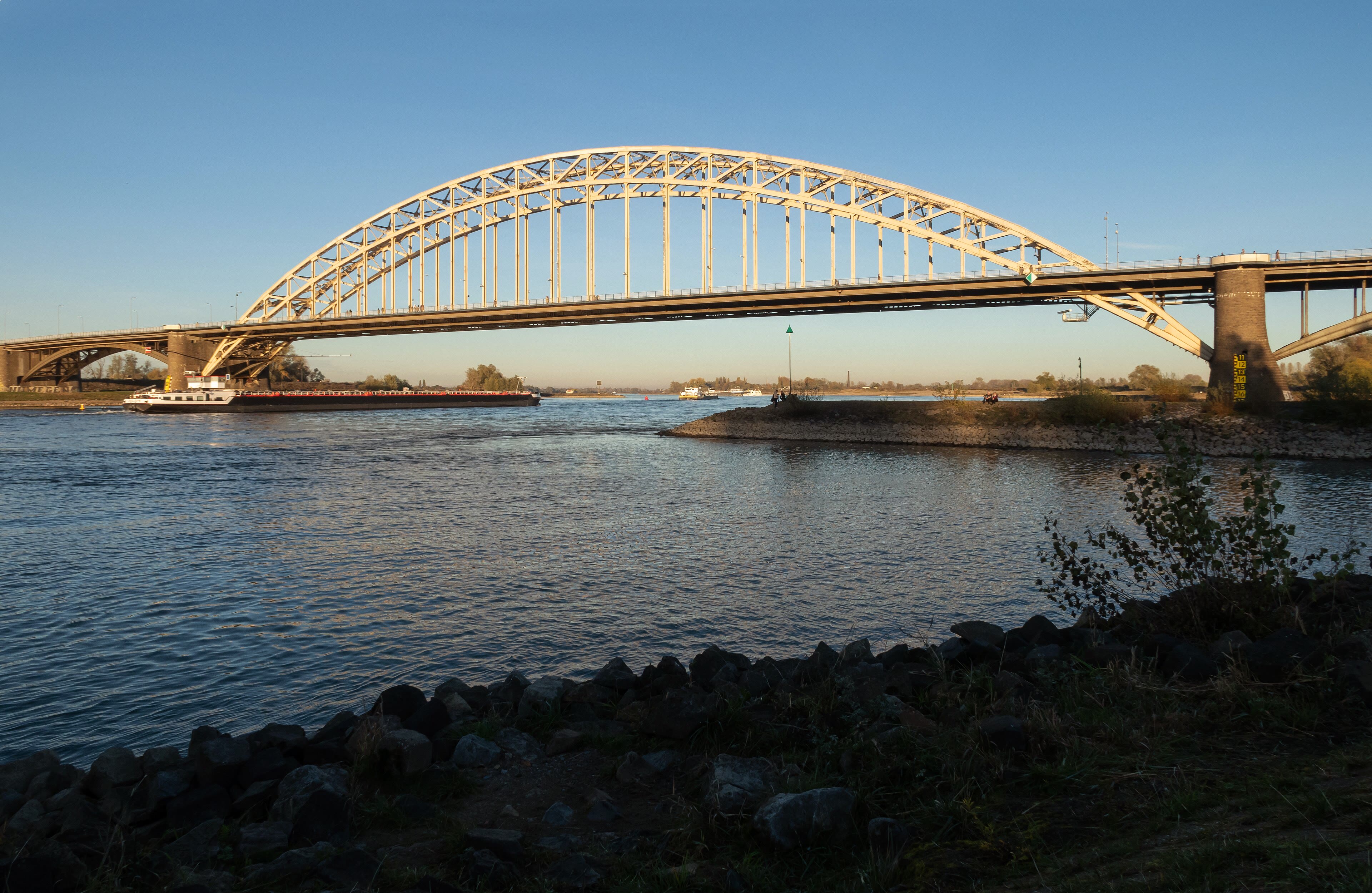
Now we turn east and take the Waal, the great broad arm of the Rhine that carries most of its water into Holland. The current is suddenly a serious thing; the Zwaluw's engine settles into the low, steady note it will hold for a thousand kilometres. Nijmegen rises on its hill to port — the oldest city in the Netherlands, Roman before it was Dutch, and proud of both. Charlemagne kept a palace on this hill, looking down at exactly the view I am looking up at, which tells you the river has always been the point. We pass under bridges that the war made famous and the peace made ordinary again, and I think about how many armies have crossed this water believing it was an obstacle, when all along it was a road. The Waal is wide, sandy-shored, full of working barges longer than football fields, carrying the wealth of the Ruhr down to the sea. Wave, always. The barge families live on those boats, gardens on the stern, children doing homework in the wheelhouse. This is not a museum river. It is a living one, and we are guests in its working day.
See this place in the galleryThe Waal at Nijmegen — our interpretation, created from the reference photographs belowReference photographs — The Waal at Nijmegen · 3 photographs
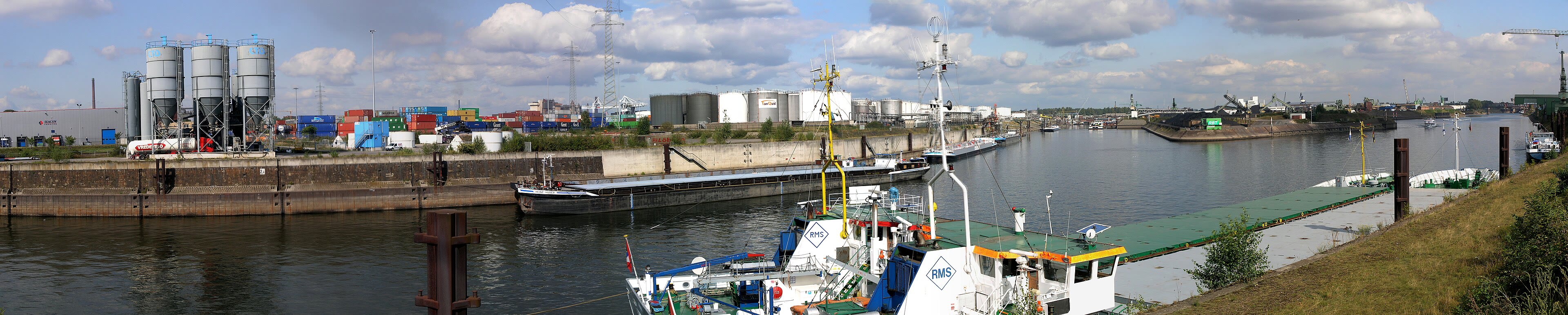
Duisburg — the Inland Sea-Port
We cross into Germany without ceremony — a line on the chart, a change of courtesy flag — and the river brings us to Duisburg, where the Ruhr comes down to meet the Rhine. This is the largest inland port in the world, a harbour you could lose a town in: basins and basins of it, reaching inland like the fingers of a great hand. Coal built this place, and steel, and the river carried both. Do not let anyone tell you the industrial river is the ugly river. There is a beauty here of scale and honesty — rust-red hulls, black water shining, cranes writing their slow calligraphy against the sky. The Zwaluw ties up small among the giants, and I walk the harbour walls in the evening and think about my grandfather, who worked boats out of ports like this when the cargo was loaded by men, not machines. The Ruhr's story is not finished; it is changing its mind about what it wants to be. But everything it becomes will still arrive and depart the way everything here always has: by water, slowly, in bulk, on the river's terms.
Duisburg — the Inland Sea-Port — our interpretation, created from the reference photographs belowReference photographs — Duisburg — the Inland Sea-Port · 3 photographs
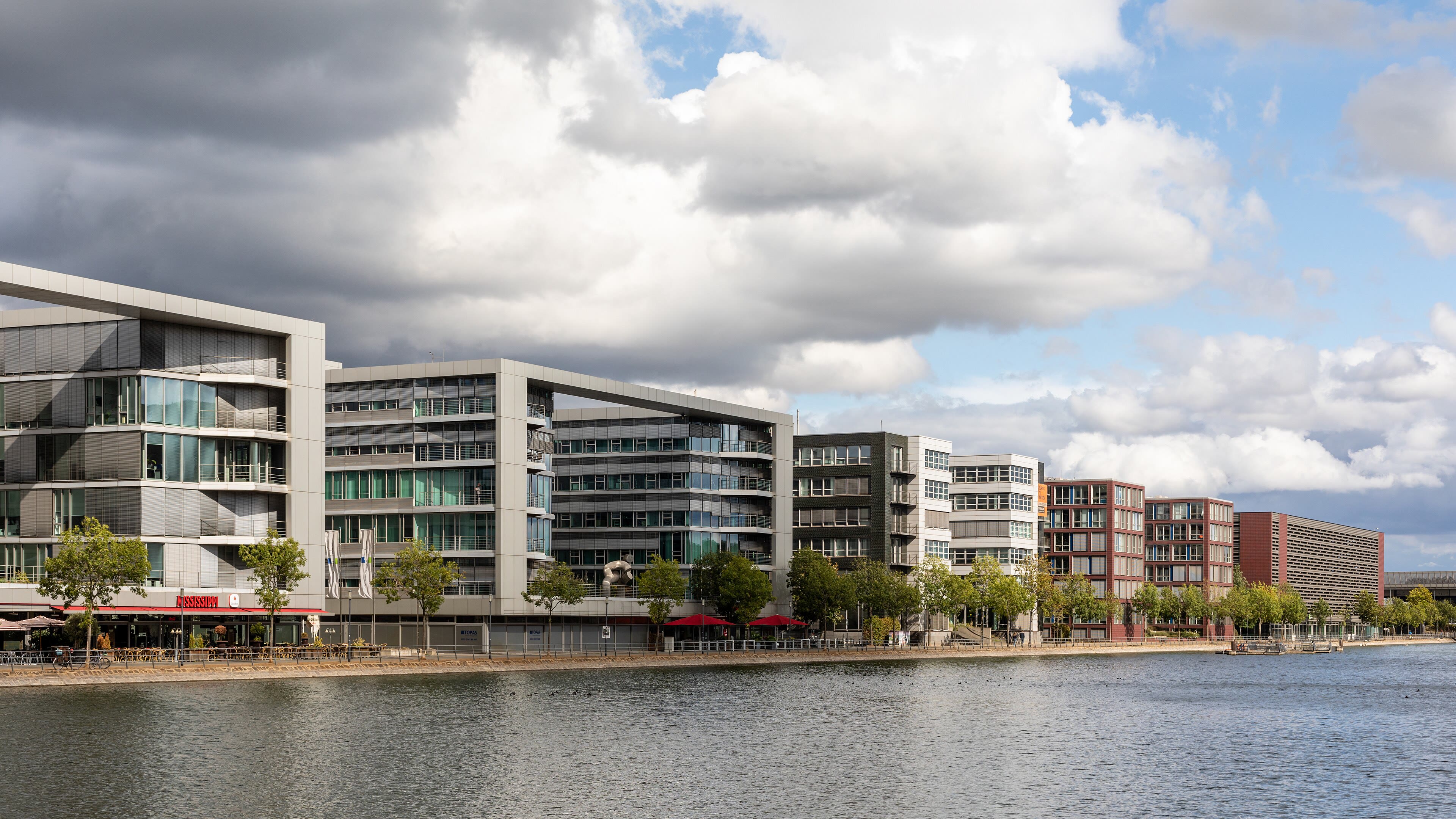
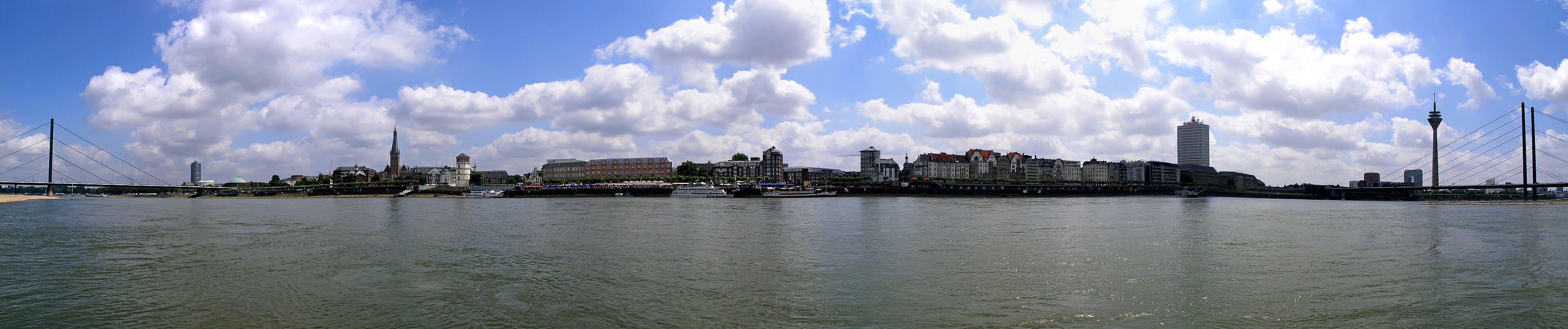
Düsseldorf — the Longest Bar in the World
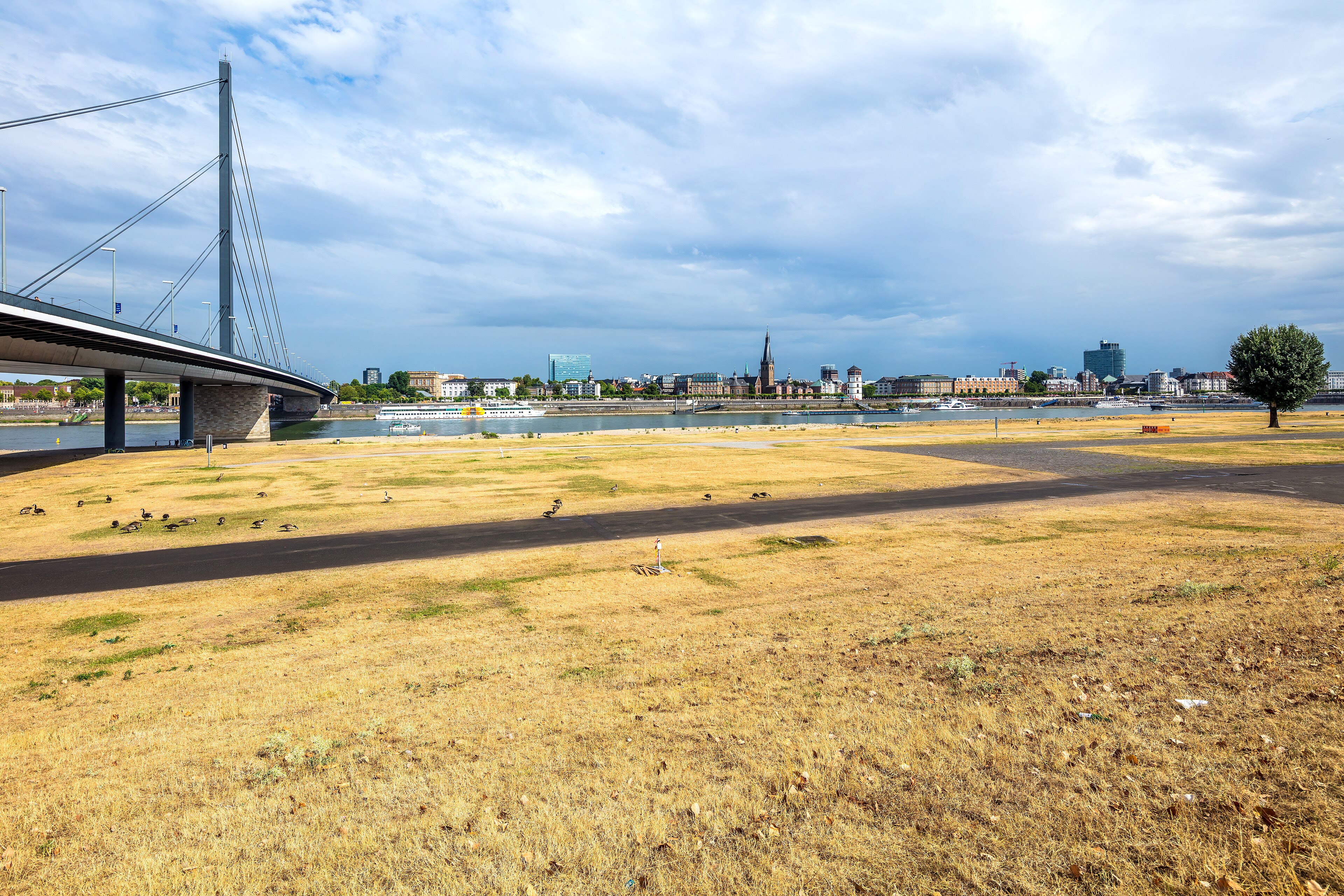
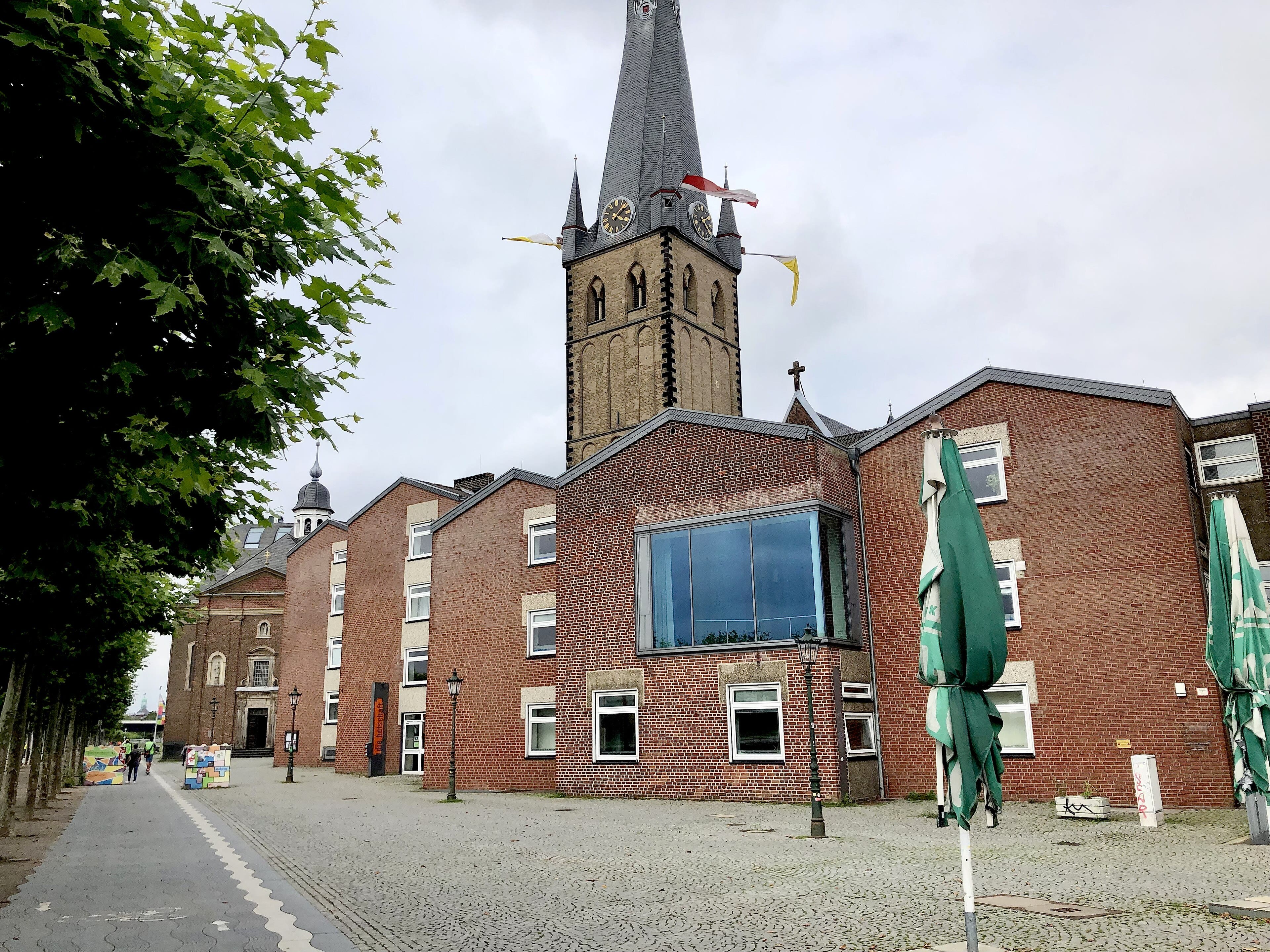
Düsseldorf announces itself the way it does everything — smartly, and with money. The Rhine promenade curves along the old town, the television tower stands over the harbour like an exclamation mark, and the MedienHafen behind us has filled its old docks with buildings by architects who sign their work. They call the old town the longest bar in the world, three hundred pubs and breweries shoulder to shoulder, and after a week of river cooking I am in no position to be snobbish about it. The local beer is Altbier, dark as river water at dusk, and the waiters will keep it coming until you cover your glass — a navigation system I can respect. We tie up along the promenade and the city strolls past the boat all evening: students, bankers, grandmothers, all taking the air the Düsseldorf way. A skipper learns that every river town has two faces, the one it shows the water and the one it shows the road, and they are rarely the same. Düsseldorf, to its credit, shows the river its best one. Tomorrow, Cologne — and I will see the towers before I see the town.
See this place in the galleryDüsseldorf — the Longest Bar in the World — our interpretation, created from the reference photographs belowReference photographs — Düsseldorf — the Longest Bar in the World · 3 photographs
Cologne — the Cathedral on the Water
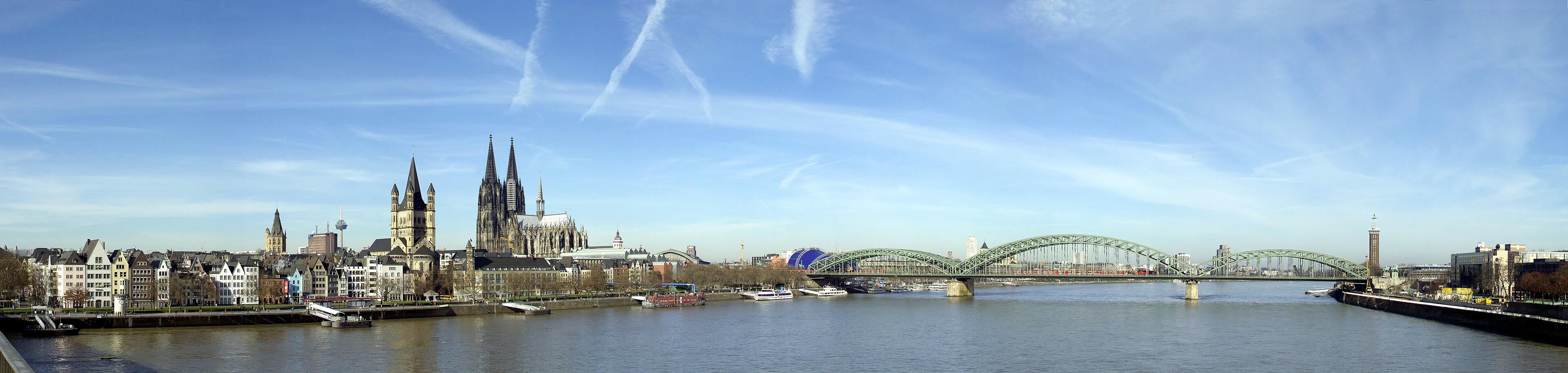
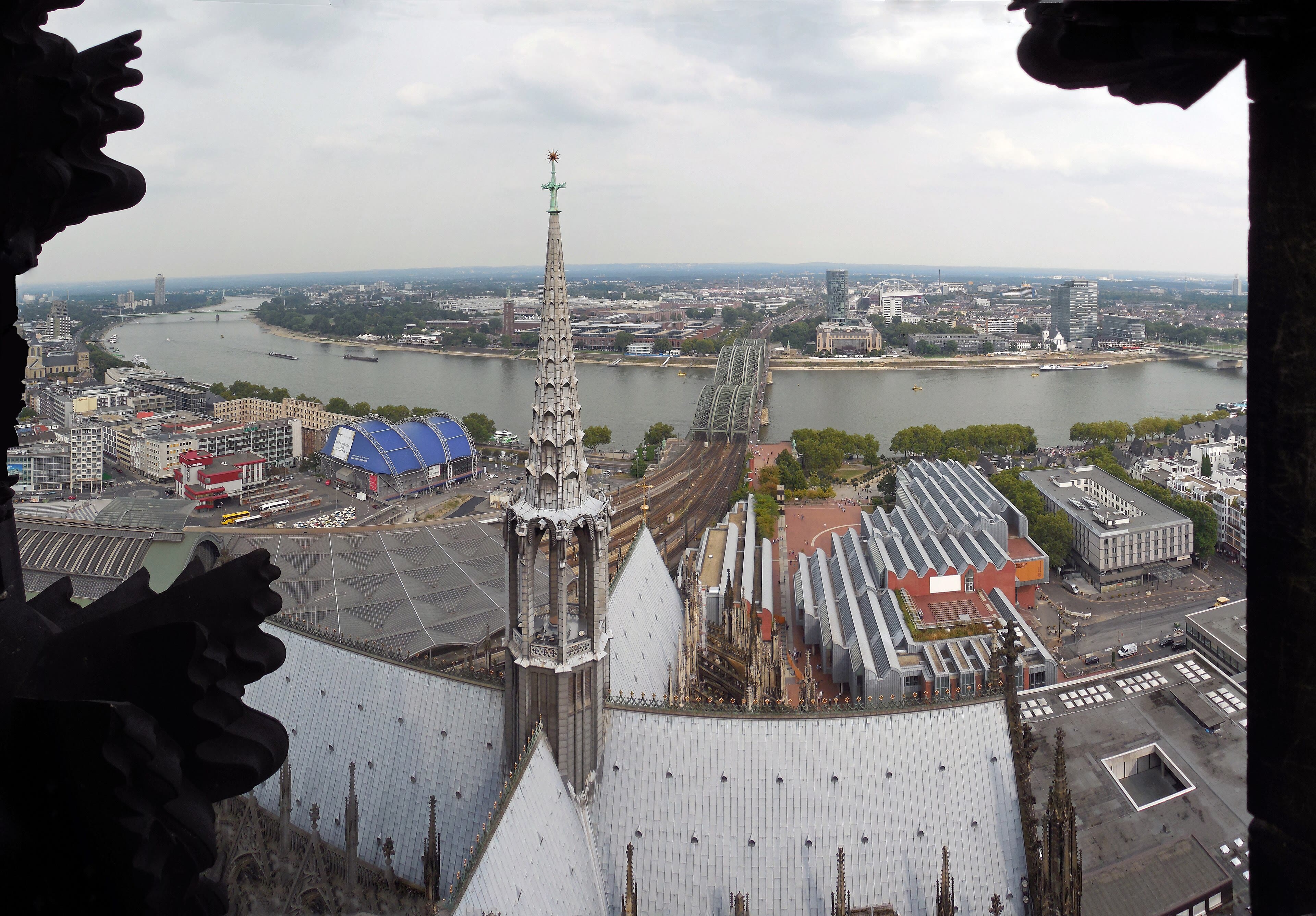
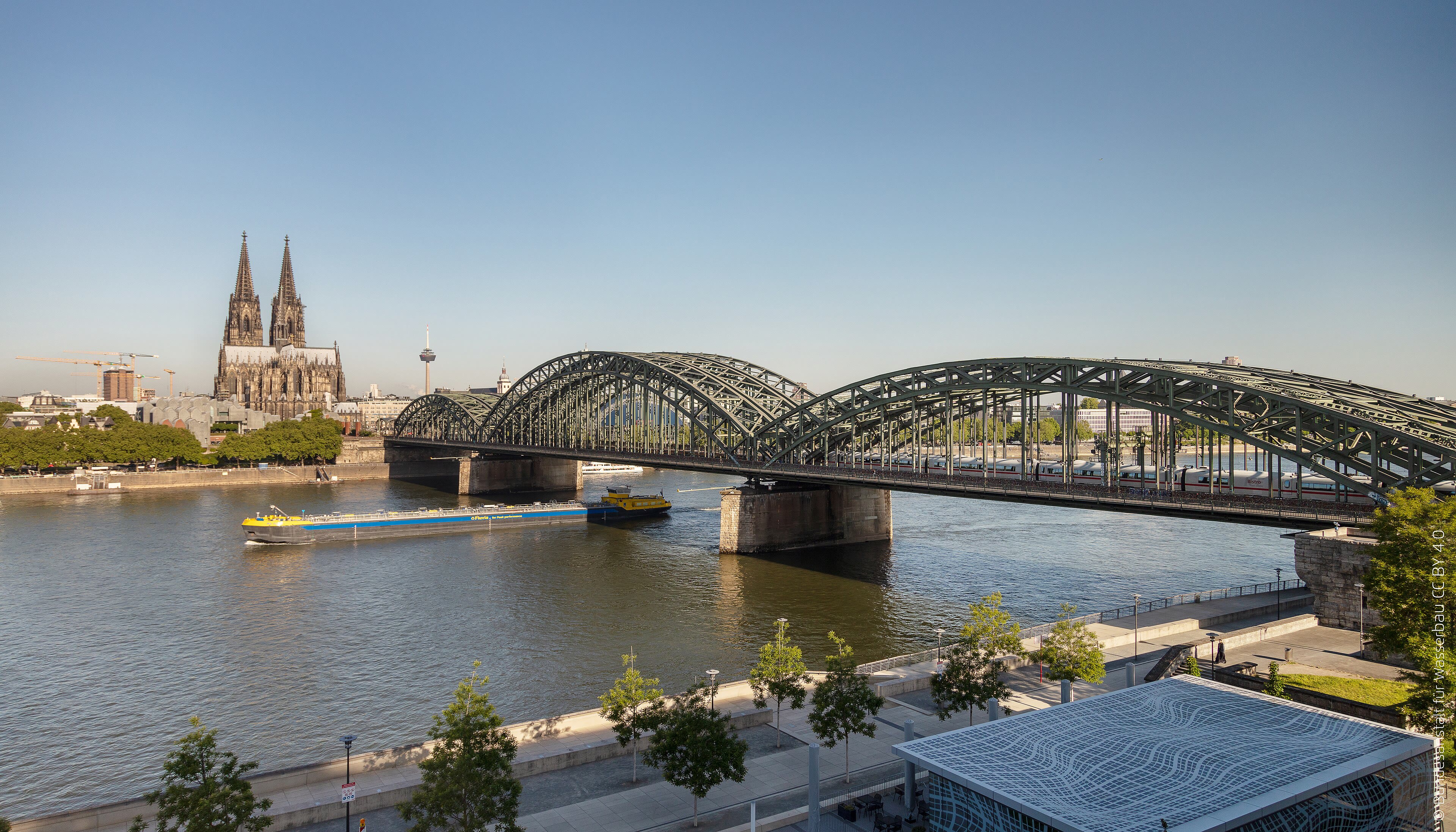
You smell Cologne's story before you see it, sweet on the wind — this is the city of Eau de Cologne, farina water, made here for three hundred years. And then the river bends, and the cathedral is simply there, the way mountains are there: two black towers, the largest facade of any church on earth, soot-dark and impossible, standing over the Rhine as it has stood for seven hundred years. Every boat slows. Even the great barges seem to tip their hats. We tie up beneath the Hohenzollern Bridge, where lovers lock their names to the railings by the ten thousand and throw the keys to our river, and I walk up into the old town to stand under that west front like a man in a gorge. The Romans founded this city; the river made it rich; the cathedral made it eternal. In the evening the towers are lit the colour of honey, and the Zwaluw rocks gently in the wash of the passing freight, and I write in the log what sailors have written here for two thousand years, in one language or another: arrived safe, river willing, going on.
See this place in the galleryCologne — the Cathedral on the Water — our interpretation, created from the reference photographs belowReference photographs — Cologne — the Cathedral on the Water · 3 photographs
Bonn — the Quiet Capital
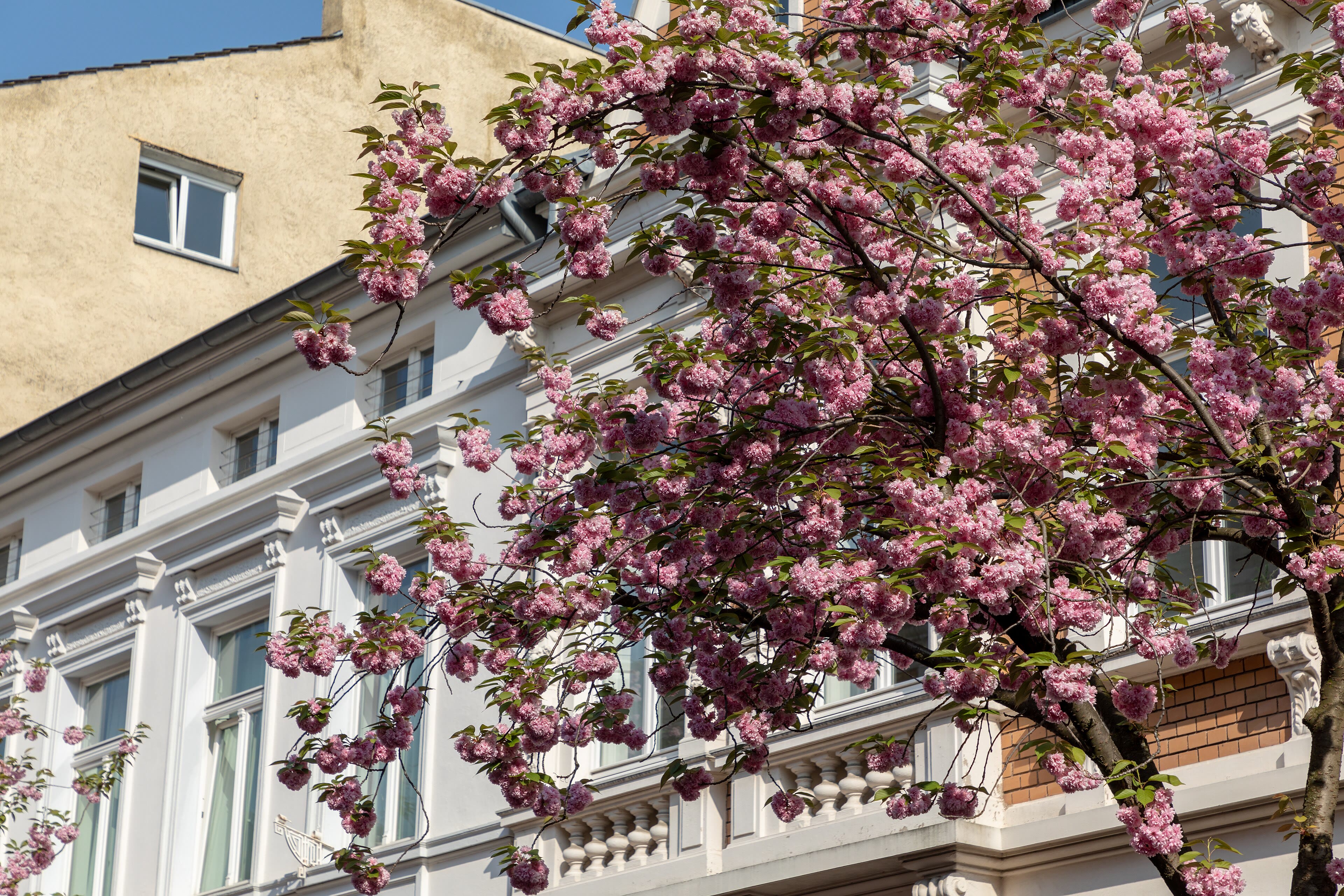
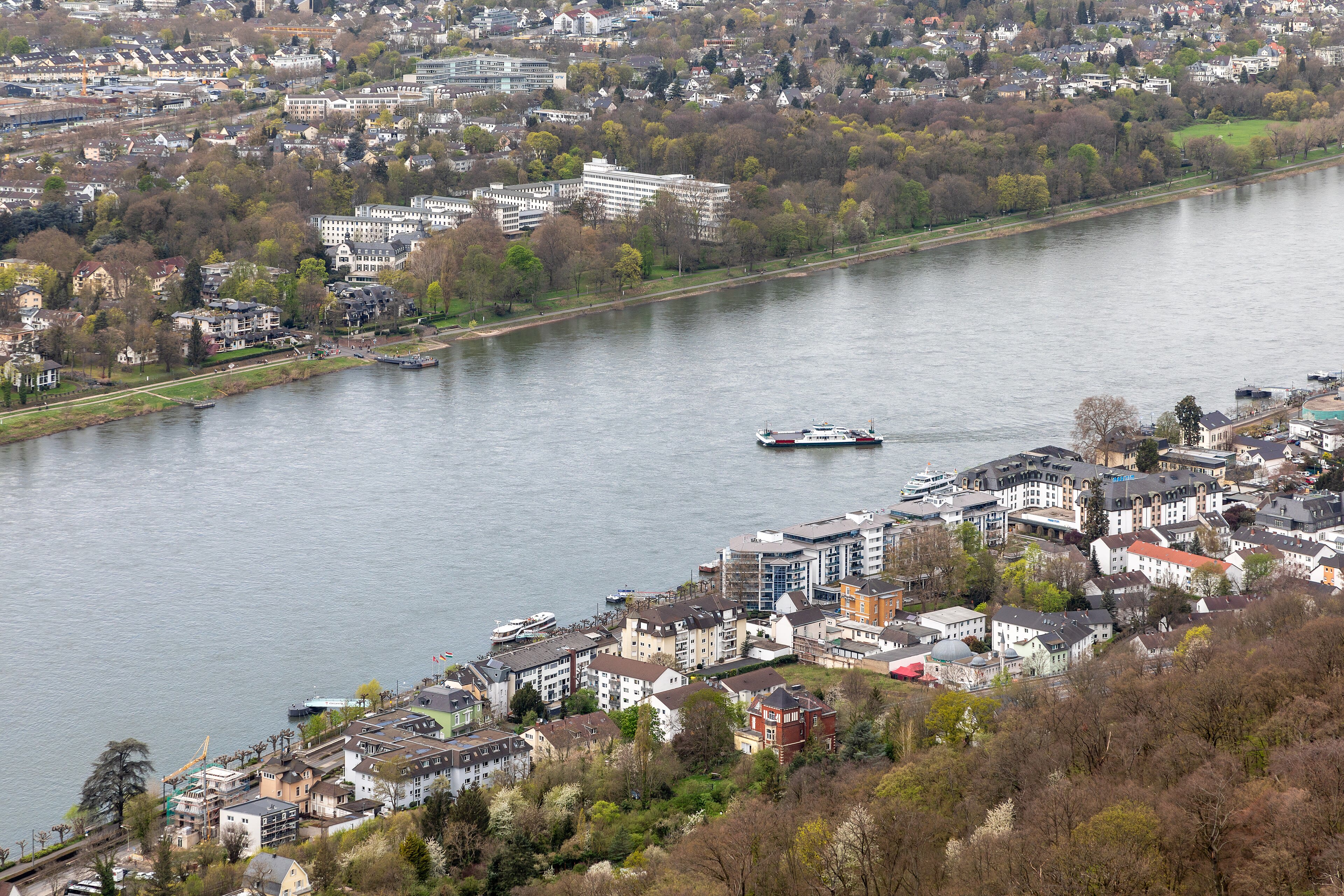
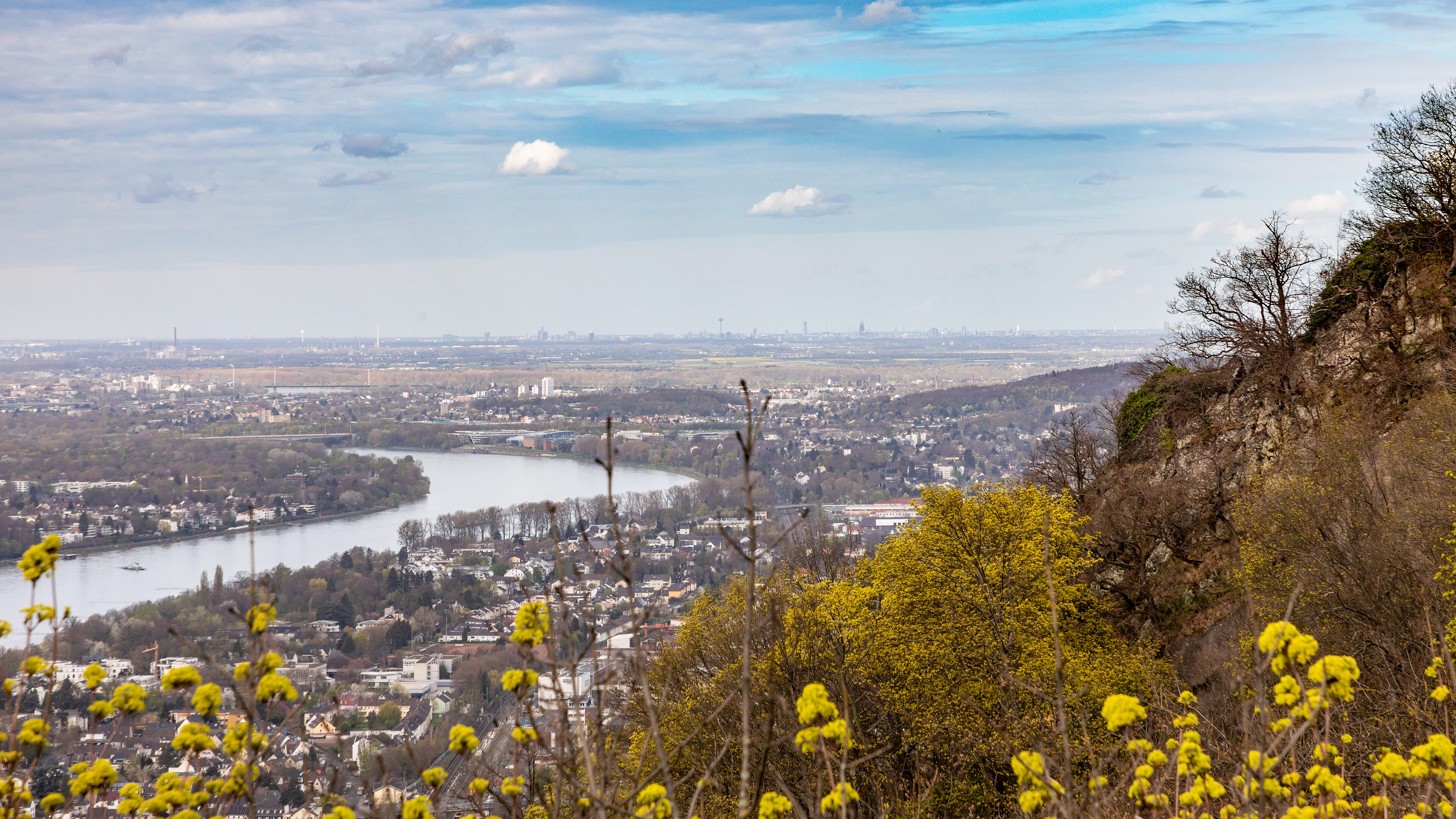
Bonn is where the Rhine begins to change its mind about being a lowland river. The Seven Hills rise ahead of us, the first wrinkles of the high country, and the town itself is green, calm and faintly surprised by its own history. A boy named Beethoven was born in a back room on the Bonngasse in seventeen seventy, and grew up walking these banks, composing weather in his head. For forty years after the war this quiet town was the capital of West Germany — governments came and went from villas and converted hotels, proving you do not need a grand stage to run a serious country. We tie up near the old parliament and I take coffee in a garden café, watching the river traffic thread the bend below the hills. Something ends here, and something begins. Behind us: the delta, the ports, the wide working water of the north. Ahead: the gorge, the castles, the river narrowing and quickening between its rocks. The Zwaluw is ready. I have been ready for twenty years. Chapter two, the Romantic Rhine, is waiting around the bend — castles on every hill, and a rock where a maiden sings.
See this place in the galleryBonn — the Quiet Capital — our interpretation, created from the reference photographs belowReference photographs — Bonn — the Quiet Capital · 3 photographs
Chapter Two — The Romantic Rhine
9 scenes · 27 reference photographs
Linz am Rhein — the Colourful Town
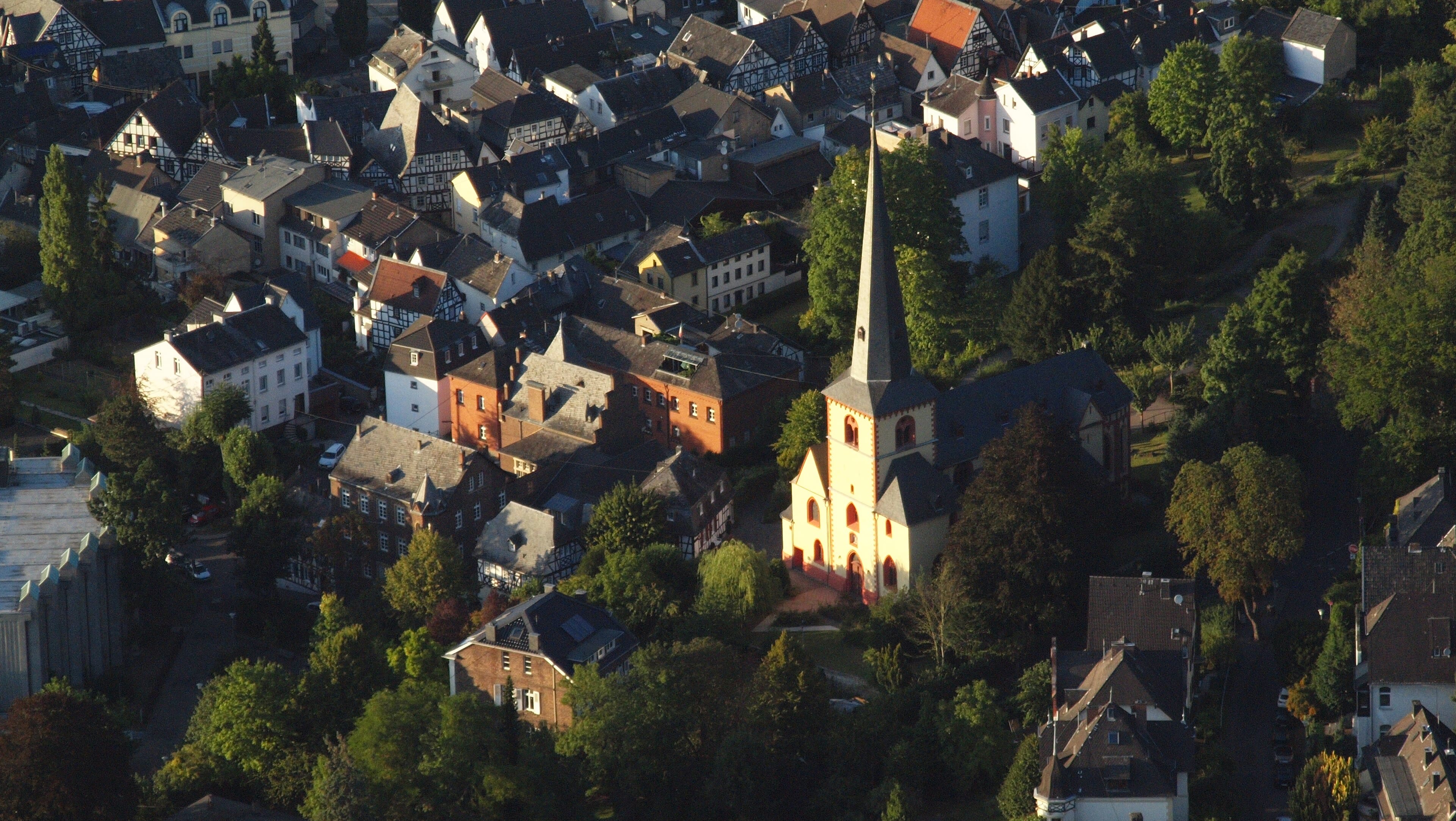
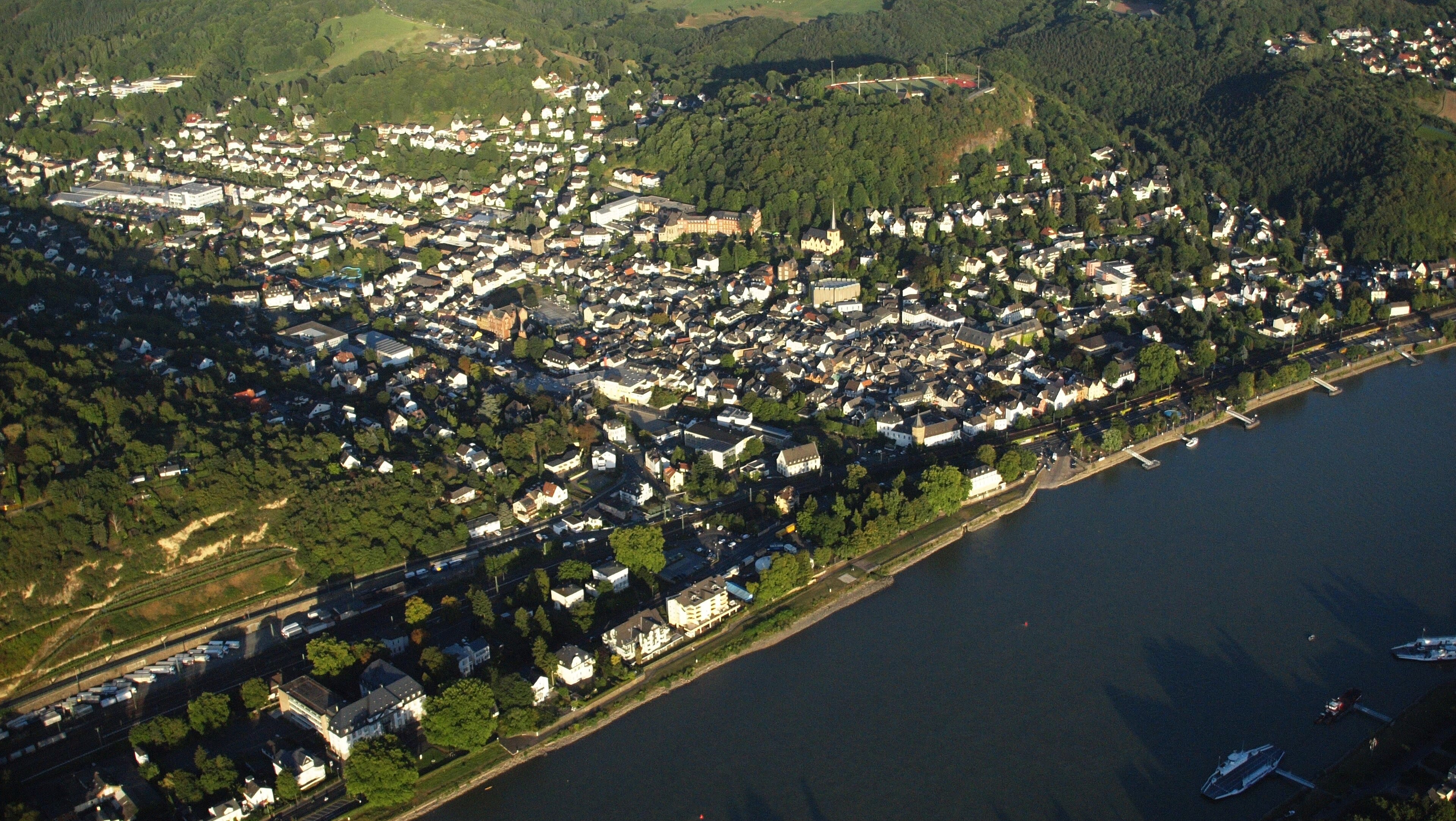
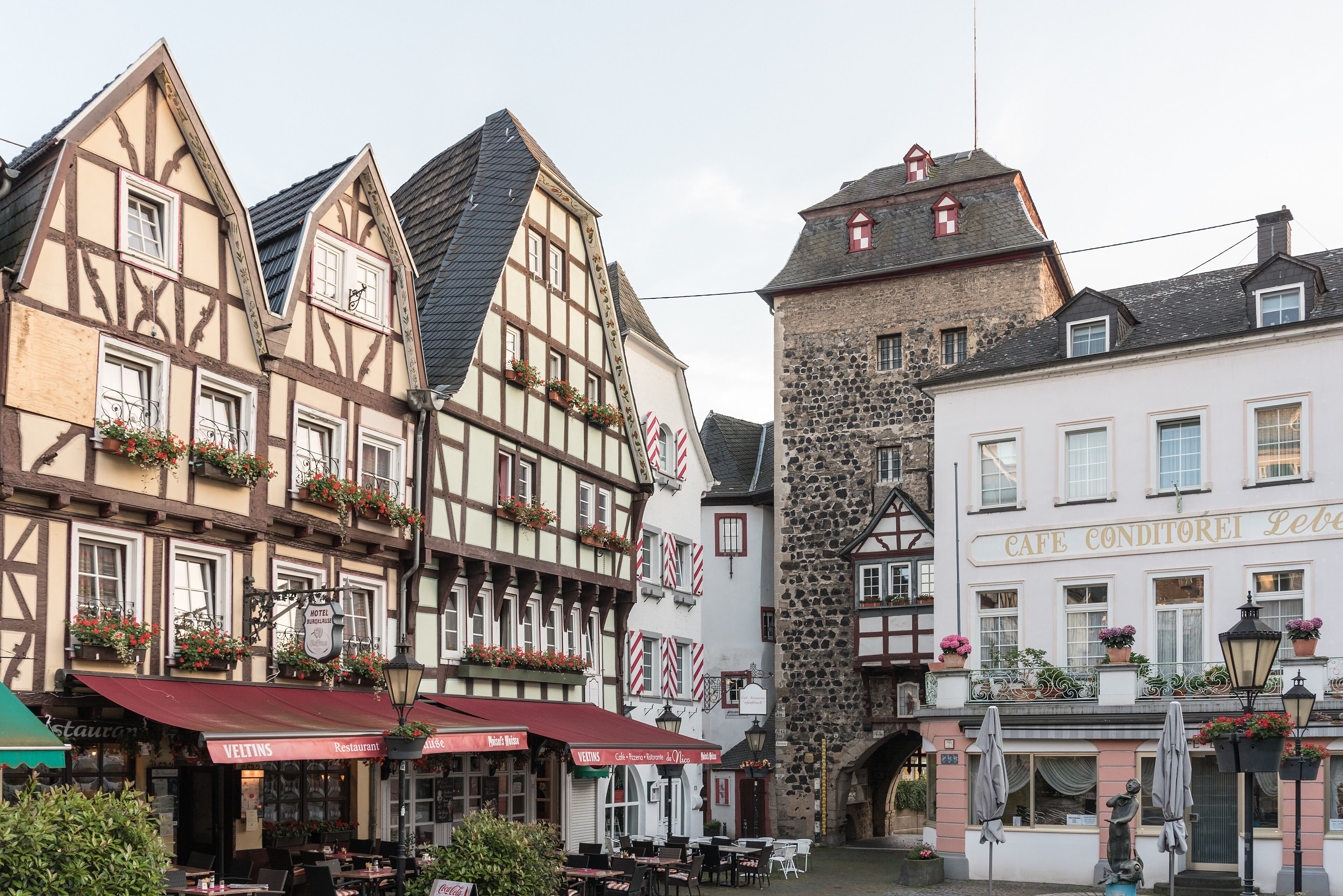
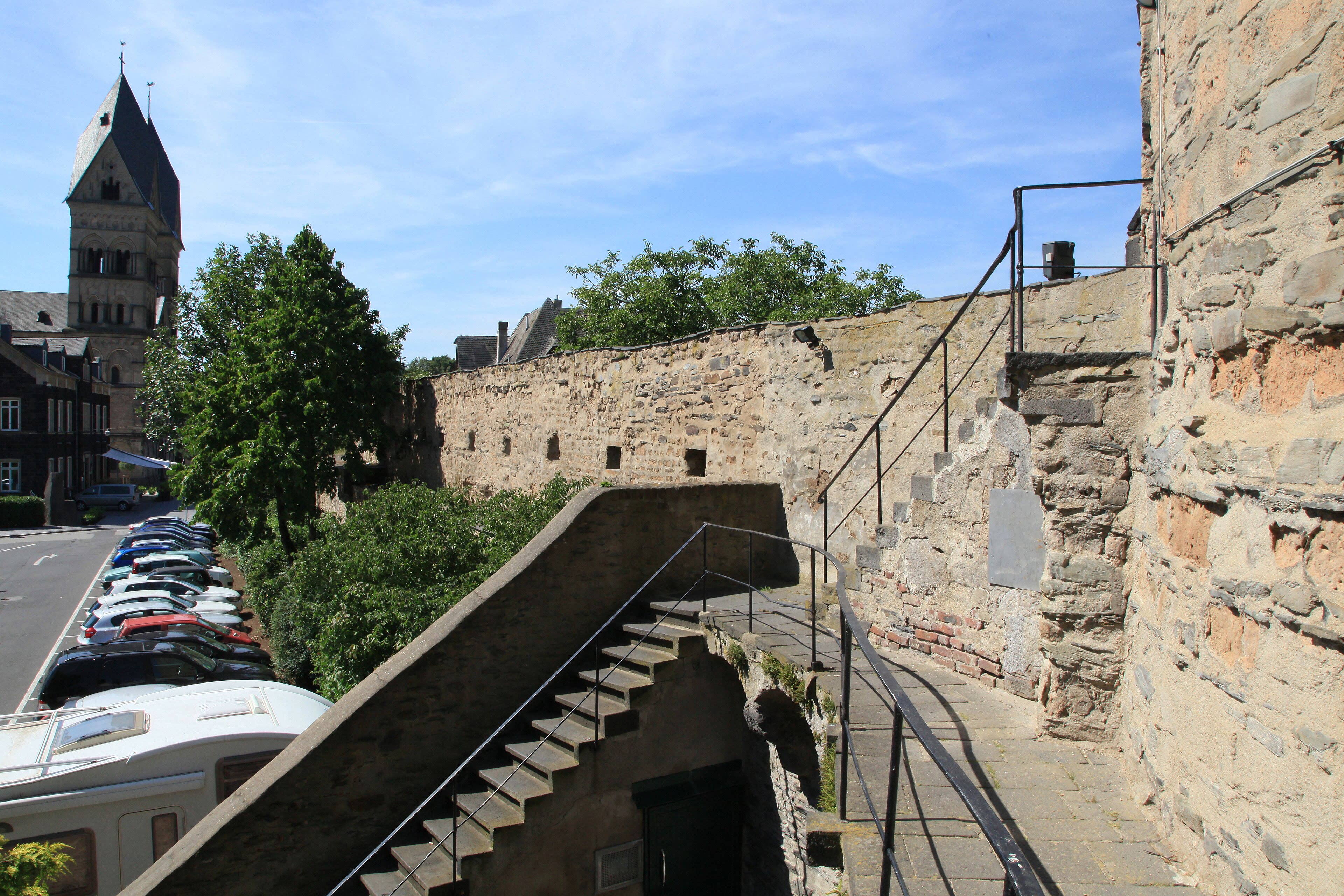
We leave Bonn in the early light, and within the hour the Rhine narrows its shoulders and the first vineyards appear on the hills — we are entering the gorge country, and the river means business from here. Linz am Rhein is our first doorway: a little town that paints its half-timbered houses the colours of a market stall — oxblood, ochre, bottle green, sky blue — and has done for centuries. They call it the Colourful Town on the Rhine, and from the water it reads like the first page of a storybook, which is exactly what this whole stretch of river became for the world. Two hundred years ago the poets and painters came down this valley and taught Europe to call it romantic, and Linz is where the working river of chapter one puts on its costume. I tie up below the old Rhine gate and walk the lanes for an hour, because the skipper's rule is this: never pass a walled town at breakfast time. The bakeries of the gorge could end voyages. But the Zwaluw is restless, and so am I — the hills are closing in ahead, and every castle in Europe seems to be waiting around the next bend.
See this place in the galleryLinz am Rhein — the Colourful Town — our interpretation, created from the reference photographs belowReference photographs — Linz am Rhein — the Colourful Town · 3 photographs
Andernach — the Tower That Refused
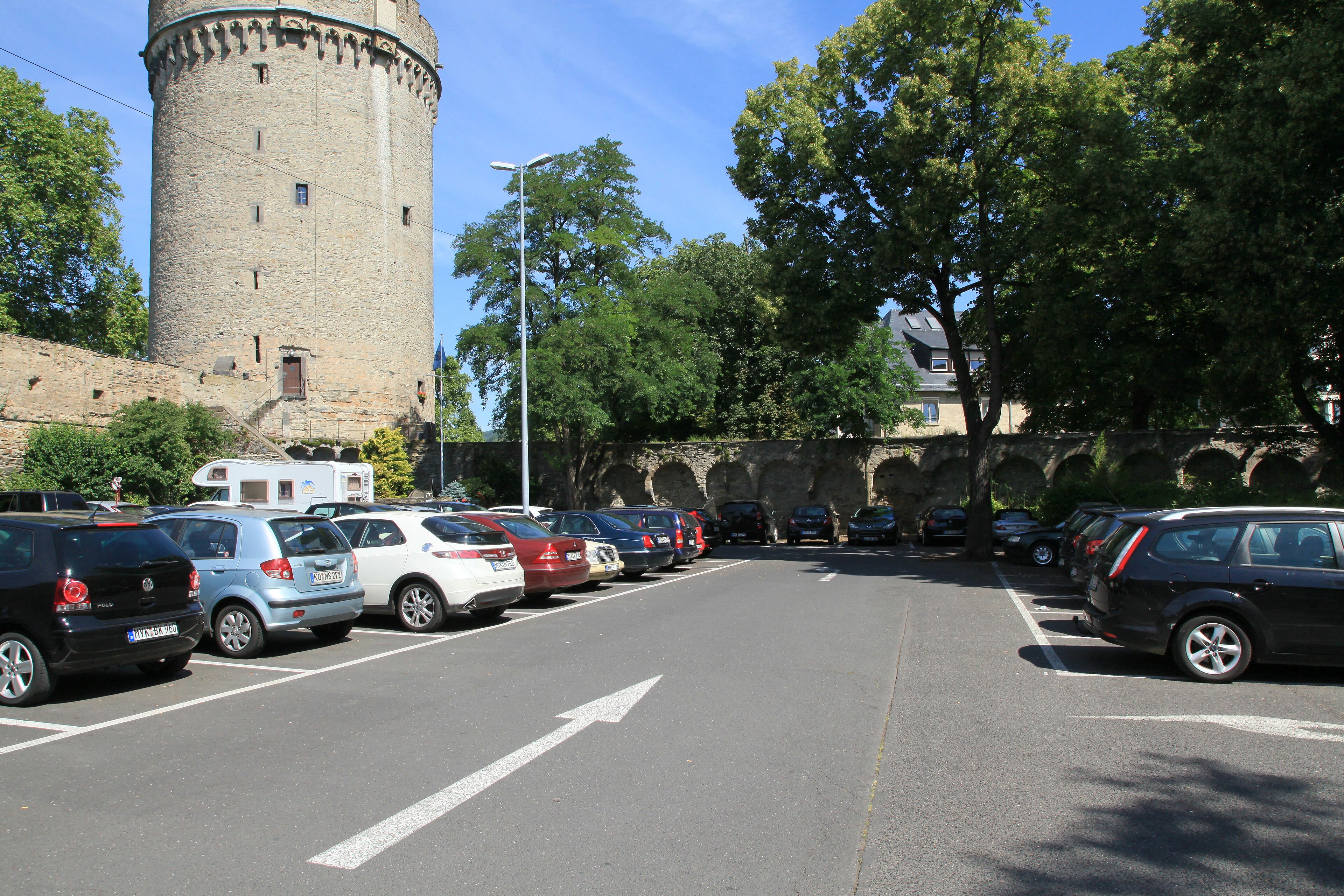
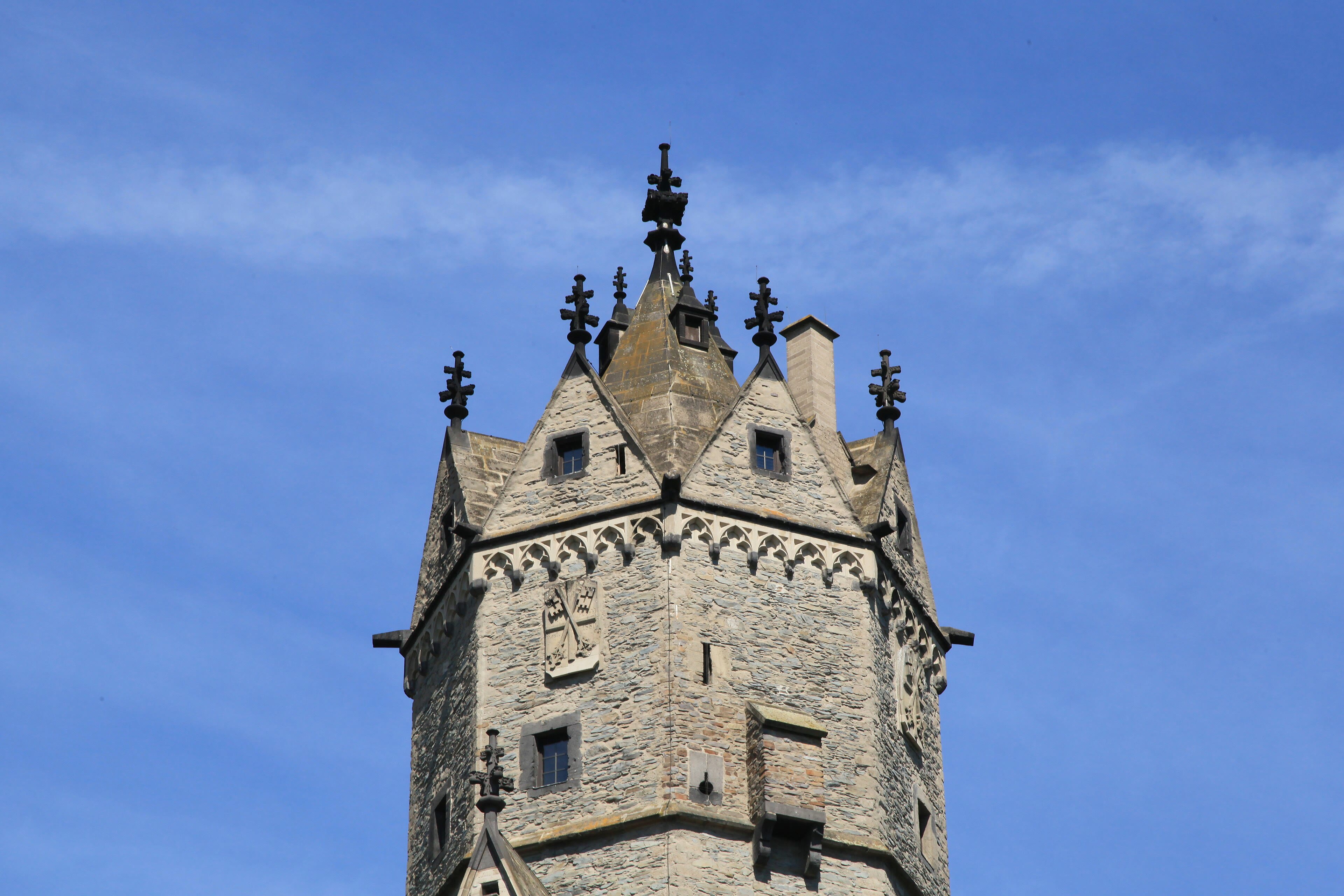
Andernach is one of the oldest towns in Germany, Roman-founded, and it guards its corner of the river with the finest medieval tower on the Middle Rhine. The Round Tower is fifty six metres of black basalt, finished in fourteen fifty three, thick enough at the base to hide a room inside its wall — and in sixteen eighty nine, French troops tried to blow it up. The explosion tore a great wound in its side, and the tower simply stood there, wounded and upright, and it stands there still, with the scar to prove it. I love that tower the way you love an old sailor who shows you his scars instead of telling you about them. Andernach keeps a second wonder up its sleeve: on the Namedy peninsula nearby, a cold-water geyser — the tallest on earth — throws a fountain sixty metres into the air every couple of hours, driven by nothing but the gas in the deep rock, as it has done since a borehole woke it a century ago. Fire under the water, patience above it. This valley is built on volcanoes, and it has never quite let you forget it. We sail on, and the hills begin to lean over the boat like spectators.
Andernach — the Tower That Refused — our interpretation, created from the reference photographs belowReference photographs — Andernach — the Tower That Refused · 3 photographs
Koblenz — Where the Rivers Marry
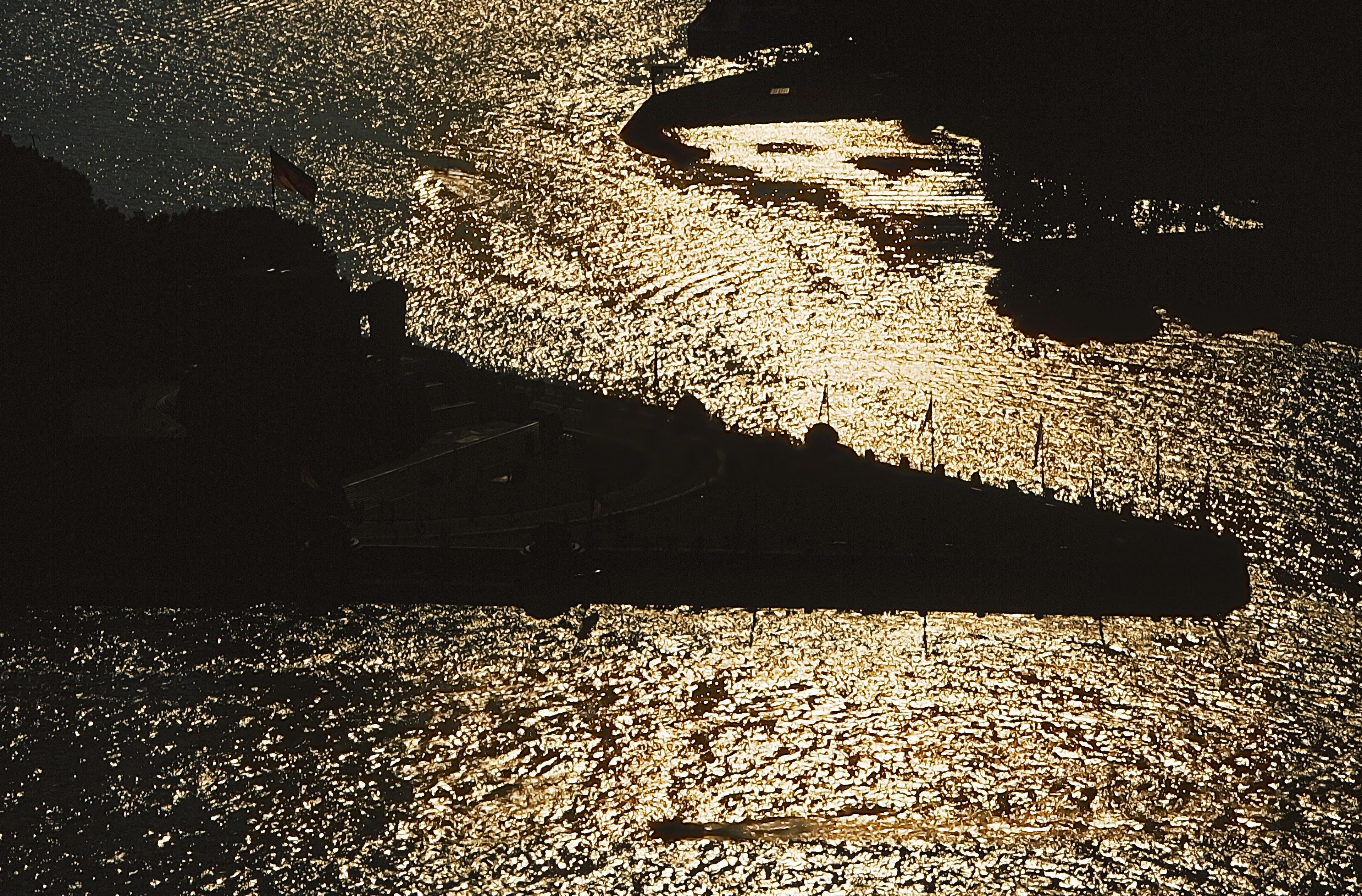
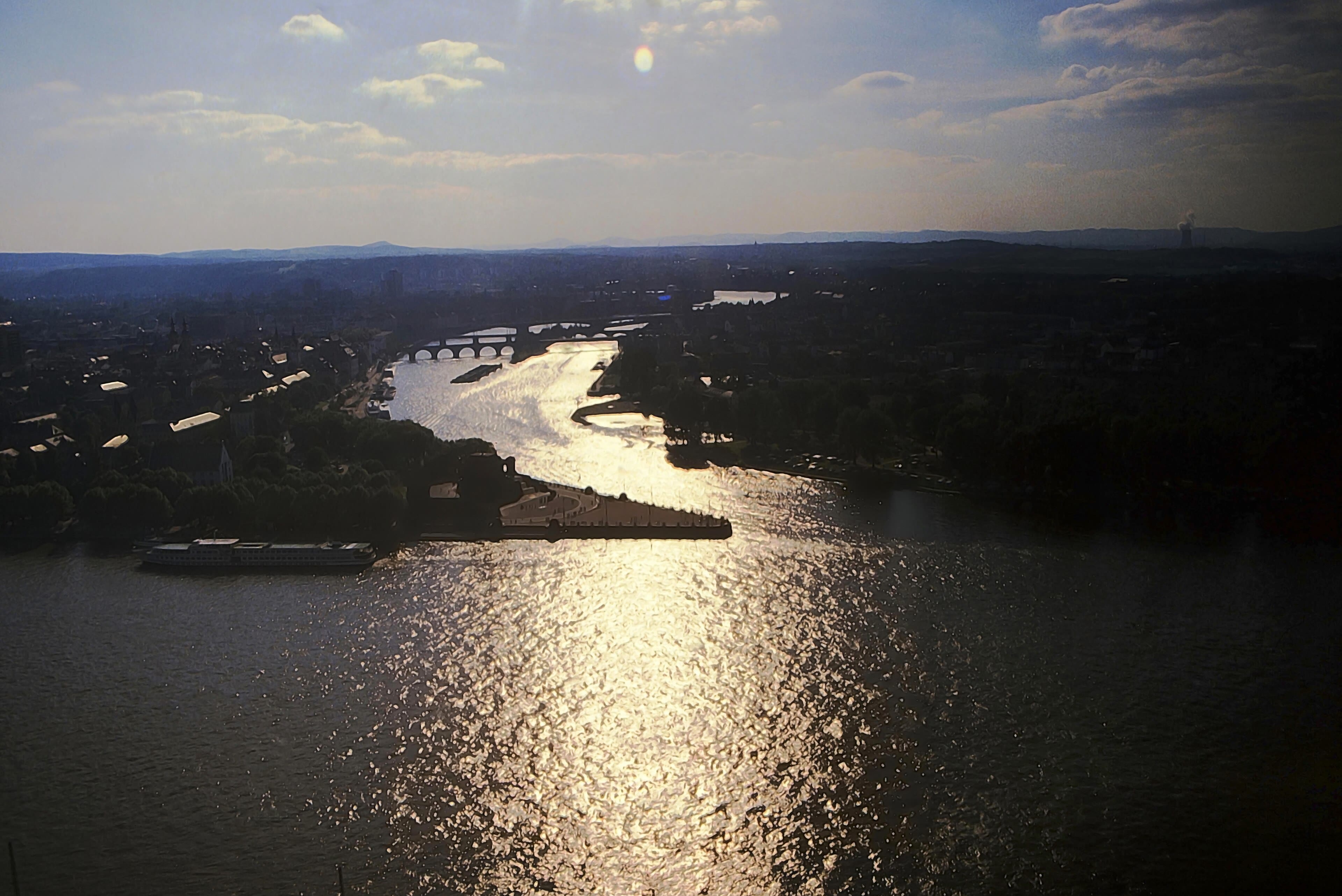
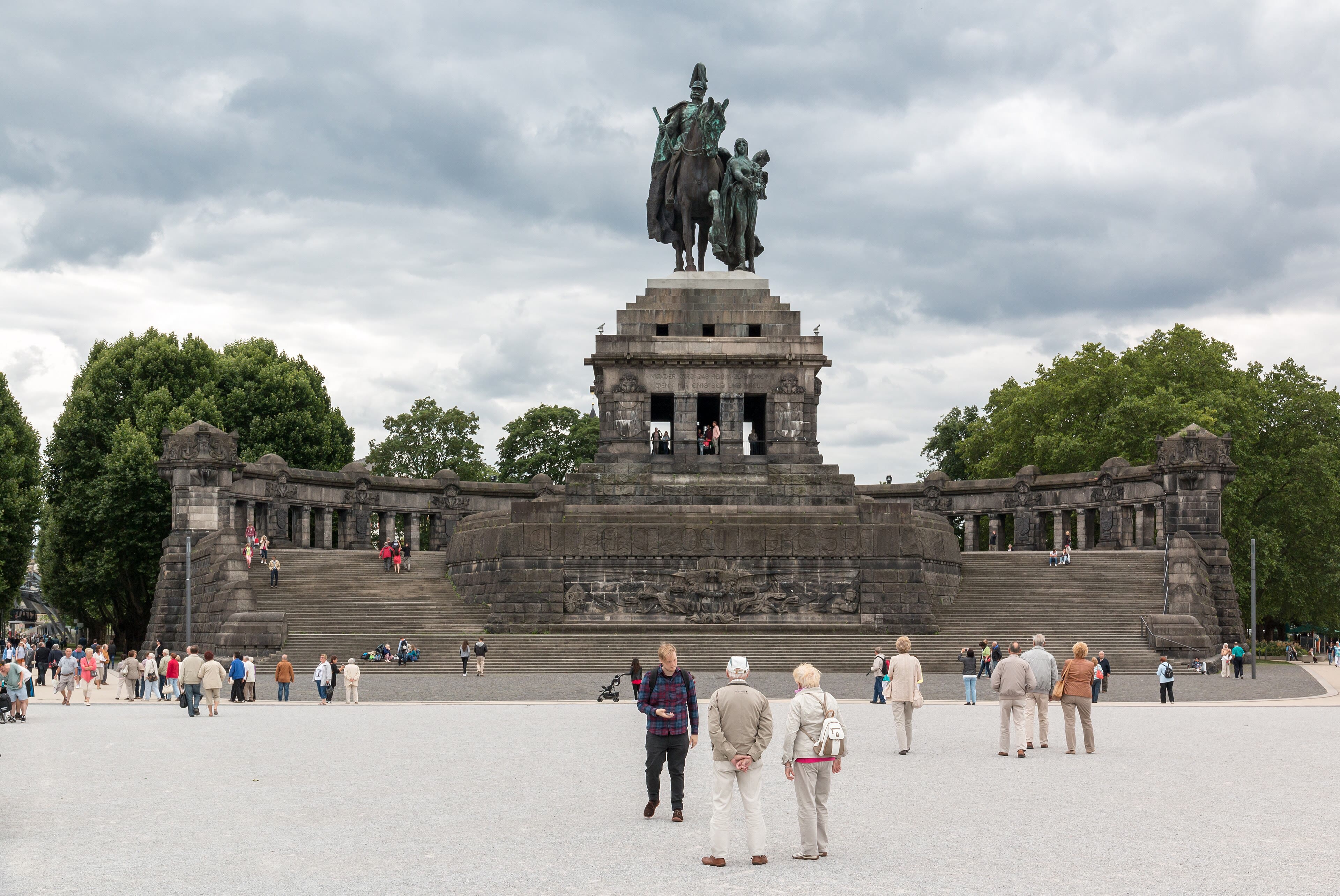
Koblenz is a wedding. Here the Moselle comes down out of its own green valley and marries the Rhine at a great stone point called the Deutsches Eck, the German Corner, and above the point rides the Kaiser on his enormous horse, watching the two waters become one. Every skipper feels it in the wheel: two currents, two colours almost, braiding together under the hull. Across the river, on a rock one hundred and eighteen metres high, sits the fortress of Ehrenbreitstein, one of the largest in Europe — the French blew up its predecessor, the Prussians rebuilt it stronger, and no army has ever taken it by force. Nowadays a cable car sails over the river where the guns once pointed, carrying grandmothers and ice creams to the ramparts. We tie up in the evening and I walk the Corner as the light fails, past the three towers of the old toll house and the boats moored bow to stern along the Moselle bank. Two thousand years ago the Romans named this place Confluentes — the Flowing-Together — and it is still the truest name on the river. Tomorrow, the gorge itself: the river narrows, the castles begin, and they do not stop for sixty kilometres.
See this place in the galleryKoblenz — Where the Rivers Marry — our interpretation, created from the reference photographs belowReference photographs — Koblenz — Where the Rivers Marry · 3 photographs
Boppard — the Great Bend
At Boppard the Rhine performs its party trick: it changes its mind. The river swings into the greatest bend of the whole Middle Rhine, looping so far back on itself that from the hills above it looks like a blue horseshoe, and a boat that has sailed an hour can seem to have barely moved. Skippers call it the Bopparder Hamm, and you feel it as a long, patient turn of the wheel while the town watches you pass — twice. Boppard is an old soul: the Romans built a fort here called Bodobrica, and stretches of its walls still stand, among the best kept Roman masonry in Germany. Above the town, the chairlift climbs to a viewpoint with a name like a promise — the Four Lakes View, where the bends of the river arrange themselves into the illusion of four separate lakes, and visitors have been gasping at it since the days of the grand tour. We do not stop long; the gorge runs a timetable of light, and I want the Loreley in the late sun. But I note the landing stage as we pass, the way you note a good harbour in the log. Some towns you visit. Some you simply promise yourself, out loud, to the river.
See this place in the galleryBoppard — the Great Bend — our interpretation, created from the reference photographs belowReference photographs — Boppard — the Great Bend · 3 photographs
The Loreley
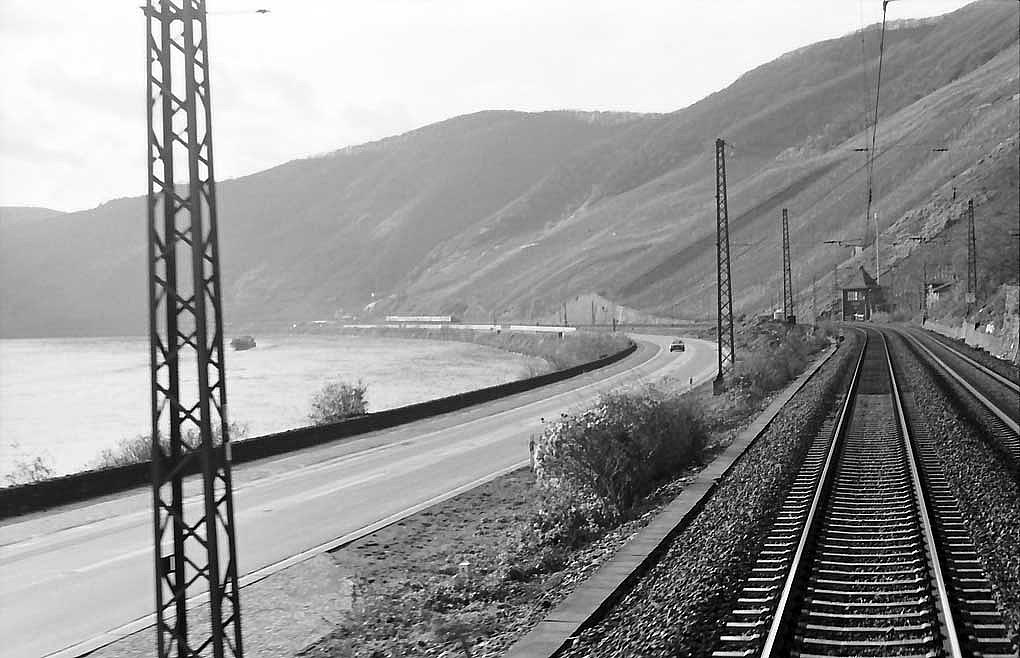
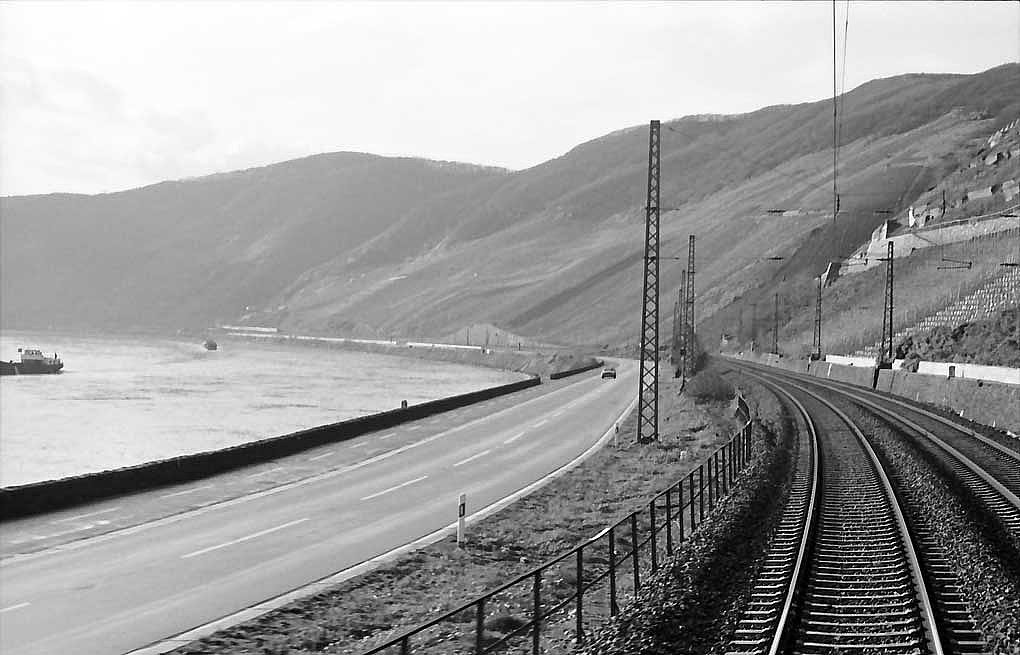
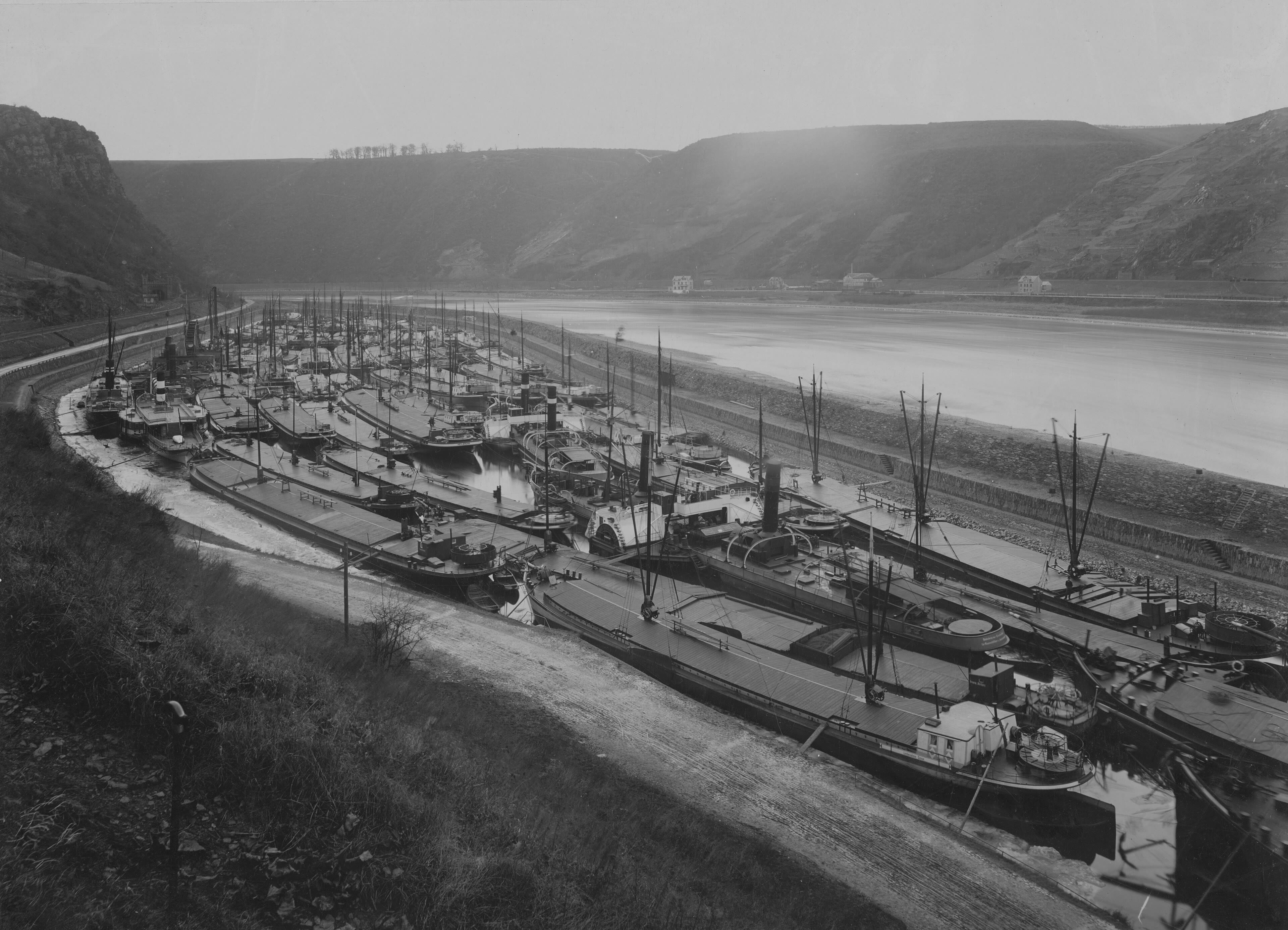
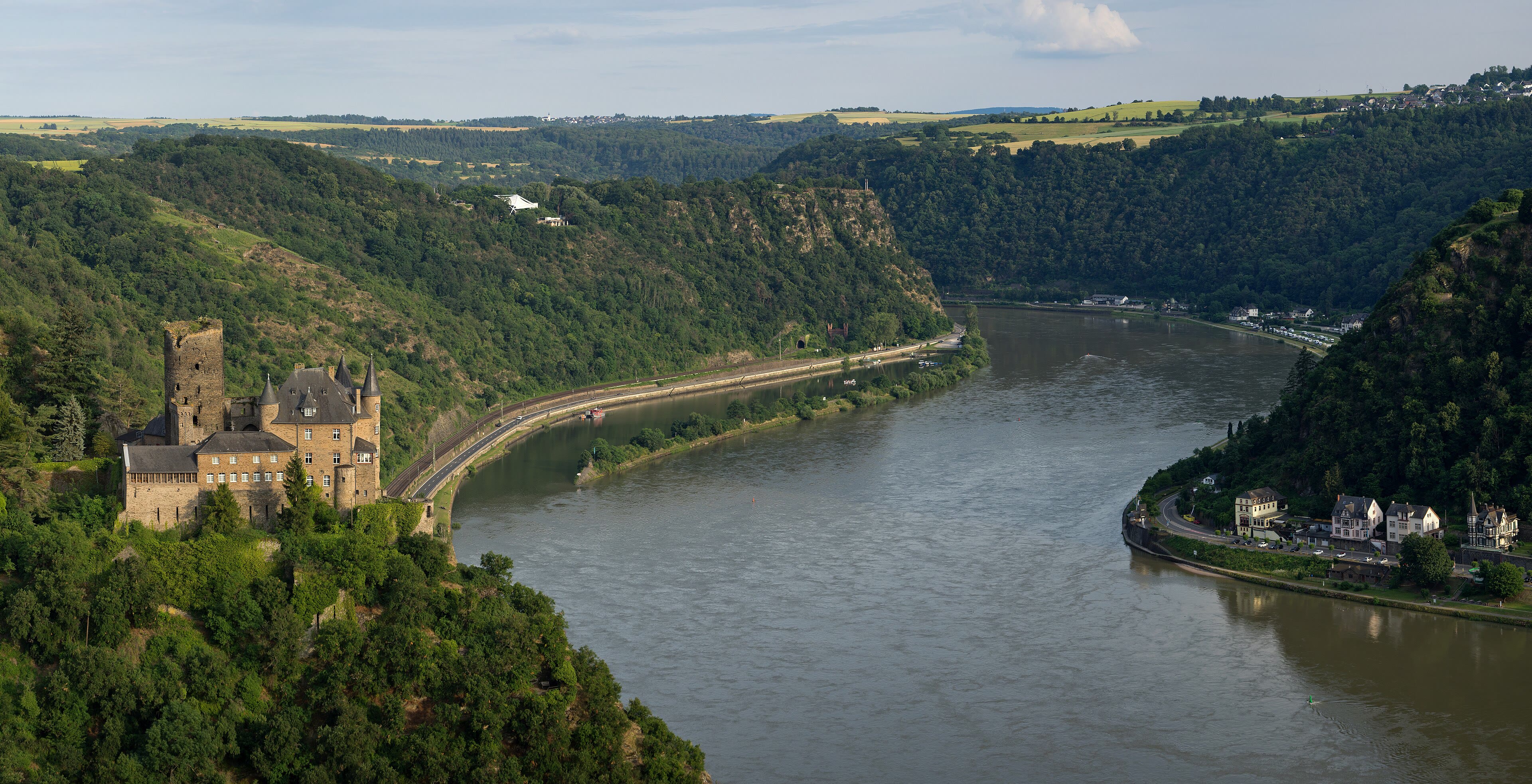
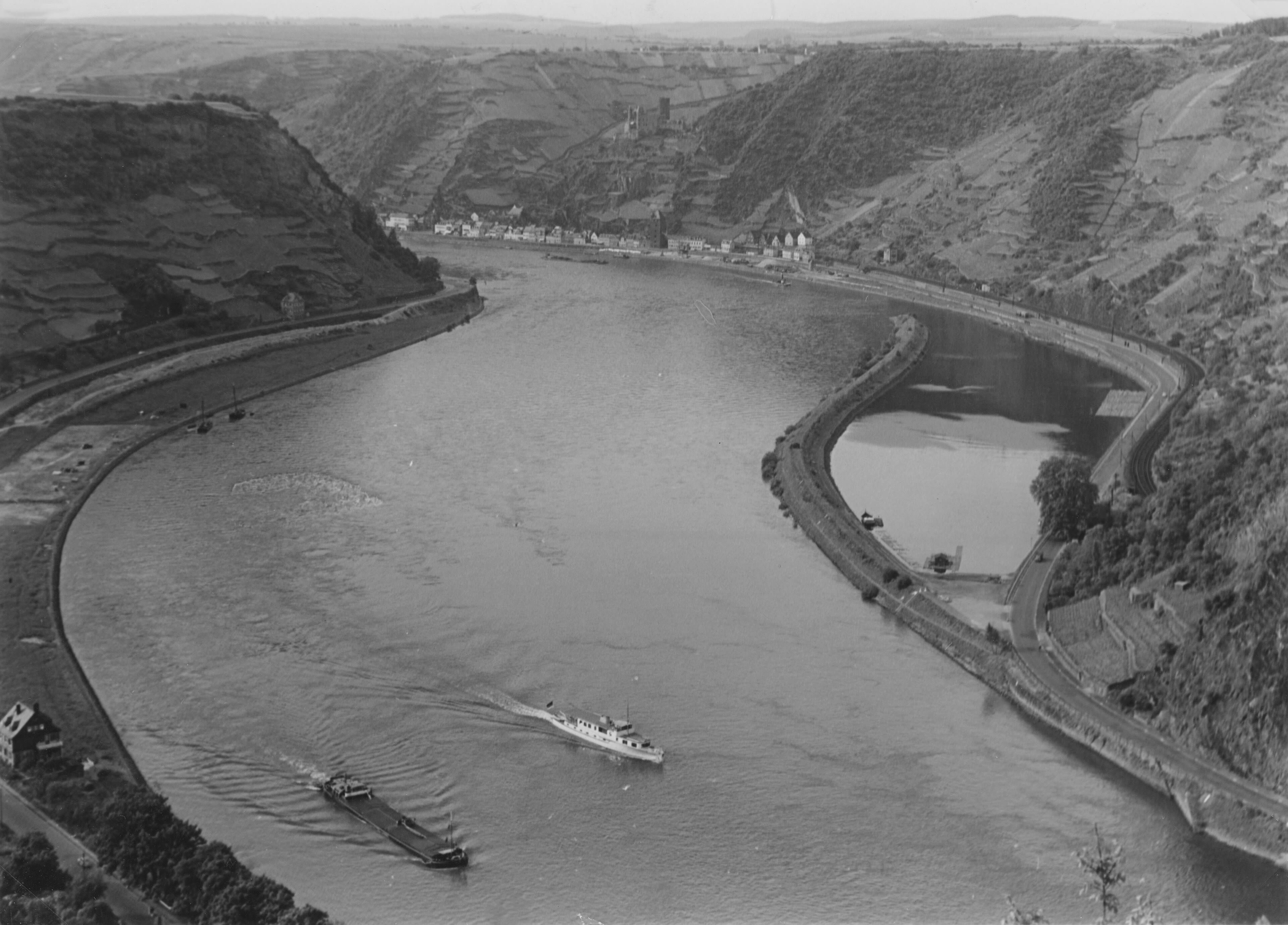
And now we slow down, though the current does not. The valley has narrowed to a stone corridor, the deepest and tightest reach of the whole Middle Rhine, and ahead on the right bank a great slate rock rises one hundred and thirty two metres straight out of the water. The Loreley. For a thousand years the boatmen feared this water — the reefs, the sucking currents, the whirlpools that took ships whole — and they explained it the way men explain anything that kills them without malice: a maiden, combing her golden hair on the rock, singing. Heinrich Heine made her immortal in eighteen twenty four: I do not know what it means, that I am so sad. The echo off this rock was famous too — sevenfold, the old pilots claimed, a voice coming back to you from the cliff like the river answering. The Zwaluw picks her way through the marked channel with respect, past the bronze maiden on her stone below the rock, past Burg Katz frowning from its crag and the great ruin of Rheinfels opposite. The water is tamed now, surveyed and dredged, but I will tell you a skipper's secret: nobody passes the Loreley quickly in their heart. You slow down. You look up. Some of the old fear is just good manners.
See this place in the galleryThe Loreley — our interpretation, created from the reference photographs belowReference photographs — The Loreley · 3 photographs
Bacharach — the Wine Altar
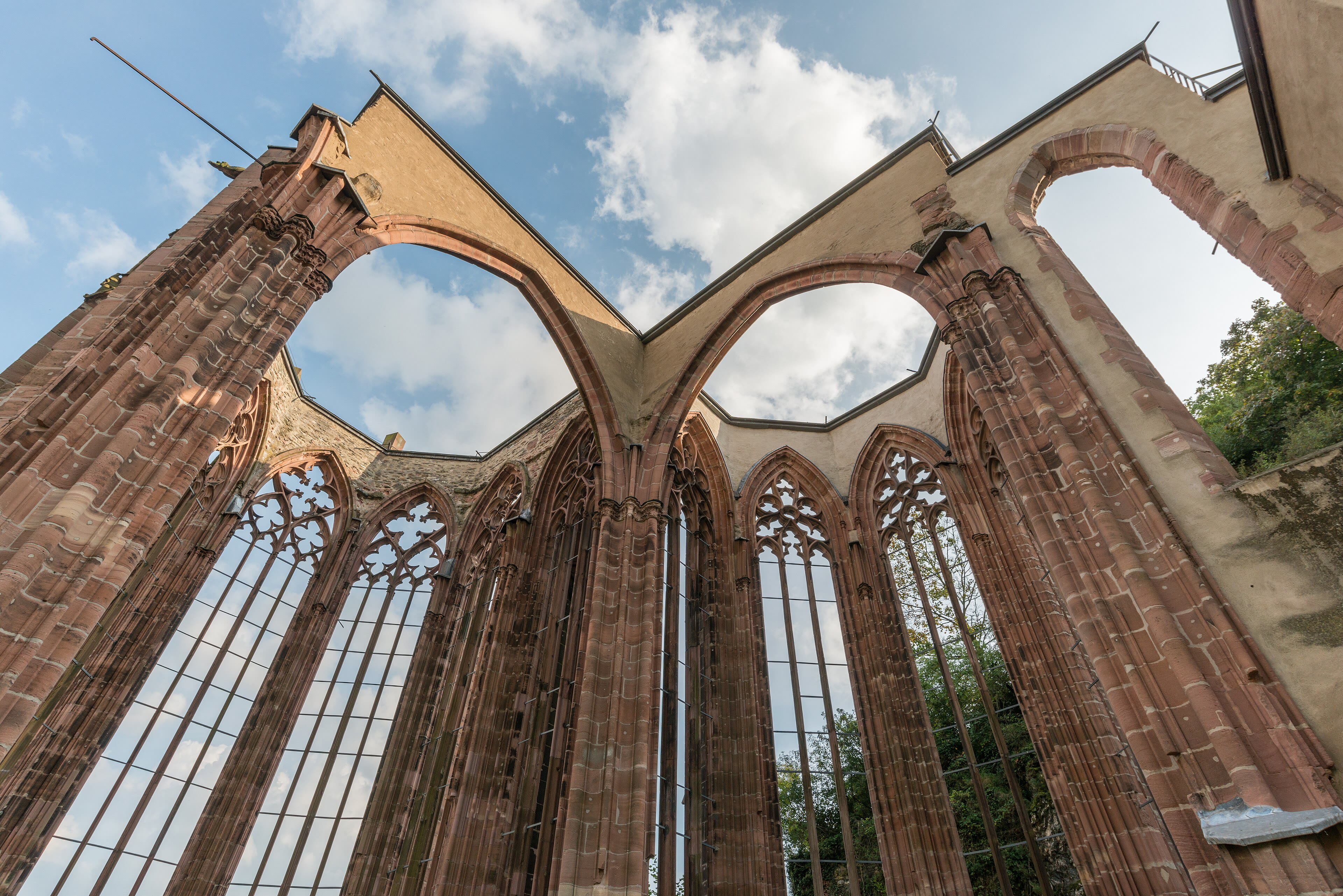
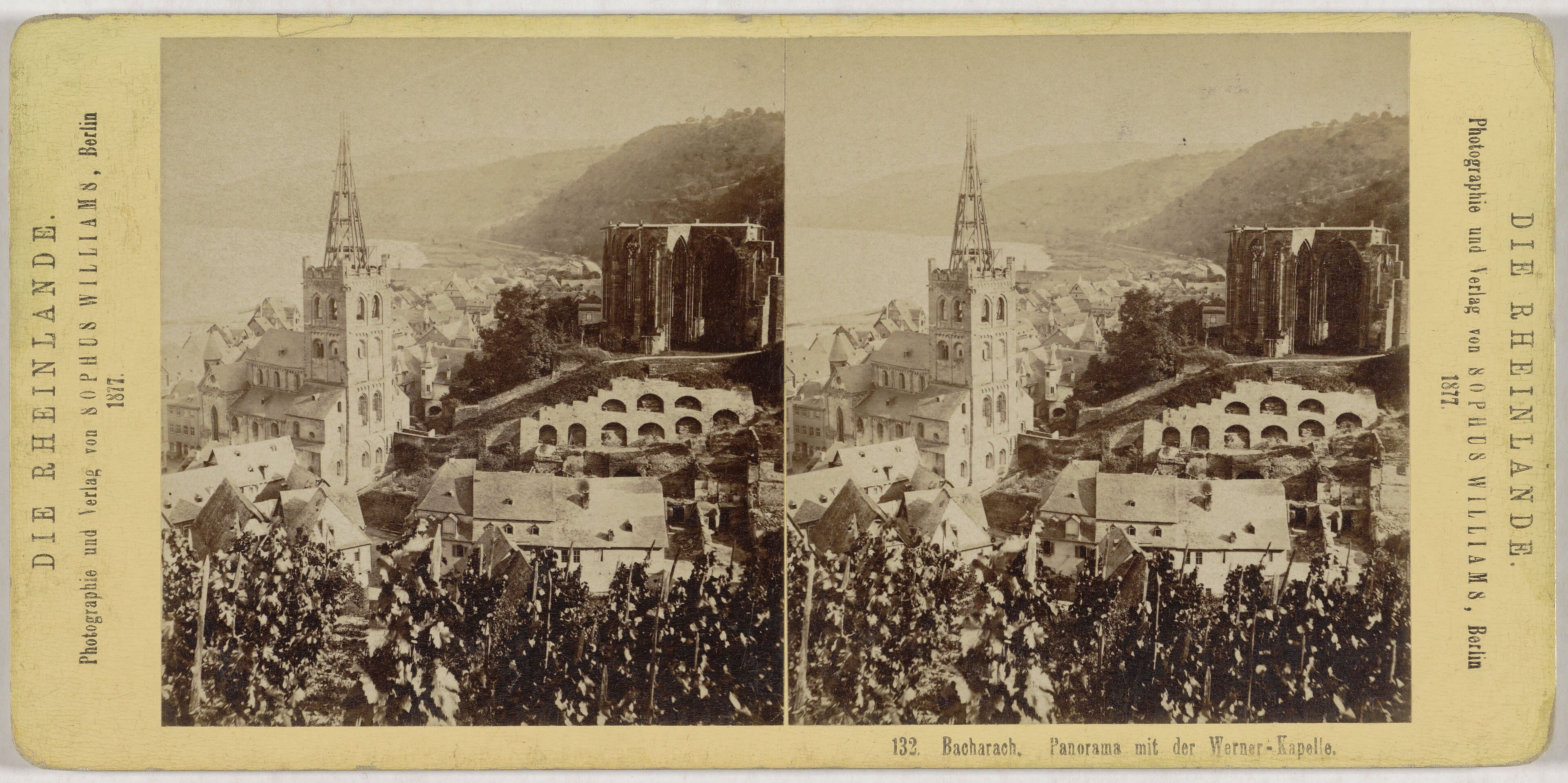
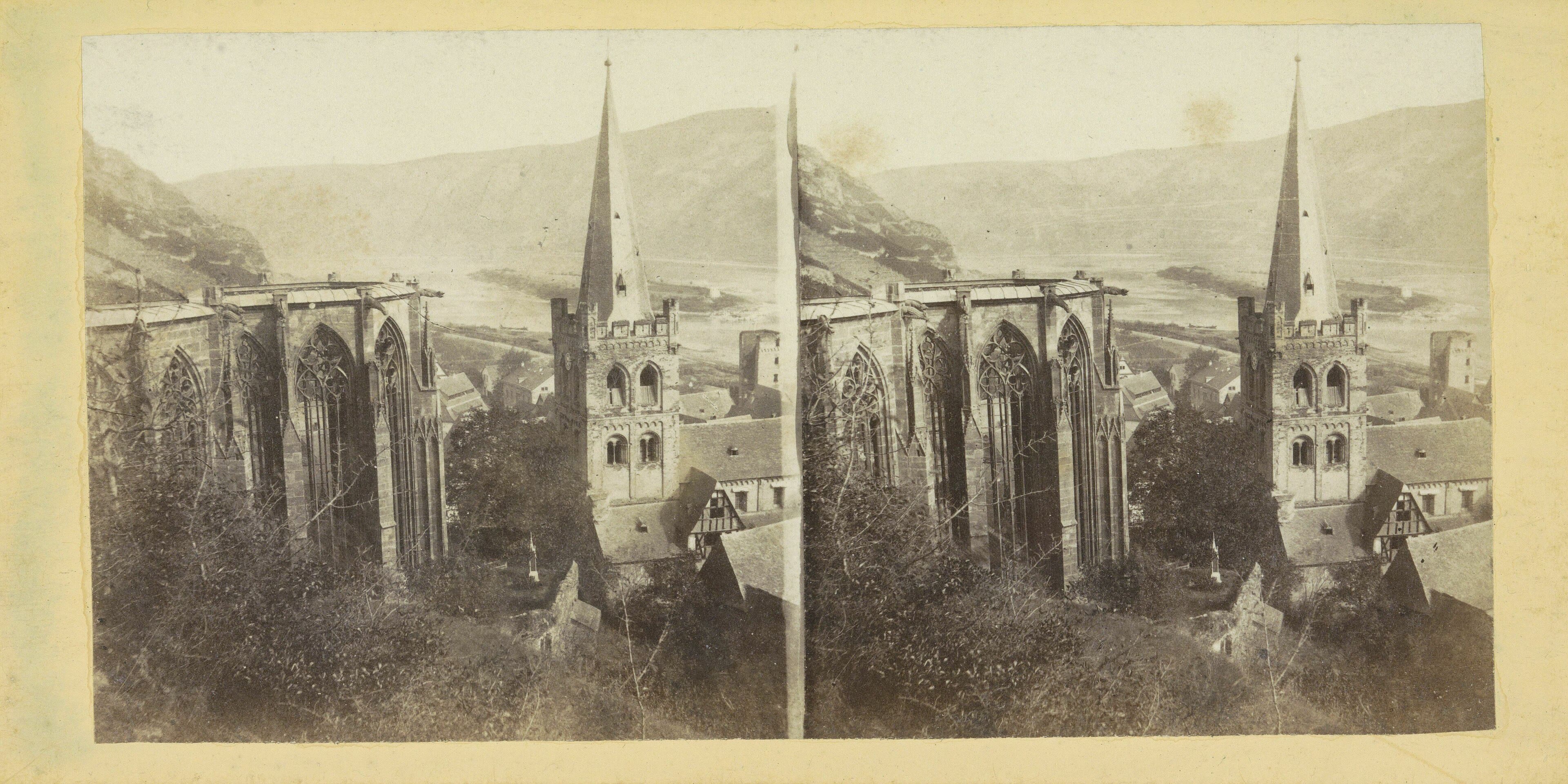
If the Rhine gorge has a jewel box, it is Bacharach. The name may come from Bacchus himself — the altar of Bacchus, the Romans called a stone here — and wine made this little town famous across the whole of medieval Europe, when its Riesling was traded further than its merchants ever travelled. Above the vines stands Burg Stahleck, rebuilt and beloved, where much of Germany seems to have spent a night in a bunk bed, for it is one of the most famous youth hostels on earth. But it is the ruin at the town's edge that stops me every time: the Werner Chapel, a Gothic church of rose-red stone that lost its roof to war three hundred years ago and gained the sky instead. It stands open to the weather like a prayer that was never finished, and the light comes through its tracery in the evening and lays patterns on the grass. We tie up at the long quay and I sit with a glass of the local wine — pale, cold, tasting of the slate it grew in — while the swallows work the river. Bacharach does not hurry you. It has been pouring wine for eight hundred years and it knows you will be back.
See this place in the galleryBacharach — the Wine Altar — our interpretation, created from the reference photographs belowReference photographs — Bacharach — the Wine Altar · 3 photographs
Kaub — the Castle in the River
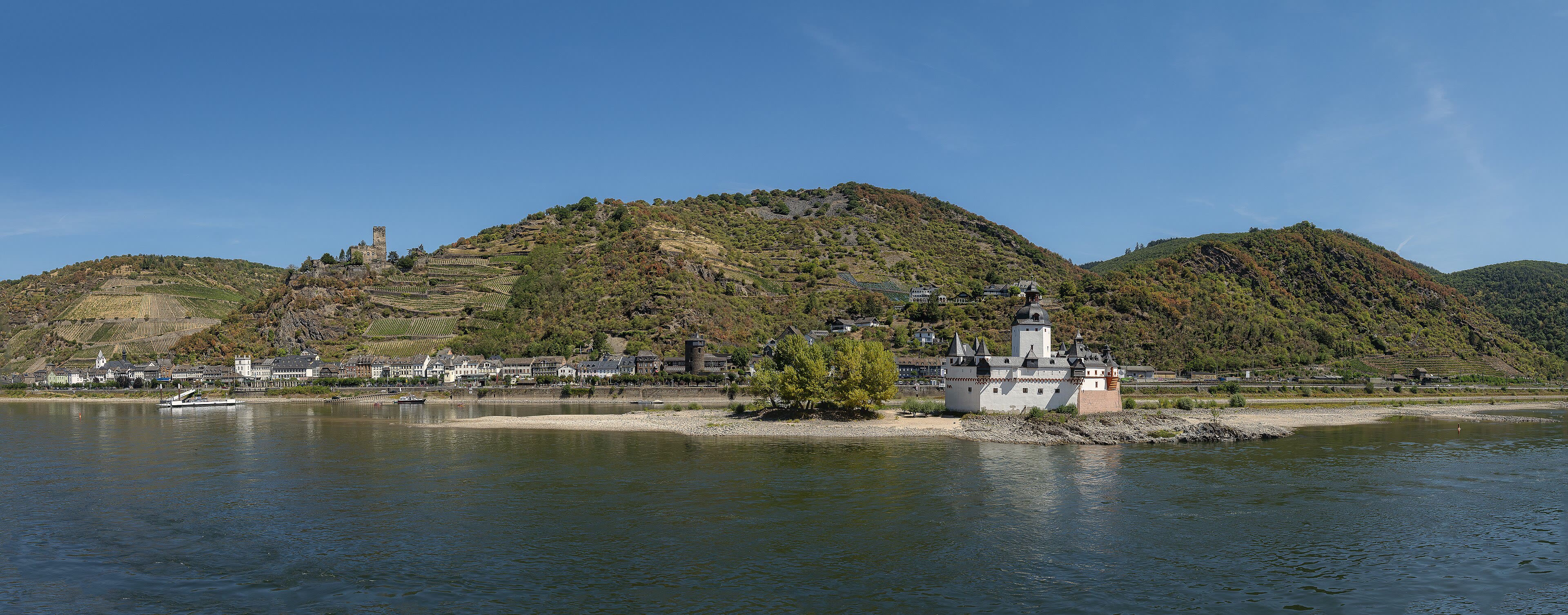
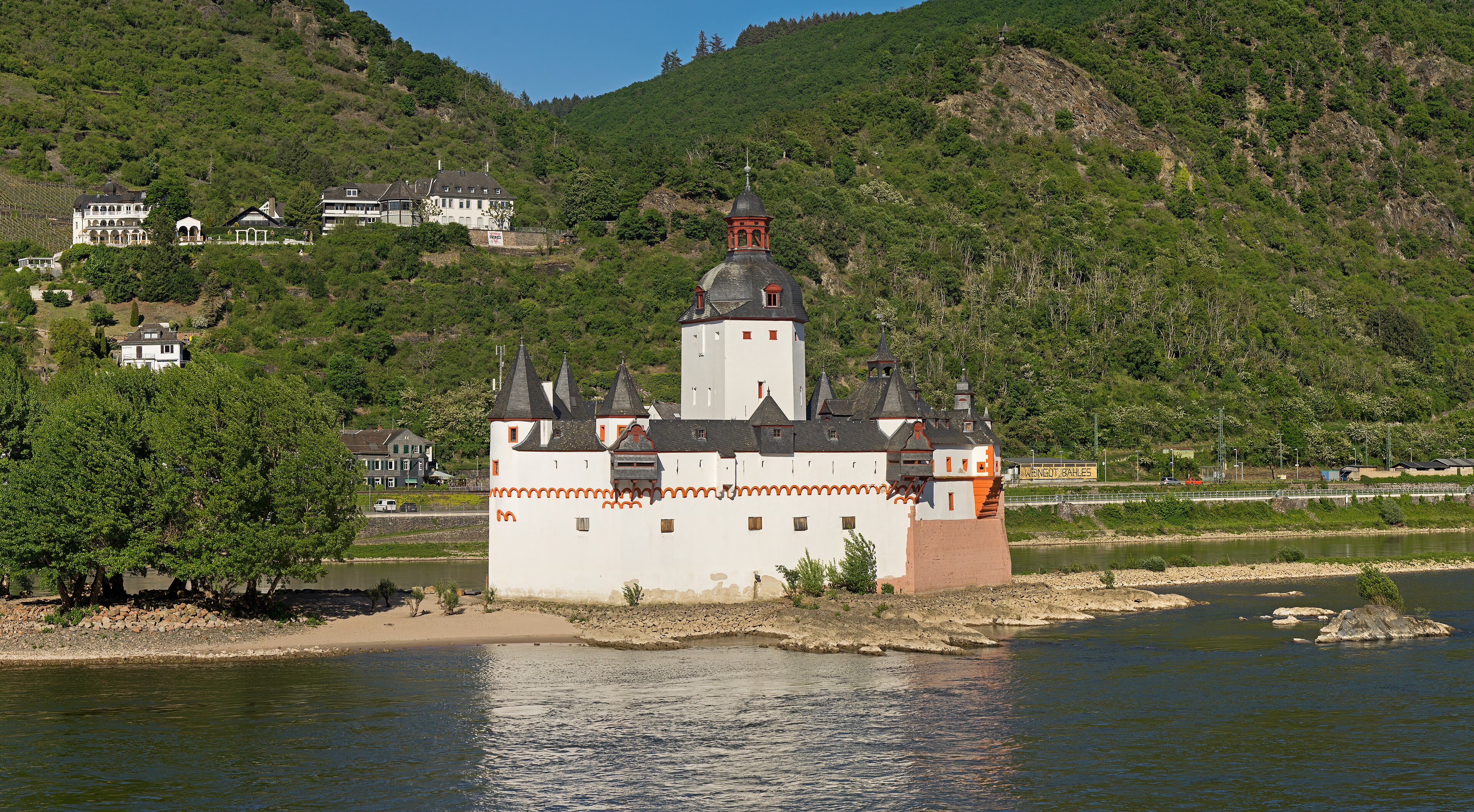
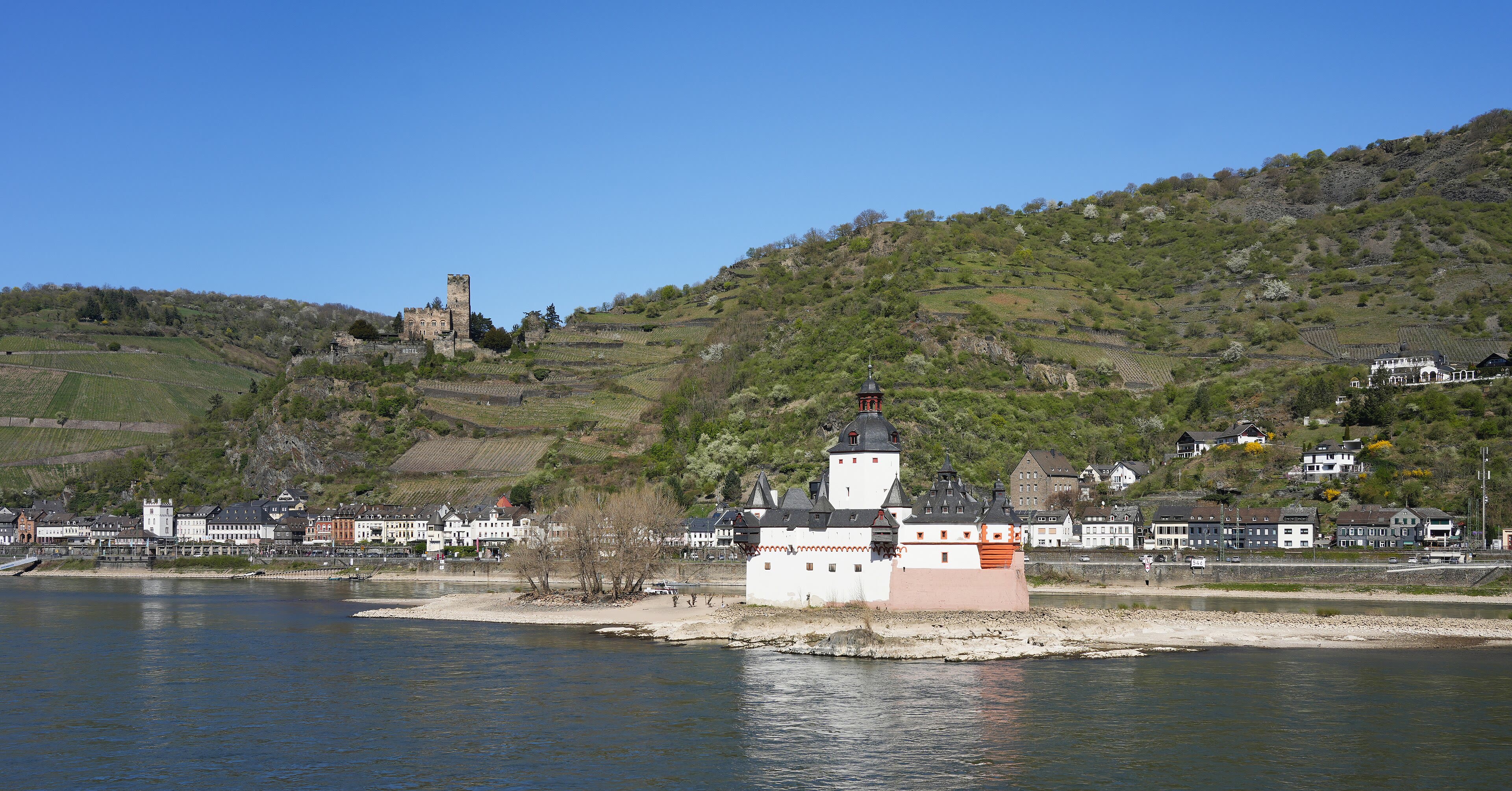
Now keep your eyes open, because we are coming to the strangest castle in Europe — and it is not on either bank. At Kaub, the Rhine carries a castle on its back. The Pfalzgrafenstein stands on a rock in the middle of the river, built in thirteen twenty six by Ludwig of Bavaria, shaped like a stone ship with its prow against the current, white walls and a black cap of slate. It was a toll station: every boat that passed paid, or a chain across the river explained the situation. The men who worked it lived out there in the stream, in the noise of the water, collecting money from the whole of European trade as it floated past their door. Above the town frowns Burg Gutenfels, and history crowds this reach — it was at Kaub, on New Year's Eve eighteen thirteen, that Blücher's army crossed the ice-cold Rhine on a pontoon bridge to hunt Napoleon into France. The ferryman still runs to the far bank, the wine growers still work slopes so steep they look like green waterfalls, and the little toll castle rides its rock as it has for seven hundred years. Everything on this river has been taxed, fought over, sung about and rebuilt. It is a wonder anything is left, and yet everything is.
See this place in the galleryKaub — the Castle in the River — our interpretation, created from the reference photographs belowReference photographs — Kaub — the Castle in the River · 3 photographs
Bingen and Rüdesheim — the Gate of the Gorge
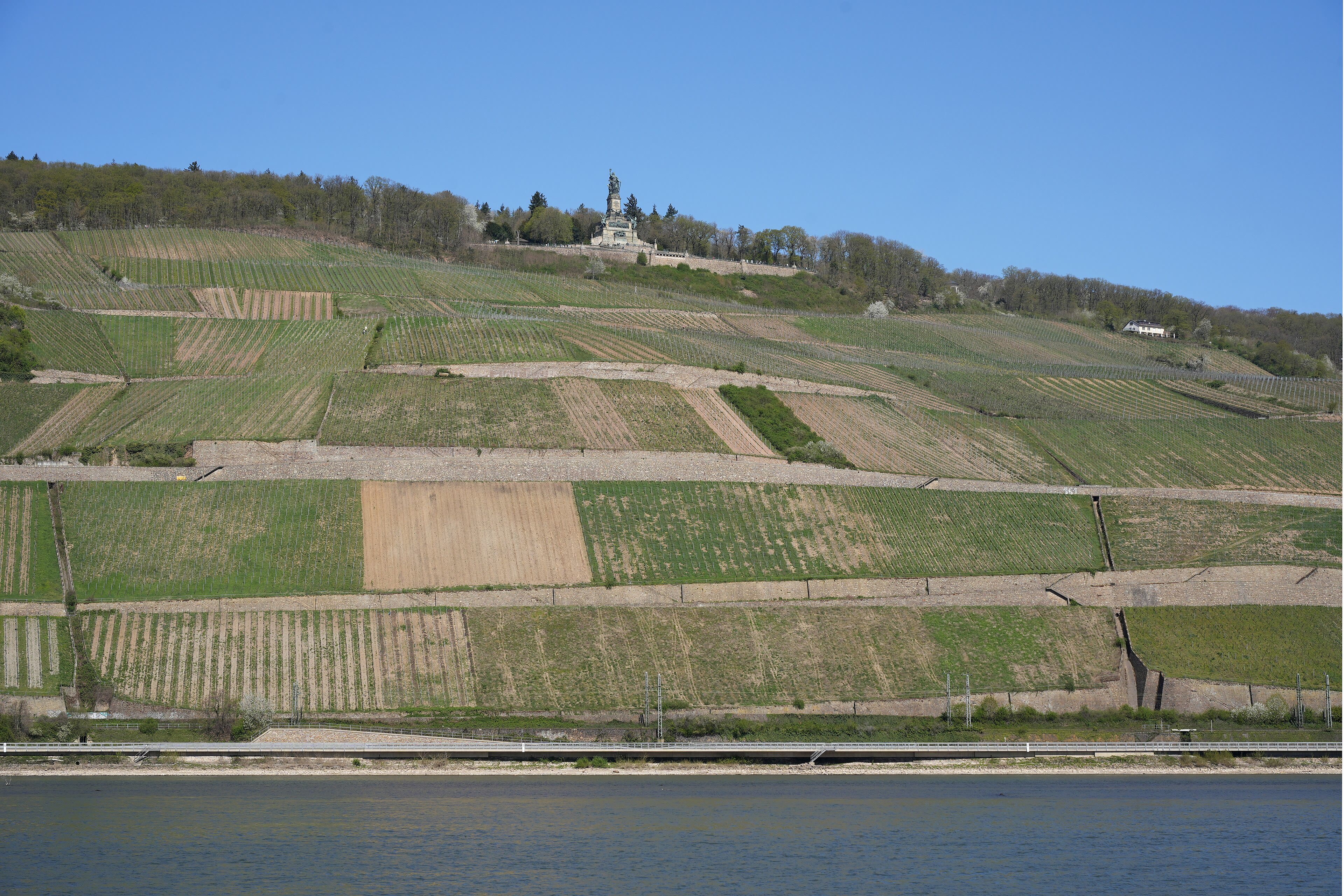
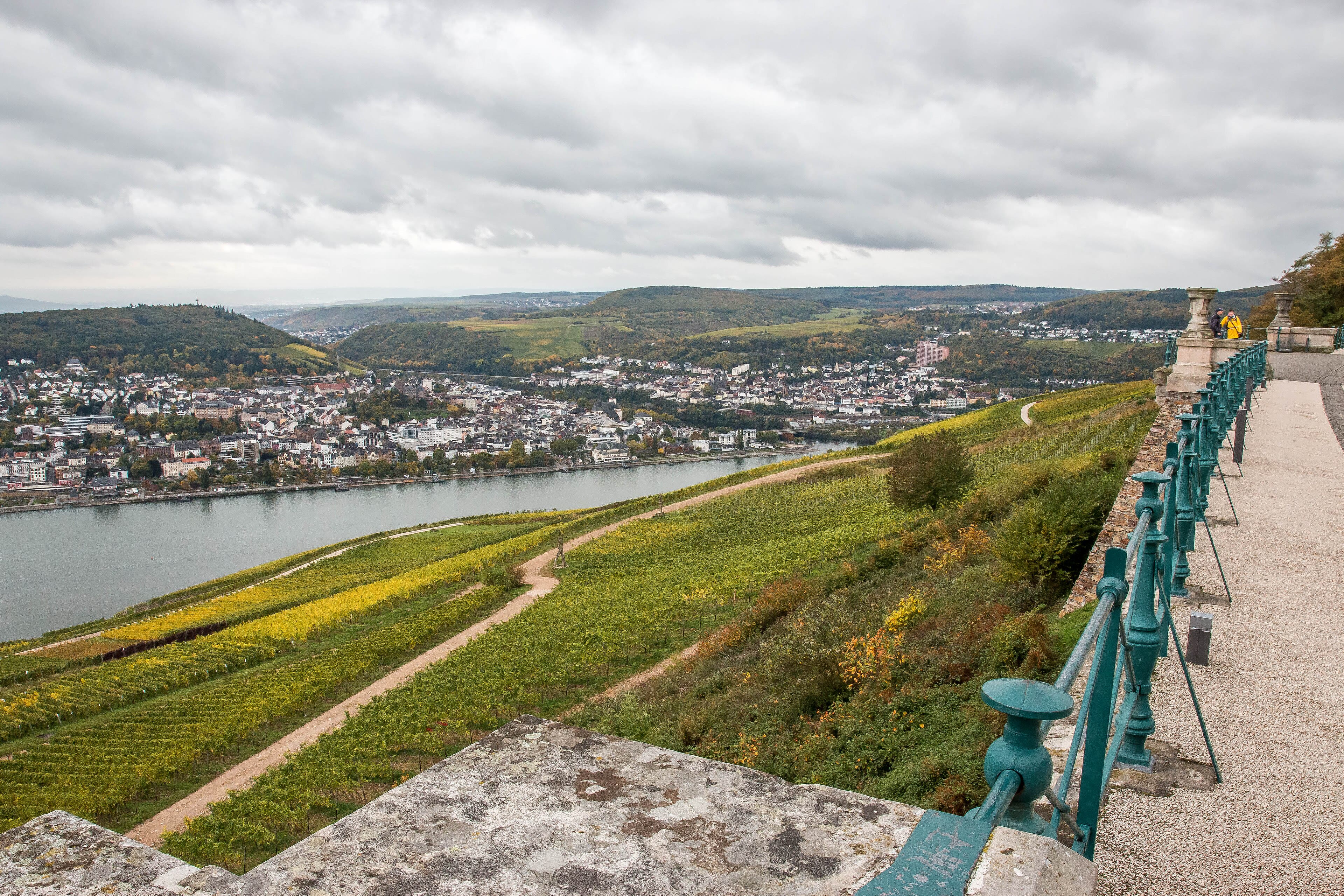
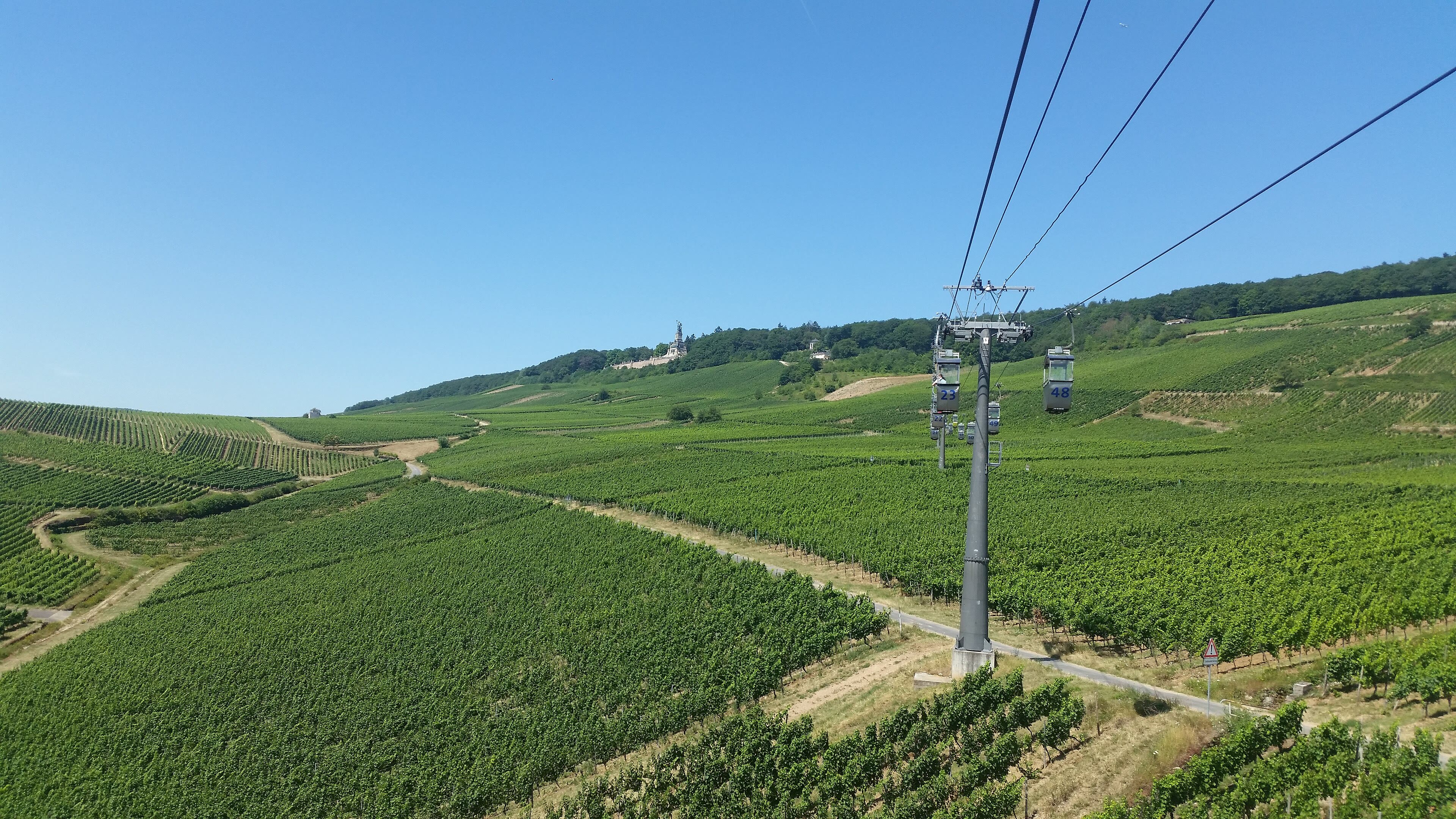
Geography plays a joke at Bingen: the river, squeezed through the gorge for sixty kilometres, suddenly opens into a broad, sunlit basin — and it was here, at the Binger Loch, that the gorge kept its deadliest reef, a gate of rock that wrecked ships for centuries until engineers blasted a safe channel through it in the eighteen thirties. In the middle of the stream stands the Mouse Tower on its little island. The legend says a cruel bishop fled there from a plague of mice, and the mice swam the river and ate him anyway; the truth is drier and better — the tower's name probably comes from Maut, a toll, and it stood watch over the traffic like a customs house with a view. Across the water rises Rüdesheim, merry with wine: the Drosselgasse lane no wider than a cart, the Riesling terraces, and above it all on the Niederwald heights, the great Germania statue of eighteen eighty three, a monument thirty eight metres high, raised in gratitude for a united Germany, gazing down the river she guards. We tie up below her as the evening comes on. The gorge is astern of us now, every castle counted. Ahead, the river broadens toward Mainz — and toward our turn.
See this place in the galleryBingen and Rüdesheim — the Gate of the Gorge — our interpretation, created from the reference photographs belowReference photographs — Bingen and Rüdesheim — the Gate of the Gorge · 3 photographs
Mainz — the Turn
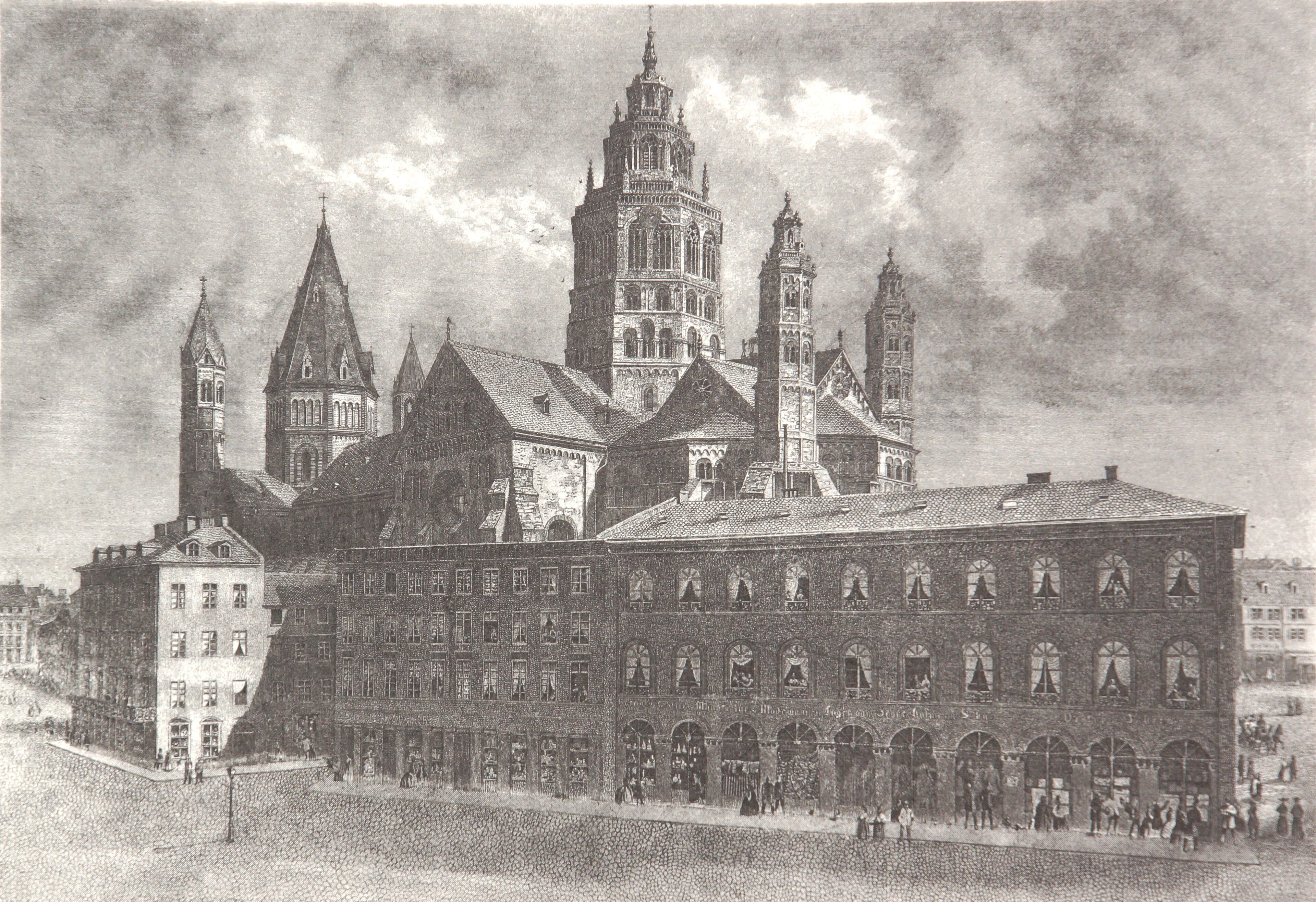
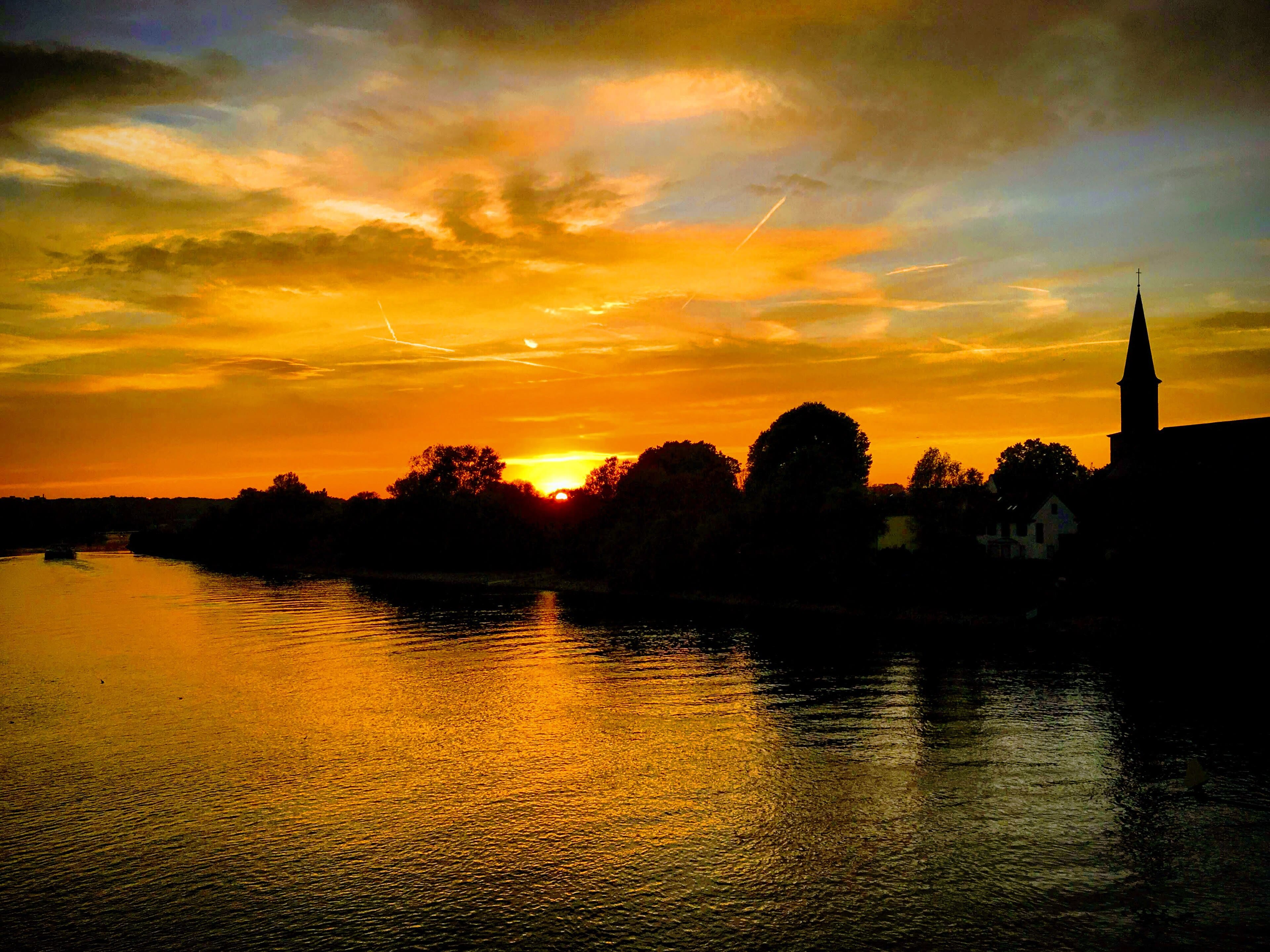
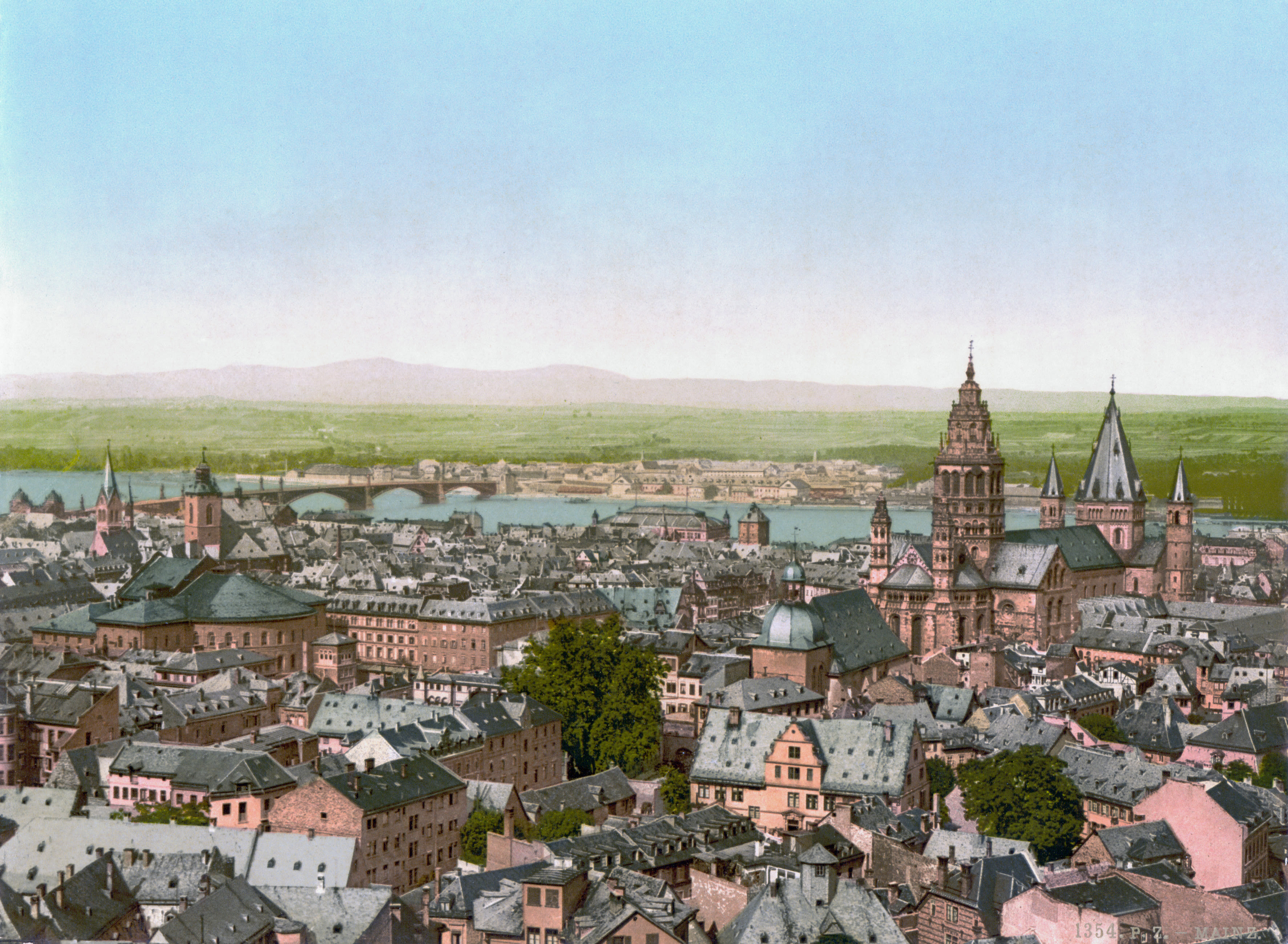
Mainz greets us with a cathedral the colour of rust and wine — a thousand years of red sandstone, founded in the days of the first millennium, burned on the day of its consecration and rebuilt by men who simply started again. This is Gutenberg's city, where a goldsmith's son took movable type and changed the world more thoroughly than any army the Rhine ever carried; his museum stands a short walk from the cathedral, and the two buildings argue politely across five centuries about which one really made Mainz immortal. But for us, Mainz is something else: it is the hinge of the whole voyage. Here the river Main comes down out of the east to meet the Rhine, and here the Zwaluw turns. Ahead of the Rhine, the water runs south toward Worms and Speyer, Strasbourg and Basel — fine countries, and a voyage for another season. Our road runs east now, up the Main toward Frankfurt and Würzburg, toward a canal that climbs over a watershed and pours, at last, into the Danube. A skipper feels a turn like this in the stomach — half of it sorrow for the river you're leaving, half of it hunger for the one you're joining. Cast off, then. The Main is waiting, and the Black Sea is two rivers away.
See this place in the galleryMainz — the Turn — our interpretation, created from the reference photographs belowReference photographs — Mainz — the Turn · 3 photographs
Chapter Three — The Main and the Canal
8 scenes · 24 reference photographs
Frankfurt — the River’s Turn East
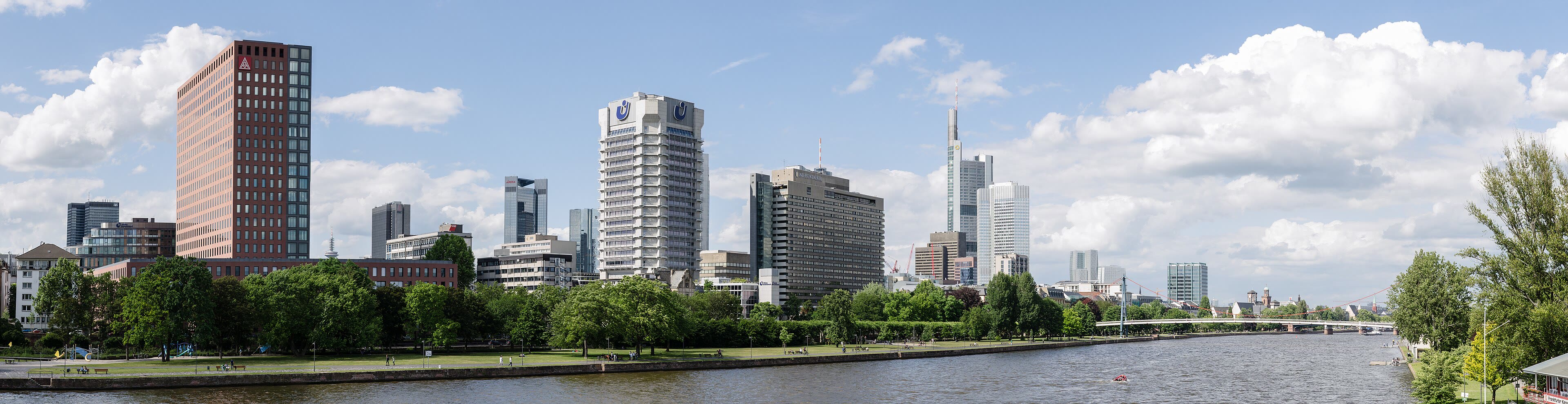
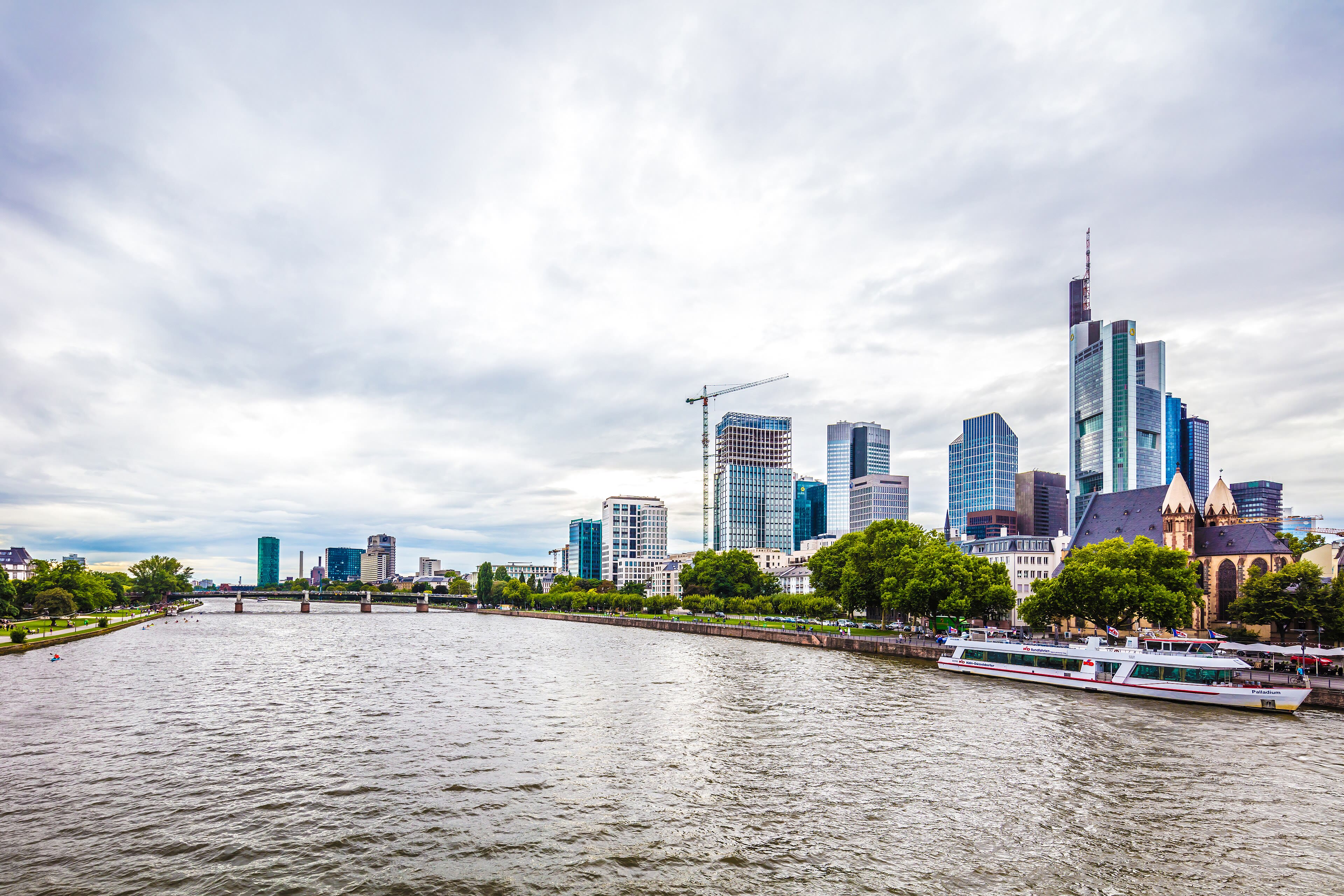
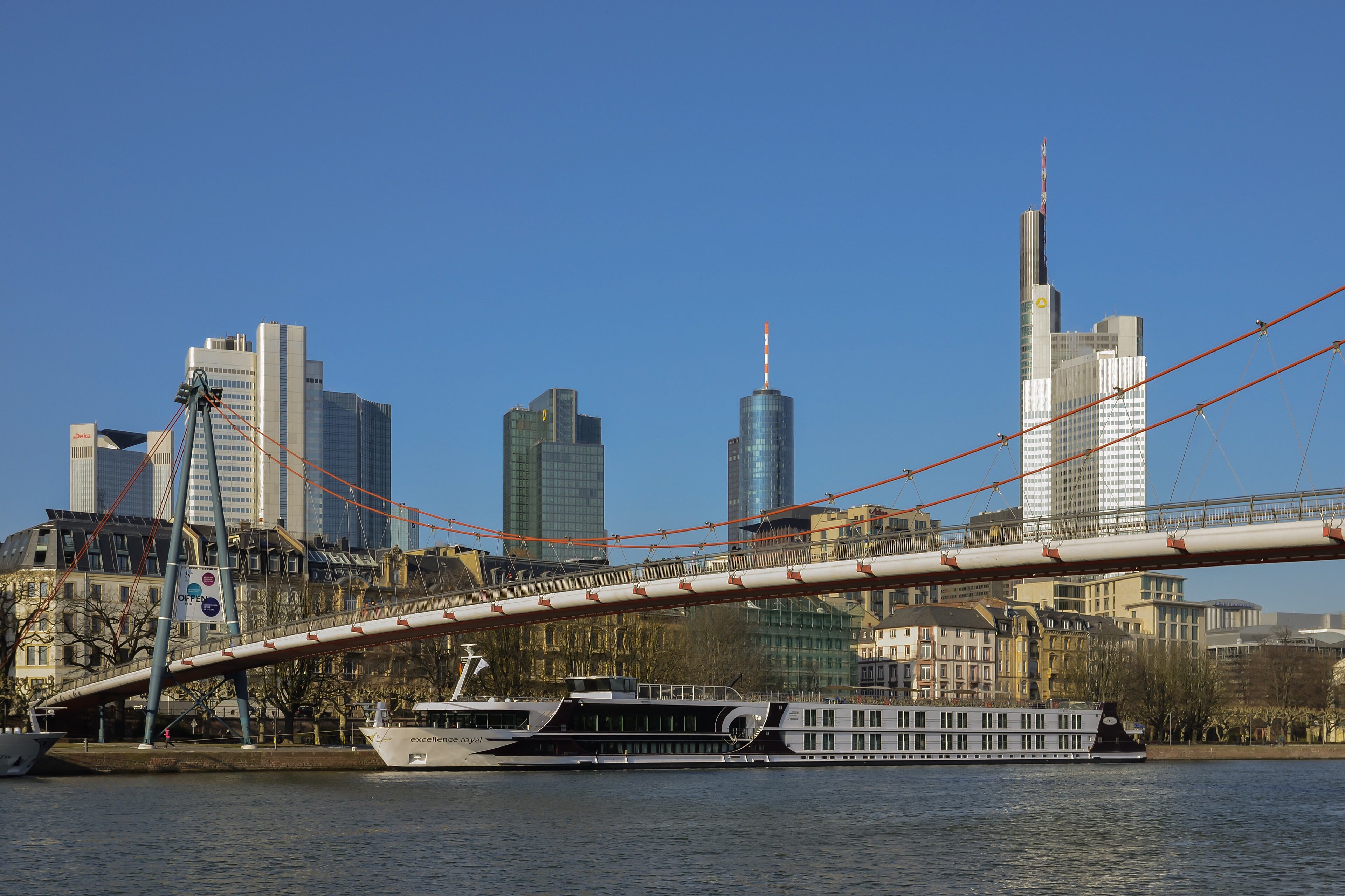
We round the Mainz bend in the morning and the river changes its mind with us — the Rhine lets us go, and the Main takes over, carrying us east into Germany's heart. Frankfurt comes up on the river like a argument between centuries: the banking towers of the Mainhatten skyline on one bank, and on the other, the old Römerberg where the half-timbered houses of the Ostzeile lean together like old friends. I tie up at the Museumsufer, the museum bank, where a dozen museums line the quay and the iron bridges step across the river like combs — the Eiserner Steg, the Iron Footbridge, locked with the padlocks of a thousand couples. Frankfurt is where Charlemagne held court, where Goethe was born in a house on the Hirschgraben, where kings were crowned in the Kaiserdom that rises above the river in red sandstone. It is also the most American city in Germany, all glass and hurry. The skipper in me likes it for a simpler reason: here the river stops running north and starts running east, and the whole voyage changes its mind. Tonight we eat green sauce and apple wine, and in the morning we go up the Main.
See this place in the galleryFrankfurt — the River’s Turn East — our interpretation, created from the reference photographs belowReference photographs — Frankfurt — the River’s Turn East · 3 photographs
Aschaffenburg — the Pompeii of the North
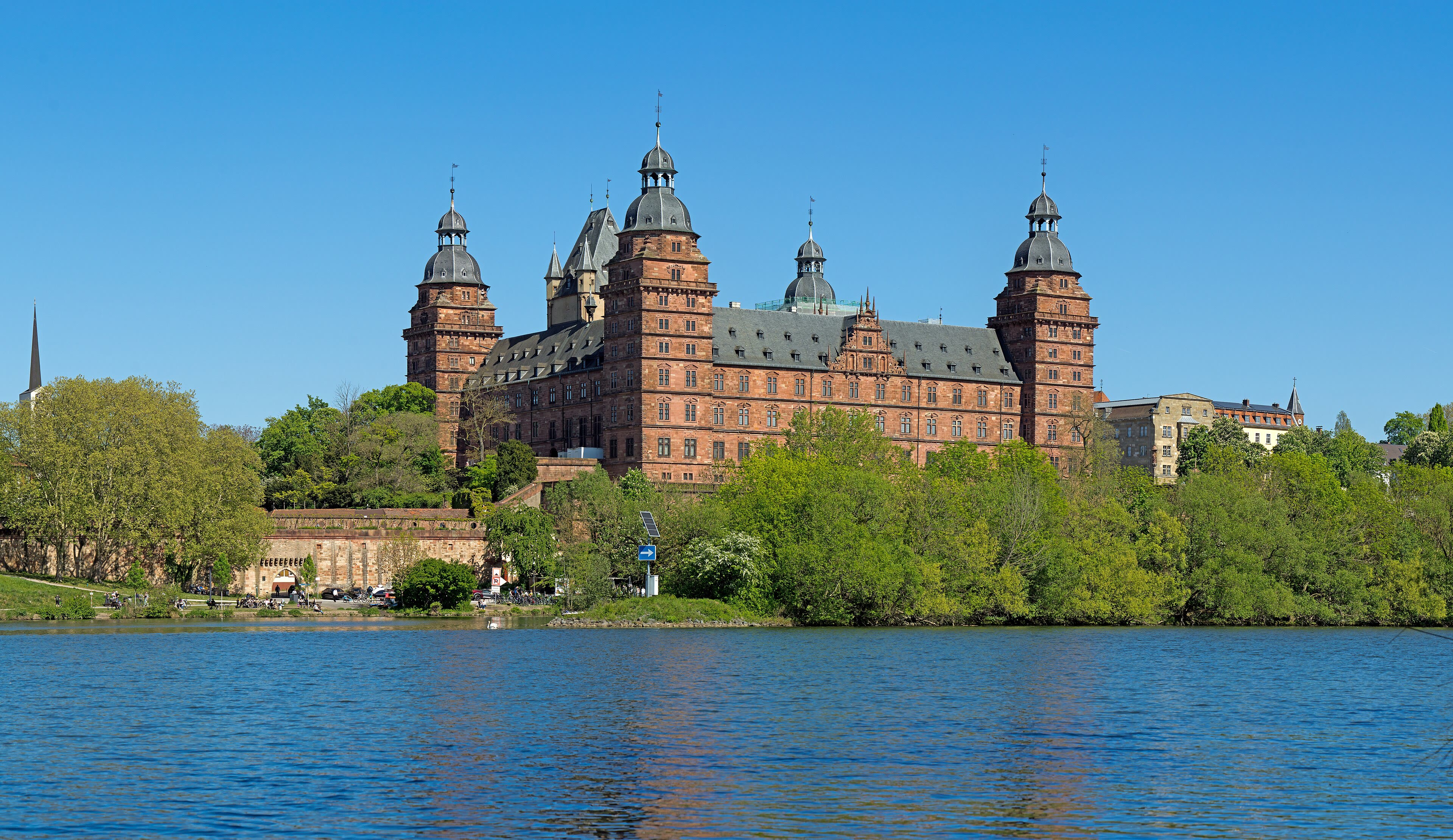
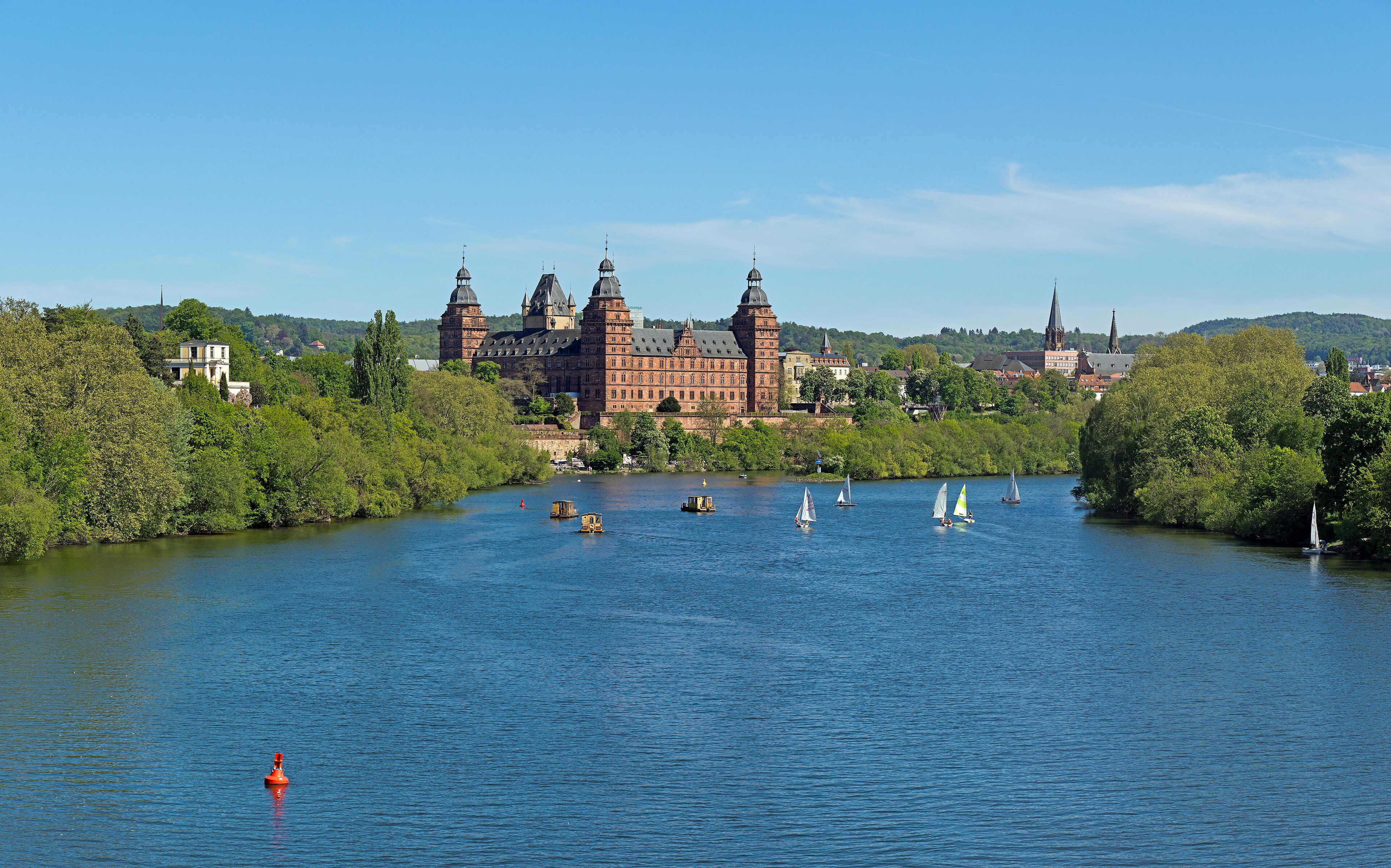
Up the Main the river goes quiet and the banks close in green, and Aschaffenburg greets us with a joke of a palace. Schloss Johannisburg, the great red sandstone castle of the archbishops, stands four-square on the river terrace with its four corner towers, as grand as any residence on the Rhine. But the sight that stops me every time is the one behind it: the Pompejanum, a perfect copy of a Roman villa from Pompeii, built in the eighteen forties by a king who loved Italy so much he rebuilt a piece of it on the Main. A Roman house, under a German sky, on a river terrace — Aschaffenburg is full of these gentle surprises. The town's old quarter climbs from the river in crooked lanes, the collegiate church of St Peter and Alexander keeps watch over the roofs, and the Main rolls past in that particular shade of green that belongs only to German rivers in June. We take on water and a few provisions, and I walk the palace gardens at dusk, when the river mist comes up and the castle glows. Tomorrow the Main narrows properly, and the old timber towns begin.
See this place in the galleryAschaffenburg — the Pompeii of the North — our interpretation, created from the reference photographs belowReference photographs — Aschaffenburg — the Pompeii of the North · 3 photographs
Miltenberg — the Crooked House Town
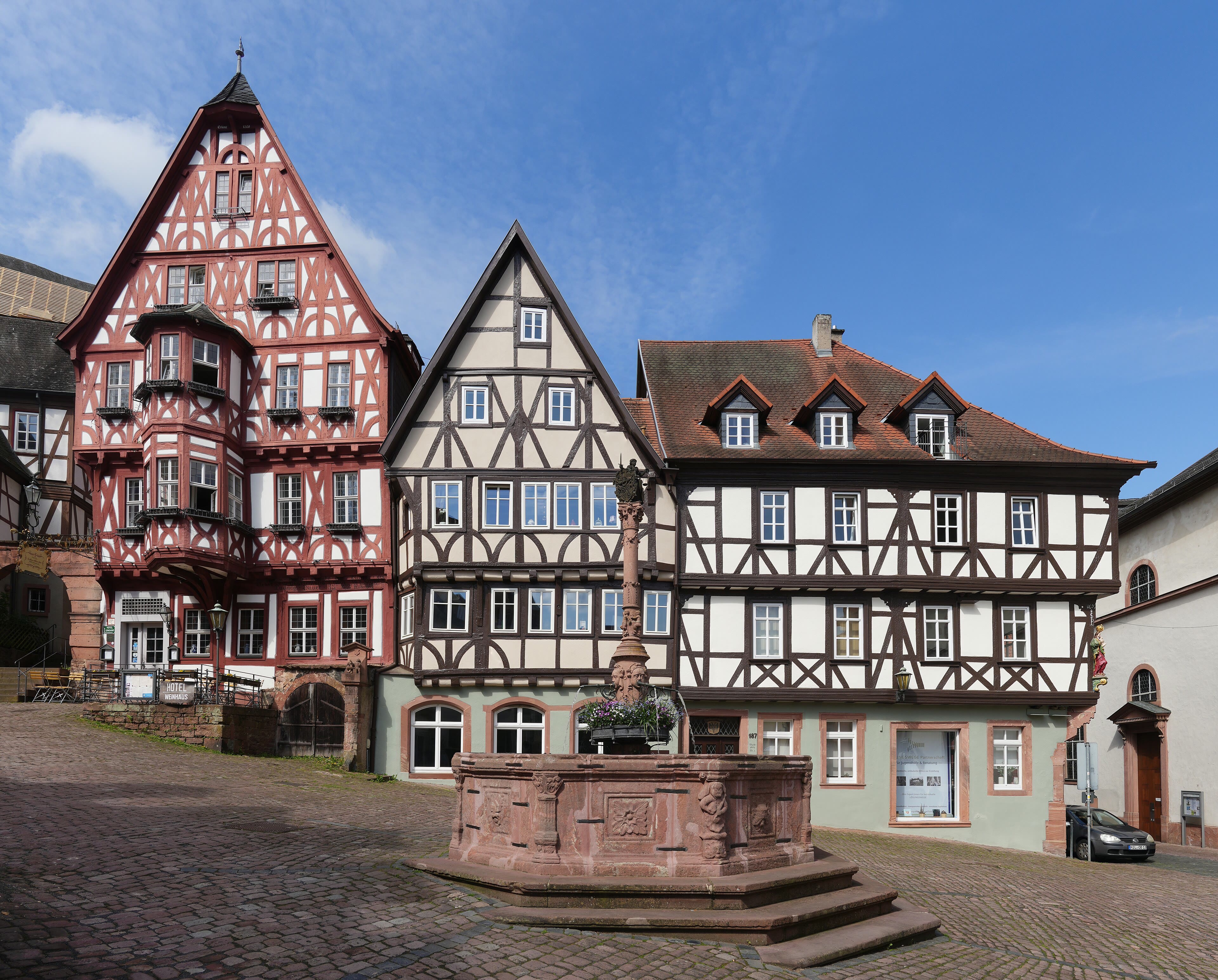
Miltenberg is the Main at its prettiest, and that is a crowded field. The old town runs a single narrow street along the river, and every house on it is half-timbered and leaning, as if the whole street were gossiping. At its centre stands the Schnatterloch — the Chatter Hole — where the market square narrows to a gap between the fountain and the tavern, and above it the Gasthaus zum Riesen, the Giant's Inn, claims to be Germany's oldest inn, pouring beer since fourteen eleven. Up on the hill, Mildenburg Castle watches the river traffic as it has for eight centuries, and the Zwaluw passes beneath it like a small thing — which, beside eight hundred years of stone, she is. The Main here is a proper working river still, barges and pleasure boats sharing the bends, and the town's wine taverns fill as the light goes down over the Odenwald hills. I moor at the old landing and take a glass of the local red, and I think this: some towns you visit; some towns you simply agree with. Miltenberg is the second kind.
See this place in the galleryMiltenberg — the Crooked House Town — our interpretation, created from the reference photographs belowReference photographs — Miltenberg — the Crooked House Town · 3 photographs
Wertheim — Where the Waters Wed Again
At Wertheim the Tauber comes down out of the Franconian hills and marries the Main at the foot of the castle rock — a second wedding for the Zwaluw this voyage, after Koblenz, and the river marks it the same way, with a swell of current and a widening of the water. Above the confluence stands the ruined castle of Wertheim, one of the largest castle ruins in Germany, its stones weathered to the colour of old parchment, looking down over the town's pointed roofs and the two rivers braiding below. The town itself is a jewel box of half-timber and glass — it has made glass for centuries, and the little glass museum still shows the blowers at work, which is a beautiful thing to watch on a rainy afternoon, which is what Wertheim does best. The Main bends here, and the hills begin to look like Franconia properly: vineyards on the south slopes, forest on the north, and the river threading between them like a needle. We tie up beneath the castle rock and I climb the lanes at evening, when the bells are ringing and the river is putting on its gold. A skipper learns to read a town by its light. Wertheim reads beautifully.
Wertheim — Where the Waters Wed Again — our interpretation, created from the reference photographs belowReference photographs — Wertheim — Where the Waters Wed Again · 3 photographs
Würzburg — the Prince-Bishops’ City
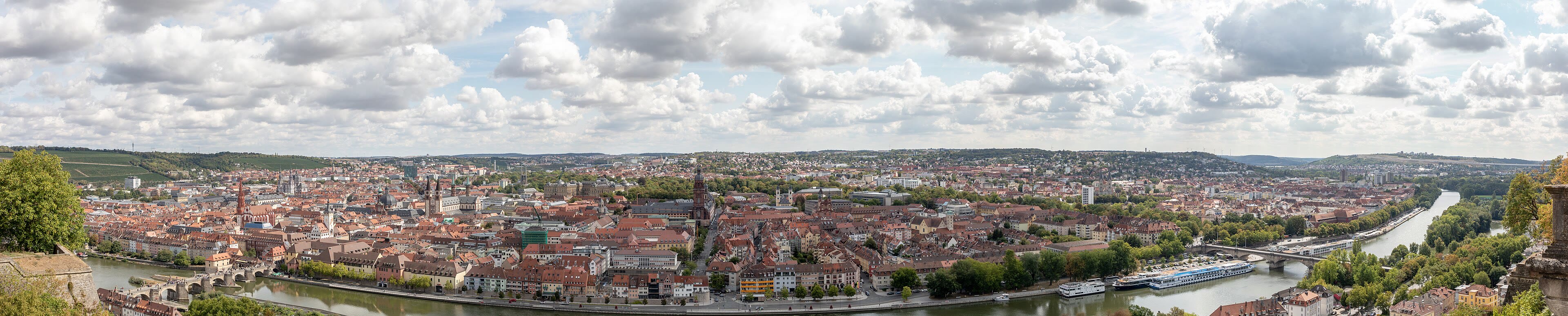
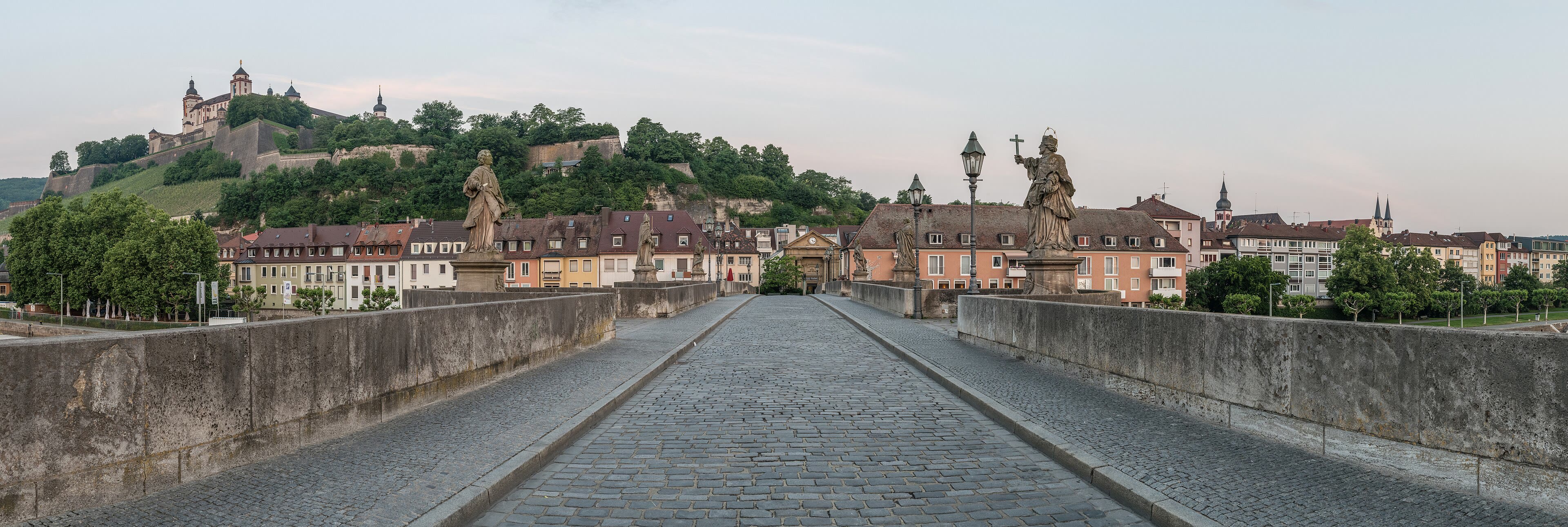
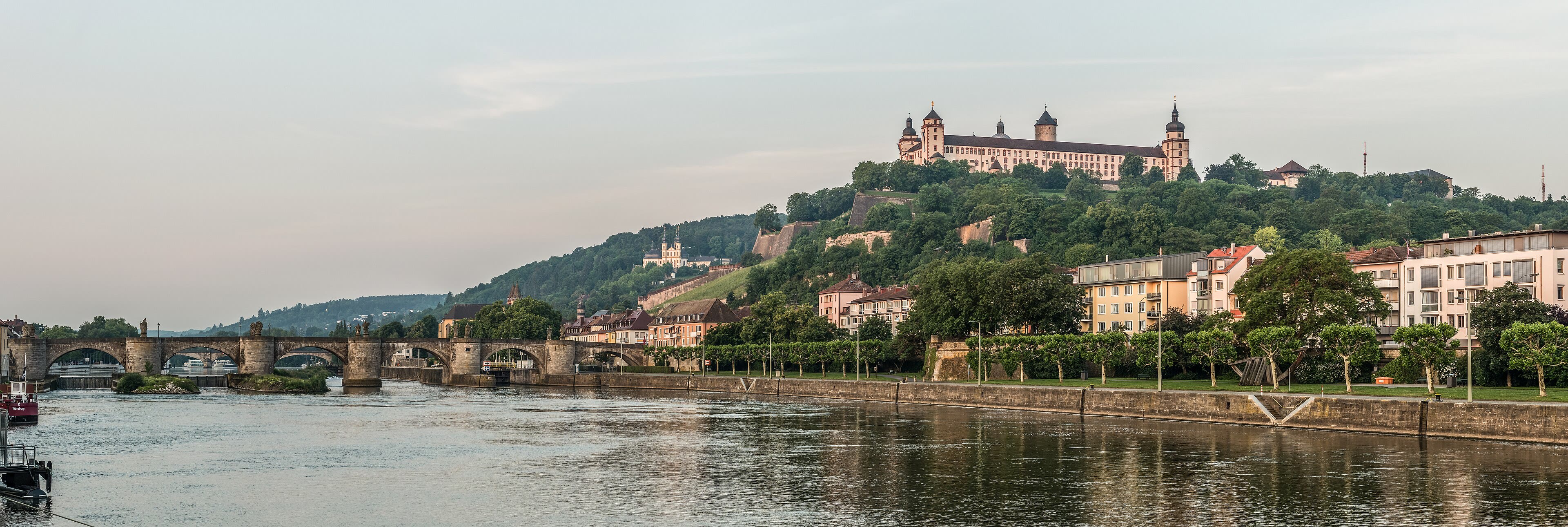
Würzburg arrives in a rush of rooftops and towers, and then the Residenz stops you cold. The prince-bishops built the largest palace in Germany here — a baroque palace with a staircase painted by Tiepolo, the largest fresco in the world, heaven itself on the ceiling — and it stands above the Main as if Franconia had decided, once, to outbuild the whole of Europe. On the far bank, the Marienberg fortress rises on its hill, the old seat of those same prince-bishops, and between them the Alte Mainbrücke — the Old Main Bridge — carries the saints in stone across the water, twelve statues of saints and kings looking down on the river traffic with the air of men who have seen it all before. Würzburg's vineyards run right to the city walls, and its wine is Franconian, sharp and dry, poured in the squat Bocksbeutel bottles that look like flattened flasks. I tie up below the bridge and walk the old town at dusk, and I will tell you the truth: this is the most beautiful city we have seen since the Rhine gorge. The Zwaluw agrees. She has seen plenty.
See this place in the galleryWürzburg — the Prince-Bishops’ City — our interpretation, created from the reference photographs belowReference photographs — Würzburg — the Prince-Bishops’ City · 3 photographs
Bamberg — the Seven Hills Town
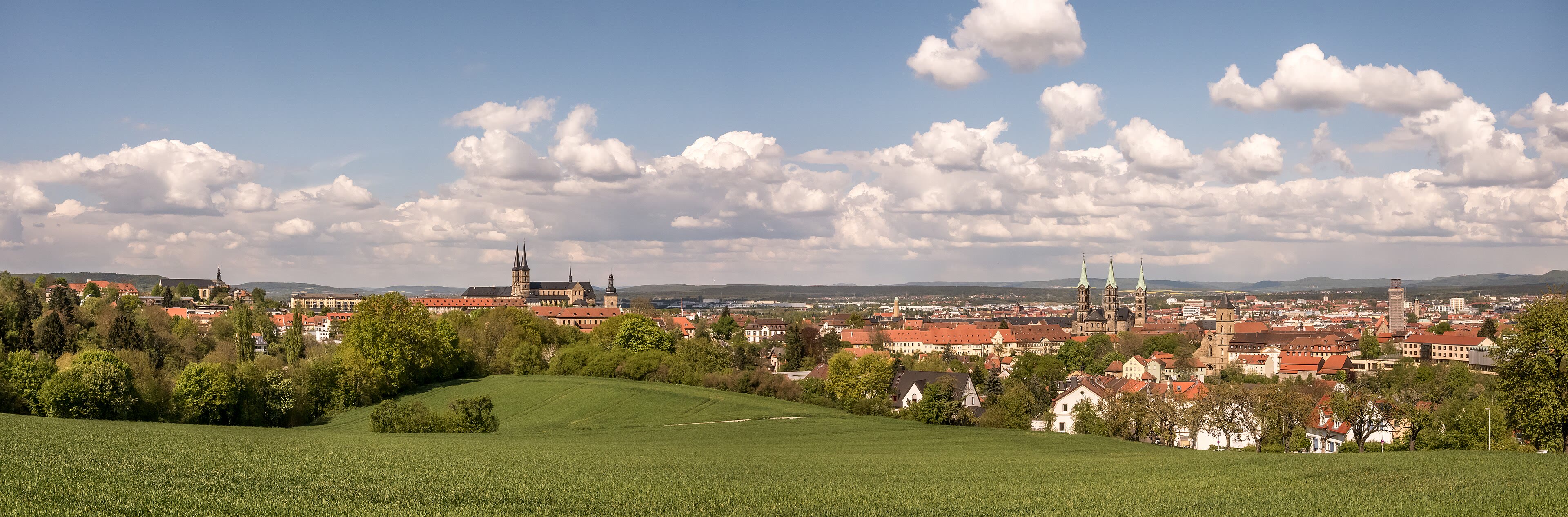
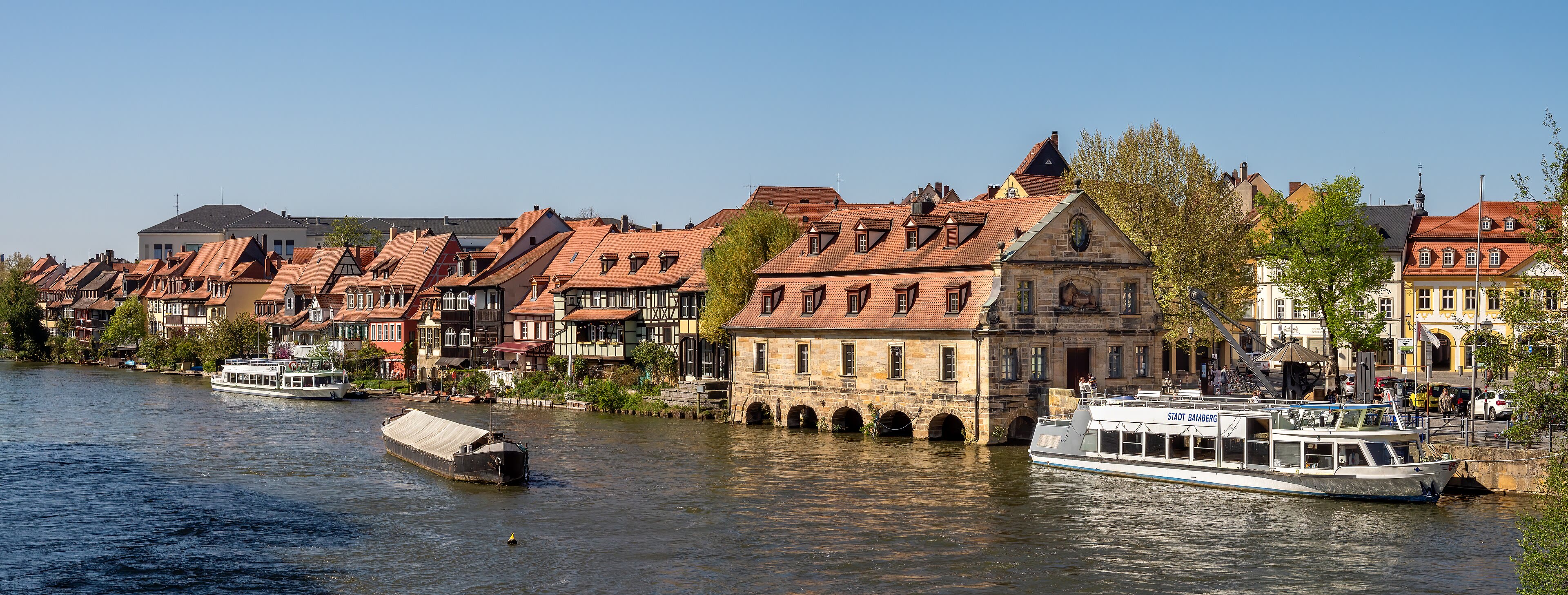
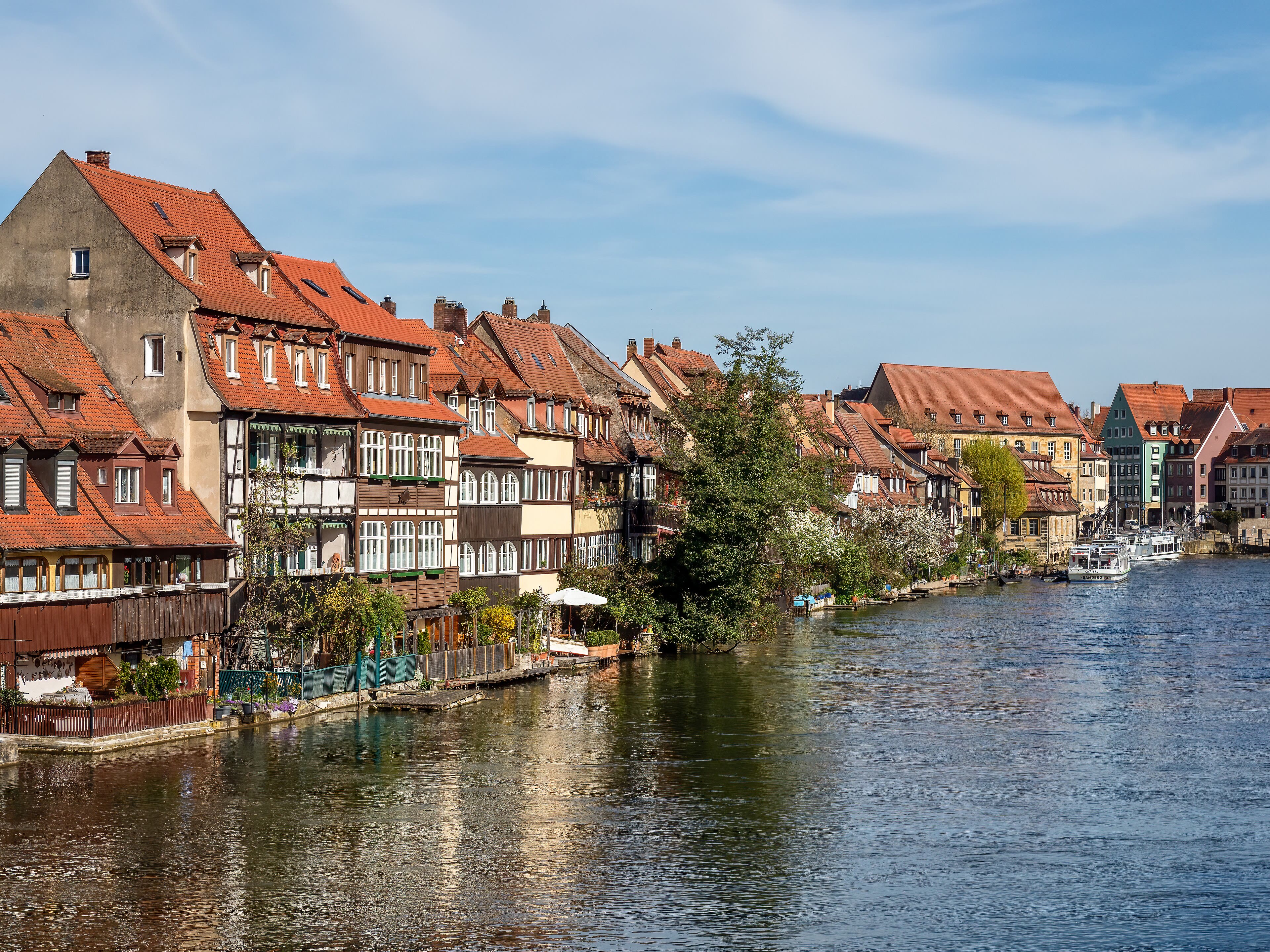
Bamberg is the town the wars forgot, and it shows — the old town stands complete, a World Heritage city of seven hills, each with its own church, each with its own view of the river. The Main's tributary, the Regnitz, threads the town, and at its heart the Little Venice quarter — fishermen's houses leaning over the water, their little boats moored at the door — is the prettiest sight on the whole voyage. Above it all rides the four-towered cathedral, the Kaiserdom, where emperors are buried, and the old town hall, built on an island in the middle of the river because the bishop would not give the citizens land on either bank. Bamberg brews a beer like no other: Rauchbier, smoked beer, tasting of campfire and bacon, and I drink one glass at the Schlenkerla tavern and order another, because a skipper must understand a place properly. Tomorrow the river leaves us — the Main-Danube Canal begins at Bamberg, and the Zwaluw climbs into the hills on a staircase of locks. But tonight, Bamberg. Seven hills, seven churches, one perfect old town, and a glass of smoke.
See this place in the galleryBamberg — the Seven Hills Town — our interpretation, created from the reference photographs belowReference photographs — Bamberg — the Seven Hills Town · 3 photographs
The Canal Summit — the Roof of Europe
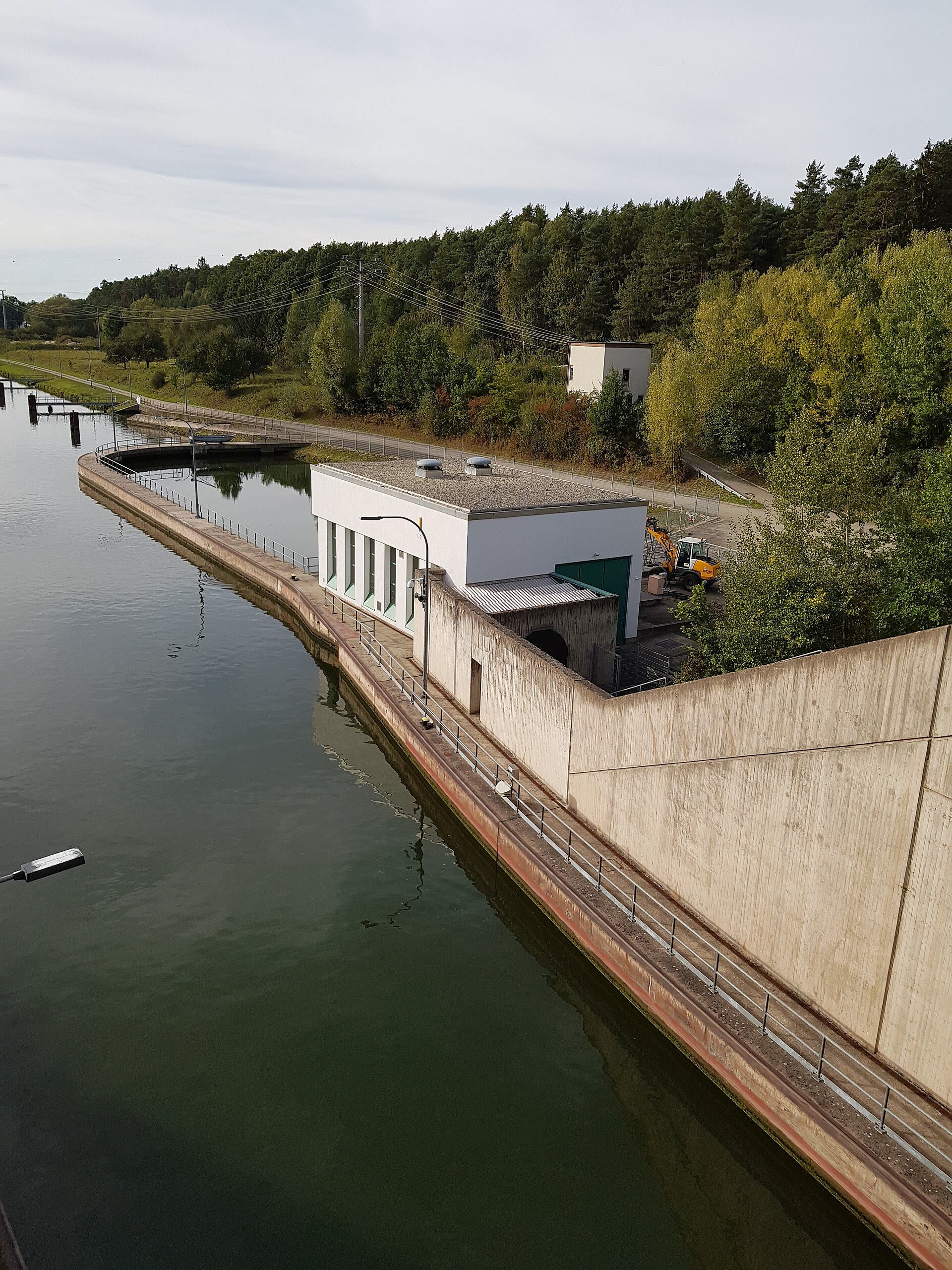
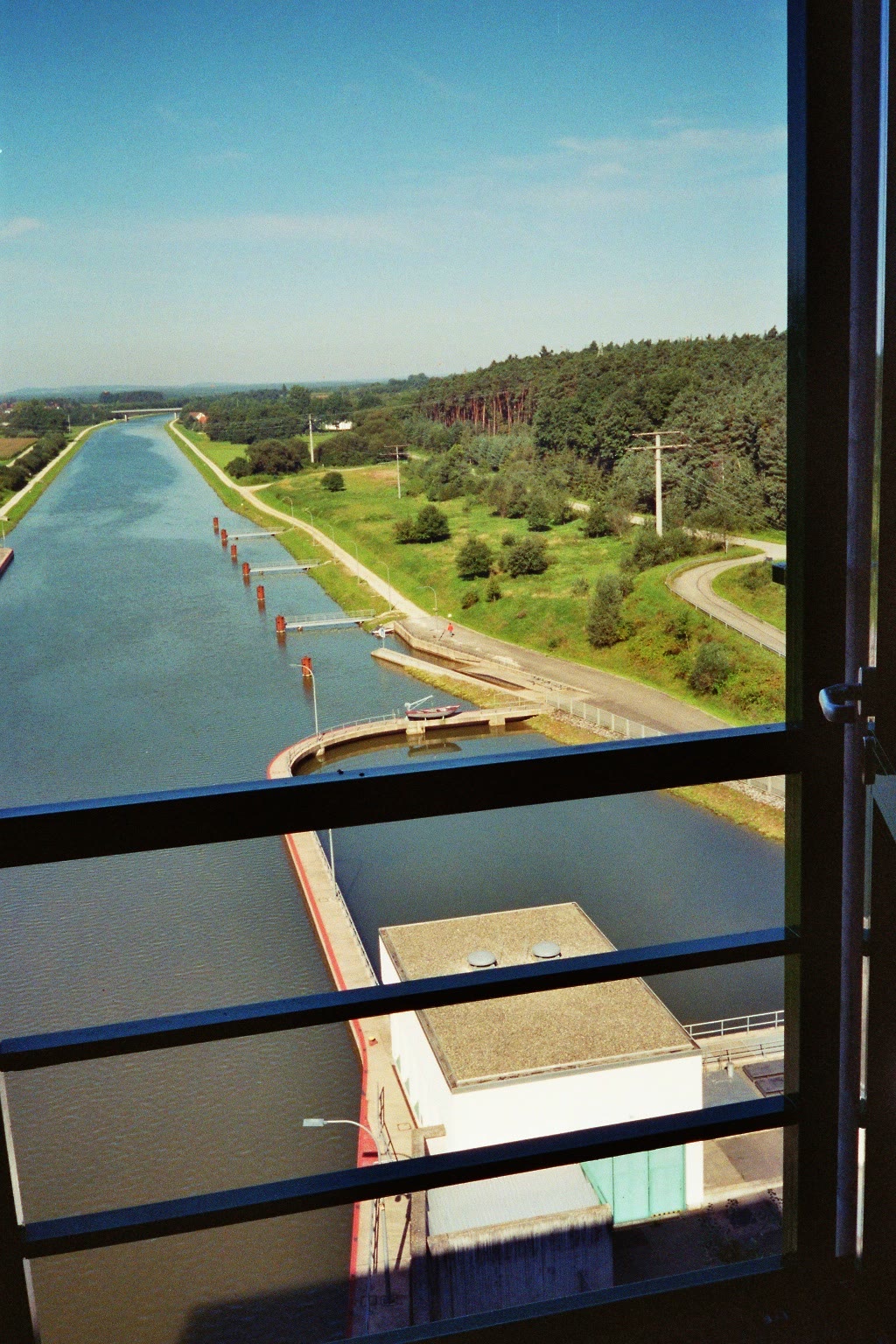
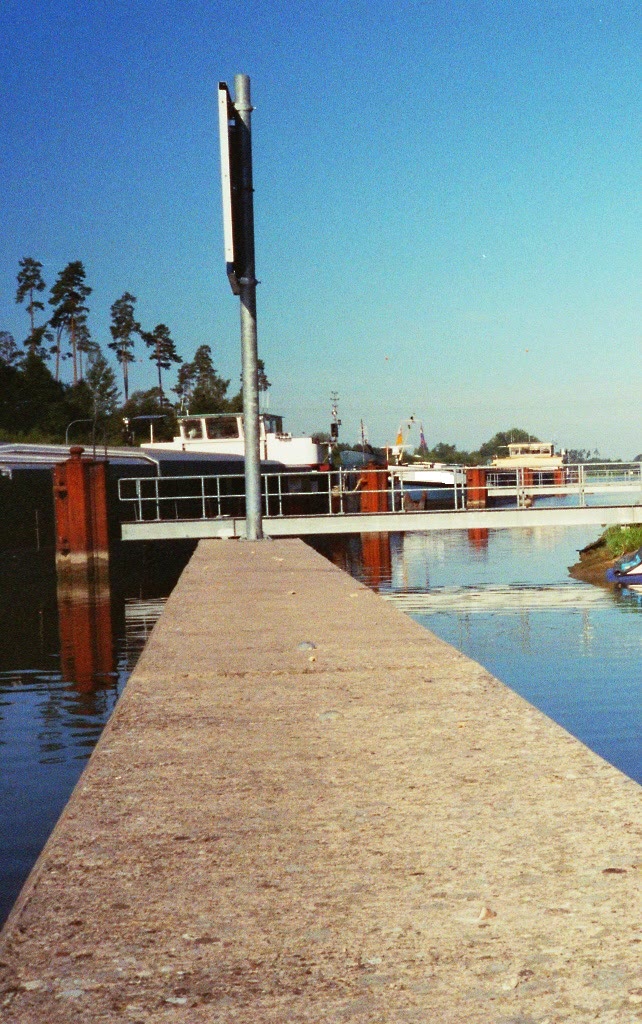
And now the strangest sailing of the whole voyage. At Bamberg we leave the Main and enter the Main-Danube Canal, a waterway dug in our own lifetimes — finished in nineteen ninety two — that climbs through the Franconian hills on sixteen locks to the summit level, four hundred and six metres above the sea. This is the roof of Europe: the watershed between the Rhine and the Danube, between the North Sea and the Black Sea. The Zwaluw rises in the locks like a lift going up through the fields, and at the top the water lies still and green between the meadows, and the signposts say what no skipper of the old days would have believed — that a boat can cross the continent without ever leaving the water. We tie up at the summit pound as the evening comes down, and I stand on the bank and think about it: a ditch, dug by men, that joins two seas. The Romans dreamed it. Charlemagne tried it. We are sailing it. Tomorrow we go down the other side, sixteen locks to the Danube, and the river that carried us from Amsterdam becomes a different river entirely.
The Canal Summit — the Roof of Europe — our interpretation, created from the reference photographs belowReference photographs — The Canal Summit — the Roof of Europe · 3 photographs
Kelheim — Where the Danube Begins
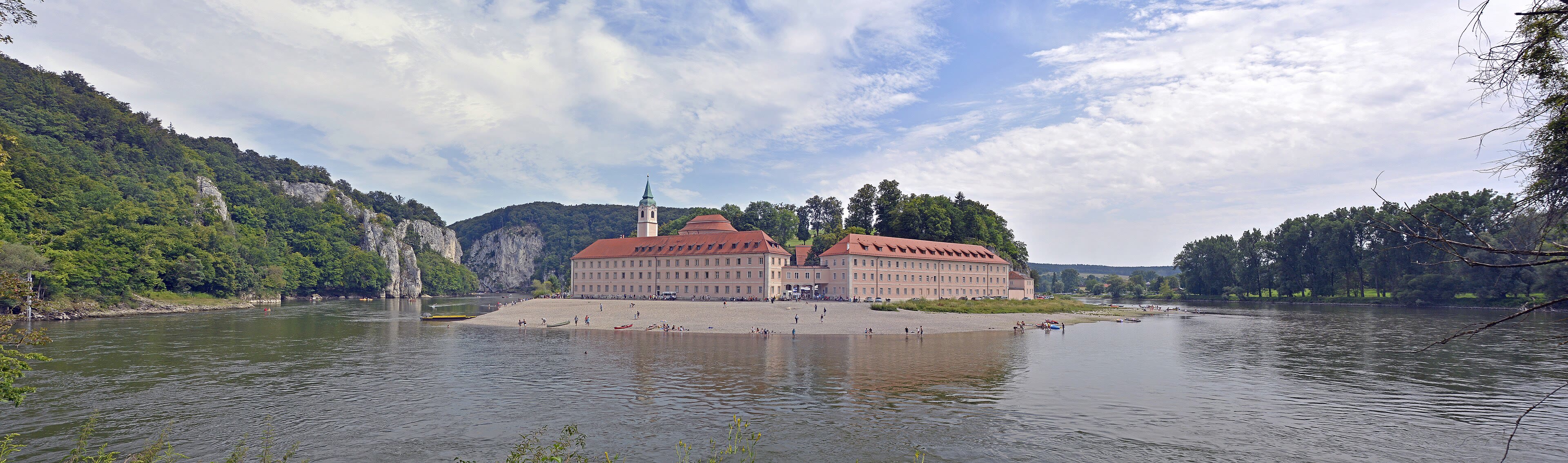
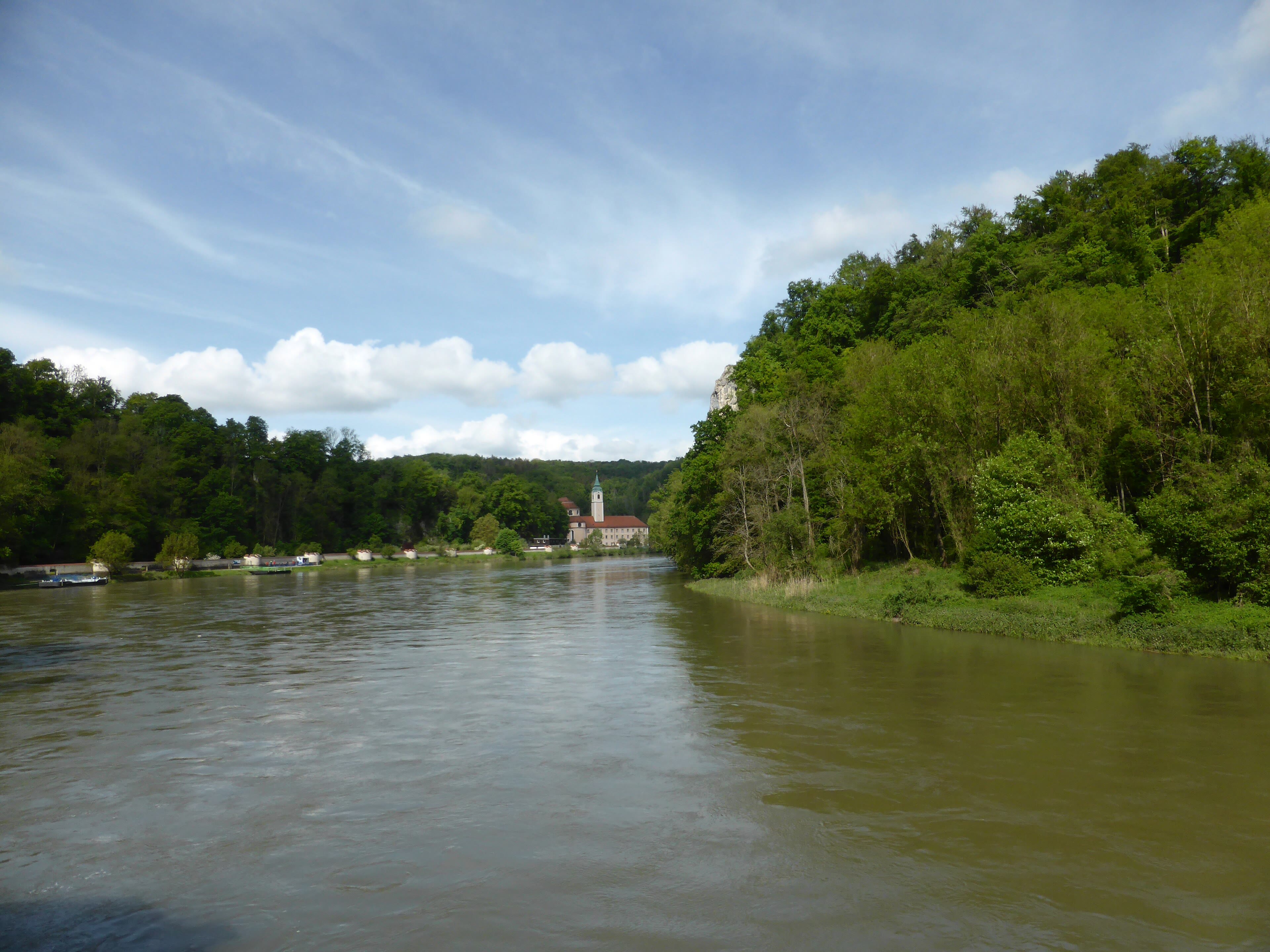
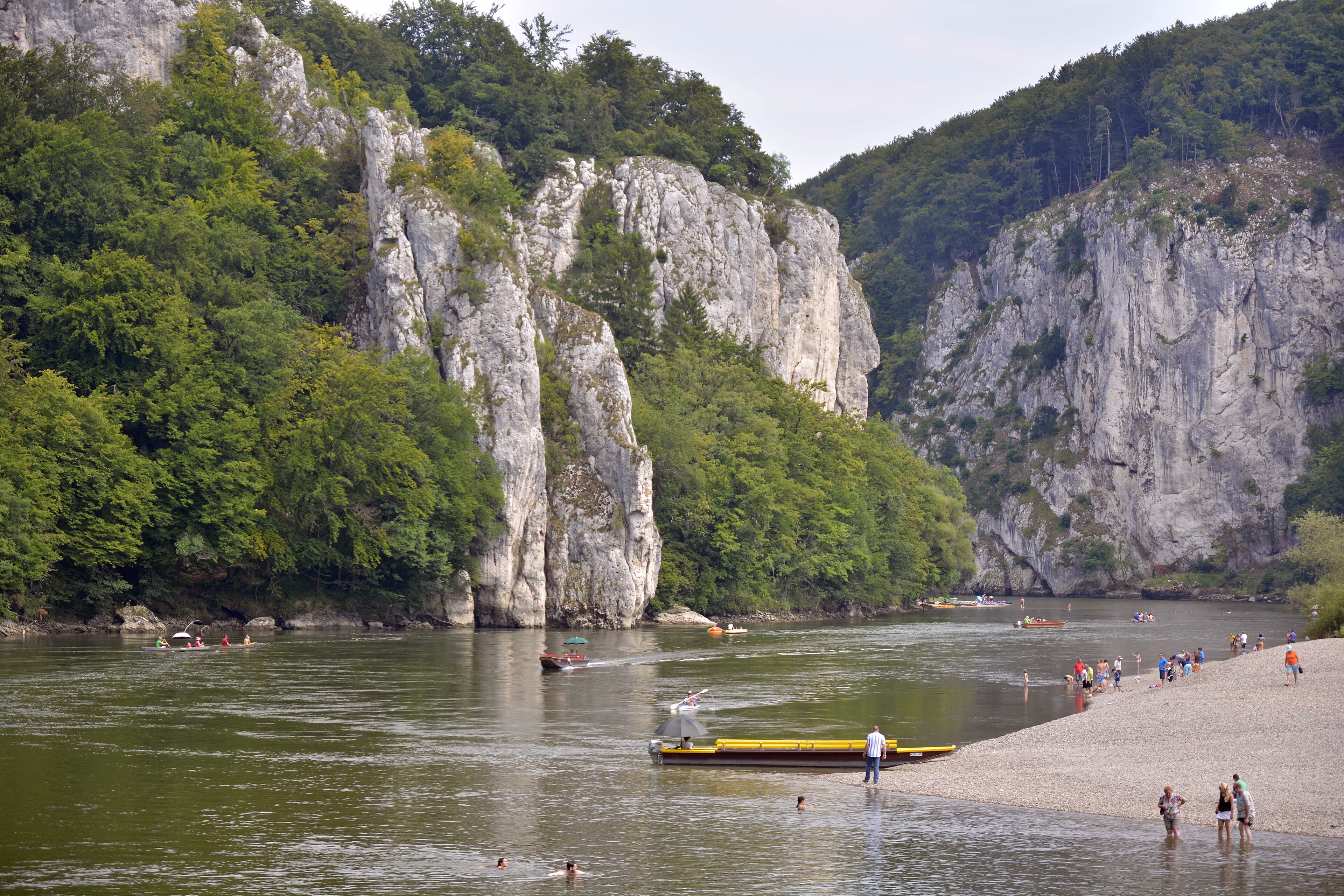
We come down the canal locks in a long green staircase, and at Kelheim the water opens and there it is: the Danube, wide and brown and serious, rolling out of the west toward Vienna and the Black Sea. Kelheim is the door to it — a small town at the mouth of the canal, with the great hall of Befreiungshalle, the Hall of Liberation, standing on its hill above the river like a crown. But the sight that owns this place is just upstream: the Danube Gorge, the Donaudurchbruch, where the river squeezes between towering limestone cliffs at Weltenburg, and the abbey there has brewed beer since ten fifty, the oldest monastic brewery in the world. I take the Zwaluw into the gorge at the golden hour, the cliffs standing close on both sides, the water green and deep, and I think about what we have done. Amsterdam to Kelheim: down the Rhine, up the Main, over the roof of Europe, and now the Danube. A thousand kilometres of water behind us, and two thousand ahead. The journey turns again tonight — eastward, properly, into the Danube's own country. Vienna is waiting. The Black Sea is waiting. We go on.
See this place in the galleryKelheim — Where the Danube Begins — our interpretation, created from the reference photographs belowReference photographs — Kelheim — Where the Danube Begins · 3 photographs
Chapter Four — The Danube to Vienna
7 scenes · 21 reference photographs
Regensburg — the Stone Bridge City
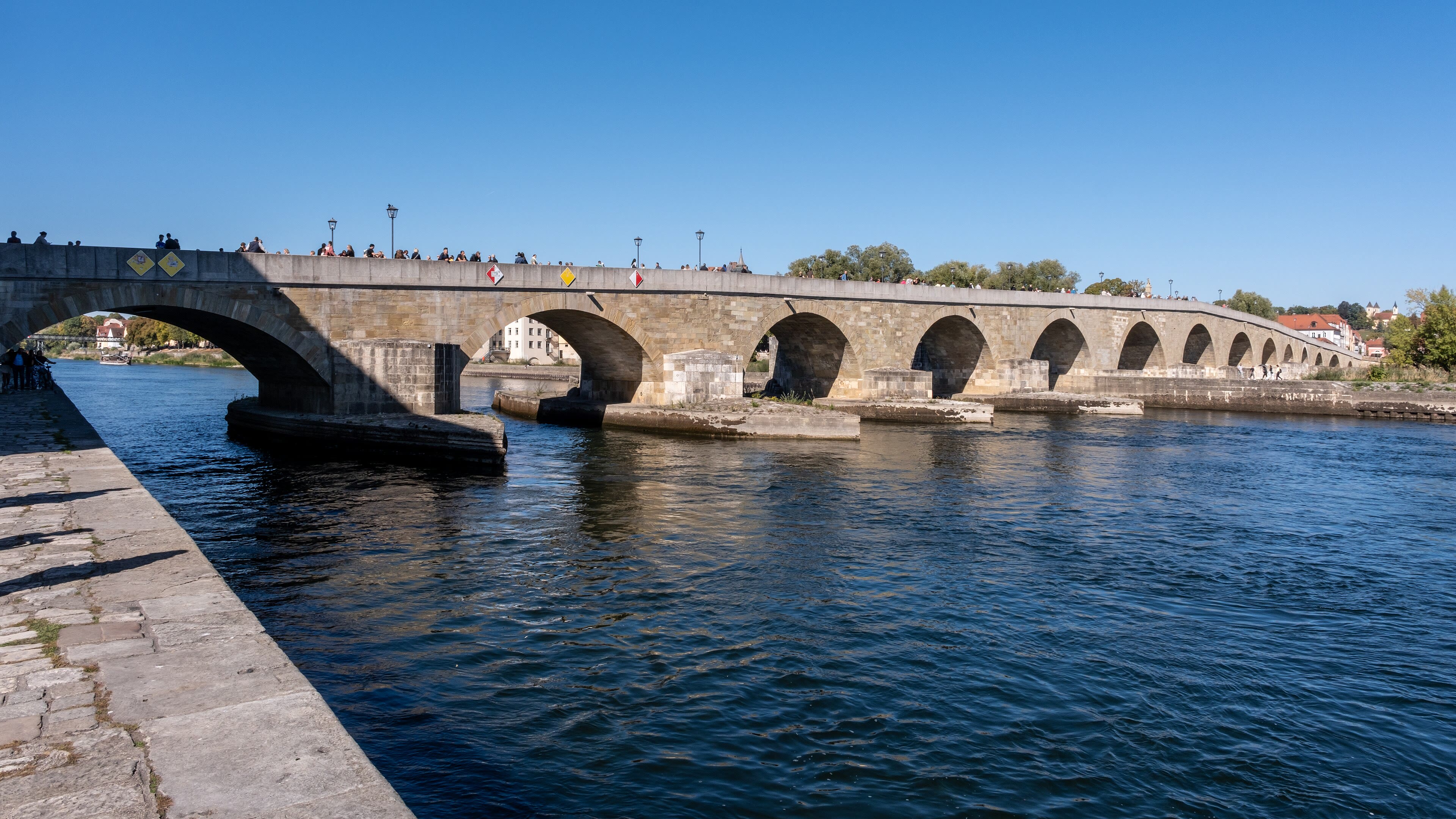
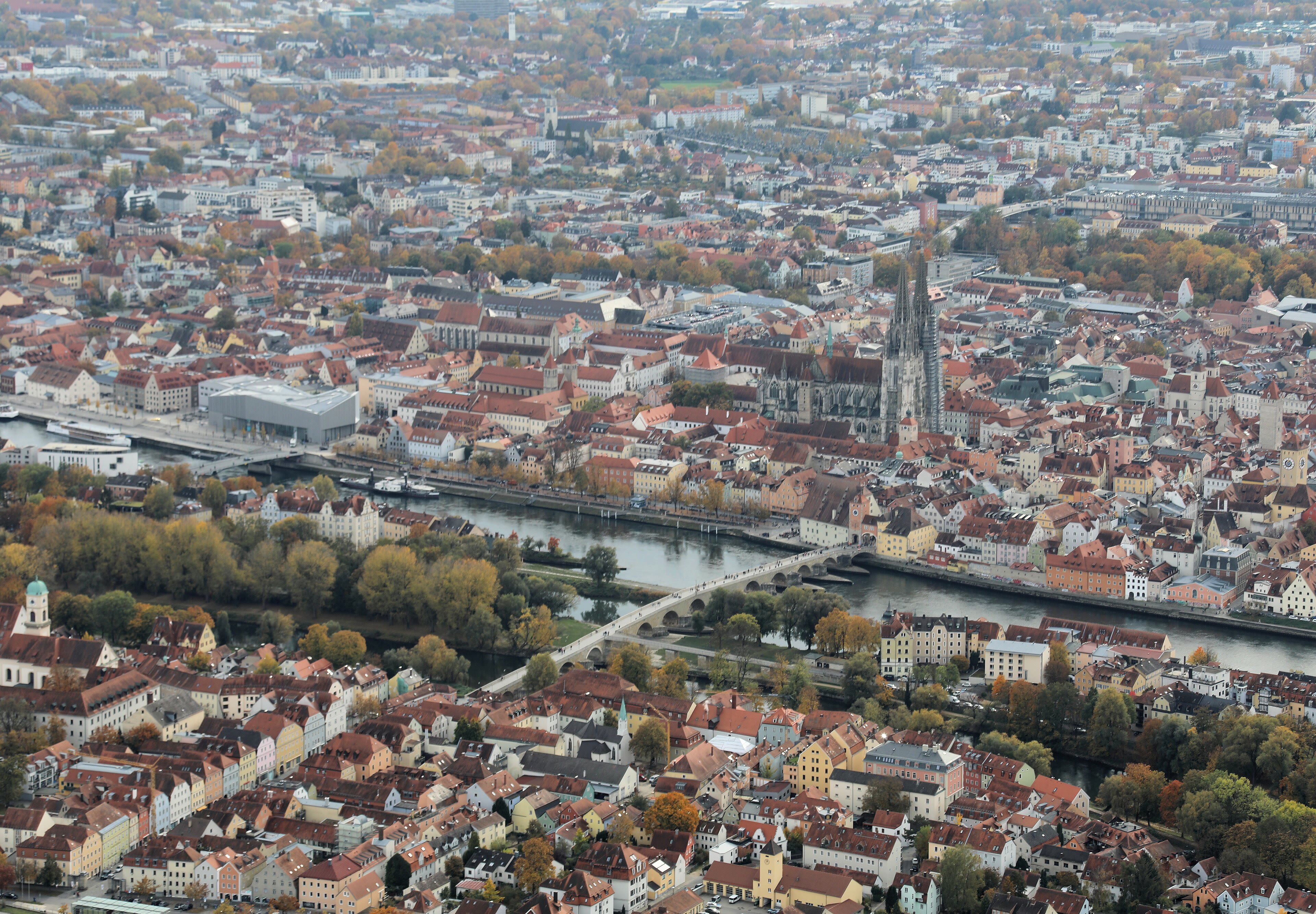
The Danube at Kelheim was a promise; at Regensburg it becomes a city. We come down the river in the morning and the old town rises on the south bank in a wash of towers — the cathedral's twin spires, the patrician towers the merchant families built to out-stare each other, and in front of it all the Stone Bridge, twelve arches of it, thrown across the river in the eleven hundreds and still carrying the traffic of a living city. Regensburg kept what the wars took from other towns: an entire medieval city, a World Heritage site, with a sausage kitchen by the bridge that has fed travellers since the bridge builders themselves ate there. I tie up below the old town and walk the lanes — Italian courtyards hidden behind German gables, a Roman gate still standing in the wall, the Porta Praetoria, older than everything. The Danube here is wide and confident, an imperial river, and the Zwaluw rides a little smaller on it. That is the truth of this chapter: from here to Vienna the river is the main character, and we are all just passing through its story.
See this place in the galleryRegensburg — the Stone Bridge City — our interpretation, created from the reference photographs belowReference photographs — Regensburg — the Stone Bridge City · 3 photographs
Passau — Where Three Rivers Meet
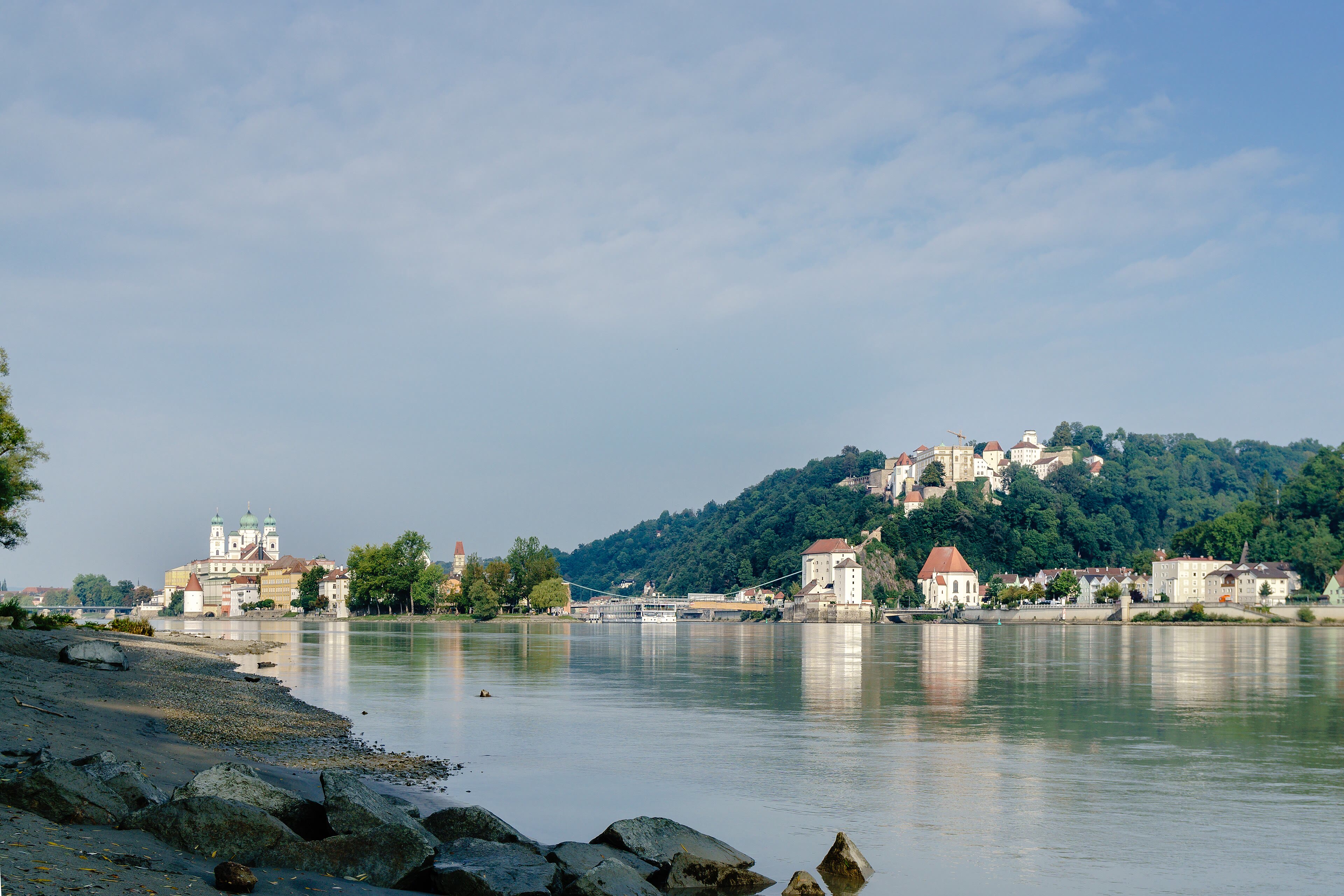
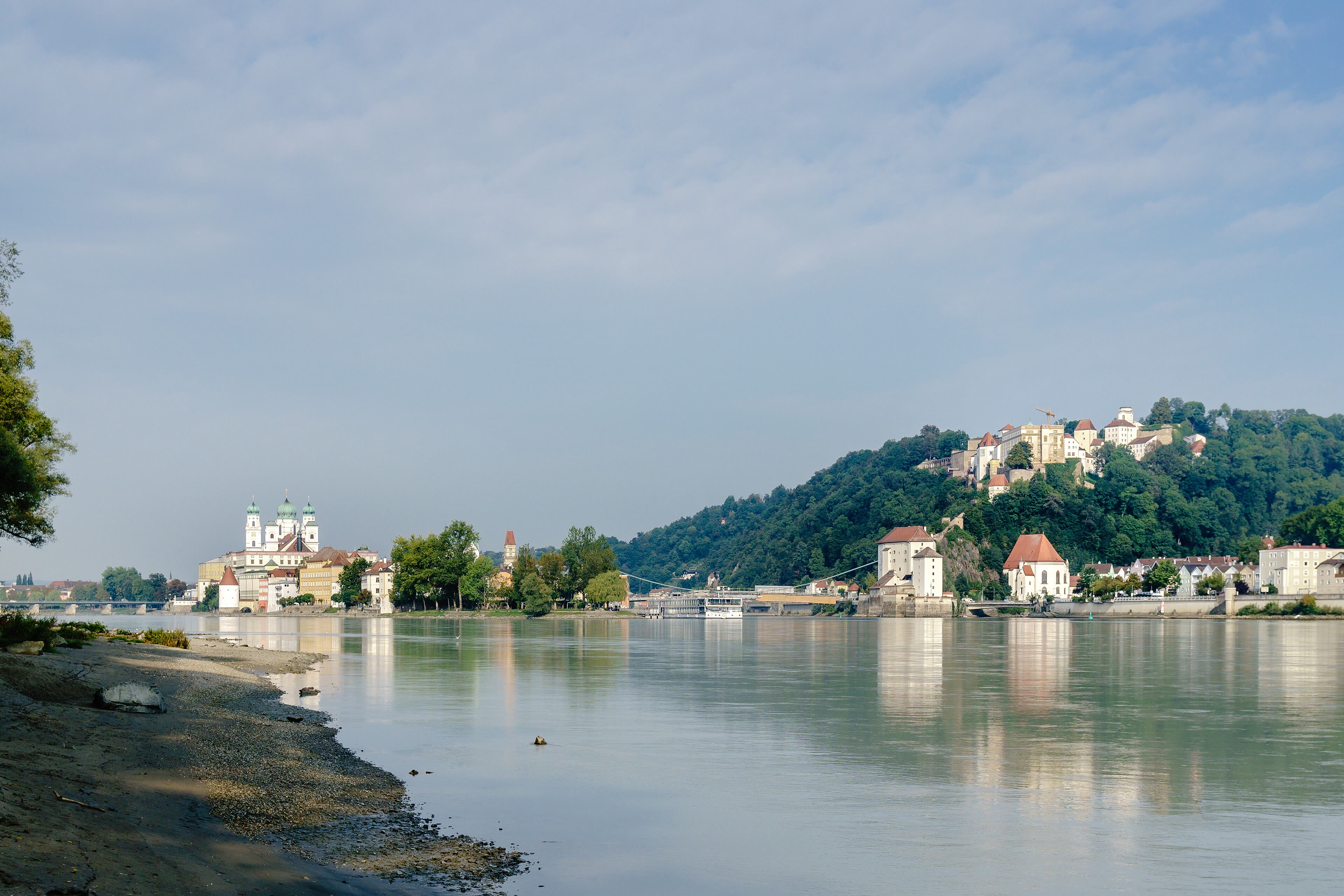
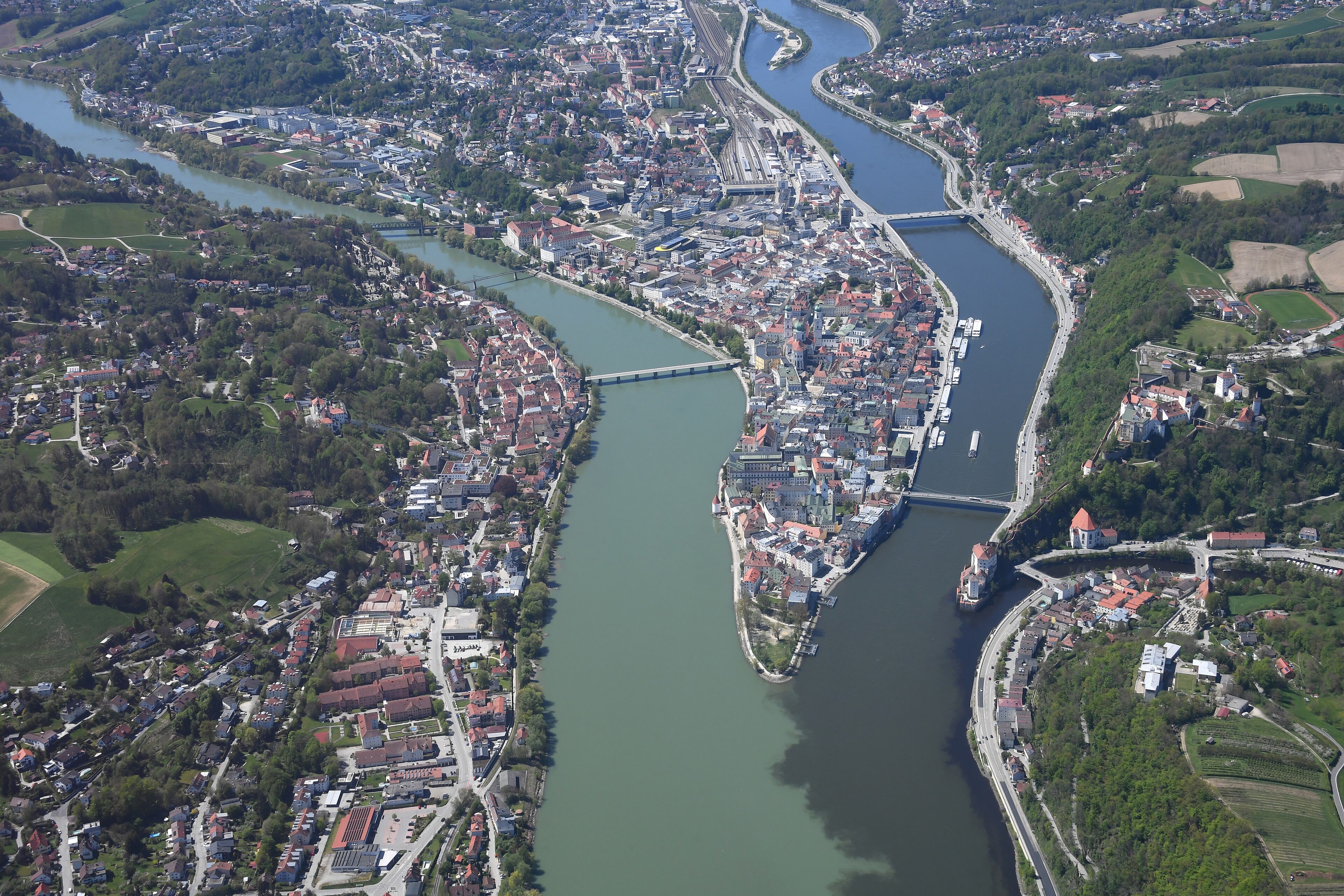
Passau is a confluence with a cathedral on top. Three rivers arrive here from three directions and three colours: the Inn comes down from the Alps green and milky with glacier water, the Ilz creeps in black from the Bavarian Forest, and the Danube rolls through blue-grey and broad — and at the point of the old town you can stand and watch the three waters braid together and sort themselves out into one river. The town between them is a ship's prow of baroque streets, rebuilt in Italian style after a great fire, all pastel facades and little squares, and above it rides St Stephen's Cathedral with the largest cathedral organ on earth — seventeen thousand, nine hundred and seventy four pipes of it, which is a number I say out loud on the boat every time, because it deserves saying. On the far hill the Veste Oberhaus fortress watches the meeting of the waters as it has for eight hundred years. We take the evening light on the point, where the three rivers argue and agree. Tomorrow, Austria — and the river puts on its mountains.
See this place in the galleryPassau — Where Three Rivers Meet — our interpretation, created from the reference photographs belowReference photographs — Passau — Where Three Rivers Meet · 3 photographs
Linz — the Danube’s Iron City
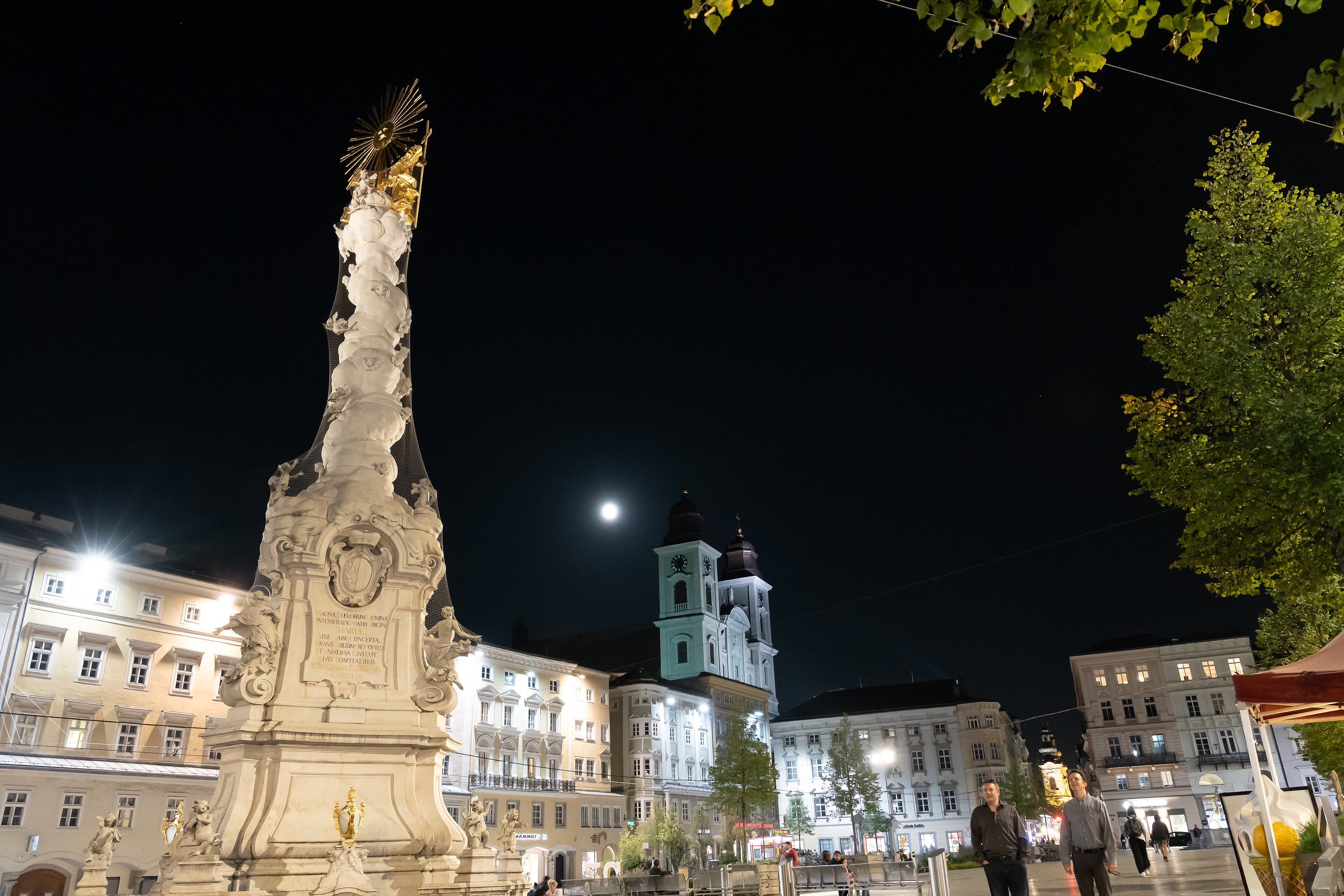
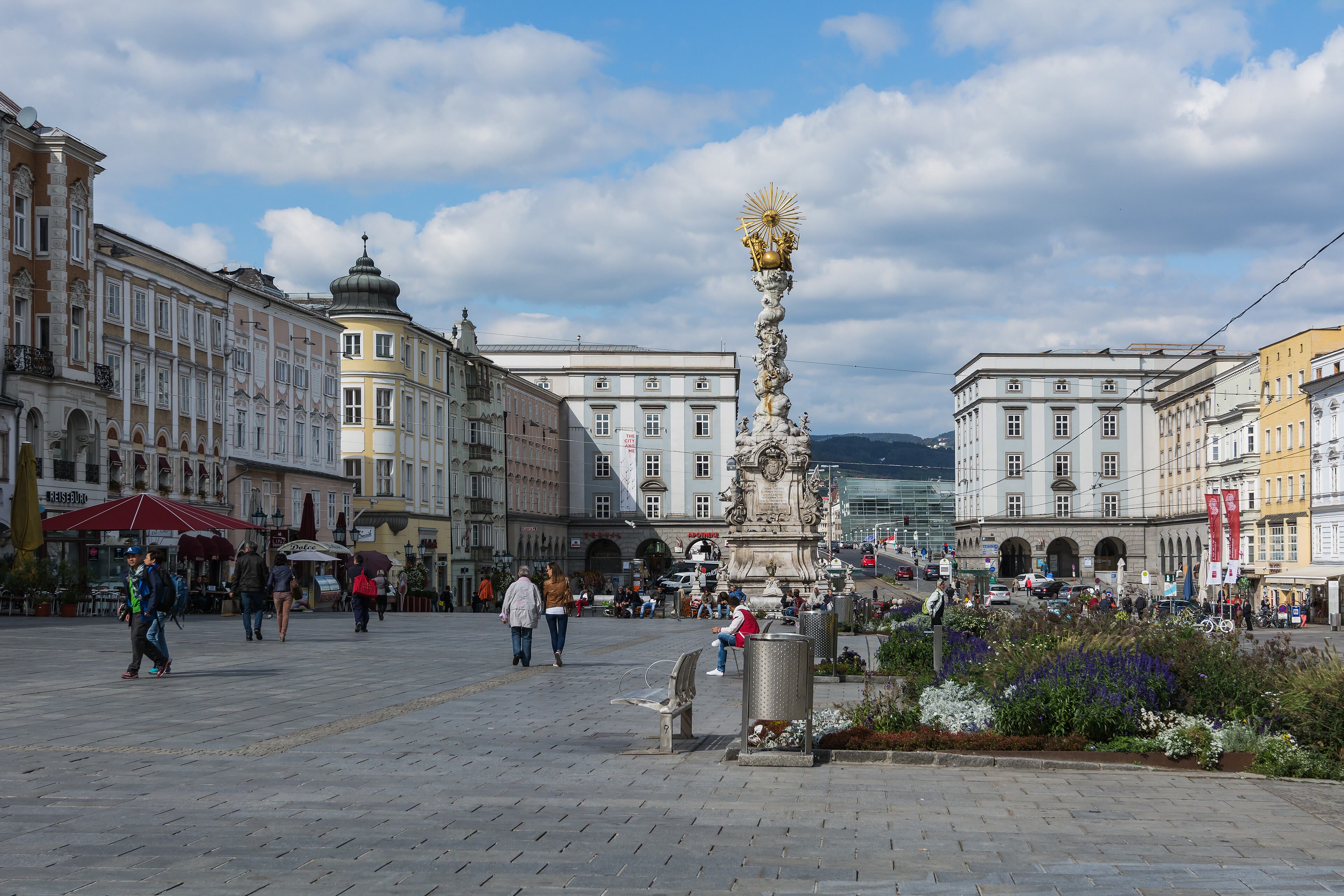
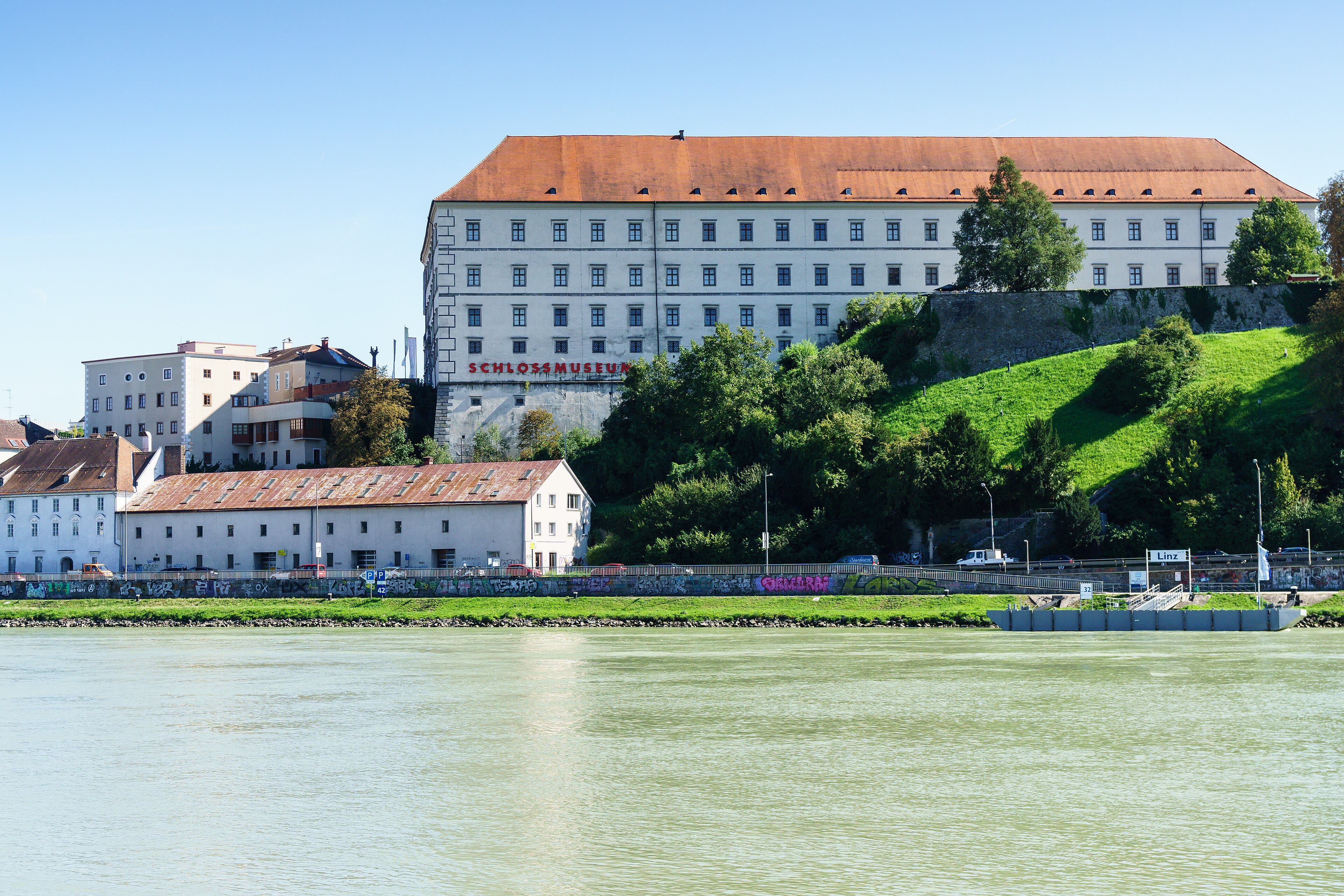
Linz announces itself honestly: first the great steelworks on the north bank, the chimneys and the blue haze of a working river city, and then, as the bend opens, the old town — a handsome baroque main square, a Trinity column of white marble, and the castle on its hill above the water. This is the Danube's industrial heart and it has never apologised for it, and I like Linz the better for that. But the new Linz stands beside the old: the Ars Electronica Center glows on the north bank after dark like a lantern, a museum of the future in a city of steel, and the Lentos art museum stretches along the south bank in glass. The Zwaluw ties up below the old town and I climb to the castle at dusk, where the museum keeps the whole story — Romans, steel, and all. Below us the Danube bends away east, wide and patient, and the hills begin to gather on both banks. The river is narrowing its eyes. Ahead of us now: the Wachau, where the Danube becomes a poem, and even an iron city seems to lower its voice as we leave.
See this place in the galleryLinz — the Danube’s Iron City — our interpretation, created from the reference photographs belowReference photographs — Linz — the Danube’s Iron City · 3 photographs
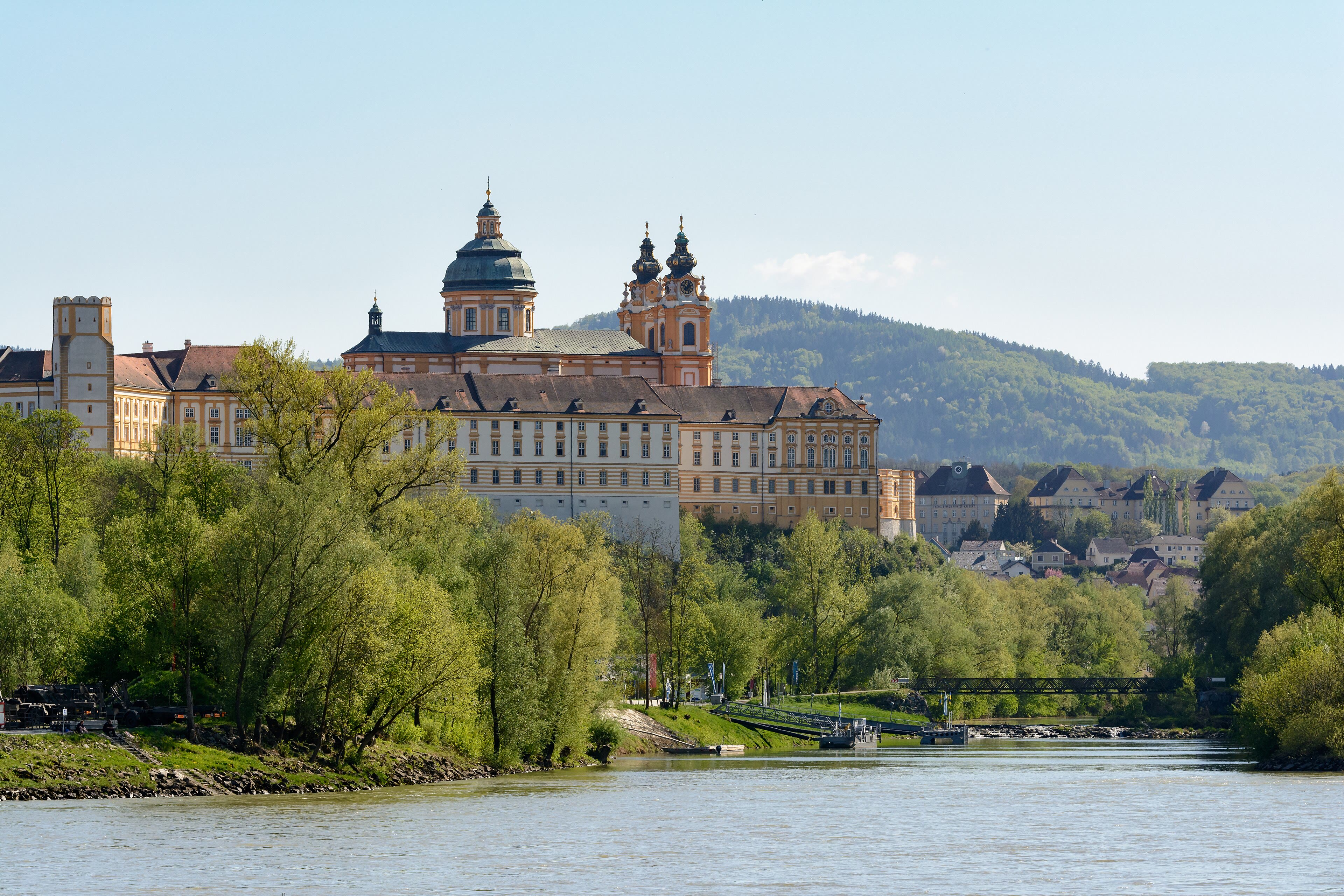
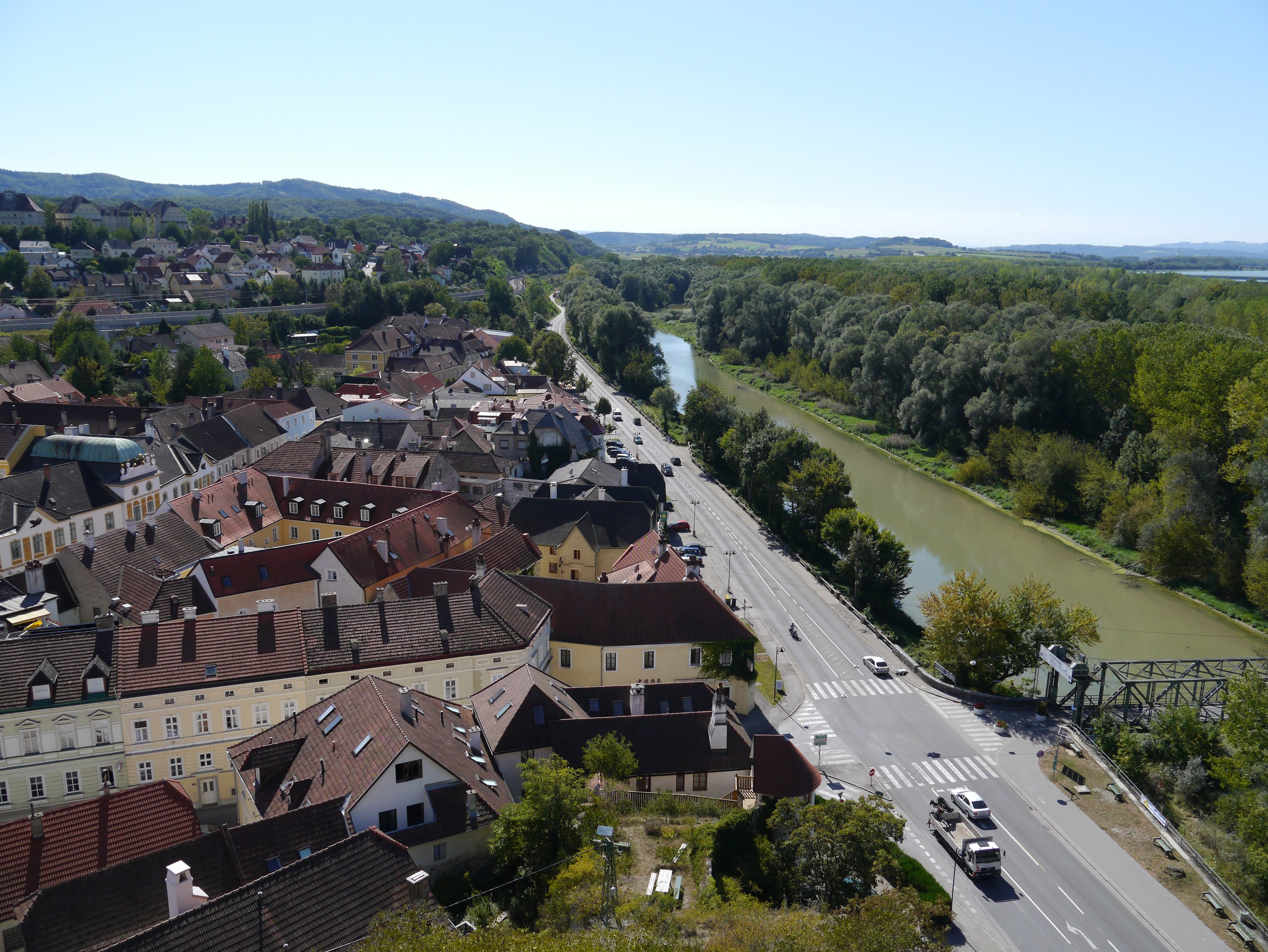
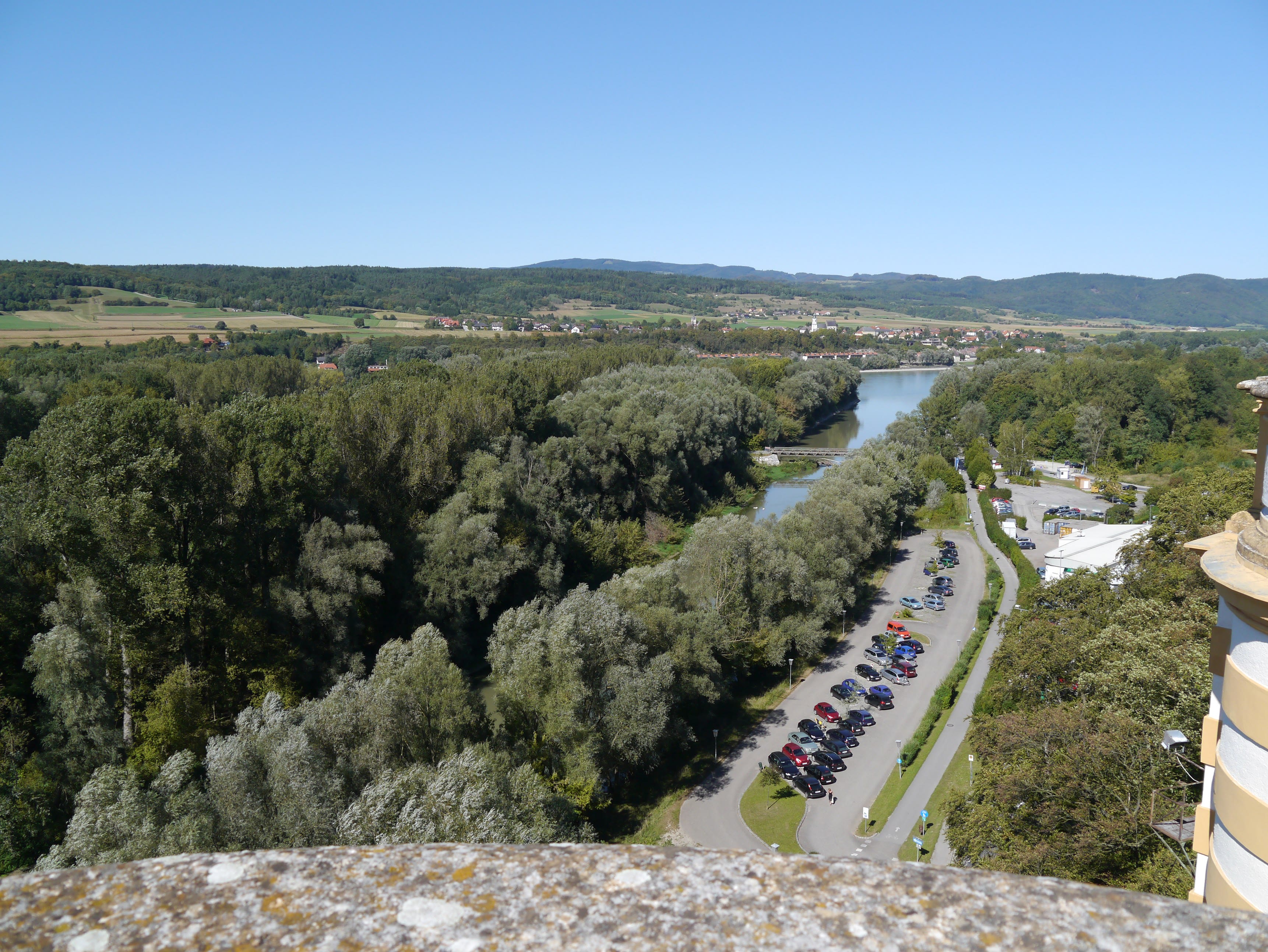
Melk — the Golden Abbey
The Wachau begins with a chord struck in gold. Melk Abbey stands on its rock above the river like a palace that decided to be a monastery — three hundred metres of baroque facade, honey-coloured, with its great church dome riding above the Danube bend. The Benedictines have been up there for over nine hundred years, and the view from their terrace is the valley's front door: the river swinging wide below, the vineyards beginning, the little town of Melk gathered at the rock's foot like a congregation. I climb the abbey stairs in the morning — the marble hall, the library with its medieval manuscripts, the church itself all gold and light — and I come down slowly, because places like this should be left at walking pace. The Zwaluw waits at the landing stage, and the river below the abbey is already changing its nature: the banks close in, the hills put on their vineyard terraces and their apricot orchards, and the Danube, which has been a working river since Amsterdam, becomes something else entirely. Thirty kilometres of the prettiest river in Europe. We go in gently.
See this place in the galleryMelk — the Golden Abbey — our interpretation, created from the reference photographs belowReference photographs — Melk — the Golden Abbey · 3 photographs
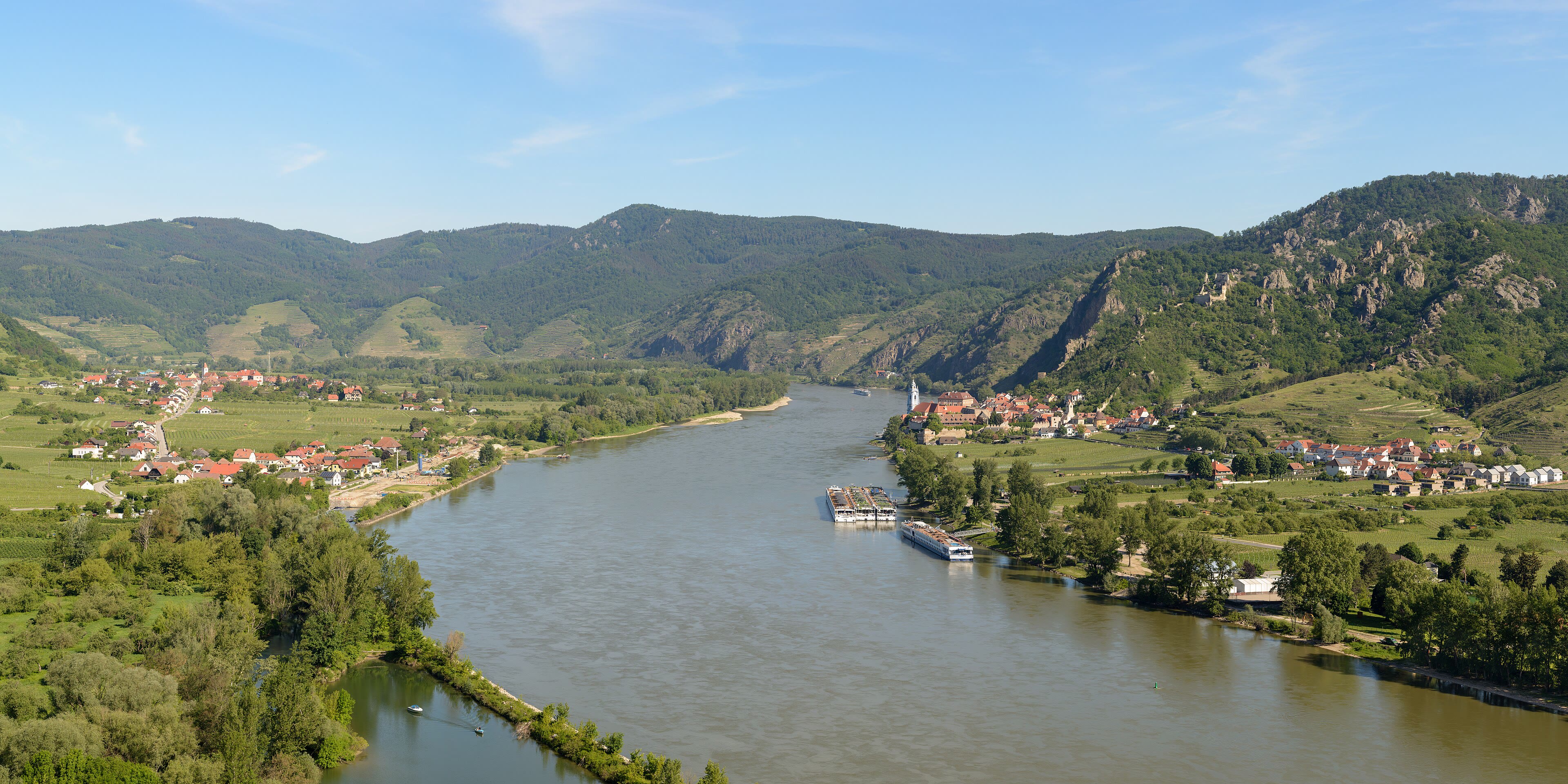
Dürnstein — the Blue Tower
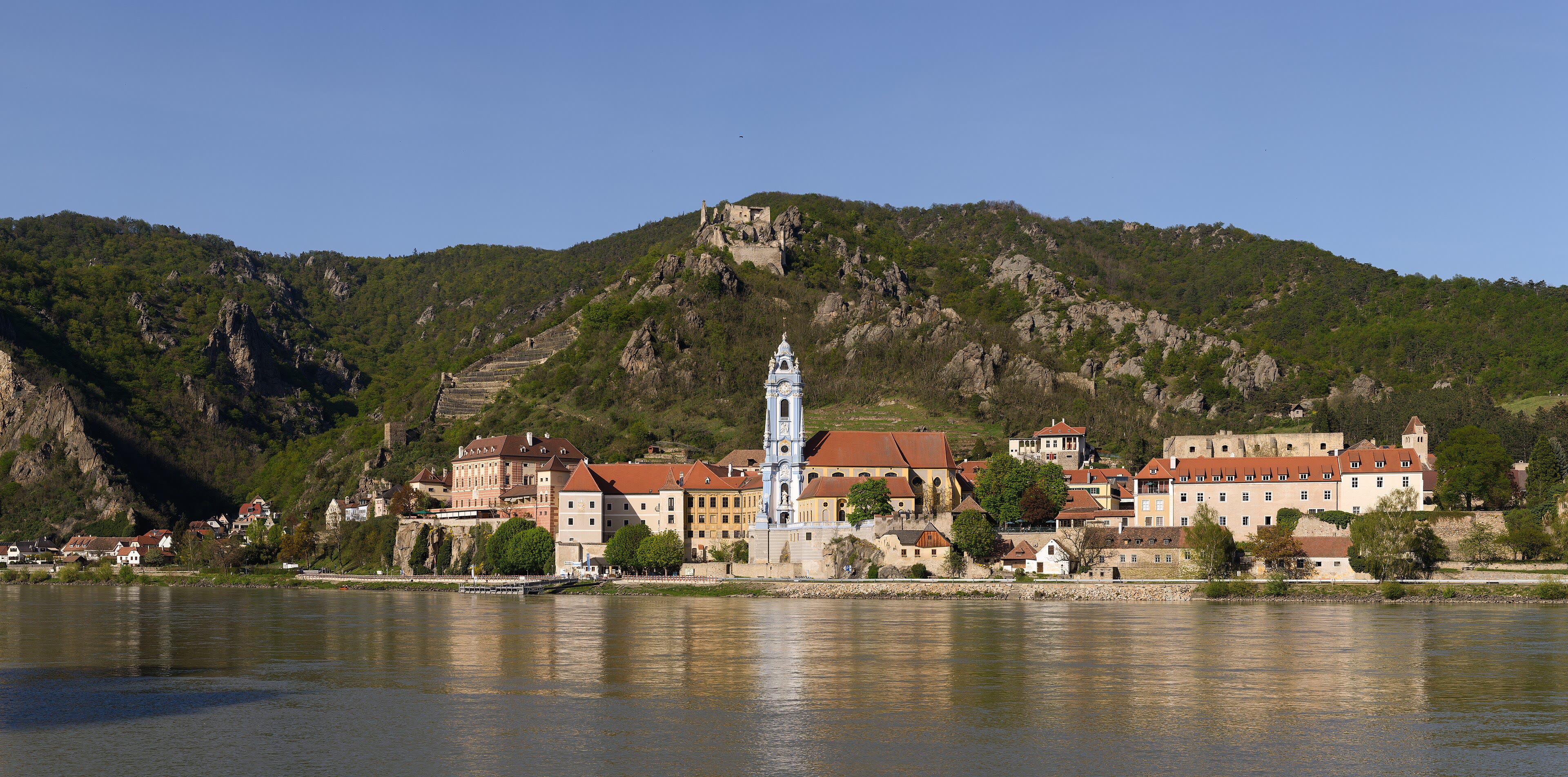
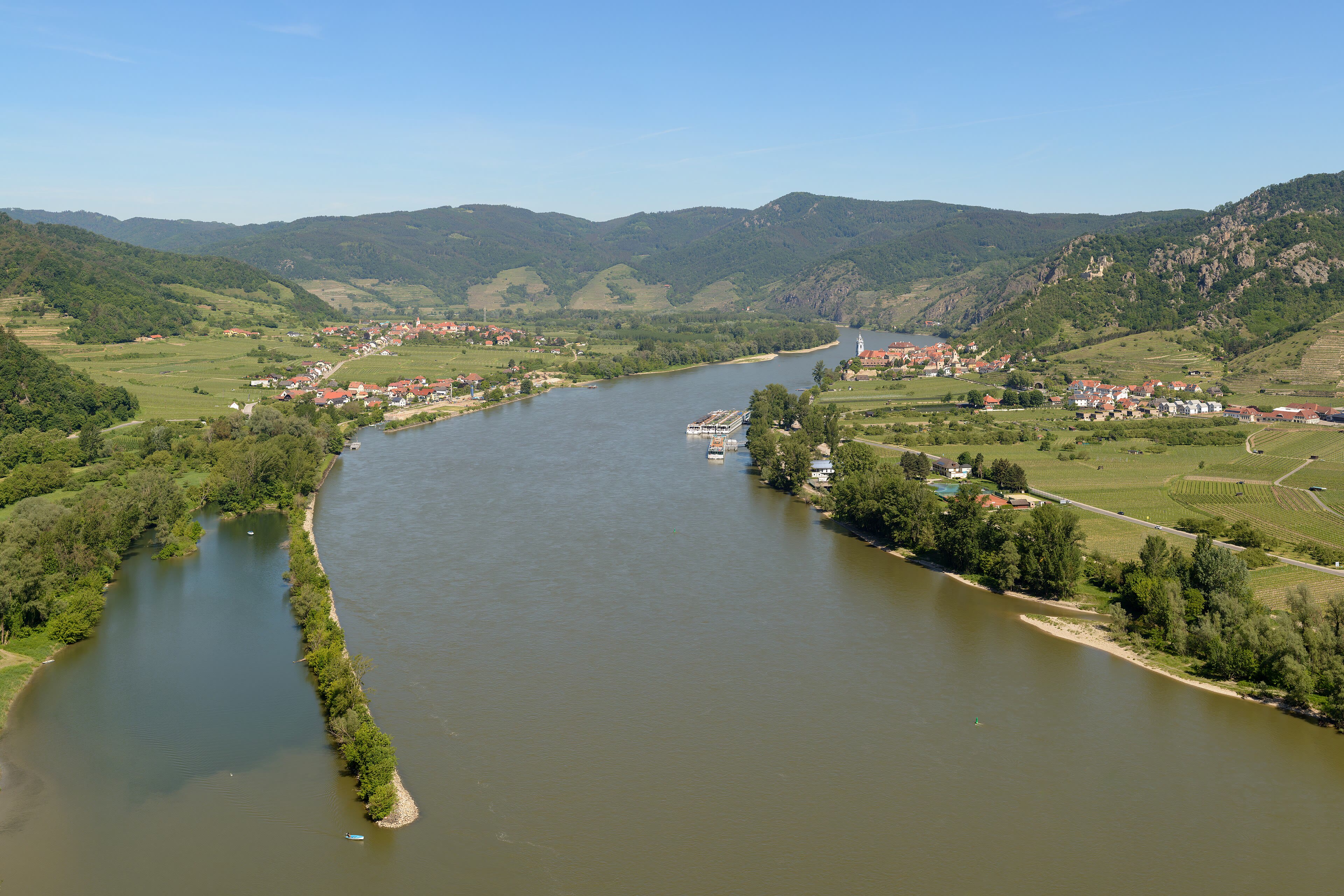
If the Wachau has a postcard, it is Dürnstein. The little town is one street long, squeezed between the river and the terraced vines, and above its rooftops the collegiate church raises a tower of powder blue and white — a baroque exclamation mark you can see from half the valley. High on the crag behind the town stand the ruins of the castle where Richard the Lionheart was held for ransom on his way home from the Crusades, until England paid a king's fortune in silver to buy him back. The story flavours the place like its apricot brandy. For Dürnstein is also the Wachau in a glass and on a plate: apricots in everything — jam, dumplings, schnapps — and the great Rieslings and Grüner Veltliners grown on stone terraces the Romans planted, in vineyards so steep the harvest is still done by hand. We tie up at the landing and I take a glass of the local wine at a heuriger as the light goes down the valley, and the blue tower turns the colour of deep water. Some stops are sights. Dürnstein is a mood, and it does not let go quickly.
See this place in the galleryDürnstein — the Blue Tower — our interpretation, created from the reference photographs belowReference photographs — Dürnstein — the Blue Tower · 3 photographs
Krems — the Wachau’s Gate
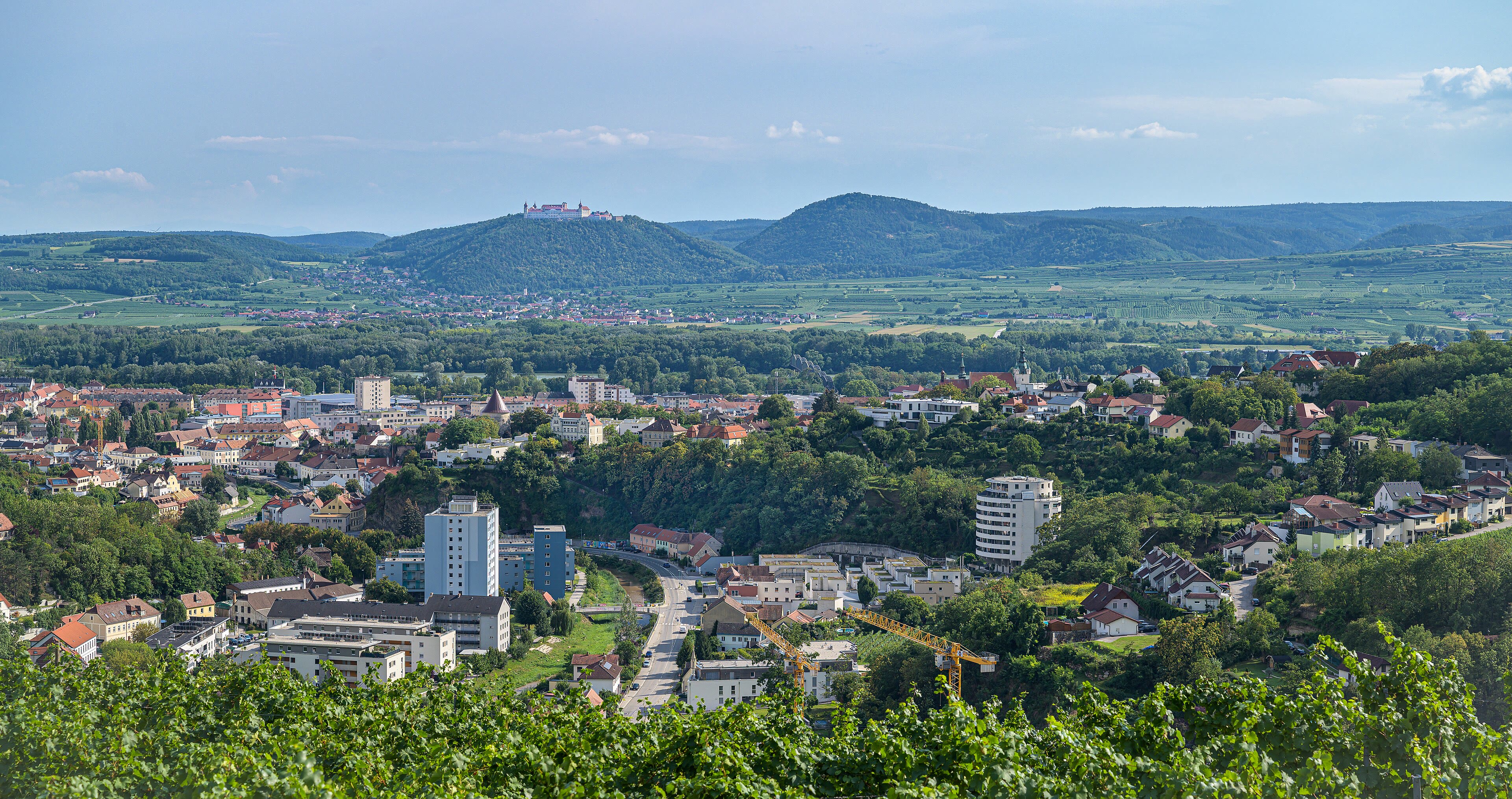
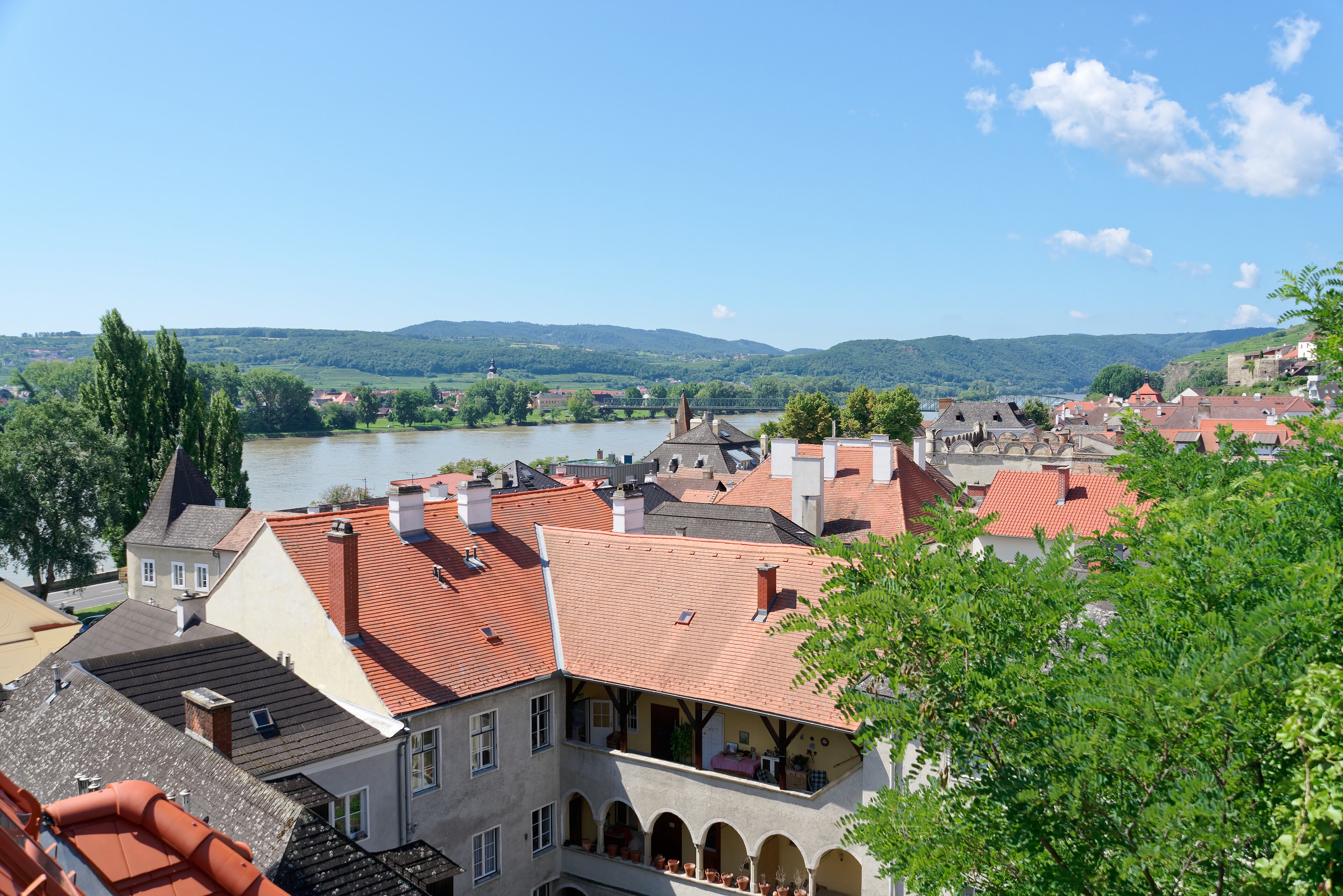
Krems is where the Wachau exhales — the valley opens, the hills step back, and the old wine town spreads along the north bank in a long, handsome line of gabled houses and church towers. It is one of the oldest towns in Austria, older than Vienna in its charter, and it carries its age the way its wine carries the stone of the terraces: quietly, in the flavour. The Steiner Tor, the old town gate, still stands at the end of the lane; the Piarist church climbs its hill; and between them the town goes about the serious business of wine — Krems is the valley's merchant, the place where the Wachau's Rieslings were loaded onto river boats for a thousand years. I walk the long main street at the blue hour, past the wine taverns lighting their lamps, and think about how this whole valley is a collaboration between a river and the people who refused to leave its banks. Tomorrow we ride the last green miles and the river delivers us to an imperial capital. But tonight belongs to Krems, and a glass of something cold and golden, raised to the valley behind us.
See this place in the galleryKrems — the Wachau’s Gate — our interpretation, created from the reference photographs belowReference photographs — Krems — the Wachau’s Gate · 3 photographs
Vienna — the Waltz at the River’s Edge
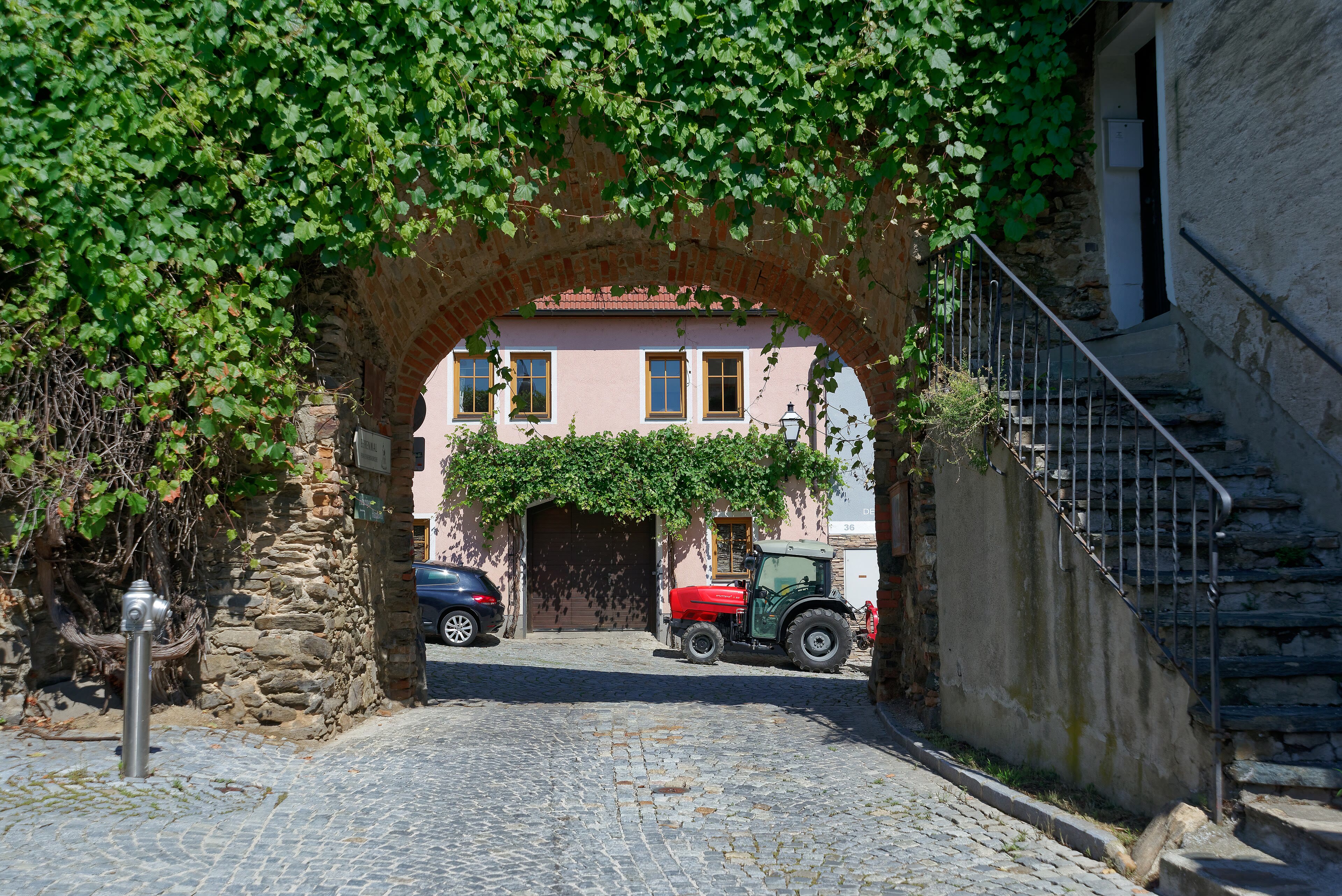
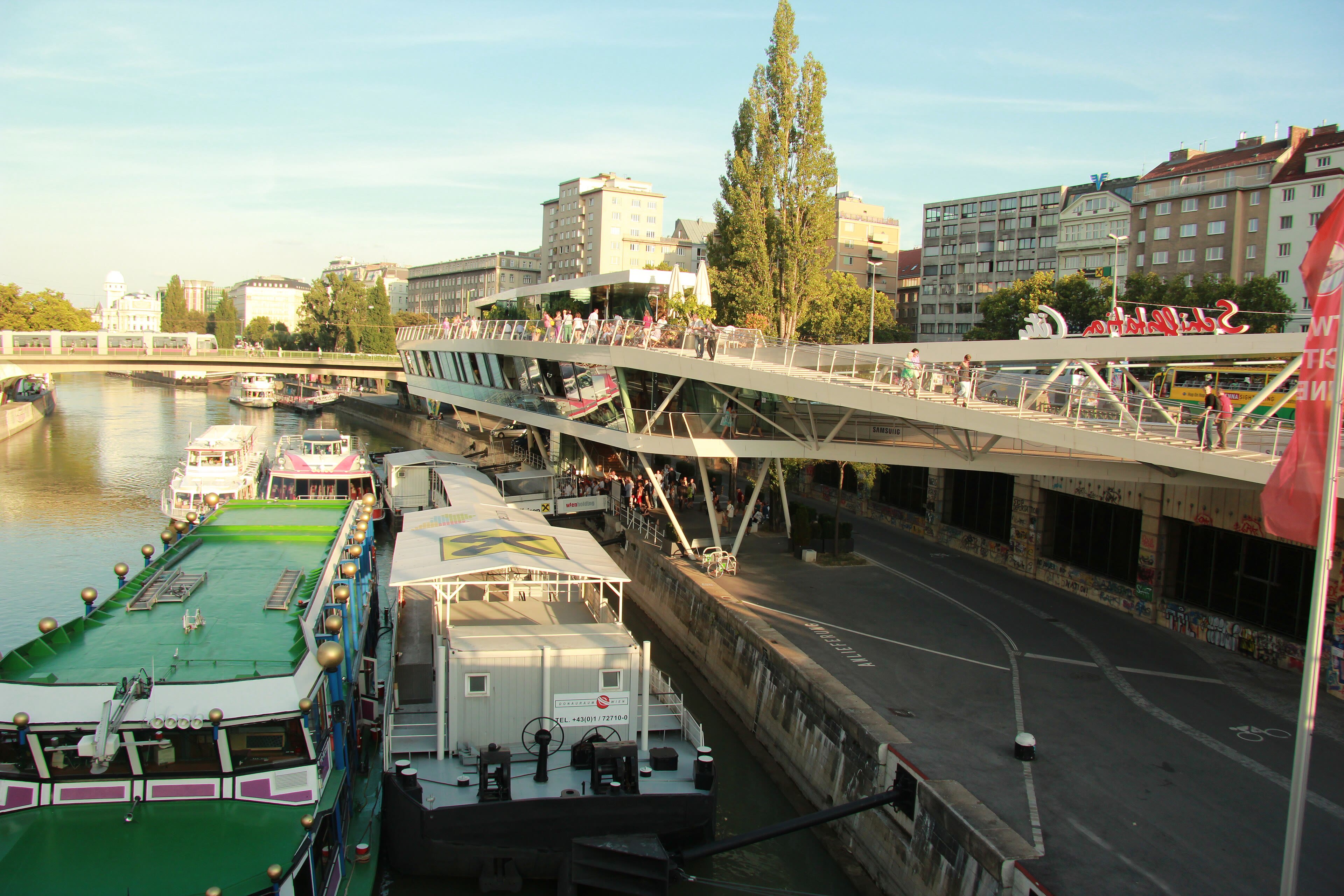
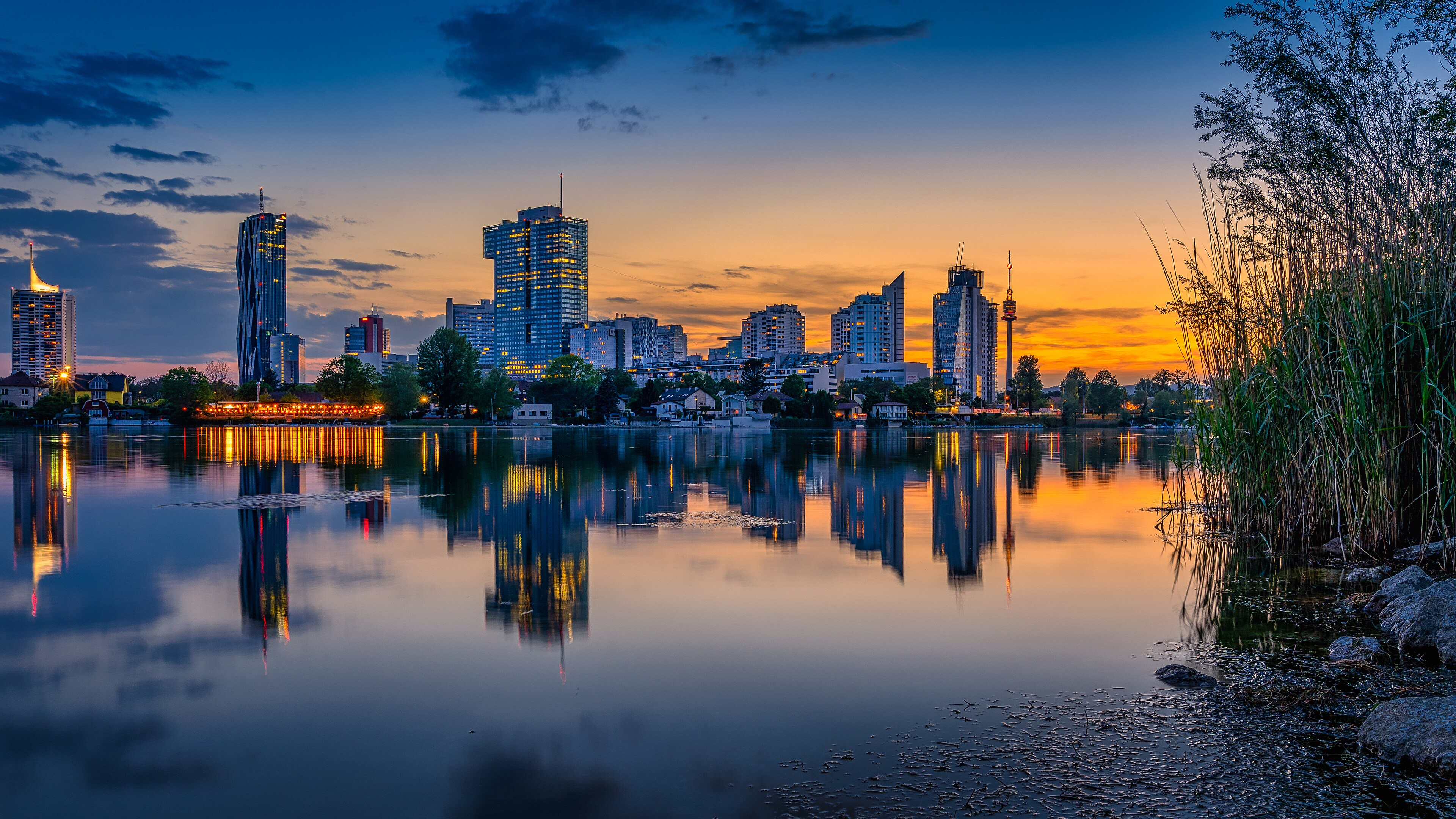
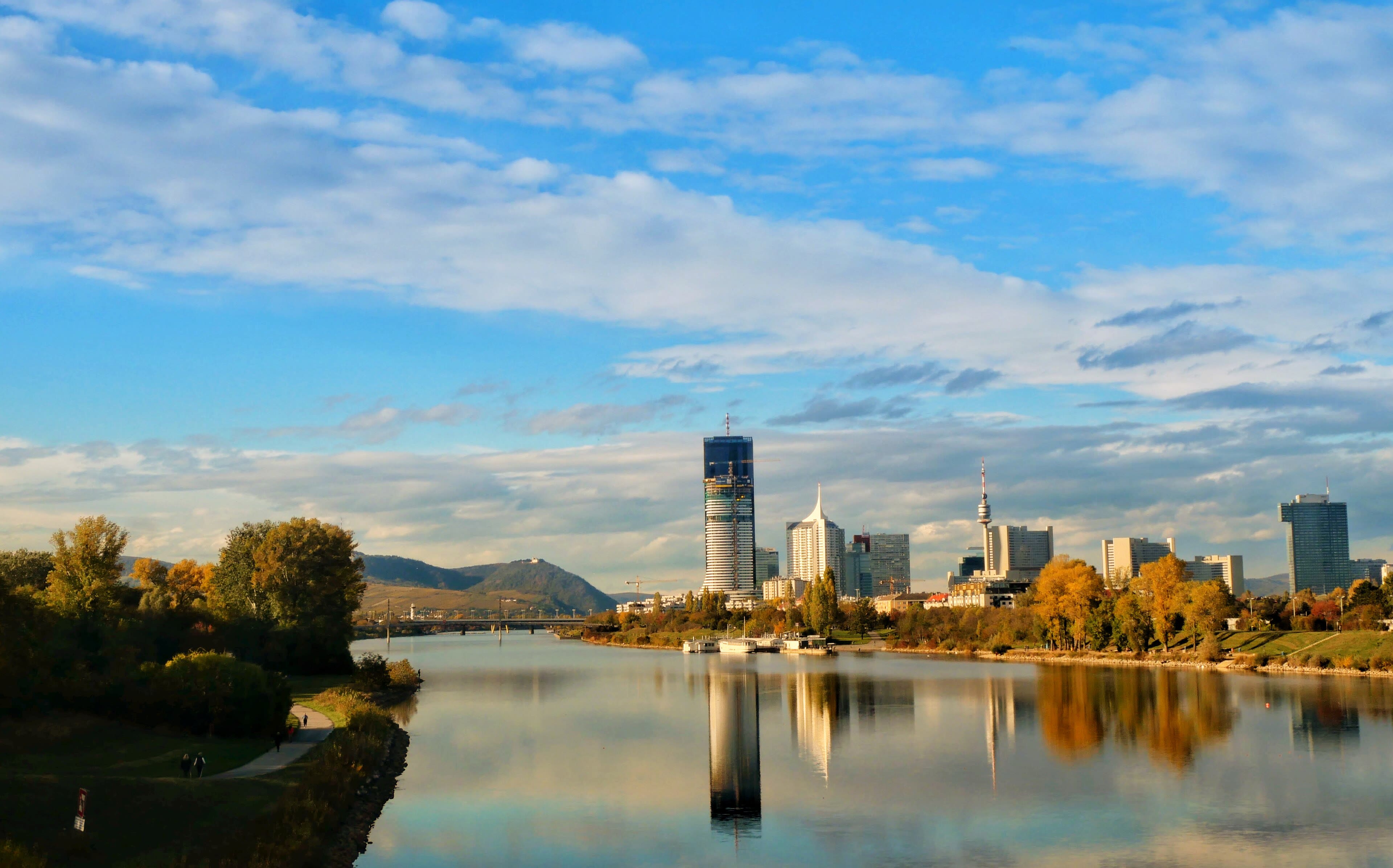
And so to Vienna. The Danube does not run through the old city — it runs beside it, in its broad regulated bed, and the capital turns a graceful shoulder to the water, keeping its river at the distance of a waltz. We come down past the green island of the Danube Island, under the bridges, and tie up at the marina as the light goes on in a city that has been Europe's drawing room for three hundred years. Everything is here, a short ride from the quay: the Ringstrasse with its opera house and parliament, the great cathedral of St Stephen's at the centre of the web, the palaces of emperors, the coffee houses where the waiters still call you by your title until they learn your name. The Zwaluw has carried us from the North Sea's delta to the Danube's capital — Amsterdam, the Rhine, the Main, the canal over the roof of Europe, and now Vienna. Pieter stands at the gangway a moment before going ashore, because some arrivals deserve a breath. One chapter of the river remains: the wilder Danube, east of empire, all the way to the Black Sea. We go on — but tonight, Vienna.
See this place in the galleryVienna — the Waltz at the River’s Edge — our interpretation, created from the reference photographs belowReference photographs — Vienna — the Waltz at the River’s Edge · 3 photographs
Chapter Five — The Danube to the Sea
10 scenes · 30 reference photographs
Bratislava — the Coronation City
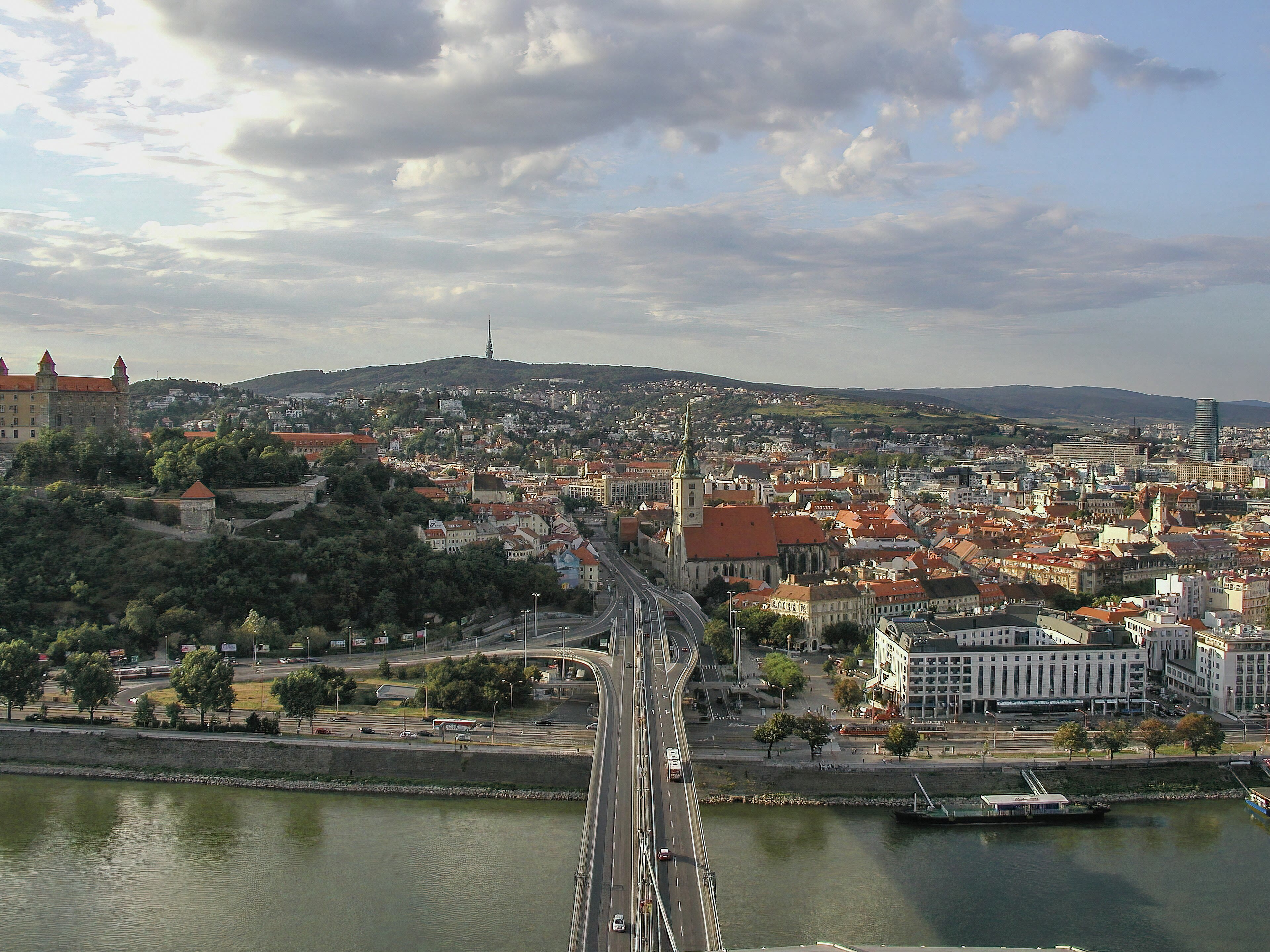
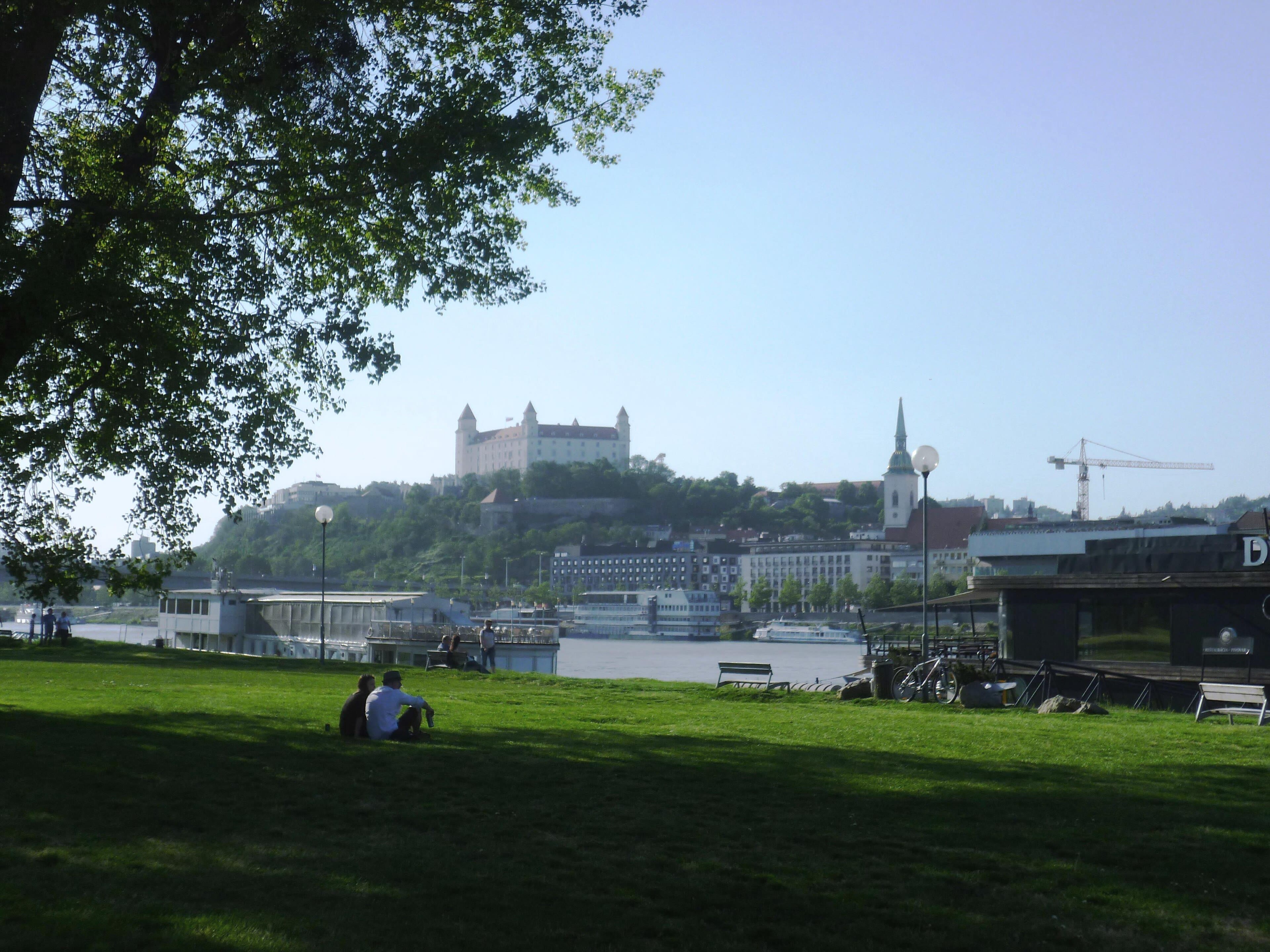
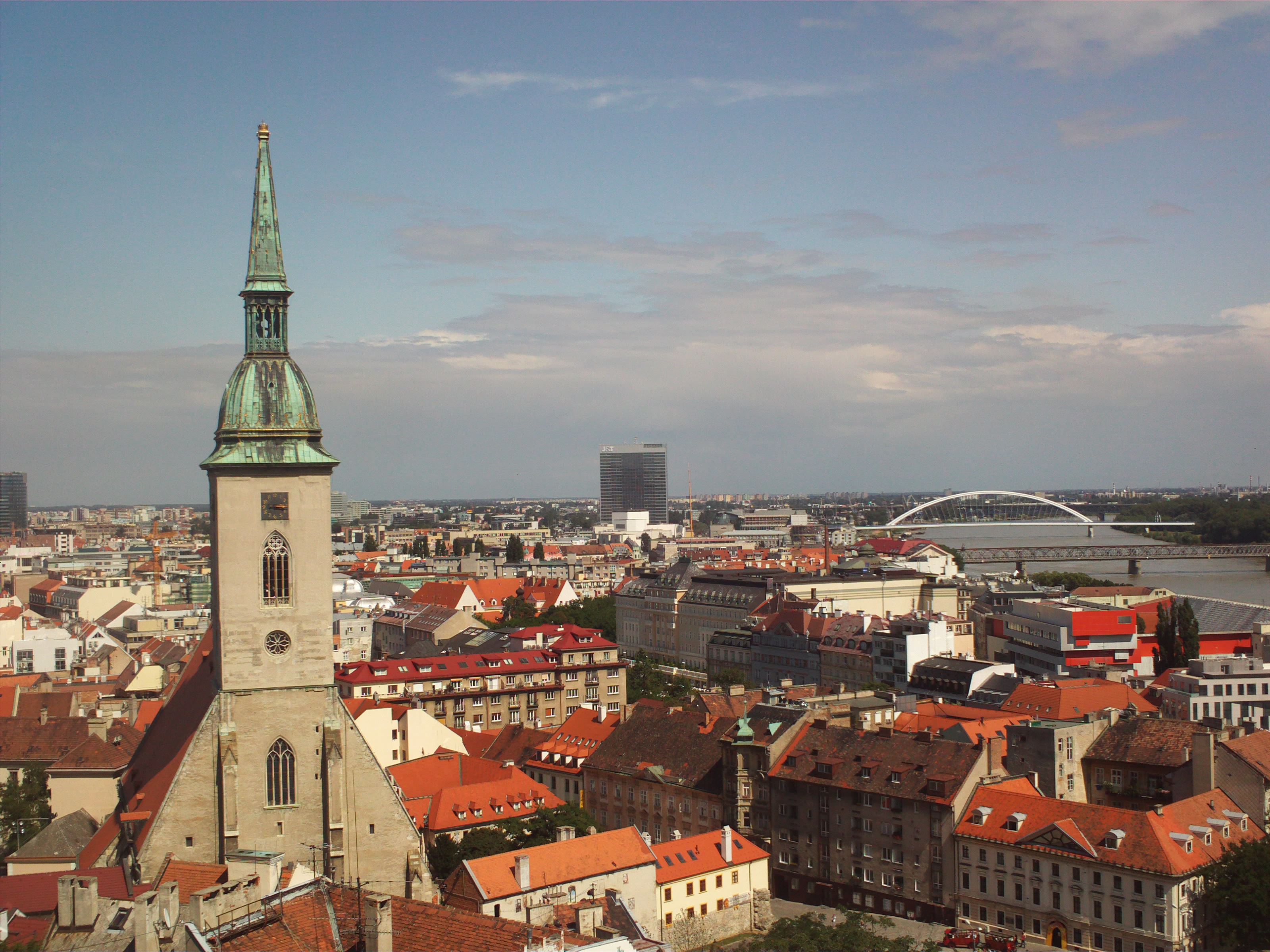
Below Vienna the river changes its accent. The hills fall away, the plain opens, and Bratislava rises on the north bank with its castle standing four-square above the water — an upturned table of a castle, white-walled, that has watched this river longer than most nations have existed. This was Pressburg, the coronation city of Hungary's kings, where Maria Theresa was crowned in St Martin's Cathedral under the tower that still carries a gilded crown on its spire. The old town below is a gentle place of pastel lanes and coffee houses, and across the river the great UFO bridge — a flying saucer on a pylon, as unlikely a sight as the Danube offers — lands on the south bank where the panel housing of Petržalka marches to the horizon. Two Europes in one view, and the river between them, indifferent and magnificent. We tie up under the castle rock in the evening and I walk the coronation route through the old town. Behind us: the empire's river. Ahead: the river of the borderlands, wilder and wider. The Zwaluw rides light and ready. So am I.
See this place in the galleryBratislava — the Coronation City — our interpretation, created from the reference photographs belowReference photographs — Bratislava — the Coronation City · 3 photographs
Esztergom and Visegrád — the Danube Bend
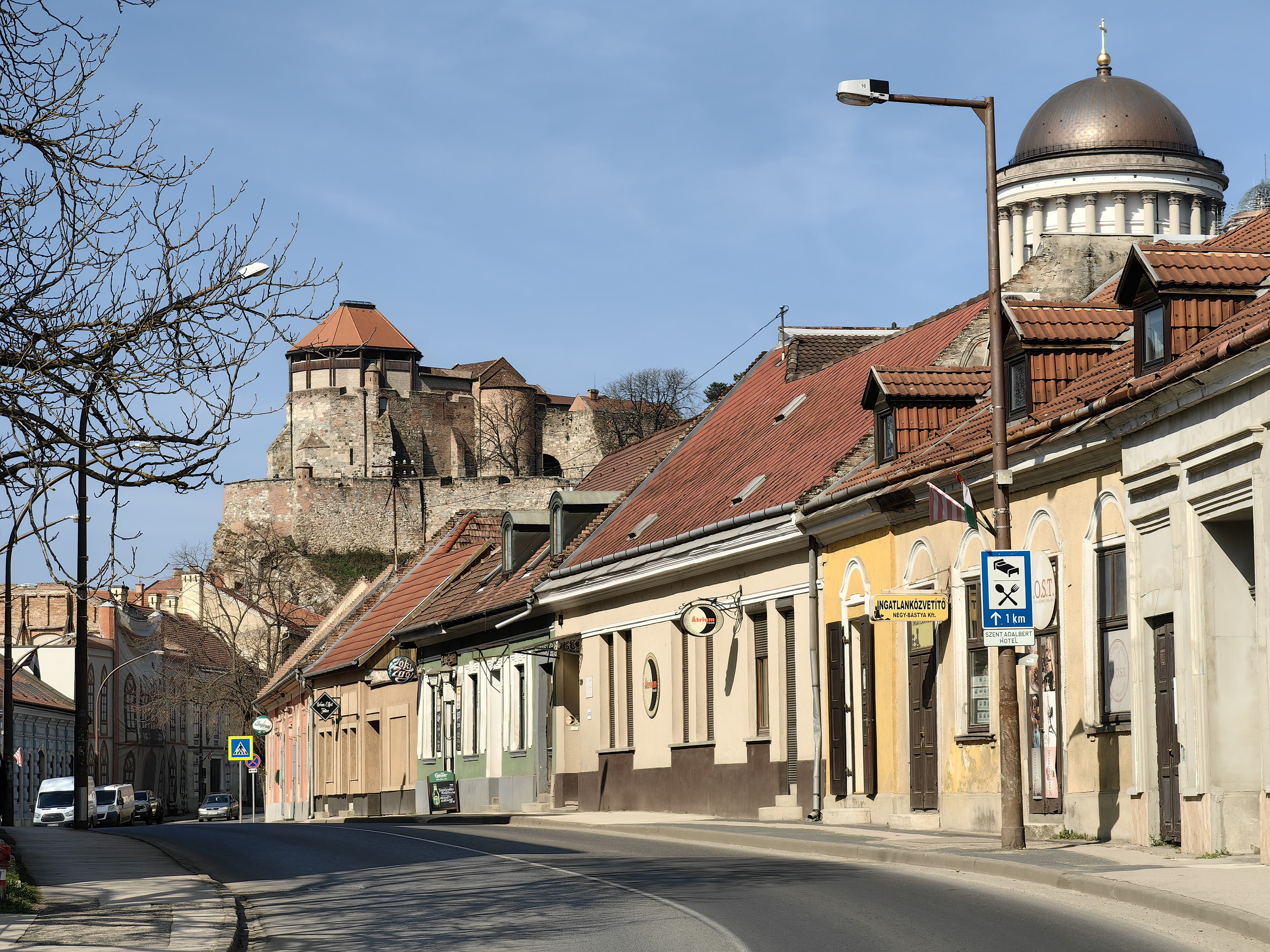
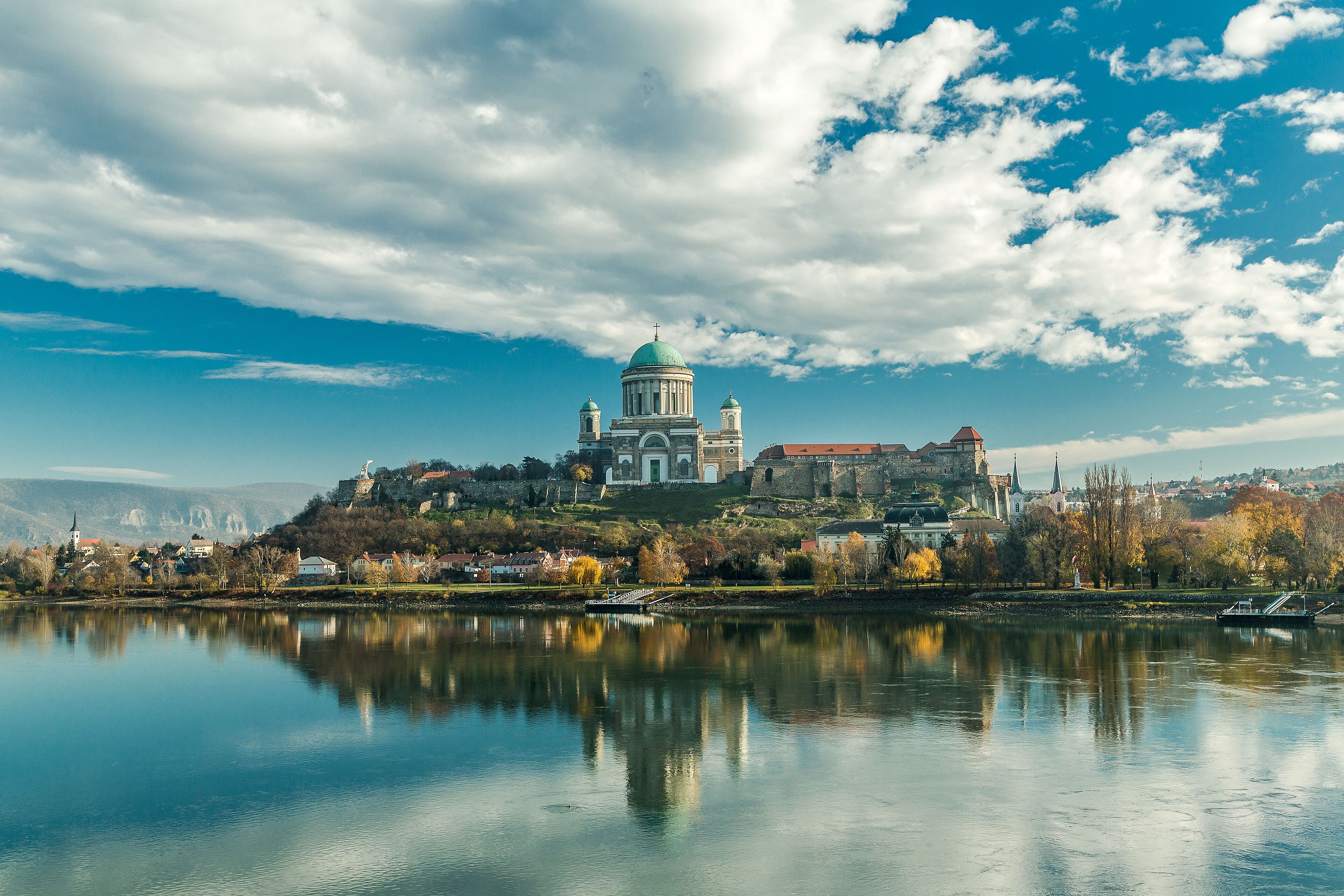
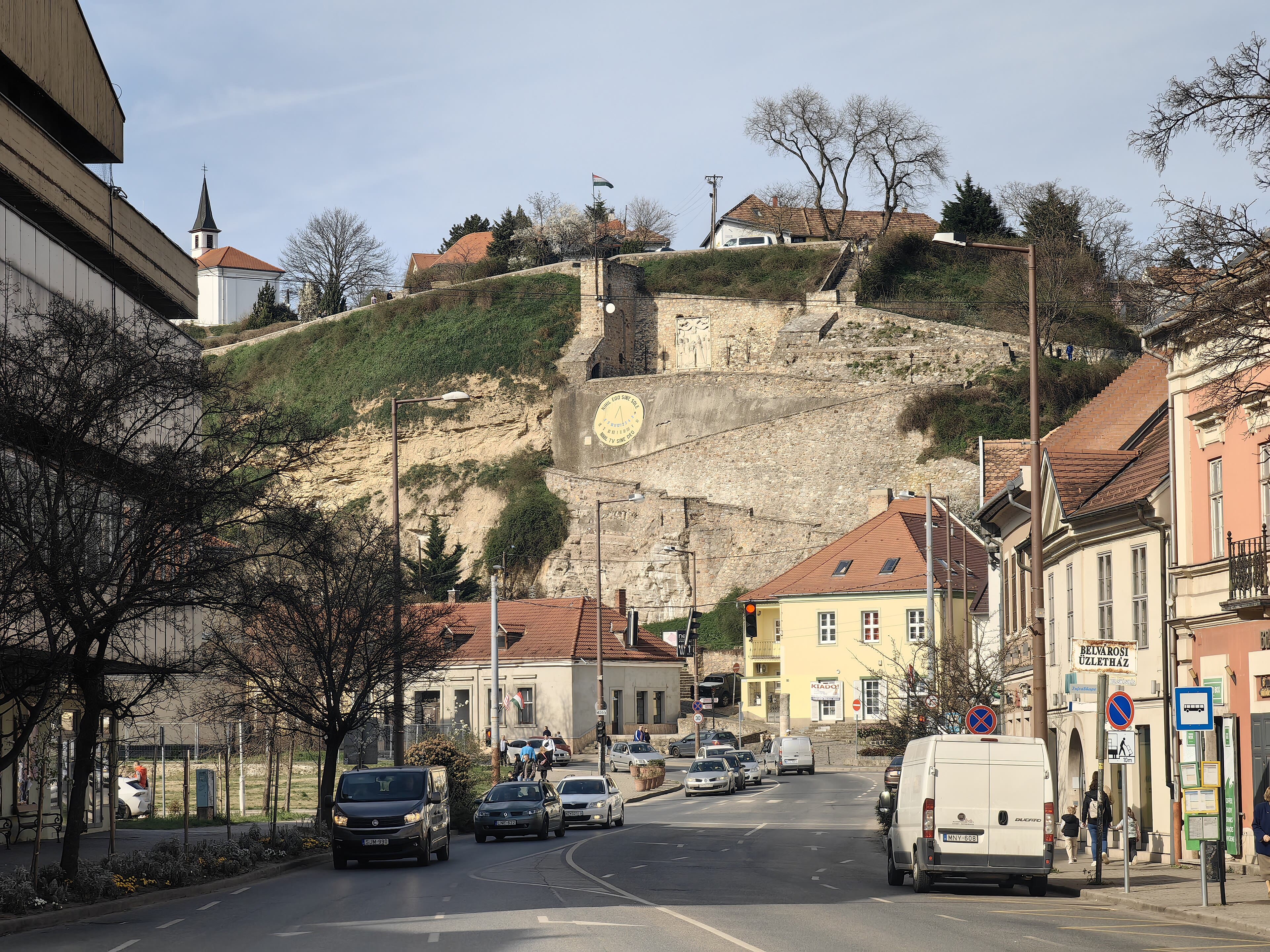
North of Budapest the Danube does something it has not done since Boppard: it bends, hard, through the hills — the great Danube Bend, where the river turns south in a green horseshoe and Hungary keeps its two oldest treasures on the banks. First Esztergom, on the south bank beneath the largest basilica in Hungary, a mountain of a church with a dome you can see from half the county, standing where Hungary's first king was crowned a thousand years ago. Then, as the river swings through the gorge of hills, Visegrád: the citadel on its crag, the ruined royal palace below, where the kings of Hungary, Bohemia and Poland once met to divide a continent's future over dinner. The hills here are the Börzsöny and the Pilis, forested to the waterline, and the river runs green and deep between them, with the excursion boats sliding past and the swallows working the cliffs. I slow the Zwaluw through the bend, because some stretches of water deserve reverence, and this one has been sacred to somebody for two thousand years.
See this place in the galleryEsztergom and Visegrád — the Danube Bend — our interpretation, created from the reference photographs belowReference photographs — Esztergom and Visegrád — the Danube Bend · 3 photographs
Budapest — the Pearl of the Danube
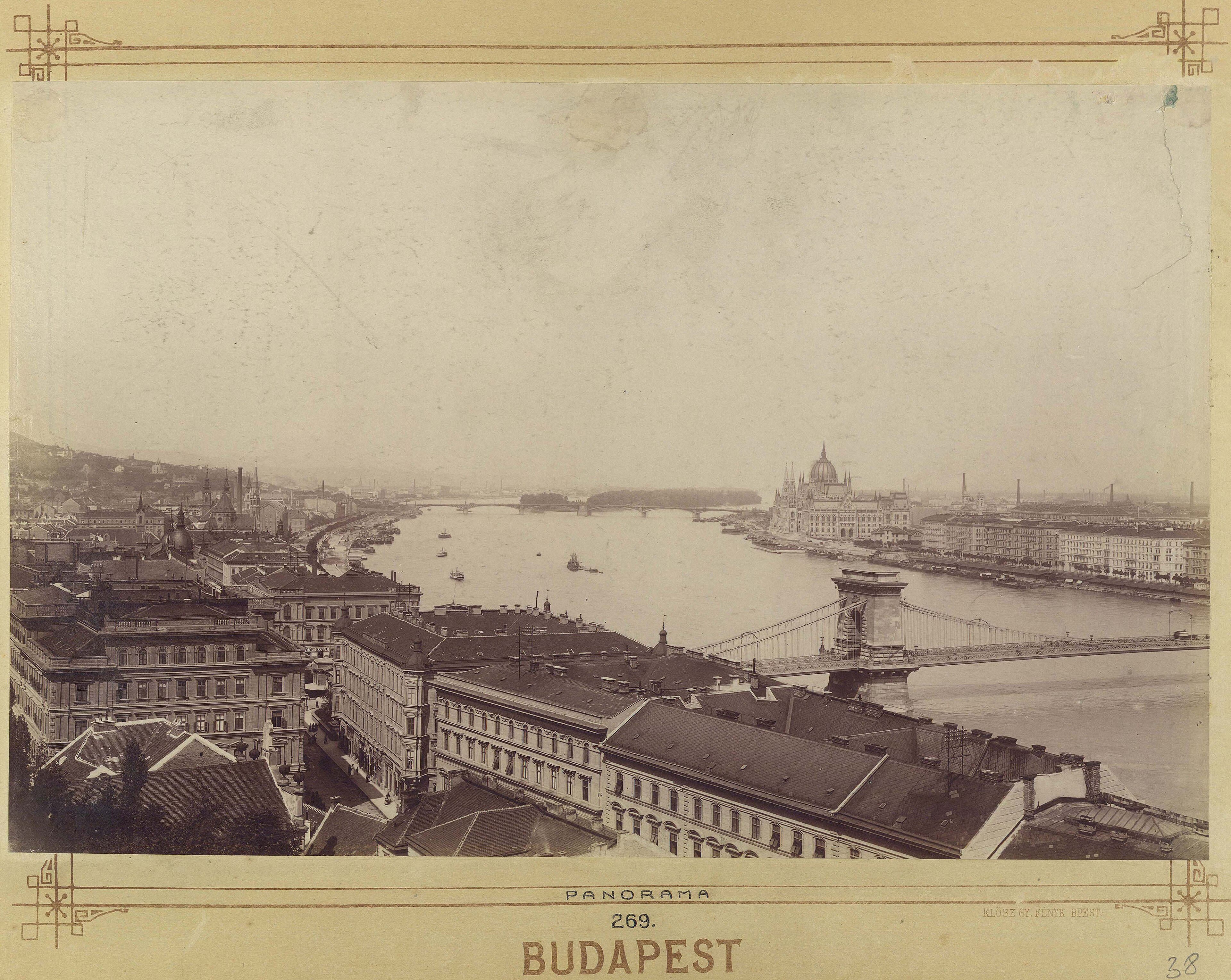
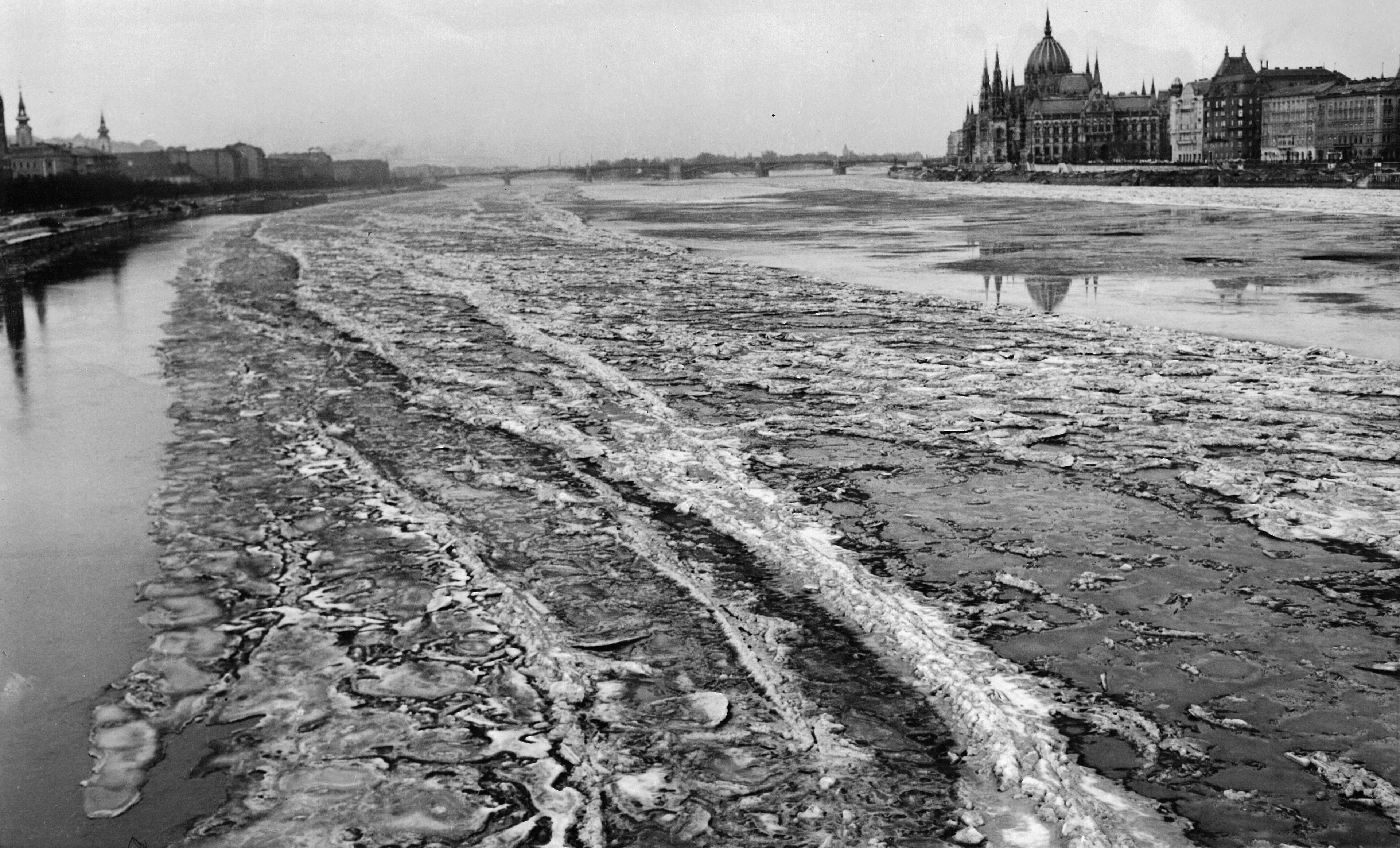
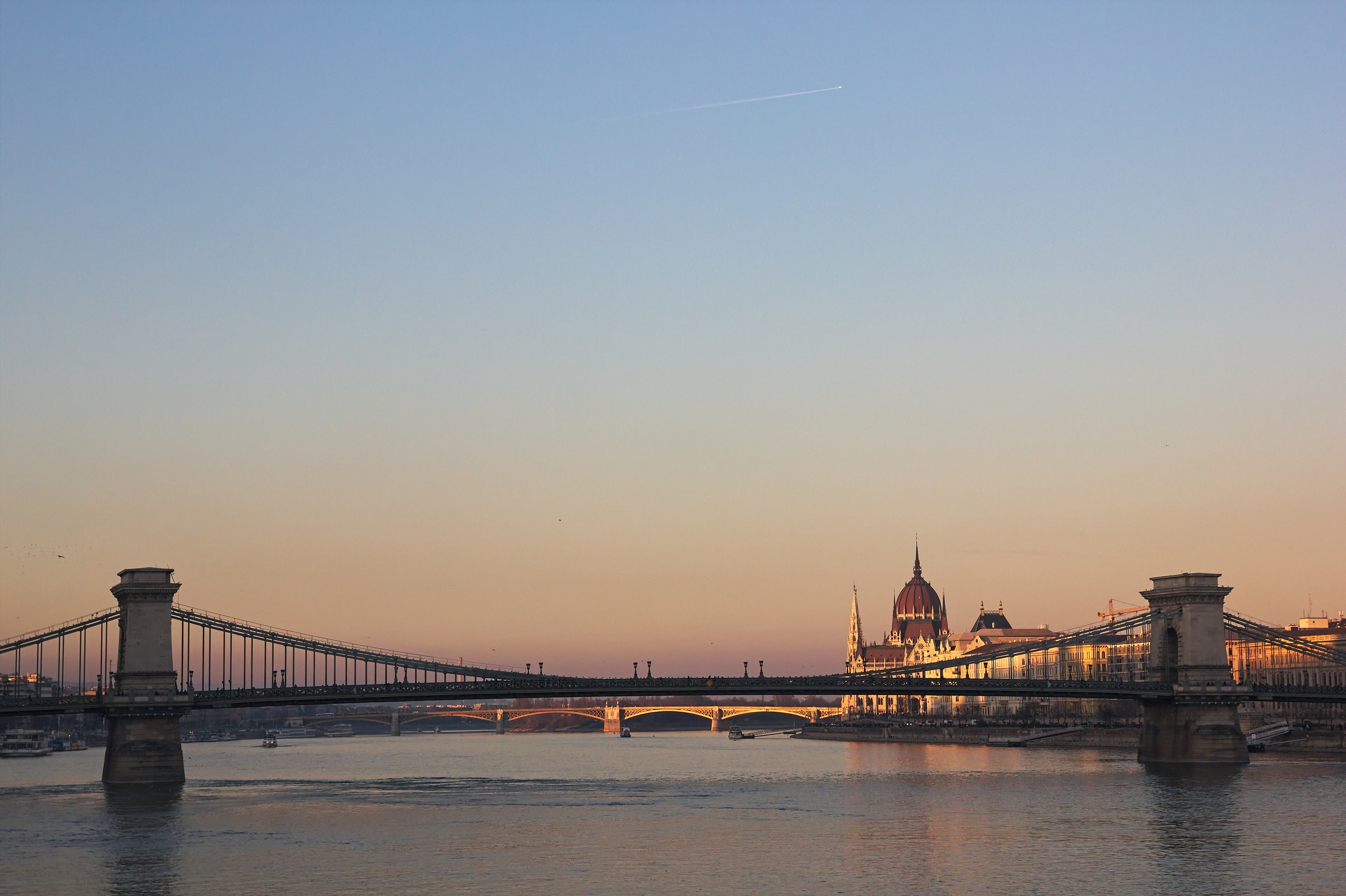
And then the river performs its greatest entrance. Budapest does not appear; it assembles — first the bridges, then Buda's castle hill rising on the west bank, then, on the east, the Parliament. I have seen the great buildings of this river from Amsterdam onward, and I tell you plainly: nothing prepares you for the Hungarian Parliament from the water — three hundred metres of neo-Gothic white stone along the bank, ninety six metres of dome, a building that looks like a cathedral and a crown decided to share an address. Across the river, Buda Castle rides its hill above the Chain Bridge, the first permanent bridge to join the two cities, lion-guarded and lamp-lit. We come in at the golden hour and tie up on the Pest embankment, where the shoes on the Danube bank — a little memorial of iron shoes at the water's edge — remind you that even the prettiest river carries sorrow. Tonight there is goulash, and a glass of Bull's Blood, and the bridges lit like necklaces. The Danube has other cities. It has no other Budapest.
See this place in the galleryBudapest — the Pearl of the Danube — our interpretation, created from the reference photographs belowReference photographs — Budapest — the Pearl of the Danube · 3 photographs
Mohács — the Quiet Fields
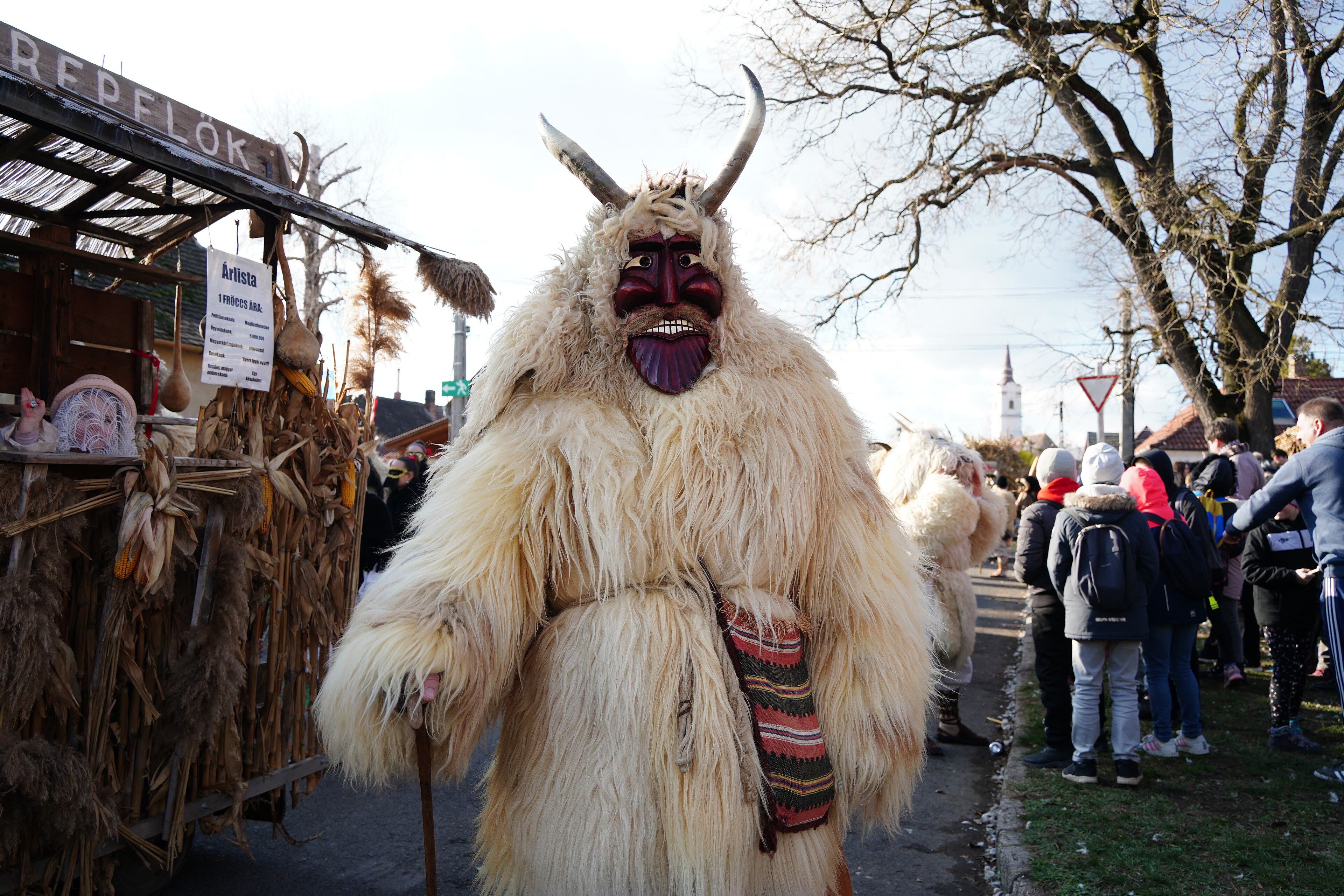
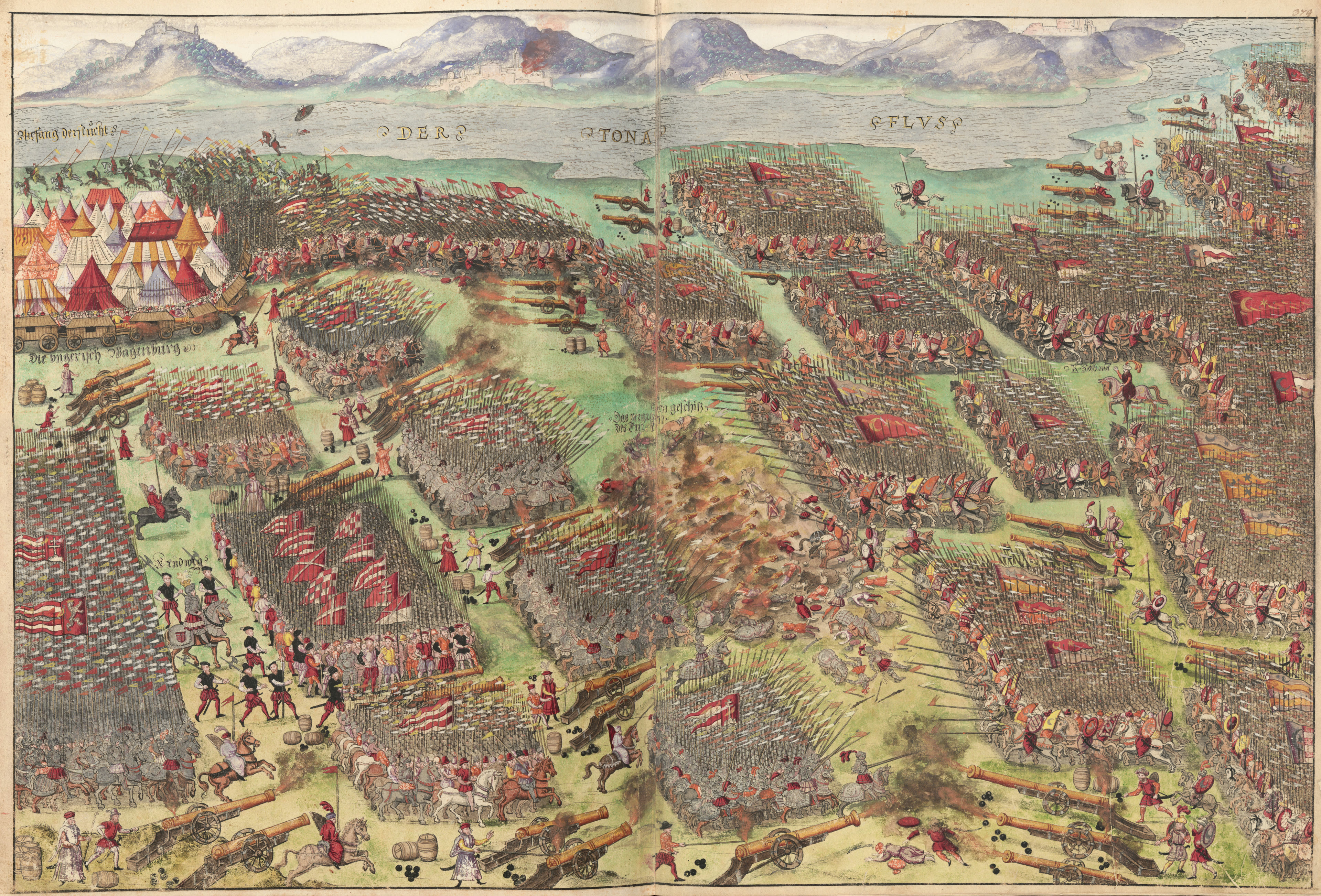
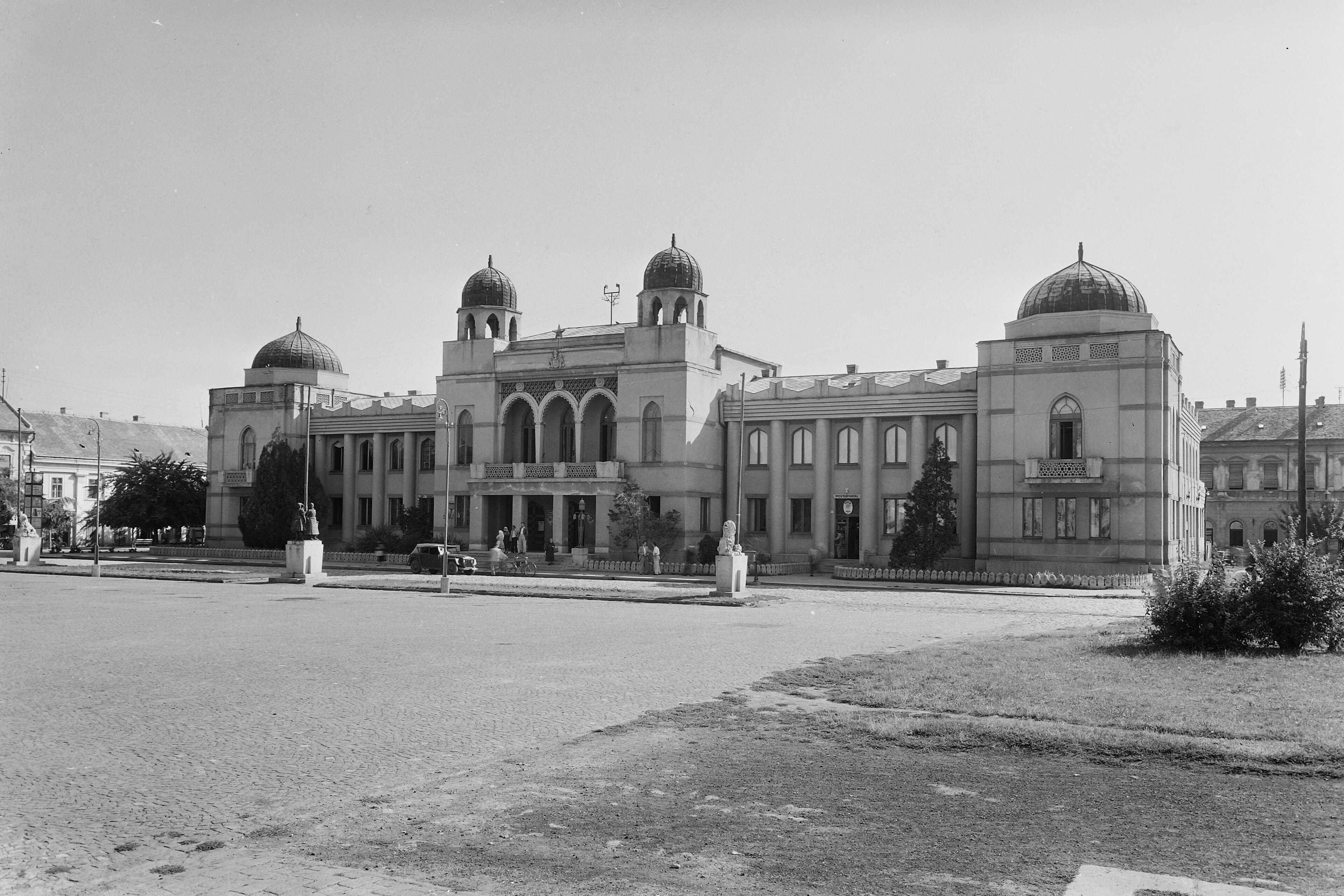
Below Budapest the river broadens into the great Hungarian plain, and the land goes flat and gold — wheat, sunflowers, and a sky that takes up most of the world. Mohács is a small, quiet town on the west bank, famous far beyond its size for two things: the busójárás, the February carnival where the townsmen dress as horned, sheepskin monsters to frighten winter away, and a field outside the town where, in fifteen twenty six, Hungary's army met the Ottomans and the medieval kingdom ended in an afternoon. You would not know it from the river. The water slides past wide and slow, the poplars shiver, and a heron lifts off the bank with the air of a creature who owns the place — which, on this stretch, everything does except us. We moor early and I ride the ship's bicycle out to the memorial field, where wooden grave posts stand in the grass and the silence does the talking. A skipper's river is not all castles and cathedrals. Some of it is memory, kept in open fields. We sail on in the morning, south, toward the border.
See this place in the galleryMohács — the Quiet Fields — our interpretation, created from the reference photographs belowReference photographs — Mohács — the Quiet Fields · 3 photographs
Vukovar — the Town That Endured
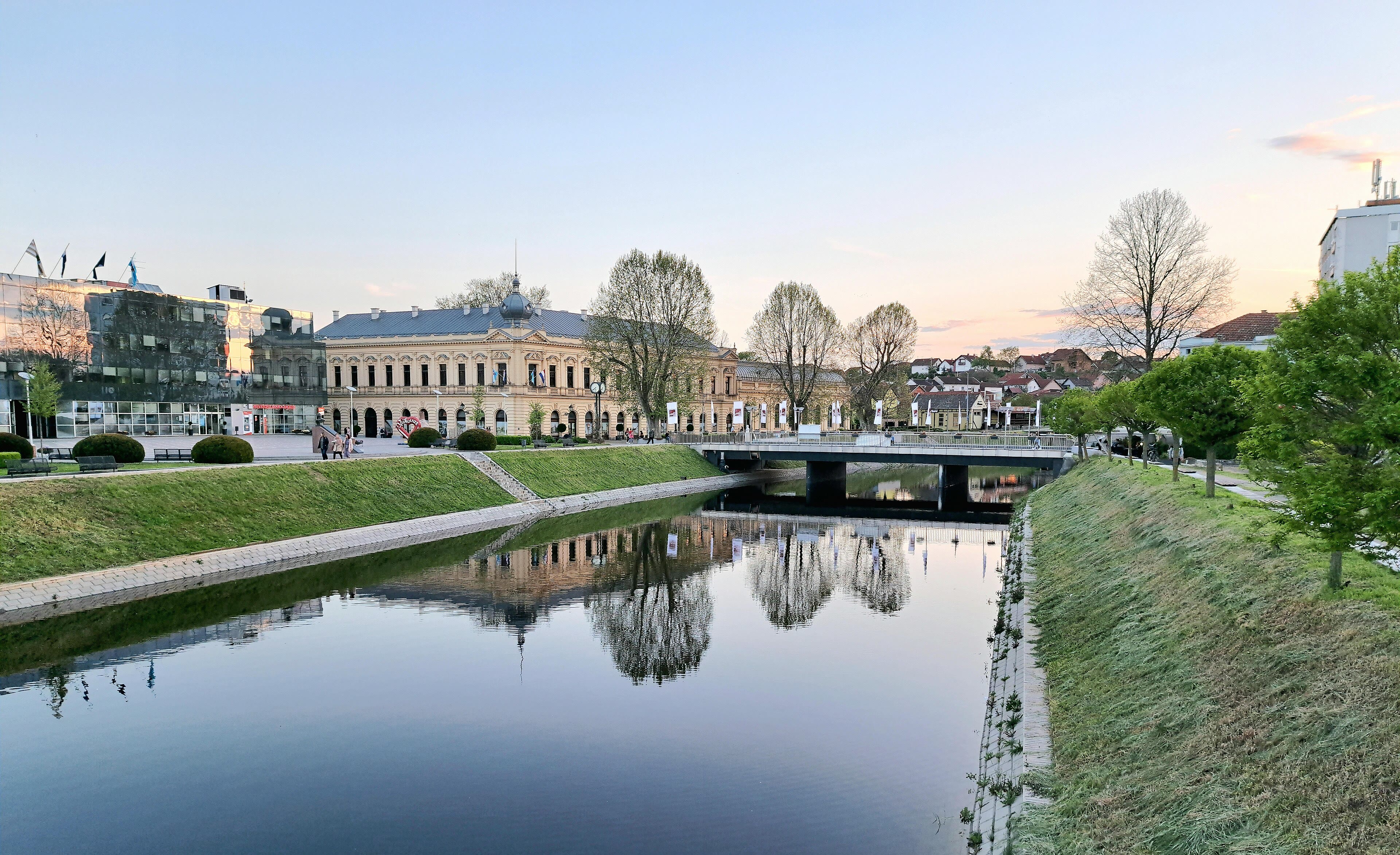
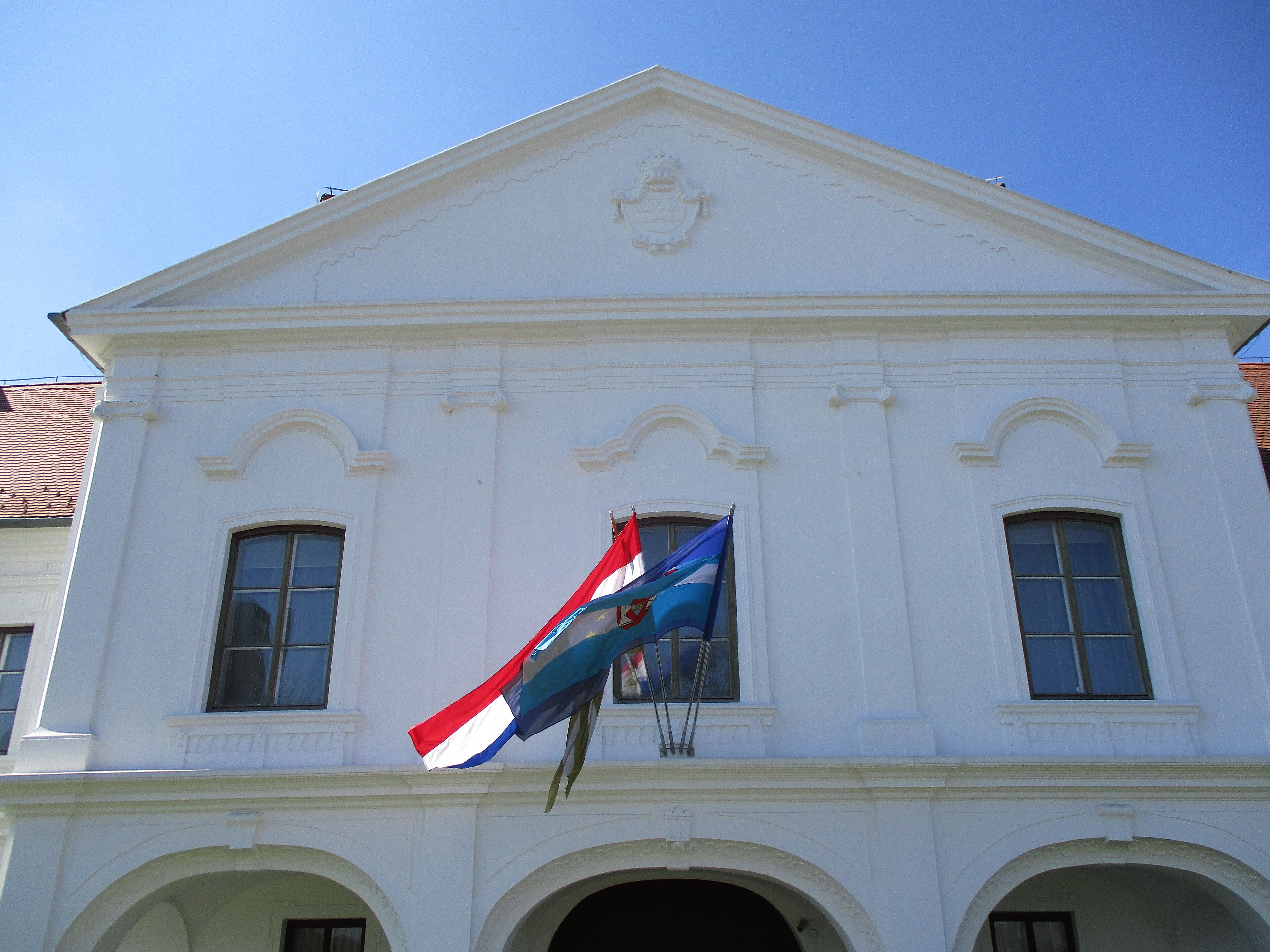
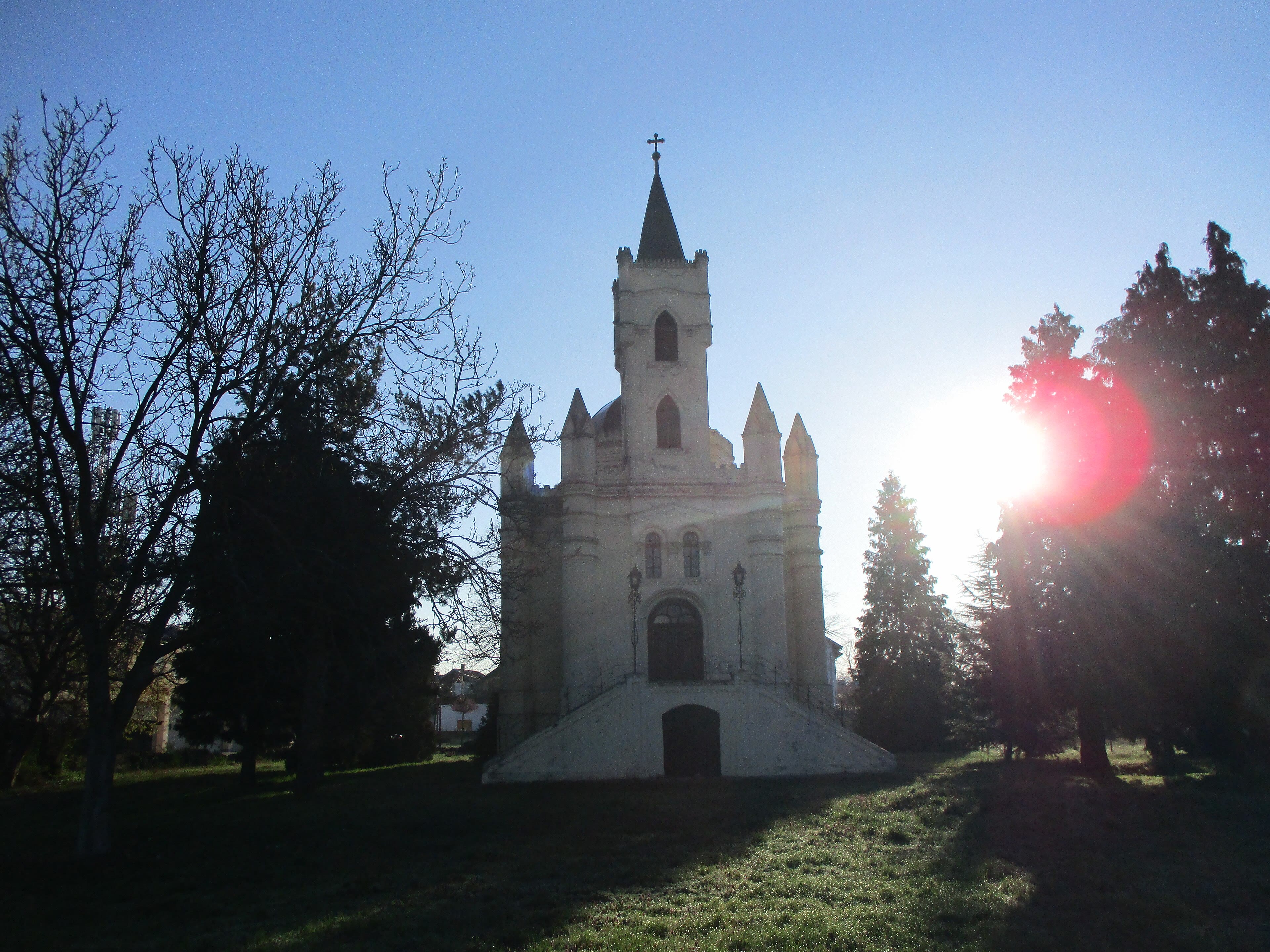
The Danube at Vukovar has seen the worst of Europe and kept flowing. This handsome baroque town on the Croatian bank was besieged for eighty seven days in nineteen ninety one, in the war that broke Yugoslavia, and the water tower on the hill — riddled with shell holes, kept standing, kept unrepaired on purpose — is its memorial and its defiance in one. I will not pretend the Zwaluw passes such a place lightly. You slow down. You look. The Eltz Castle above the river has been restored to its elegance, the old town's arcaded streets are busy again, and at the town's edge the Vučedol site holds one of the oldest cultures in Europe — the people who cast copper here five thousand years ago, when the river was already old. That is the Danube's long lesson, and Vukovar teaches it better than anywhere: towns can be broken, and rivers and people both go on. We tie up for the night and I take my supper in a little restaurant on the bank, where the owner will not let me pay for the wine. Some harbours you remember for the welcome. Vukovar, for the dignity.
Vukovar — the Town That Endured — our interpretation, created from the reference photographs belowReference photographs — Vukovar — the Town That Endured · 3 photographs
Novi Sad — Beneath the Fortress
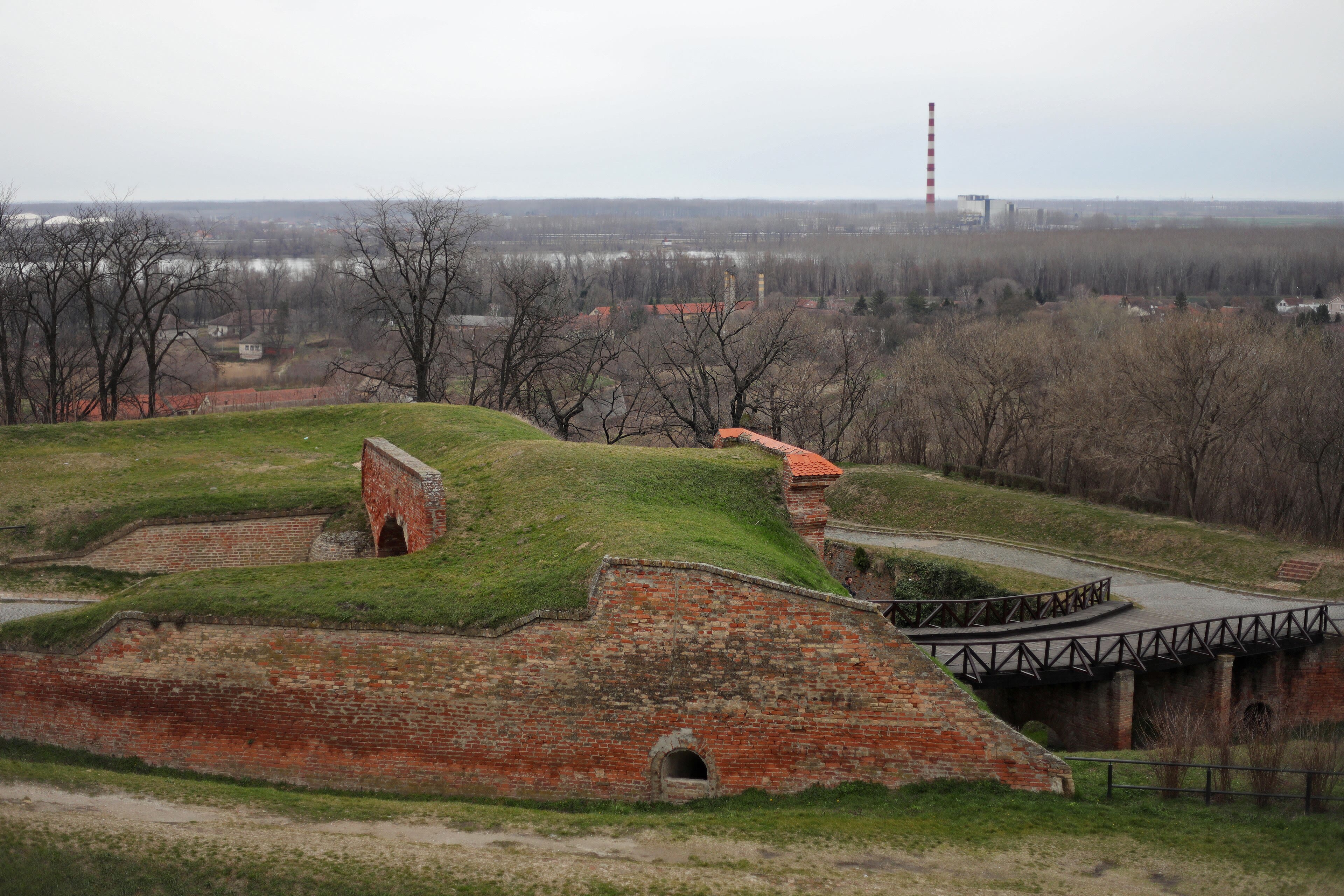
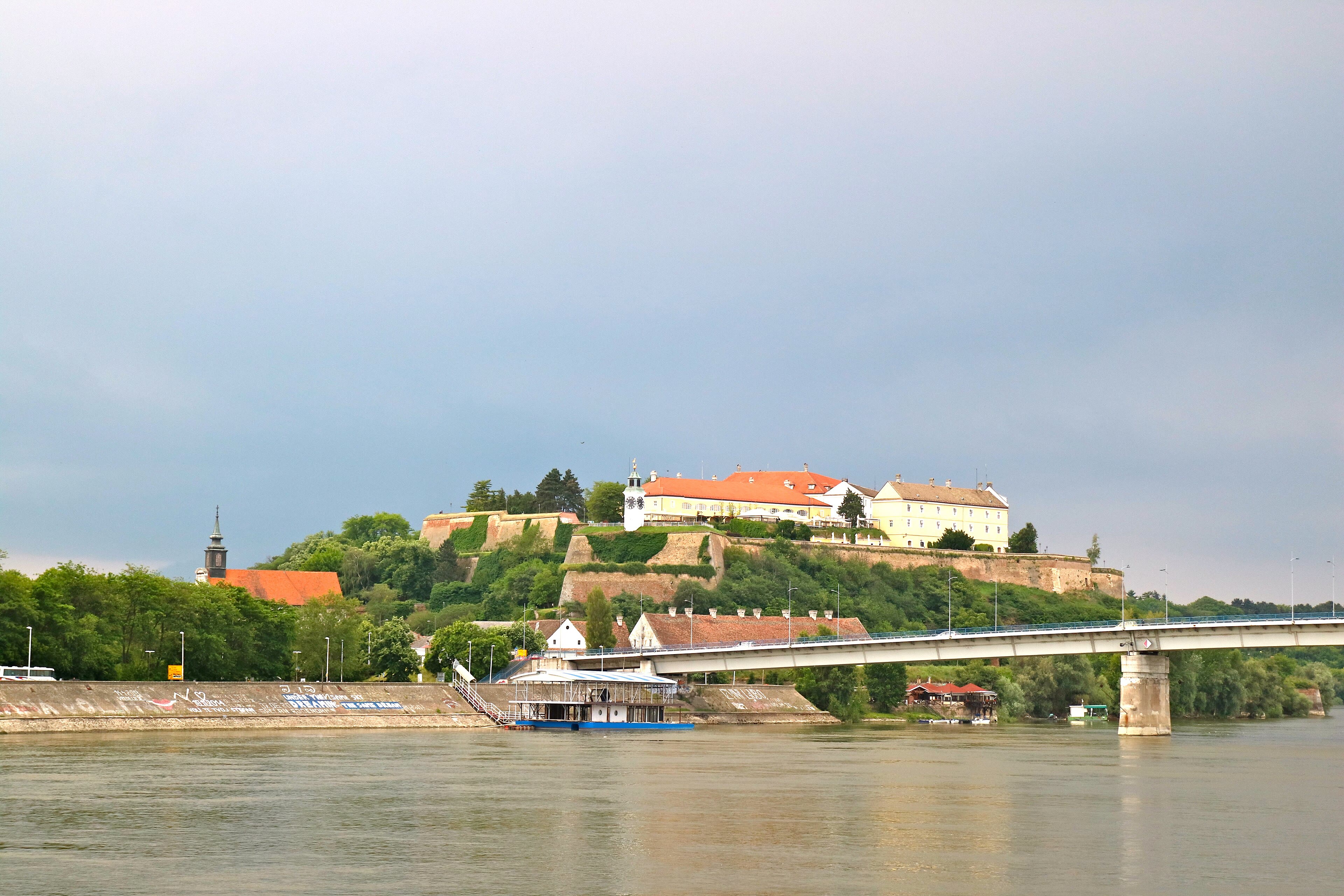
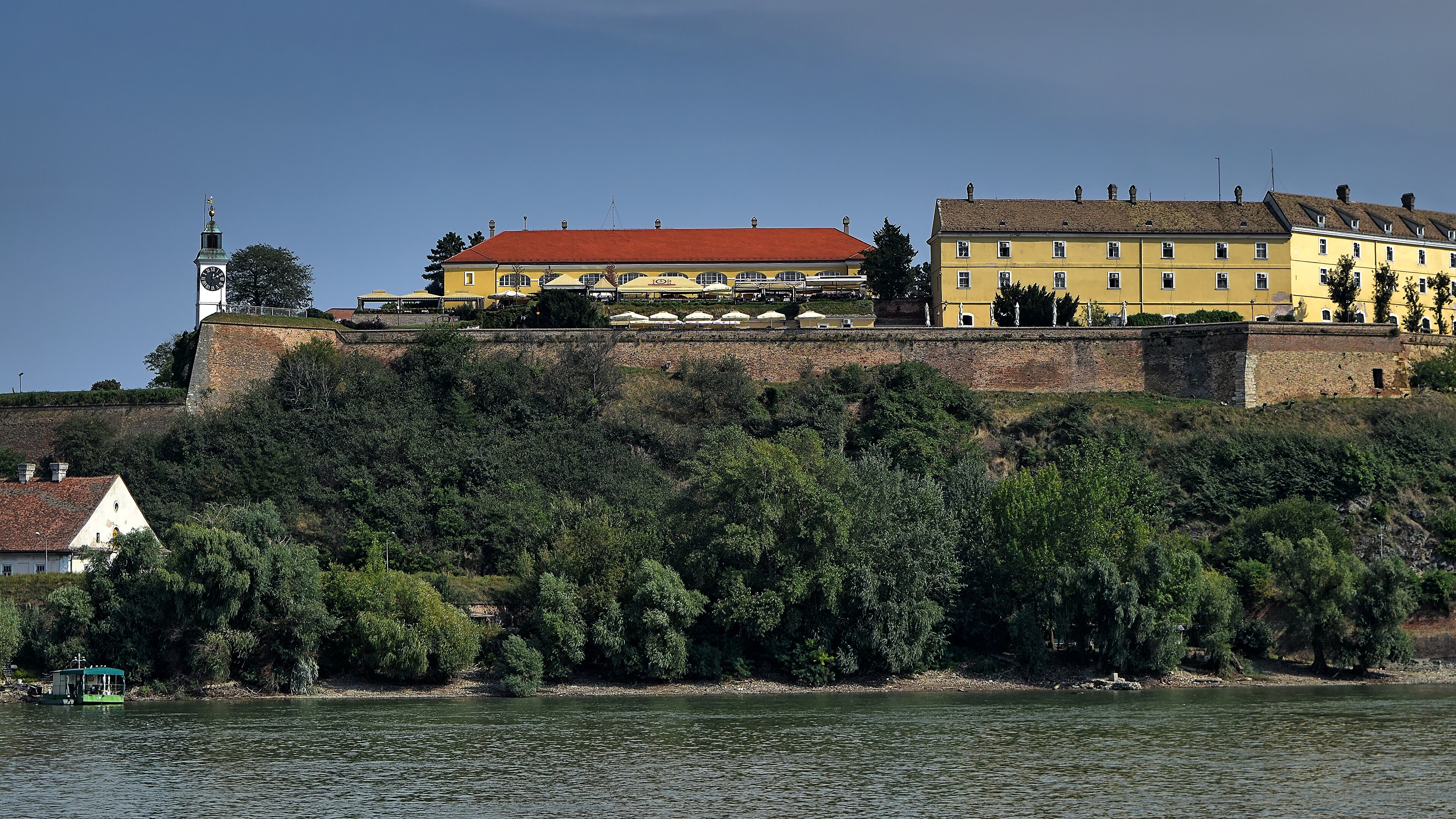
Serbia announces itself with a fortress the size of a town. Petrovaradin rides its rock above the south bank at Novi Sad — the Gibraltar of the Danube, the Austrians called it, the largest fortress system in Europe when it was built, its tunnels running for kilometres under the hill. Its clock tower has a famous peculiarity: the hands are reversed, the long hand for the hours, so the boatmen could read the time from the river — a clock built for people like me, and I salute it every time. Below the fortress, Novi Sad spreads in a easygoing grid of Habsburg streets and café terraces; it is Serbia's second city and its most relaxed, a place that takes its pleasures seriously and its history lightly, which after the twentieth century is a kind of wisdom. In summer the fortress fills with one of Europe's great music festivals and the whole hill hums. We come in the soft evening, under the Varadin bridge, and I walk the old town while the cafés fill and the river slides past in the dusk. Tomorrow, the capital.
Novi Sad — Beneath the Fortress — our interpretation, created from the reference photographs belowReference photographs — Novi Sad — Beneath the Fortress · 3 photographs
Belgrade — Where the Sava Marries
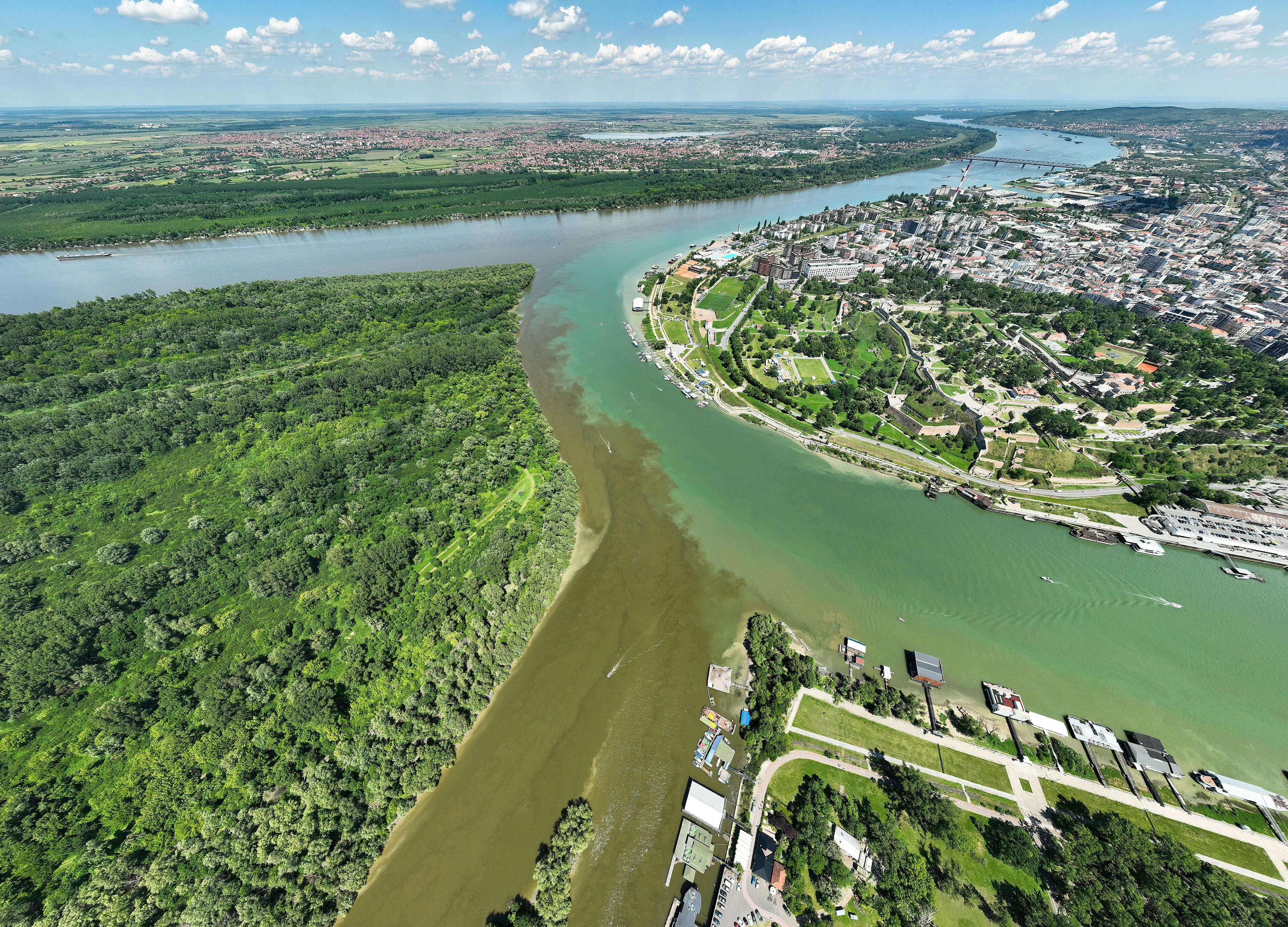
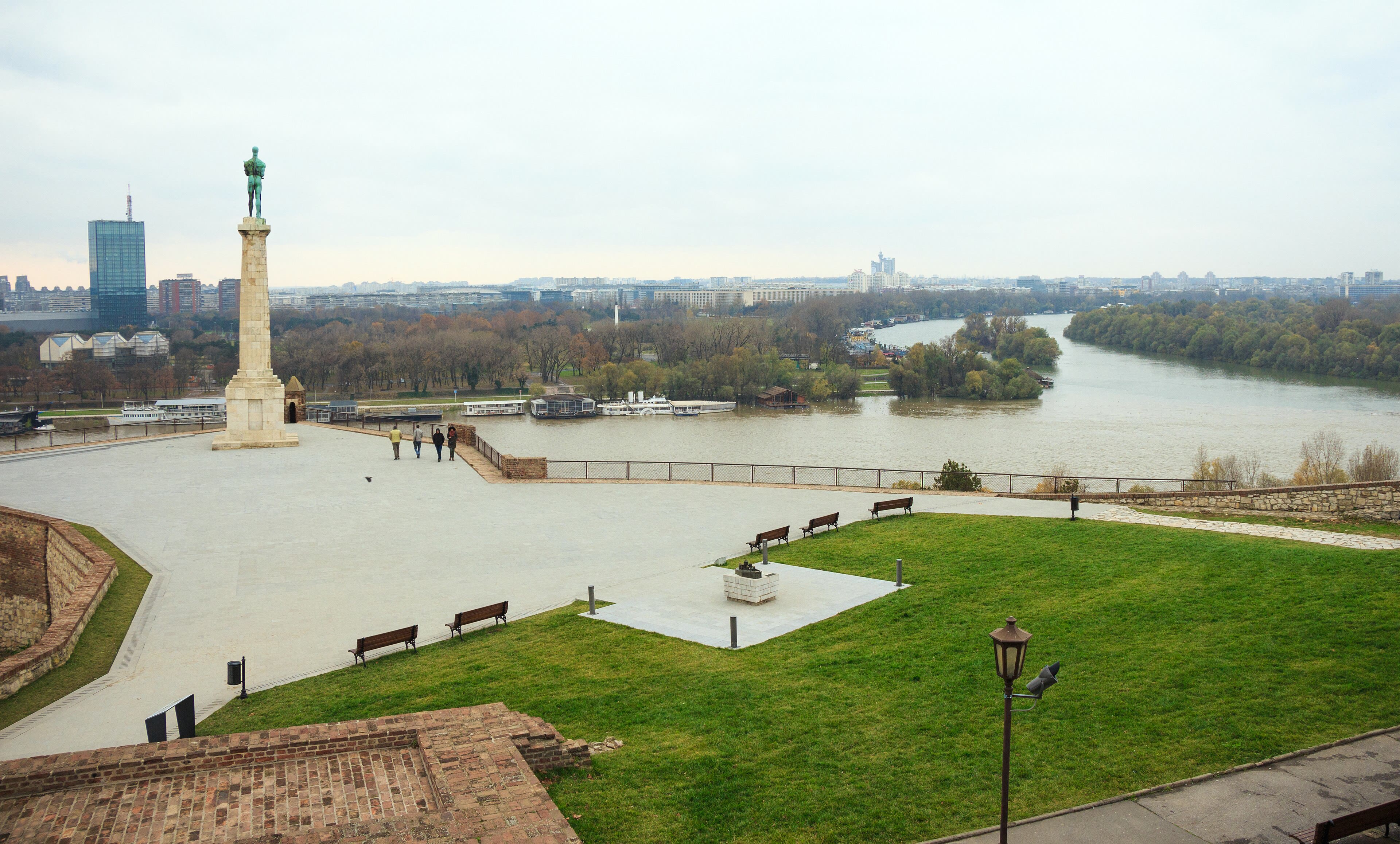
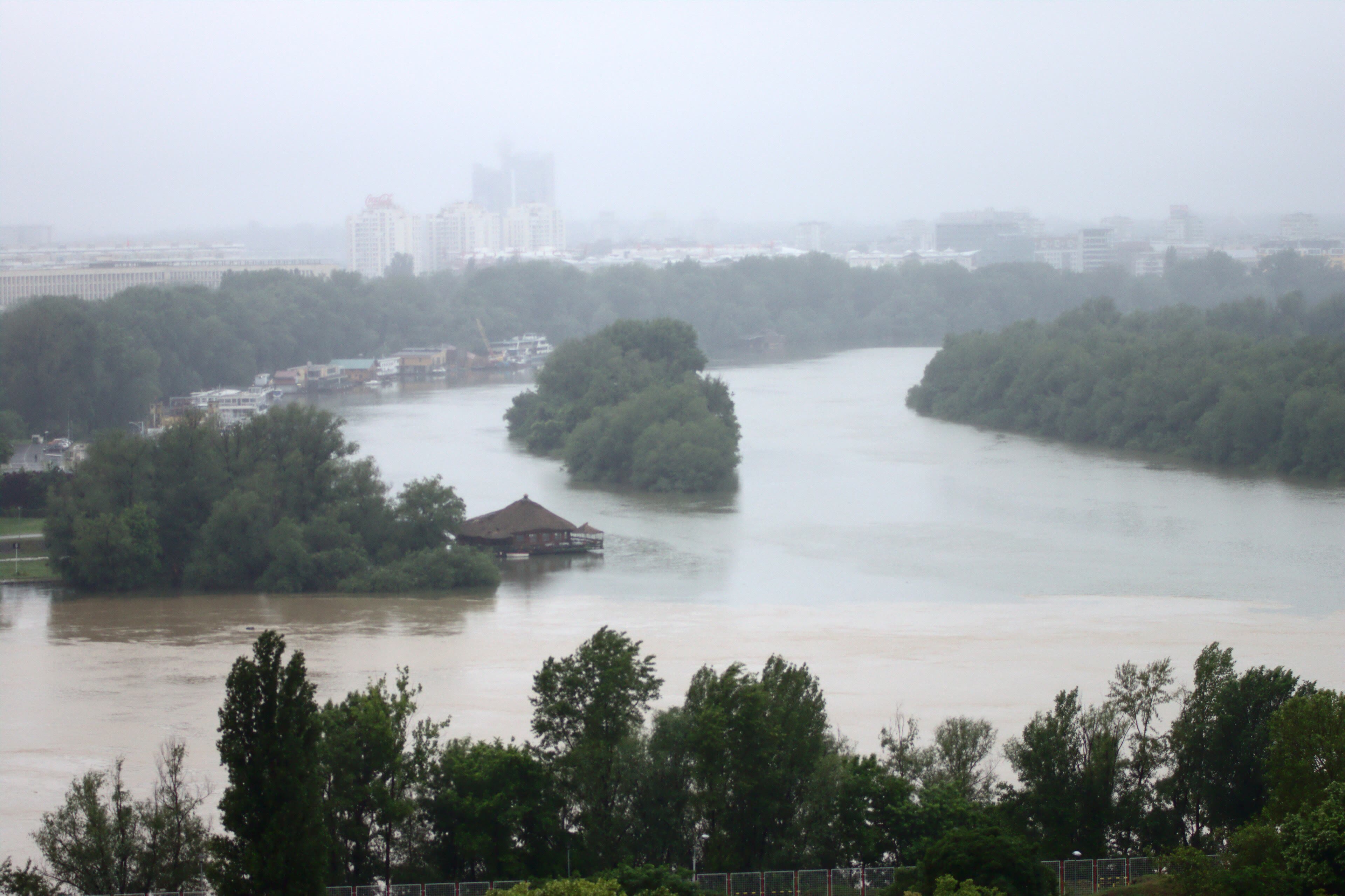
Belgrade is the second great wedding of our voyage. Here the Sava comes down out of the west and marries the Danube beneath the fortress of Kalemegdan, on the high ridge where the two rivers meet — and the city has been fought over for that ridge for two thousand years, destroyed and rebuilt some forty times, by Celts, Romans, Huns, Ottomans and empires without number. White City, Belgrade means, and from the water at evening it earns the name: the fortress walls pale above the confluence, the bridges stepping across the Sava, the new towers rising on the far shore. It is a loud, warm, sleepless sort of capital, and its river life is its own — the splavovi, the raft bars and restaurants moored along the banks, fill with music as the dark comes down. The Zwaluw ties up among them, modestly, and I take a table at a little raft where the fish soup comes with paprika and the band plays something old. Two rivers, one city, forty rebuildings. The Danube respects a survivor. So does a skipper.
Belgrade — Where the Sava Marries — our interpretation, created from the reference photographs belowReference photographs — Belgrade — Where the Sava Marries · 3 photographs
The Iron Gates — the River’s Great Door
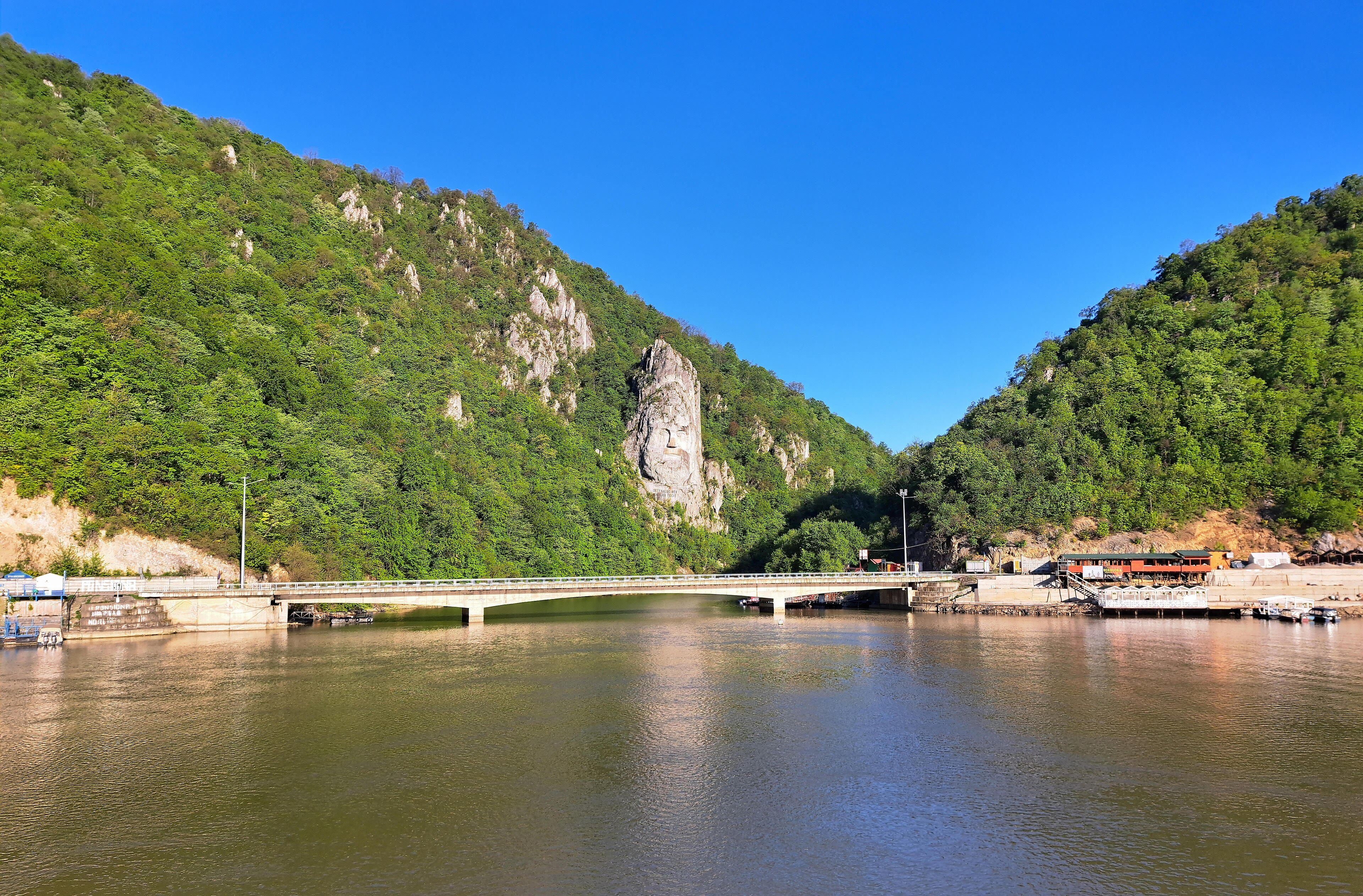
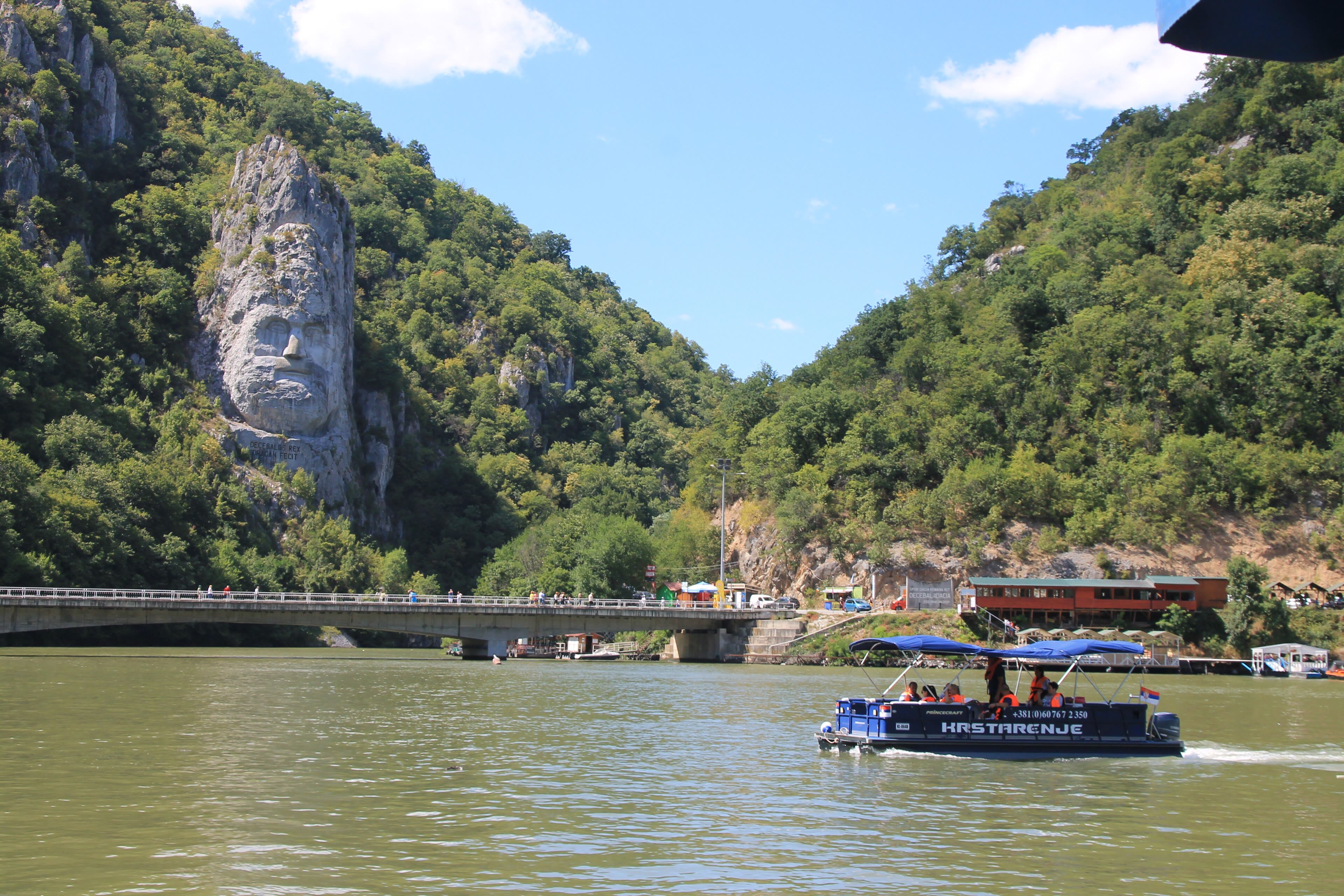
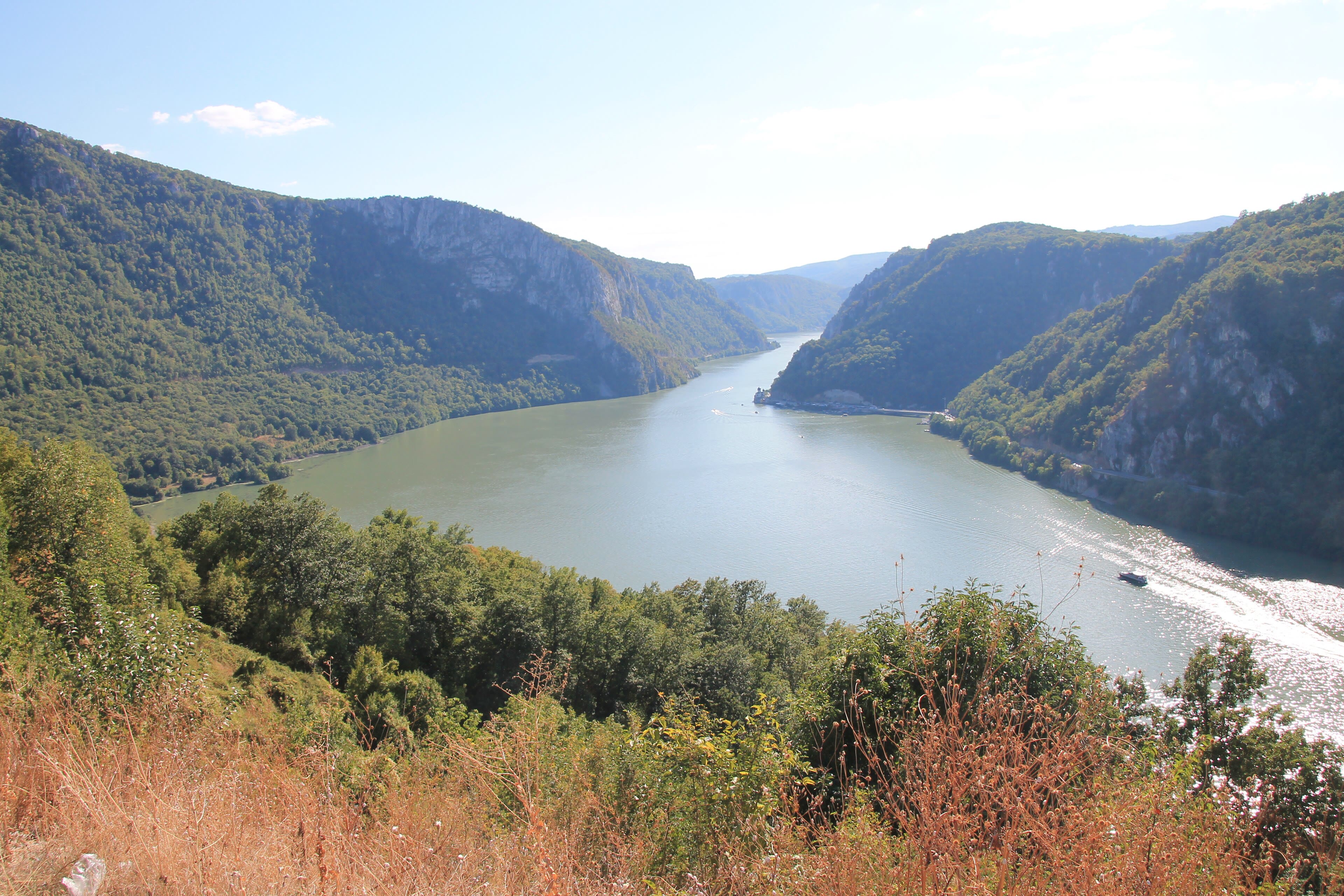
And now the Danube does the mightiest thing we have seen on the whole voyage. Below Belgrade the plain ends, the Carpathians and the Balkans close in from both sides, and the river — a kilometre and a half wide in the plain — squeezes through the Iron Gates gorge in a channel in places barely a hundred and fifty metres across and deeper than it has any right to be. For a hundred kilometres the water runs between cliffs seven hundred metres high: through the Kazan gorge, where the rock face carries the carved portrait of Decebalus, the last Dacian king, forty metres of him glowering at the river; past the Roman plaque of Trajan, who cut a road into this cliff two thousand years ago; and through the great lock of the Iron Gates dam, where the Zwaluw rises in a chamber built for giants. The current quickens, the echo comes back off the stone, and every skipper who ever ran this water with a cargo and a prayer is standing at your shoulder. This is the river's great door. We pass through it slowly, and small, and grateful.
The Iron Gates — the River’s Great Door — our interpretation, created from the reference photographs belowReference photographs — The Iron Gates — the River’s Great Door · 3 photographs
The Delta — Where the River Becomes a World
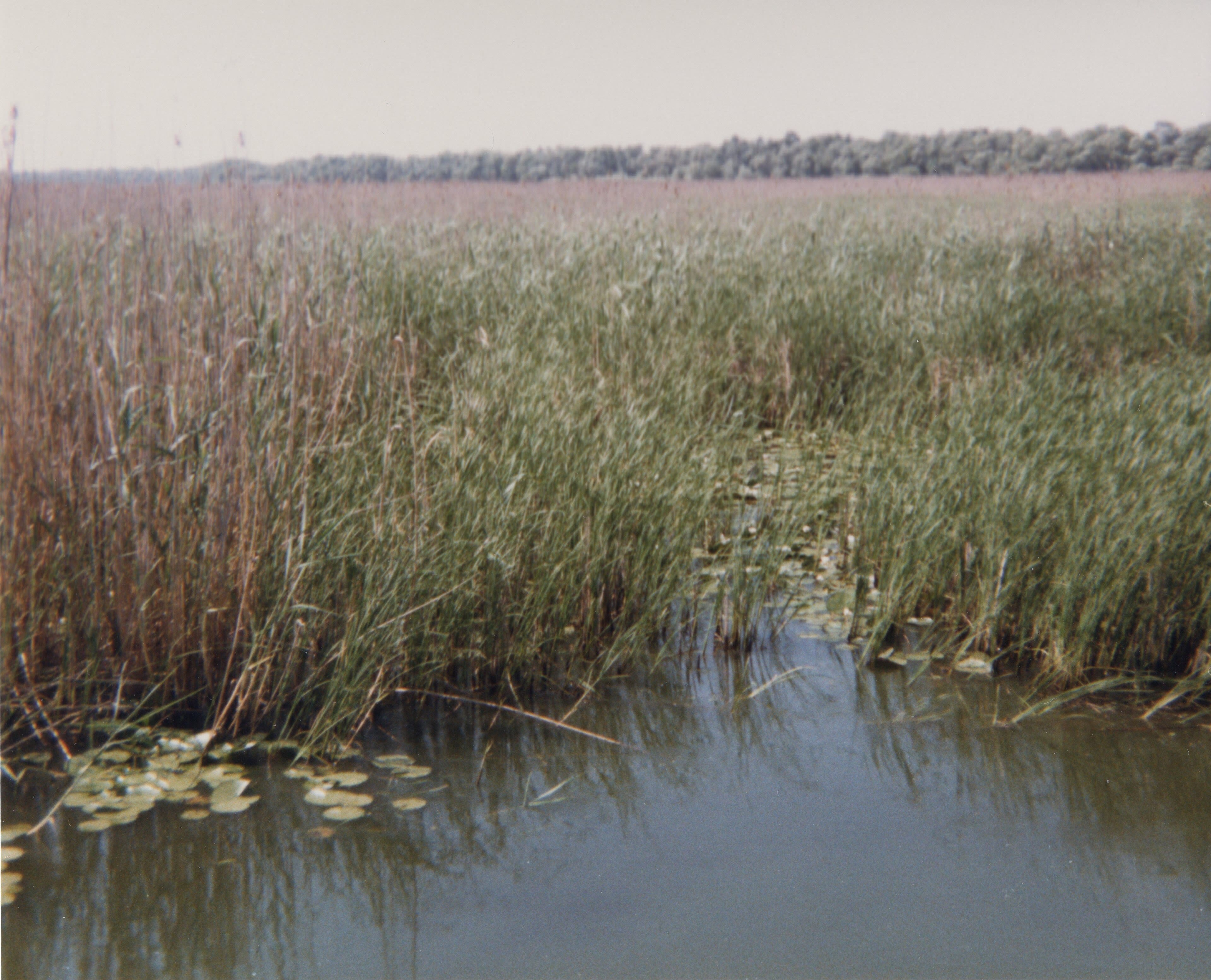
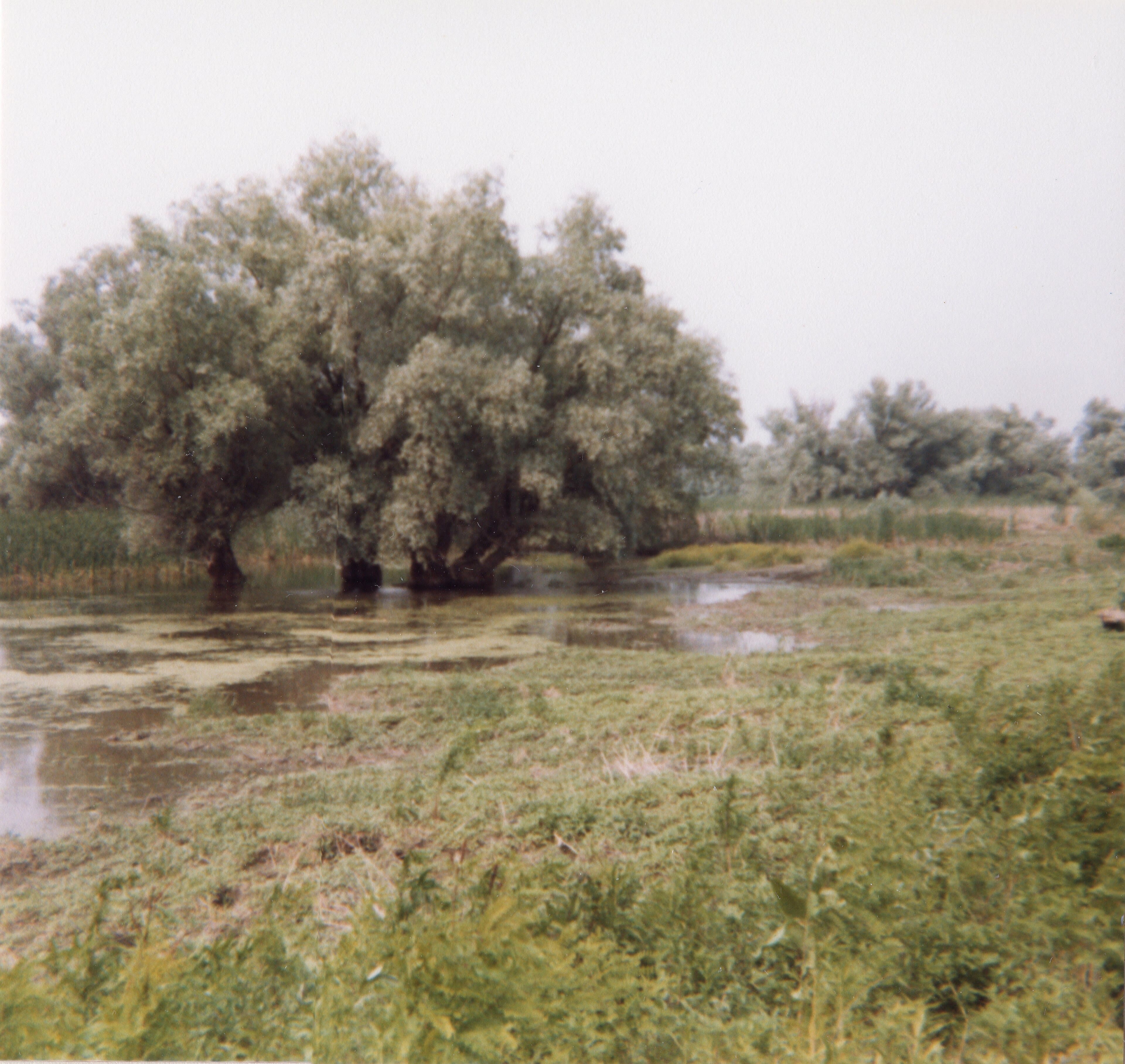
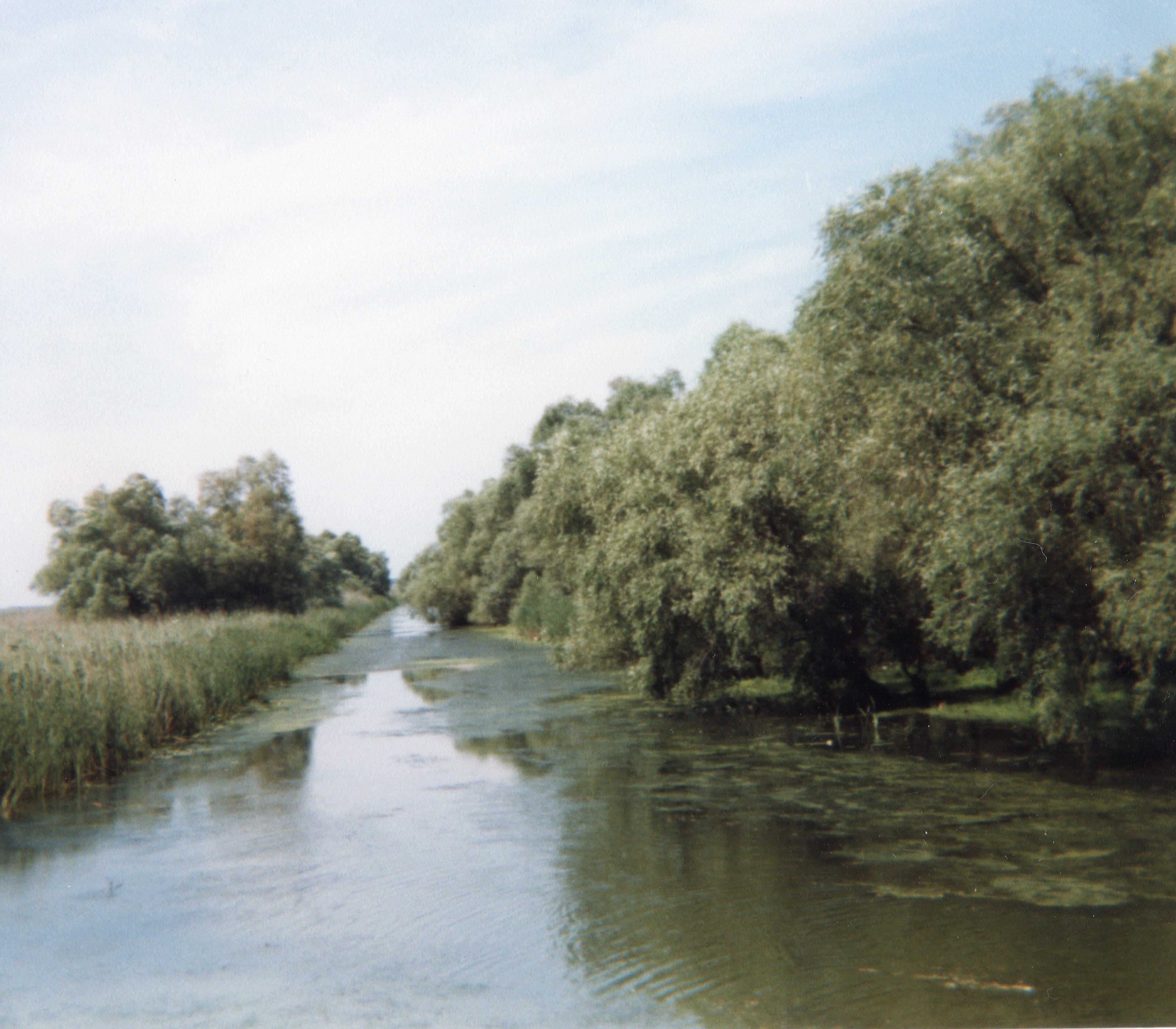
Below the Iron Gates the Danube crosses Romania's plain in long, lazy sweeps, past Vidin and Ruse and the wheatlands, gathering width and silence — and then, at the end of everything, it comes apart in your hands. The Danube Delta is where the river stops being a river and becomes a world: three great arms splitting into a wilderness of reed beds, channels, lakes and floating islands the size of a small country, the largest wetland in Europe. Over three hundred kinds of birds — pelicans by the thousand, herons, egrets, eagles — fish of a hundred kinds, villages reachable only by boat, and a sky so wide it recalibrates you. The Zwaluw slows to walking pace among the reeds, and the only sounds are water, wings, and the frogs holding their evening parliament. We have followed one river from a Dutch canal to this: from locks and cities to a place with no roads at all. I anchor in a side channel as the light fails, and the delta takes the noise out of the whole world.
The Delta — Where the River Becomes a World — our interpretation, created from the reference photographs belowReference photographs — The Delta — Where the River Becomes a World · 3 photographs
The Black Sea — Journey’s End
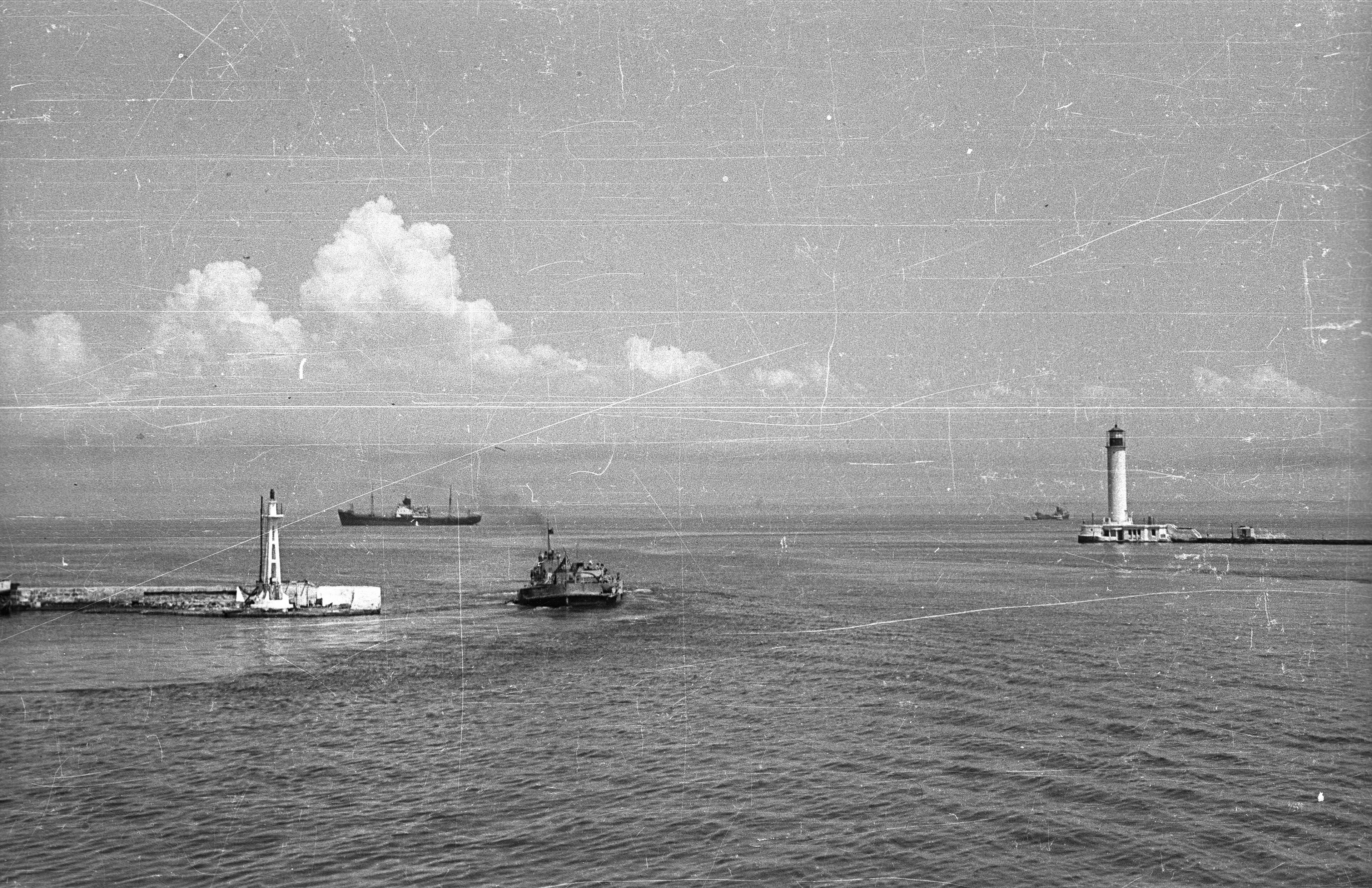
And in the morning, the river delivers us. The channel runs straight at last between its training walls, the reeds give way to open sky, and there it is — the Black Sea, grey-green and enormous, rolling in under a sky with nothing left to prove. Sulina's lighthouse stands at the point where the Danube's water, which fell as rain on German hills and snowmelt off the Alps, which carried us from Amsterdam through four kingdoms and a dozen capitals of the mind — where that water goes home to the sea. I bring the Zwaluw out past the breakwater and let her ride the first real swell of the whole voyage, and I stand at the rail a long time. Two thousand eight hundred kilometres of river. Twenty-some bridges' worth of countries. One small Dutch barge, and everyone who sailed with her in their armchairs. This is where the Great River Way ends — not with a full stop, if you will forgive your skipper, but with a horizon. Thank you for making the voyage with me. The Zwaluw turns for home when you're ready. Pieter will be at the wheel.
The Black Sea — Journey’s End — our interpretation, created from the reference photographs belowReference photographs — The Black Sea — Journey’s End · 3 photographs
The voyage is complete
Forty-two stops from the canals of Amsterdam to the open Black Sea — the delta, the gorge, the Main, the canal, the Wachau, the capitals and the Iron Gates all behind us, and the Zwaluw at anchor where the river ends. Thank you for sailing the whole way with Pieter.
Other rivers are calling: in time, the Zwaluw will ride the Moselle, the Upper Rhine, the Seine, the Rhône, the Douro, the Elbe and the Loire as side voyages from this page. All the journeys are one tap away.
B7 — CC BY 3.0 · I would appreciate being notified if you use my work outside Wikimedia. More of my work can be found in my personal gallery. · Wikimedia Commons
The Iron Gates — the River’s Great Door
B8 — CC BY-SA 4.0 · Bybbisch94, Christian Gebhardt · Wikimedia Commons
 Jason D’s Vision